

Overview
Introduction
The BSc in Actuarial Science at LSE is a programme of study that provides an intriguing blend of statistics, mathematics, finance, and the social sciences. It's designed for students with a strong mathematics aptitude and an interest to learn from a social science perspective that embraces multifaceted interdisciplinary approaches and insights (eg, societal context and ethical dimensions).
Students will learn through an approach characterised by its academic rigour, mathematical focus, and applications to solve important problems and tackle complex challenges especially for insurance, finance, climate change, government, commerce industry, and academic research. It aims to provide students with the intellectual foundation to prepare them for further study, or for professional and managerial careers, particularly in the actuarial profession or in other areas requiring the application of quantitative skills (eg, risk analysis and management; business and investment analysis) to support informed decision-making. Finally, this is a broad-based degree programme within which students may choose to study a specialist area according to their developing interests and career plans.
Many students find and complete work experience in actuarial and financial firms with support from our department and LSE Careers. Typically, our graduates move on to high-earning careers in insurance (life and general), banking, finance, pension, consultancy, and statistics.
This programme is also available with a placement year – BSc Actuarial Science (with a Placement Year) – which can greatly enhance your career prospects and provide invaluable workplace experience. This sets you apart from other graduates in a competitive employment market.
Accreditations
- Accredited by the Institute and Faculty of Actuaries (IFoA) for the purpose of exemption from some professional examinations
- Students may obtain exemption from some professional examinations of the Chartered Institute of Management Accountants (CIMA)’s CGMA® Professional Qualification through relevant pathway.
Preliminary readings
Watch The Joy of Stats, a documentary that gives an insight into the exciting world of statistics.
For an introduction to mathematics as it's applied in economics and finance:
- M Anthony and N Biggs Mathematics for Economics and Finance (Cambridge University Press, 1996)
Much of university level mathematics and statistics is concerned with formal proofs and rigorous mathematical argument and this is necessary for some of the advanced mathematics required in finance, economics and other fields of application. For an introduction, we recommend:
- R Allenby Numbers and Proofs (Butterworth- Heinemann, 1997)
- P Eccles An Introduction to Mathematical Reasoning (Cambridge University Press, 1997)
- T Gowers Mathematics: a very short introduction (Oxford University Press, 2002)
- D Hand Statistics: a very short introduction (Oxford University Press, 2008)
- M Liebeck A Concise Introduction to Pure Mathematics (Chapman & Hall/CRC Mathematics, 2005)
Why study with us
Discover more about our students and department.
Meet the department
The Department of Statistics at LSE is one of the oldest and most distinguished in the UK.
The department has an international reputation for the development of statistical methodology and a long history of pioneering contributions to research and teaching. Many of the world’s most famous and innovative statisticians have been associated with LSE.
Our research spans four main areas – data science, probability in finance and insurance, social statistics, and time series and statistical learning. The department has close links with the Data Science Institute at LSE – an interdisciplinary institute that fosters the study of data science, with a particular emphasis on the social, economic and political contexts.
All aspects of our research were ranked world-leading or internationally excellent in the most recent Research Excellence Framework (2021), submitted jointly with the Department of Mathematics.
The department’s research strengths are reflected in our teaching curriculum. We have a comprehensive range of undergraduate and postgraduate degrees and doctoral research opportunities – hosted in a vibrant department with a supportive and friendly community of staff and students.
Our alumni enjoy successful careers in diverse areas, such as banking, accounting, finance, statistics, government and business consulting while others pursue postgraduate study or research. Our alumni frequently return to LSE to share their career experiences with current students.
Learn more about our programmes and research.

Why LSE
University of the Year 2025 and 1st in the UK in 2025 and 2026
Times and The Sunday Times - Good University Guide 2025 and 20261st in London for the 15th year running
The Complete University Guide - University League Tables 20275th in the world for the study of social sciences and management
QS World University Rankings by Subject 20266th in the world for leading the way in social and environmental sustainability
QS World University Rankings: Sustainability 2026Fees and funding
The table of fees shows the latest tuition fees for all programmes.
You're charged a fee for each year of your programme. Your tuition fee covers registration and examination fees payable to the School, lectures, classes and individual supervision, lectures given at other colleges under intercollegiate arrangements and, under current arrangements, membership of the Students' Union. It doesn't cover living costs or travel or fieldwork.
Your tuition fees, and eligibility for any financial support, depend on whether you’re classified as a home or an overseas student – known as your fee status. We assess your fee using The Higher education (Fee Limit Condition) (England) Regulations 2017.
Learn more about fee status classification.
We recognise that the cost of living in London may be higher than in your home town or country. LSE offers a range of financial support to help eligible students with the cost of studying.
For UK Home fee status students, this includes the LSE Bursary, LSE Scholarships, the LSE Accommodation Bursary, and the Care-Experienced and Estranged Student Bursary. UK students may also be eligible for government student loans.
For Overseas fee status students, the School provides a range of bursaries and scholarships, including the LSE Access to Education Scholarships, to support your undergraduate study. These awards are funded by philanthropic donations to LSE and vary each year in number, value and eligibility criteria.
Learning and assessment
How you learn
Format and contact hours: you’ll usually attend lectures and related classes, seminars or workshops for 10 to 15 hours per week. Hours vary depending on the course. Get a broad idea of the study time involved in the Calendar within the Teaching section of each course guide.
Independent study: you’ll be expected to complete independent study and manage your time effectively. Typically, this will include research, reading and note-taking.
LSE teaching: our School is internationally recognised for teaching and research and you’ll learn from academics with a wide range of experience and knowledge. Courses may be taught by our academic staff, guest teachers, visiting members of staff, LSE teaching fellows and graduate teaching assistants, who are usually doctoral research students.
Learn about the teacher responsible for each course in the relevant course guide.
Academic mentor: you’ll meet with your academic mentor regularly to discuss your work. Your mentor can provide advice and guidance on academic issues and, where appropriate, personal concerns.
Other academic support: at LSE, we offer lots of opportunities to extend your learning outside the classroom.
The Learning Lab is the place to discover and develop the skills you’ll need to reach your academic goals at LSE.
Through the Learning Lab, you can:
- attend practical workshops and one-to-one sessions on essay writing, conducting research, and on managing your reading lists, workloads, and deadlines
- develop your academic writing, reading, and critical-thinking skills to meet degree-level expectations
- work in study groups to strengthen collaboration, cross-cultural communication, and teamwork skills in a supportive environment.
Disability and Mental Health Service: we want all LSE students to achieve their full potential. Students can access free, confidential advice through our Disability and Mental Health Service. This is the first point of contact for students.
- The standard teaching day runs from 9am to 6pm, Monday to Friday. Undergraduate teaching is not normally scheduled for Wednesdays after 12 noon to allow for sports, volunteering and other extra-curricular activities.
- The lecture and seminar timetable is published in mid-August and the full academic timetable (with information on classes) is published by mid-September via the LSE timetables web pages.
- All personal undergraduate timetables are published in LSE for You (LFY). For personal timetables to appear, you must be registered at LSE, be signed up for courses in LFY and ensured that there are no unauthorised clashes in your course selections. We try our best to minimise changes once personal timetables have been published. However, you’ll be notified about any changes by email.
How you're assessed
Formative coursework
All taught courses include formative coursework, which is not assessed. This helps prepare you for summative assessment. We use a wide range of formative assessment methods, such as essays, case studies, reports, quizzes and mock exams.
Feedback on coursework is an essential part of the learning experience. Class teachers mark formative coursework and feedback is normally given within two weeks – provided the work is submitted on time.
Summative assessment
This assessment counts towards your final course mark and degree award.
Summative assessment for most courses is by a three-hour examination in June. A small number of courses are assessed by project work. Your degree award will be based on assessment over all three years, with an emphasis on the second and third years.
You’ll receive feedback on any summative coursework as part of the assessment for individual courses (except for final submitted dissertations). Feedback will normally be provided before the examination period.
Assessment on individual courses can change from year to year. See details of the current formative coursework and summative assessment for each course in the relevant course guide.
Graduate destinations
Overview
Graduates from the programme will be able to work on a range of financial services organisations from companies which operate in the life and general insurance sector through to accounting firms, specialist actuarial consultancies, investment banks , data analytics, statistics, civil service and graduate studies.
Further information on graduate destinations for this programme
Top 4 sectors our students work in:
Career support
From CV workshops through to careers fairs, LSE offers lots of information and support to help you make that all-important step from education into work.
Many of the UK’s top employers give careers presentations at the School during the year and there are numerous workshops covering topics such as job hunting, managing interviews, writing a cover letter and using LinkedIn.
See LSE Careers for further details.
Discover Uni
Every undergraduate programme of more than one year duration will have Discover Uni data. The data allows you to compare information about individual programmes at different higher education institutions.
Programmes offered by different institutions with similar names can vary quite significantly. We recommend researching the programmes you're interested in and taking into account the programme structure, teaching and assessment methods, and support services available.
Find out more
Explore LSE
Student life

Student support

Accommodation

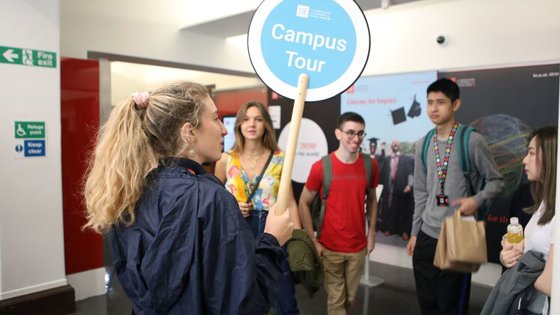
Meet, visit and discover LSE