Tackling school bullying as an urgent policy issue: lessons from Mexico
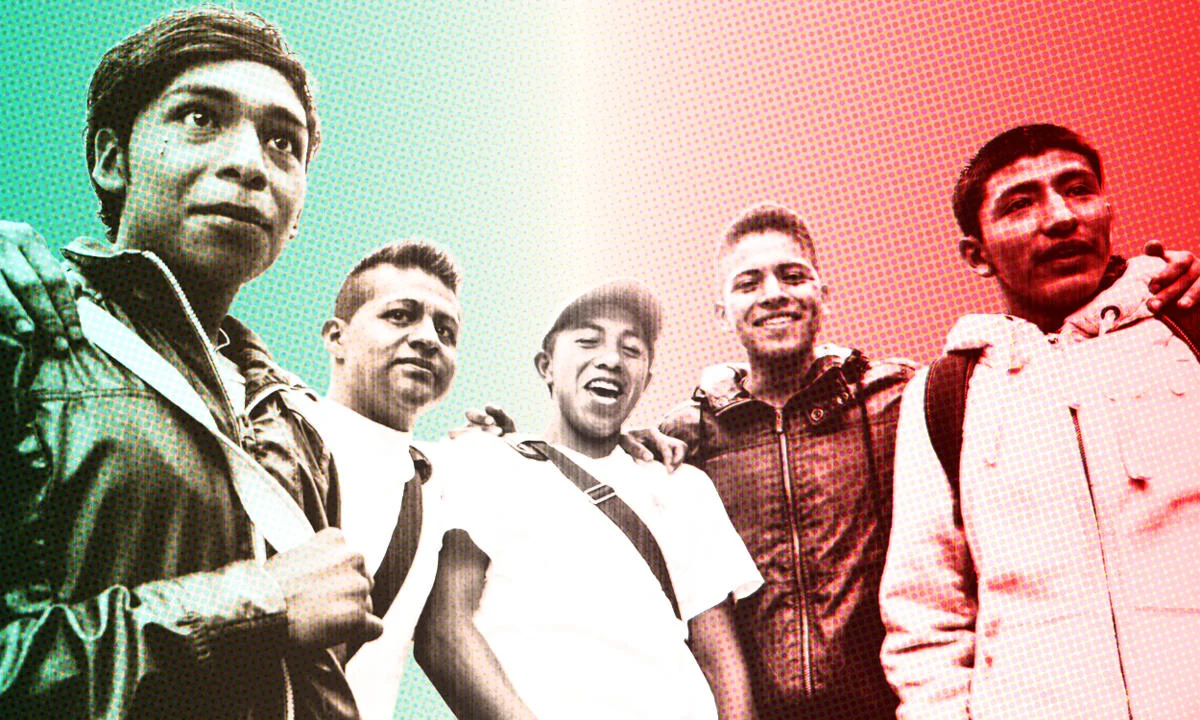
For Dr Kevin Zapatan Celestino, LSE Fellow in the Department of Social Policy at LSE, exploring the motivations and perspectives of those who perpetrate bullying is particularly pressing in Mexico given the prevalence of school violence.
According to recent figures, 3.3 million adolescents in Mexico are believed to be victims of bullying. Harrowing cases of children and teachers being attacked and even killed in classrooms have hit the headlines. The OECD aligns Mexico with the global average across OECD countries when it comes to reports of school bullying, but some NGOs consider the situation in Mexico to be far worse – perhaps even among the most severe in the world.
Despite these horrific incidents and deeply concerning statistics, school bullying has not typically been seen as a public problem in Mexico. Speaking at an LSE Research Showcase talk, Dr Zapata-Celestino shows how understanding bullying from the perspective of bullies can be a vital part of tackling school violence as an urgent policy issue in Mexico and beyond.
Bullying in schools as a public problem
When it comes to bullying, Dr Zapata Celestino differentiates it from other types of school violence. Bullying can take many forms – whether verbal, physical, psychological or digital – and can range from physical attacks to insults, spreading rumours, social ostracism and sexual harassment. As an act of interpersonal aggression, what defines bullying are three key characteristics: intentionality, repetition and power imbalance.
It's difficult to overstate the impact of bullying on victims. Those who experience bullying are often targeted because of physical traits or identity markers, such as gender, race and religion. The long-term consequences include physical injuries, psychological distress and declining educational performance. Dr Zapata Celestino also points to research that finds that experiencing childhood bullying reduces an individual’s long-term social and economic prospects.
Despite these impacts, bullying has been normalised in the Mexican context, where it is typically understood as an individual issue that should be addressed with more violence. Dr Zapata Celestino quotes a scene from a 1959 film, Los Santos Reyes, where a child tells their teacher they’ve been hit. The teacher’s response? "So? Don’t you have hands? Hit him back." While the movie may have been released nearly 70 years ago, this scene could just as easily take place today, argues Dr Zapata Celestino. In Mexico, "you self-defend in order to grow up".
Dr Zapata Celestino sought to challenge this individualisation of bullying. His research fills a crucial gap in the literature on school violence by exploring the motivations and perspectives of those who engage in bullying.
Bullying from the perspective of bullies
To fill in the missing piece of the puzzle, Dr Zapata Celestino and independent researcher Daniela Manríquez Madrigal conducted and analysed 13 semi-structured interviews with adults aged between 21 and 42 who identified as having participated in direct, aggressive bullying in primary and early secondary school. The adults originated from different areas of Mexico and had been educated in a mix of private and public schools. While the team sought to include as many women as possible in the study, 10 of the 13 interviewees were men.
Combining empirical findings with social and psychological theories of social cognition, social identity and social dominance, the research revealed the multiple motivations and factors that can lead to and reinforce bullying behaviours.
One of the main findings is that wider violence in domestic and institutional environments influences the prevalence of school bullying. Dr Zapata Celestino found that "bullying stems from exposure to violence in families, communities and institutions". He reports how one participant observed that "growing up in a violent environment makes you defensive and looking for someone to attack ... How could I expect them [other students] to react well, when their Dad used to hit their Mum?"
Bullying also played a role in forming social connections and bonds. Dr Zapata Celestino describes how participants found that "aggression became a form of bonding; inclusion required tolerance of violence."
Some participants spoke about how bullying was reinforced by being socially rewarded. One questioned, "how the hell are you supposed to change if everyone keeps celebrating your stupid behaviour, no matter how much you make life miserable for others?"
As schoolchildren, some had even viewed bullying as a joke or game undertaken by the collective, which served to rationalise the behaviour and minimise individual guilt. Participants came to retrospectively understand the impact: "it’s only in hindsight that I realised it wasn’t right … we made life miserable for a lot of people just because we thought it was funny."
In intensely hierarchical settings like schools, with both formal and informal systems of authority, bullying was also understood as a strategy for asserting dominance or else for self-preservation: "i2f you are embedded in an environment that is full of violence, it is the only way that you can survive. One participant stated that "it’s not that you want to do it – but if you don’t do it, others will do it to you."
Furthermore, bullying acts as a mechanism of control and discipline that reinforces unwritten social norms, including traditional or idealised gender roles and expectations surrounding masculinity and femininity. Those perceived to diverge from these were frequently bullied and marginalised.
Dr Zapata Celestino notes that not all students will actively support or engage in these forms of hostility and aggression. But they may still fear that social stigma has a contagious quality that could affect them, discouraging solidarity between students and perpetuating harmful discourses.
Bullying prevention – the role of parents and teachers
By broadening the lens to understand the motivations and dynamics that promote and maintain violence in schools, Dr Zapata Celestino believes this opens up the possibility of more effective solutions: "if we see bullying only as an individual behavioural issue, we tend to focus on punitive measures."
Dr Zapata Celestino particularly identifies the role played by silence in perpetuating bullying, where children don’t speak up due to fear of retaliation, the normalisation of violence or anticipation of distrust from adults. One participant remembered: "A teacher gave us a box to report bullies anonymously. No one wrote anything. No one wants to be the class snitch."
For another participant, better parent-child communication was key: "I stopped bullying when my mother talked to me … in that moment, I knew I had to change." However, given the Mexican labour market where caregivers frequently work very long hours to make ends meet, Dr Zapata Celestino is realistic about the structural barriers that can prevent parents from having the necessary time to break the silence.
Similarly, while teachers also play a vital role in tackling school violence, in Mexico they experience high levels of burnout and often lack training and institutional support. Many measures likely to have a positive effect – such as school-led parenting sessions focused on emotional skills, socio-emotional learning for students, and teacher training around bullying prevention and intervention – simply are not present in the Mexican school system due to a lack of resources.
Dr Zapata Celestino powerfully summarises the structural challenges inhibiting change: "we cannot ask for parental sessions if the parents are not there. We cannot ask for better teacher training when teachers are already working 12, 14, 16 hours for very low pay in a precarious environment. We cannot ask the students to deal with social and emotional learning, when there is violence embedded not only in their schools but in other settings."
Understanding bullying as a policy issue
In providing valuable empirical evidence from Mexico from those who engaged in bullying as schoolchildren, Dr Zapata Celestino’s research not only fills an important gap in the literature. It also shows the multiple, deep-rooted social factors behind bullying, including "dysfunctional family dynamics, exposure to violence in many contexts, poorly managed dynamics of identity, belonging and domination, as well as normalised toxic discourses that contribute to aggression".
When we understand bullying as a public rather than individual issue, this opens up the possibility of finding policy solutions to school violence. As Dr Zapata Celestino argues, "addressing these factors is critical to designing interventions that move beyond punitive measures and try to address the broader social environment."
Dr Zapata Celestino nonetheless concludes by acknowledging the structural obstacles on the path to change: "The involvement of parents and well-trained teachers is very important – however, this is a missing part in the Mexican context."
This LSE Research Showcase talk was written up by Rosemary Deller, Research Engagement Manager at LSE.
LSE Research Showcase is a series of 20-minute talks from LSE researchers to enjoy on your coffee break. Catch up on YouTube.
Subscribe to LSE Research for the World

The London School of Economics and Political Science (LSE) is a world-leading university, specialising in social sciences and ranked top in the UK by The Times and Sunday Times Good University Guide 2026. Based in the heart of London, we are a global community of people and ideas that transform the world.

Related content
Mexico: the multifaceted significances of the 2024 election
Shameful pasts: why is South Africa's youth disengaged from apartheid?