

British Journal of Sociology

Impact factor 2024: 3.3
The British Journal of Sociology is a leading international sociological journal published on behalf of the London School of Economics and Political Science (LSE). Established in 1950, the journal features rigorous, original research that speaks to a general sociological audience and draws on an array of quantitative and qualitative methods. The BJS has a proud tradition of featuring work that advances both scholarly debate and broader understandings of key social and political questions.
The BJS includes a book reviews section that engages with notable new publications from junior and senior scholars, with occasional book symposia and multiple-title book review essays. The journal also publishes occasional special issues, organised around themes of political or theoretical significance.
Call for Papers - The New Sociology of Propaganda
Propaganda is among the most pervasive and vexing social problems today. In the age of big data and given the tight grip that traditional, social, and new media have on our lives, a crowded field — states, governments, news outlets, civil institutions, and experts — has fought to control, filter, and censor information and its ideological messaging. In the United States, conservatives decry the fake news media, “woke” brainwashing of young people, and rigged jobs report numbers. Many have sounded the alarm over recent presidential executive orders seeking to restore “truth and sanity” in American history, book bans, “copaganda,” the censoring of school curricula and independent media, and other modes of government overreach. Facing today’s “infodemic,” fact checkers have their hands full. Israel has criticized British universities for promoting Hamas propaganda. More recently, social media has been besieged by “pro-EU propaganda” asserting the need for a more unified Europe in the face of threats from the United States and Asia.
If you are interested in submitting a manuscript for this special issue, please send, in the body of an email (so no attachment), the following information to the Guest Editor, Dr. Freeden Blume Oeur (freeden.blumeoeur@tufts.edu), by Monday, March 16, 2026:
- A tentative title;
- An abstract of approximately 500 words explaining the paper's methods, analysis, data, relevant literatures (including a few key citations), and contributions, making clear how the paper advances the understanding of propaganda;
- Brief author biographies.
By Monday, March 30, 2026 the Guest Editor will let all prospective authors know if they are invited to submit a manuscript for consideration in the special issue. Completed manuscripts will be due through the journal submission portal by Friday, October 30, 2026 and will undergo standard peer review. Feel free to email the Guest Editor with any questions.
Call for Papers - The precarity of work and life: how insecurity equalises and stratifies people’s experiences
Insecurity sets up an important puzzle for the social sciences. In order to solve this puzzle, sociologists need to further investigate how experiences of insecurity vary and the ways in which economic and cultural factors shape different varieties of insecurity. We ask: Is everyone really experiencing insecurity? How is insecurity related to people’s structural conditions?
We welcome articles that address all aspects of socio-economic insecurity that go beyond orthodox economic framings and that can lead to empirical advancements, as well as theoretical developments, in how we understand insecurity vis-à-vis inequality. We invite submissions that use diverse methodological approaches, e.g. that explore subjective experiences of insecurity through in-depth qualitative or ethnographic research, that investigate generalizable or cross-national trends through quantitative data-based analyses, or that engage with mixed methodologies.
Call for Papers - Scholarship as Struggle: Stories of Censorship, Marketisation, and Resistance
The British Journal of Sociology is delighted to announce a new ongoing project entitled Scholarship as Struggle: Stories of Censorship, Marketisation, and Resistance. As part of this project, we aim to feature reflections by sociologists from across the world on the ongoing managerial and ideological attacks on higher education.
At BJS we are interested in receiving Commentary pieces, of no more than 2500 words, that reflect on the conditions sociologists and our colleagues in other disciplines are facing. We welcome pieces that, for instance, discuss personal experiences in light of structural conditions; that clarify the historical, political, economic, and cultural underpinnings of present crises; and/or that arrive at potential solutions and transformations. It is our aim to make sure that this project is not a short-term reaction to one set of redundancies, but rather that it acts as a long term resource to address the long term issues which face higher education. We are also very keen to make sure we highlight voices and stories from across the world, recognising that higher education is in trouble globally.

BJS Early Career Prize Announcement 2025
The BJS Early Career Prize has been awarded to Giovanni Zampieri for their paper "Saving one's face while saving one's soul? The refraction of tactical approaches to penance as a disciplinary device in Counter-Reformation Italy" (2024). Mr Zampieri's achievement was announced at the 2025 BJS Annual Lecture on 19 March 2025.

BJS Prize Announcement 2025
The BJS Prize has been awarded to David Calnitsky and Kaitlin Pauline Wannamaker for their paper "The revolution next door" (2024). Dr Calnitsky and Ms Wannamaker's achievement was announced at the 2025 BJS Annual Lecture on 19 March 2025.

On white normativity, racial habituation, and cracks in racial teams
In the 2025 annual British Journal of Sociology lecture, Eduardo Bonilla-Silva reviewed the basics of his "racialized social system" with a focus on explaining how he has improved the theoretical apparatus over the years.

Save the Date: Inaugural BJS Conference 2024
15 - 16 April 2024
The BJS hosted its inaugural major international conference on 15 and 16 April 2024 at LSE in London. We welcomed over 200 academics who showcased cutting-edge research from across the discipline of sociology, featuring keynotes, plenary sessions curated by the Editors, and author-meets-critics sessions debating high-profile new books. Watch the conference highlights here.

New Editorial Board Announcement
We are delighted to welcome Dr Ricarda Hammer, Dr Lucie Kalousová and Professor Julian Go to the British Journal of Sociology Editorial Board.
Ricarda Hammer is Assistant Professor in the Department of Sociology at the University of California - Berkeley. Her work sits at the intersection of global sociology, the sociology of race, historical sociology, social theory, and anticolonial thought. Her book project, tentatively titled "Citizenship and Colonial Difference: The Racial Politics of Rights and Rule across the Black Atlantic," explains how democratization was made compatible with colonial extractive projects through renewed constructions of race. Hammer's research has been published in Sociological Theory, Sociology of Race and Ethnicity, Political Power and Social Theory, and Teaching Sociology. She received her Ph.D. from Brown University and she was a Postdoctoral Fellow at the University of Michigan-Ann Arbor.
Ricarda Hammer is at the forefront of postcolonial and historical sociology, and is leading a new generation of thinkers forward on these matters. We’re excited to be welcoming her onto the BJS board.
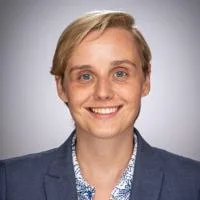
Dr Lucie Kalousová joins BJS Editorial board
Lucie Kalousová earned her PhD in Sociology and Health Services Organization and Policy from the University of Michigan in 2017. Before her current role at Vanderbilt, she served as an assistant professor at the University of California-Riverside and held a Postdoctoral Prize Research Fellowship at Nuffield College, Oxford. Dr Kalousová's research focuses on the relationship between socioeconomic status and population health, particularly the factors driving health disparities in middle- to high-income countries. She explores how economic conditions and material hardship influence individual health outcomes and the broader implications of health inequality. Her work, published in leading journals such as the Journal of Health and Social Behavior and Social Science & Medicine, contributes to our understanding of health disparities and their policy implications. Her work has received several awards, including the Neuron Award for a Promising Czech Scientist and the Postdoctoral Award from the Interdisciplinary Association for Population Health Science.
We are thrilled Dr Kalousova is joining the editorial board. She has been doing cutting edge research for the last decade and will bring a wealth of insight and experience, particularly around issues related to health and health inequalities.

Professor Julian Go joins BJS editorial board
Julian Go is Professor of Sociology at the University of Chicago. His research lies at the intersections of historical sociology, social theory, and global studies. His theoretical work bridges critical social theory with postcolonial/decolonial and global social thought in an attempt to transcend the limits and biases of conventional theory in the social sciences.
Julian Go has been a pioneer in the development of postcolonial social science and historical sociology; we are thrilled to be able to welcome him onto the BJS board.

BJS Prize Announcement 2023
The BJS Prize has been awarded to Kjell Noordzij, Willem de Koster, Jeroen van der Waal for their paper "A revolt of the deplored? The role of perceived cultural distance in the educational gradient in anti-establishment politics" (2021). Dr Noordzij accepted the Prize on behalf of all authors at the 2023 BJS Annual Lecture on 16 October 2023, from BJS Editor Dr Rebecca Elliott.
You can read the paper here, Open Access, until the end of 2023.

BJS Early Career Prize Announcement 2023
The BJS Early Career Prize has been awarded to Minwoo Jung for their paper "Embracing the nation: Strategic deployment of sexuality, nation, and citizenship in Singapore" (2021). Dr Jung's achievement was announced at the 2023 BJS Annual Lecture on 16 October 2023, from BJS Editor Dr Rebecca Elliott.
You can read the paper here, Open Access, until the end of 2023.
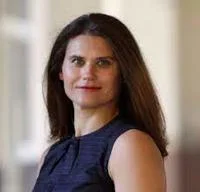
The Social Life of Money for Children
Monday 16 October 2023, 6.30pm - 8.00pm, CBG Auditorium
Inspired by Nigel Dodd’s The Social Life of Money, this lecture proposes an analysis of entangled economic lives, that is, how meaning, structure and politics jointly shape the flow of monies within households.
We are thrilled to welcome Dr Katie Higgins to the BJS team as our new Book Reviews Editor. Katie is a sociologist and human geographer whose research examines social and spatial inequalities. As a co-founder and co-convenor of the BSA Sociology of Elites Study Group and the Elite Studies Working Group, she is interested in how advantage and power are reproduced and challenged. Her current research investigates global organisations that facilitate elite connections.

From July 1st2023, BJS welcomes a new editorial team. Dr Rebecca Elliott, Professor Sam Friedman, Dr Ali Meghji and Professor Aaron Reeves succeed Dr Daniel Laurison as the new Co-Editors of the Journal. The new editorial team have a range of exciting plans, including three major initial announcements:
The BJS will host a major international conference in April 2024 at the LSE. The conference will be in-person, heavily subsidised, and will aim to showcase the best sociological work from across the discipline.
The new Co-Editors aim to reduce BJS article review times to a 60-day average for articles sent out for review.
The BJS Prize and BJS Early Career Prize will from this year both be awarded annually.

BJS/LSE Sociology Panel Event: Reflections on ‘The Quantified Scholar’
Wednesday 29 March 2023
A panel hosted by the Department of Sociology and The British Journal of Sociology discussing a variety of themes that emerge from The Quantified Scholar with the author, Juan Pablo Pardo-Guerra (UCSD) and panellists, Sam Friedman (LSE), Sarah de Rijcke (Leiden University), and John Holmwood (University of Nottingham). The panel was co-chaired by Fran Tonkiss (LSE) and Gurminder K Bhambra (University of Sussex) and moderated by Daniel Laurison (British Journal of Sociology). Catch up here.
BJS Annual Lecture 2022: Thinking Against Empire: anticolonial thought as Social Theory
Wednesday 6 April 2023
Speaker: Professor Julian Go (University of Chicago)
Chair: Professor Nigel Dodd (LSE)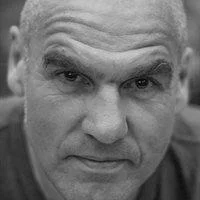
Professor Nigel Dodd
All of us at the BJS are deeply saddened by the loss of Nigel Dodd, who died peacefully on 12 August 2022. Nigel became the journal's Editor in Chief in 2014, and his incisive editorship has been transformative for the journal. He was committed to publishing a wide range of scholarship by diverse authors across the discipline, and to supporting the work of earlier career scholars. Nigel's vision of Sociology's rich intellectual history, broad conceptual and empirical range, and critical capacity to speak to contemporary social challenges, has been central to the journal's mission in the past eight years. His generosity as an editor and colleague was matched by his brilliance as a scholar: Nigel's work in the fields of economic sociology and social theory leave an outstanding intellectual legacy. He will be greatly missed.
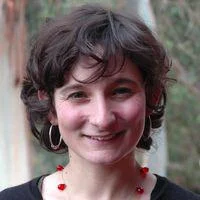
BJS Annual Lecture 2019
Ordinal Citizenship
Friday 25 October 2018, 6.30-8pm
Speakers: Professor Marion Fourcade (University of California)
Chair: Professor Nigel Dodd (LSE)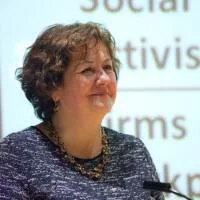
BJS Annual Lecture 2018
From "having" to "being": self worth and the current crisis of American society
Thursday 25 October 2018, 6.30-8pm
Speakers: Professor Michèle Lamont (Harvard)
Chair: Dr Rebecca Elliott (LSE)This event formed part of the "New World (Dis)Orders" series, held in the run up to the LSE Festival, a week-long series of events taking place from 25 February to 2 March 2019, free to attend and open to all, which explored how social science can tackle global issues.
BJS Annual Lecture 2017
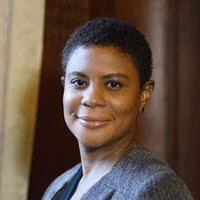
The Social Life of DNA: racial reconciliation and institutional morality
Speaker: Professor Alondra Nelson
Chair: Professor Nigel DoddIn the British Journal of Sociology's Annual Lecture, Alondra Nelson discussed her book The Social Life of DNA on how claims about ancestry are marshalled together with genetic analysis in a range of social ventures.
Twitter: #LSEBJS
@BJSociology
@LSEsociology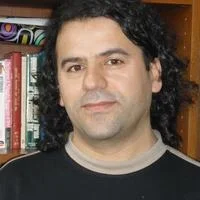
BJS Early Career Prize Announcement 2017
The BJS Early Career Prize has been awarded to Umit Cetin for his paper "Cosmopolitanism and the relevance of ‘zombie concepts’: the case of anomic suicide amongst Alevi Kurd youth" (2017) which was originally published in BJS 68(2). The paper was derived from Umit’s doctoral research, which he undertook at the University of Essex, which focused on suicide amongst second generation Alevi-Kurdish young men in London.Dr Cetin accepted the Prize at the 2017 BJS Annual Lecture on 26th October 2017 from Editor-in-Chief Professor Nigel Dodd, who commented: "Umit’s paper delves deeply into classical sociology in order to get to grips with his own, rich ethnographic data on the Kurdish migrant community in London. It’s an excellent and original paper, which has something compelling to say about the diversity of trajectories that transnational migrants follow in a cosmopolitan city such as London, and about the formation of a new rainbow underclass".

We are delighted to announce the launch of the BJS Early Career Prize for authors of papers published in the BJS in the first five years from the date they are awarded their PhD. Consideration of papers is now open, and first award will be made in 2017.
- To be a leading sociology journal in terms of academic substance, scholarly reputation, with relevance to and impact on the social and democratic questions of our times;
- To publish papers demonstrating the highest standards of scholarship in sociology for authors worldwide;
- To carry papers from across the full range of sociological research and knowledge
- To lead debate on key methodological and theoretical questions and controversies in contemporary sociology, for example through the annual lecture special issue;
- To react quickly to major publishing and /or world events by producing special issues and /or sections;
- To highlight new areas of sociological research, new developments in sociological theory and new methodological innovatins, for example through timely special sections and special issues;
- To publish the best work from scholars in new and emerging regions where sociology is developing;
- To encourage new and aspiring sociologists to submit papers to the journal, and to spotlight their work through the BJS Early Career Prize;
- To engage with the sociological community - academics as well as students - in the UK and abroad, through social media, and a journal blog.
Journal Editors:
Dr Rebecca Elliott (LSE)
Professor Sam Friedman (LSE)
Dr Ali Meghji (Cambridge)
Professor Aaron Reeves (LSE)
Book Reviews Editor:
Dr Katie Higgins (University of Oxford)
Editorial Board
Gurminder K. Bhambra, University of Sussex, UK
Nick Couldry, London School of Economics and Political Science, UK
Miriam Glucksmann, University of Essex, UK
John Holmwood, University of Nottingham, UK
Anthony King, University of Warwick, UK
Aris Komporozos-Athanasiou, University College London, UK
Monika Krause, London School of Economics and Political Science, UK
Daniel Laurison Swarthmore College, USA
Lydia Morris, University of Essex, UK
Utsa Mukherjee, Brunel University London, UK
Susan Pickard, University of Liverpool, UK
John Solomos, University of Warwick, UK
Fran Tonkiss, London School of Economics and Political Science, UK
David Voas, University College London, UK
International Advisory Board
Irena Borowik, Jagiellonian University, Poland
Craig Calhoun, Arizona State University, USA
Daniel Chernilo, University of Loughborough, UK
Vivek Chibber, New York University, USA
Raewyn Connell, University of Sydney, Australia
David Garland, New York University School of Law, USA
Deborah Giustini, KU Leuven, Belgium
John A. Hall, McGill University, Canada
Michael Hill, Victoria University, New Zealand
Huang Ping, Academy of Social Sciences, China
Christine Inglis, University of Sydney, Australia
Hiroshi Ishida, University of Tokyo, Japan
Yao-Tai Li, UNSW Sydney, Australia
Susan McDaniel, University of Lethbridge, Canada
Michael Mann, University of California, USA
Steve Messner, University at Albany, USA
Harvey Molotch, New York University, USA
James Montgomery, University of Wisconsin, USA
Claus Offe, Hertie School of Governance, Germany
Stella Quah, Duke-NUS Graduate Medical School, Singapore
Vadim Radaev, The State University - Higher School of Economics, Moscow, Russia
Saskia Sassen, Columbia University, USA
Susumu Shimazono, University of Tokyo, Japan
Margaret Somers, University of Michigan, USA
Richard Swedberg, Cornell University, USA
Piotr Sztompka, Jagiellonian University, Poland
Goran Therborn, Swedish Collegium for Advanced Study in the Social Sciences, Sweden
John Torpey, City University of New York, USA
Bryan S. Turner, Australian Catholic University, Australia
Tina Uys, University of Johannesburg, South Africa
Masao Watanabe, Hitotsubashi University, Japan
Malcolm Waters, University of Tasmania, Australia
Richard Wright, Georgia State University, USA
Shujiro Yazawa, Seijo University, Japan
BJS Prize
The BJS Prize is awarded biannually for an article published in the BJS during a 24-month period that makes an outstanding contribution to sociological knowledge. The award takes the form of £500 plus a year's subscription to the Journal (or books from the Wiley catalogue to the same value if this is preferred).
BJS Early Career Prize
The BJS Early Career Prize is an award for authors who are in the first five years after gaining their PhDs. We hope it will encourage submissions from people at an early stage of their career. The Prize will be awarded annually.
Eligibility
- Papers published in the BJS by academics who are in the first five years from the award of their PhD.
- The case for eligibility will be based on the amount of work contributed to joint works and will be decided by the Editors.
- An author may have more than one paper considered for the Prize.
- Authors will be asked if they are eligible to put themselves forward for the Prize when their paper are accepted for publication.
Assessment
- Entries will be judged by the Editorial Board.
- The award of the Prize will be at the discretion of the Board
- In the unusual event where no award can be made, the Board has the discretion to extend this period by an additional year.
Award
- The Prize will be awarded at the Annual BJS Lecture held at the LSE.
- Where there are two authors the Prize will be split 50/50.
- The winner of the successful contribution will receive a cheque for £500 together with £500 worth of Wiley books.
- Only one Prize can be awarded per manuscript or per author.
For further information please contact bjs@lse.ac.uk.
The British Journal of Sociology
London School of Economics
Houghton Street
London WC2A 2AE
Email: bjs.office@wiley.com
Twitter: @BJSociology