

The India Observatory
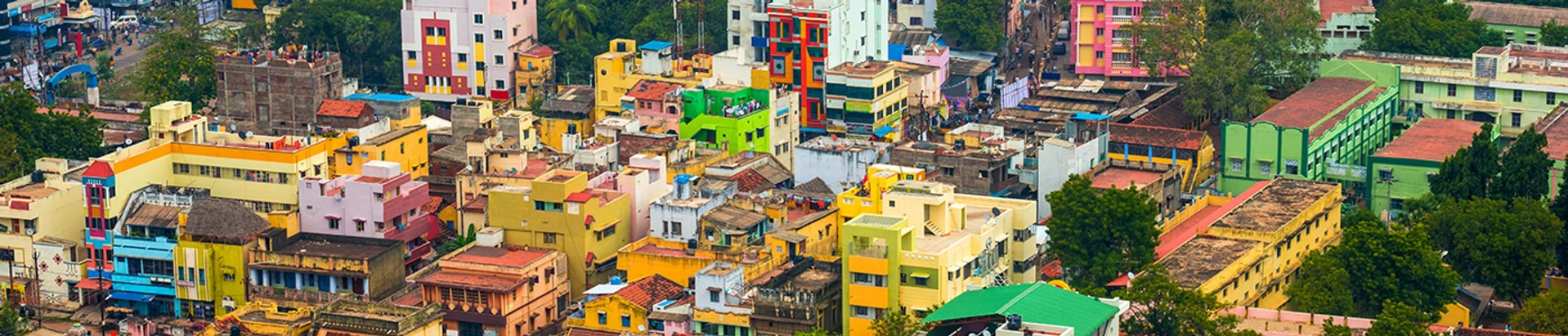
The India Observatory (IO), set up in 2006, is a centre to develop and enhance research and programmes related to India's economy, politics and society. It is involved in public policy engagement in, and with, India and also works in collaboration with international partners for the generation and exchange of knowledge on India and its position in the world.
The IO is involved in evidence based research and a strong public policy engagement in and with India and beyond. We work in collaboration with international partners for the generation and exchange of knowledge on India and its position in the world. It has a global focus, especially with respect to emerging economies. This is to enable sharing knowledge and experiences between India and other countries with common synergies for better understanding and mutual benefit.
The IO is involved in developing, enhancing and undertaking high impact multi-disciplinary and interdisciplinary research at the LSE and beyond. It has strong links with academic institutions; public and private sector institutions to further knowledge exchange and contributes to the debate on broader policy issues by promoting and supporting an active engagement around economics and social policy.
The IO operates in conjunction with the IG Patel Chair, forming a collaborative partnership with the Reserve Bank of India and the State Bank of India. This initiative honours the legacy of Dr IG Patel, a highly distinguished Indian economist and public servant who served as the Director of the London School of Economics from 1984 to 1990 and as the Governor of the Reserve Bank of India from 1977 to 1982.
Professor Lord Stern and Dr Ruth Kattumuri jointly serve as co-chairs of the India Observatory.
Research and Policy Commitment
The IG Patel Chair and the India Observatory are deeply committed to conducting research and engaging in public policy discussions to address global societal challenges. Their primary focus areas include sustainable growth, social inclusion, population development, and governance.
Research Approach
The India Observatory works in partnership with key academic, government and corporate organisations in order to:
- Support and promote research into economic, social, developmental and cultural issues relevant to India
- Promote research related to India within LSE by developing and supporting a network of academics from across the school
- Forge partnerships with India, Asia, Europe and other regions for collaborative research and knowledge sharing issues related to India and Asia
- Support public-private partnerships for research and dissemination
The IO's Relationship with India
Since 2003, LSE has been intensifying its institutional engagement with India still further, developing strong links with Indian academic institutions, government and corporate bodies to foster exchange of ideas and research, contribute to capacity building and contribute to the debate on broader policy issues.
The story of LSE and India starts with the School's foundation in 1895. As far back as 1912, an Indian was the first non-European president of the Students' Union.
Ralf Dahrendorf (1995) refers to the association between India and LSE as a story of soul mates. Through exchanges with government and academic initiatives, LSE has been more deeply entrenched in Indian life than a few highly visible names could achieve. In the words of a well-known Indian political leader, there is a vacant chair at every cabinet meeting in India reserved for the ghost of Professor Harold Laski.
Among the many famous Indians who have passed through LSE, two of the most prominent are Dr Bhim Rao Ambedkar, a founding father of the Indian constitution and a leader of the Dalit community in India and ex-President KR Narayanan. Nobel Laureate Professor Amartya Sen is an LSE Honorary Fellow. Former Prime Minister Dr Manmohan Singh is an Honorary Fellow of the Asia Research Centre. Thus the LSE-India partnership has been sustained and strengthened over the years.
Dr IG Patel was the ninth Director of LSE from 1984-90. In 1999 Professor Anthony Giddens, then Director of LSE and author of The Third Way, delivered the BBC Reith lecture in Delhi. Former Director Howard Davies visited India in early 2004 when a memorandum of understanding was signed with the Confederation of Indian Industries (CII) for collaborative activities and projects / knowledge-exchange programmes to facilitate interaction on new innovations in business practices. He also visited the then President of India Dr Abdul Kalam.
Past research projects
- Artificial Intelligence and Sustainable Development
- Economic Development in Palanpur, A North Indian Village
- EFFECT – Ecosystems For Futuristic Entrepreneurship through Collaboration and Technology
- Environment Sustainability and Climate Change
- Fiscal Policies and Governance of Financial Institutions
- Sustainable Human Capital Development
- Urbanisation, Infrastructure and Governance
- Dr Ruth Kattumuri, India Observatory Co-Chair
- Professor Lord Nicholas Stern, IG Patel Professor of Economics and Government and India Observatory Co-Chair
- Dr Shantanu Singh, Associate Fellow, India Observatory
Books
- Family change, intergenerational relations and policy responses(2020) Co-edited by Linda Hantrais, Julia Brannen and Fran Bennett
- Population Dynamics in Eastern India and Bangladesh: Demographic, Health and Developmental Issues (2020) Edited by Aparajita Chattopadhyay and Saswata Ghosh
- What Brexit Means for EU and UK Social Policy (2019) by Linda Hantrais
- Changing India (2018) by Manmohan Singh Nicholas Stern and Shantanu Singh edited Volume 4
- Sustaining Natural Resources in a Changing Environment (2018) Edited by Linda Hantrais, Ruth Kattumuri and Ashley Thomas Lenihan
- How Lives Change: Palanpur, India, and Development Economics (2018) by Himanshu, Peter Lanjouw and Nicholas Stern
- Economic Development in Palanpur over Five Decades (2018) by Peter Lanjouw and Nicholas Stern
- Palanpur: The Economy of an Indian Village (2018) by Christopher Bliss and Nicholas Stern
- Secular States, Religious Politics: India, Turkey, and the Future of Secularism (2018) by Sumantra Bose
- A Business History of India: Enterprise and the Emergence of Capitalism from 1700 (2018) by Tirthankar Roy
- Sustaining Natural Resources in a Changing Environment (2018) Co-edited by Ruth Kattumuri with Linda Hantrais and Ashley Thomas Lenihan
Executive Summary
- Governance and Governed: Multi-Country Perspectives on State, Society and Development (2018) Edited by Ruth Kattumuri with Madhushree Sekher and S. Parasuraman
- India's Fiscal Policy: Prescriptions, Pragmatics and Practice (2017) Edited by Supriyo De
- International and Interdisciplinary Insights into Evidence and Policy (2016) Edited by Linda Hantrais, Ashley Thomas Lenihan and Susanne MacGregor
- The Changing Village in India: Insights from Longitudinal Research (2016) Edited by Himanshu, Praveen Jha and Gerry Rodgers
- Multi-level Finance and the Euro Crisis: Causes and Effects (2016) Edited by Ehtisham Ahmad, Massimo Bordignon and Giorgio Brosio
- Why Are We Waiting? The Logic, Urgency, and Promise of Tackling Climate Change (2015) by Nicholas Stern
- The Global Development of Policy Regimes to Combat Climate Change (2014) Edited by Nicholas Stern, Alex Bowen and John Whalley
- Social Protection, Economic Growth and Social Change: Goals, Issues and Trajectories in China, India, Brazil and South Africa (2013) Edited by James Midgley and David Piachaud
- Inclusive Education: A Contextual Working Model (2013) by Ashima Das, Shankar Das and Ruth Kattumuri
- The New Bihar: Rekindling Governance and Development (2013) Edited by NK Singh and Nicholas Stern
- Revealing Indian Philanthropy (2013) Edited by Mathieu Cantegreil, Dweep Chanana and Ruth Kattumuri
- Of Economics, Policy, and Development: An Intellectual Journey (2012) Edited by Deena Khatkhate and YV Reddy
- New Oxford Companion to Economics in India (2012) Edited by Kaushik Basu and Annemie Maertens
- Colonialism and Welfare - Social Policy and the British Imperial Legacy (2011) Edited by James Midgley and David Piachaud
- India's Economy: Performances and Challenges, Essays in Honour of Montek Singh Ahluwalia (2011) Edited by Shankar Acharya and Rakesh Mohan
- India Development Report 2011 Edited by DM Nachane
- Democracy, Development and Decentralisation in India: Continuing Debates (2010) Edited by Chandan Sengupta and Stuart Corbridge
- A Blueprint for a Safer Planet: How to Manage Climate Change and Create a New Era of Progress and Prosperity (2009) by Nicholas Stern
- Economic Development in Palanpur over Five Decades (1998) by Peter Lanjouw and Nicholas Stern
- Palanpur: The Economy of an Indian Village (1982) by Christopher Bliss and Nicholas Stern
Research Reports
- India's Economic "Revolution": A Perspective from Six Decades of Economic Development in Palanpur, A North Indian Village
- Sustaining Growth and Promoting Inclusion in India
India Observatory Working Papers
- IOWP11: Empowering Labour Force in Technology Driven Era: An Indian ContextRuth Kattumuri and Shantanu Singh (2020)Keywords: Labour, technology, productivity, India.
- IOWP10: Smart Cities for Sustainable and Inclusive Urban Transitions: Some options for IndiaEhtisham Ahmad, Giorgio Brosio and Ruth Kattumuri (2019)Keywords: Smart cities, sustainablity, inclusion, property tax, India.
- IOWP09: Governance and Fiscal Policy for achieving the SDGs in the Asian Region: SouthSouth LearningEhtisham Ahmad (2017)Keywords: Governance, fiscal policy, sustainable development, asia, South-South learning.
- IOWP08: Public Investment for Sustainable DevelopmentEhtisham Ahmad (2017)Keywords: Public investment, infrastructure, good practice, sustainable development.
- IOWP07: Contracting Arrangements and PPPs for Sustainable DevelopmentEhtisham Ahmad, Annalisa Vinella and Kezhou Xiao (2017)Keywords: Investment, sustainable development, public-private partnerships.
- IOWP06: Political Economy of Tax Reform for SDGs: Improving the Investment Climate; Addressing Inequality; Stopping the CheatingEhtisham Ahmad (2017)Keywords: Political economy, tax reform, investment, inequality, sustainable development.
- IOWP05: Sustainable Urban Development in India: A tale of two Mahindra World CitiesRuth Kattumuri with Sunil Kurian and Mahindra World Cities Team (2017)Keywords: Sustainable development, urbanisation, India.YouTube video: Sustainable Urban Development in India: A tale of two Mahindra World Cities
- IOWP04: ‘Incentive Conscious’ Agents and Moral HazardSwapnendu Banerjee and Oindrila Dey (2017)Keywords: Incentive-consciousness, incentives, moral hazard, optimal contract.
- IOWP03: ‘To sell or not to sell’: Patent licensing versus selling by an outside innovator in the linear city frameworkSwapnendu Banerjee and Sougata Poddar (2017)Keywords: Outside innovator, Cost-reducing innovation, Licensing, Selling, Linear city model.
- IOWP02: A More Sustainable Energy Strategy for IndiaMontek Ahluwalia, Himanshu Gupta and Nicholas Stern (2017)Keywords: Sustainable, energy, India.
- IOWP01: Trade liberalization and Quality Innovation: A Theory and Some EvidenceSwapnendu Banerjee (2016)Keywords: Trade liberalization, quality innovation, economy
Asia Research Centre Working Papers
- Second Demographic Transition or Aspirations in Transition - An exploratory analysis of lowest-low fertility in Kolkata, IndiaSaswata Ghosh (2015)Keywords: Second demographic transition, lowest-low fertility, fertility rate, fertility transition.
- Location Determinants of Foreign Direct Investment in Services: Evidence from Chinese Provincial-level dataFeng Yin, Mingque Ye and Lingli Xu (2014)Keywords: Foreign Direct Investment, Services, Location, Determinants, China
- Measuring HDI - The Old the New and the Elegant: Implications for multidimensional development and social inclusivenessSrijit Mishra and Hippu Salk Kristle Nathan (2014)Keywords: displaced ideal, hiatus sensitivity to level, MANUSH, Minkowski distance, shortfall sensitivity, uniform development
- Farmers' Suicides in India, 1995-2012: Measurement and interpretationSrijit Mishra (2014)Keywords: Bt cotton, farmers' suicides, India, livelihood, people-centric, techno-centric
- Crop Insurance for Adaptation to Climate Change in IndiaMamata Swain (2014)Keywords: climate change, agricultural risk, adaptation, crop insurance, odisha, India
- Diasporas Transforming Homelands - Nuancing 'collective remittance' practices in a western Indian villageSudeep Basu (2013)Keywords: collective remittances, diaspora philanthropy, dan, social transformation, village collectives
- Environment and the Aging Experience Among South Indian Hunter-GatherersSeetha Kakkoth (2011)Keywords: Environment, aging, India, hunter-gatherers
- Nutrition Status in PalanpurDipa Sinha (2011)Keywords: Nutrition, Palanpur, India
- The Invisible Half - Women's Status in PalanpurDipa Sinha and Rosalinda Coppoletta (2011)Keywords: Women, literacy, employment, Palanpur, India
- Developments in education in Palanpur, a village in Uttar PradeshRuth Kattumuri and Dinesh Kumar Tiwari (2011)Keywords: Development, education, literacy, Palanpur, village, India
- Change and Continuity: Agriculture in PalanpurAshish Tyagi and Himanshu (2011)Keywords: Agriculture, Palanpur, India, change, tenancy
- Tenancy in PalanpurAshish Tyagi and Himanshu (2011)Keywords: Tenancy, agriculture, Palanpur, India
- Stepping out of Palanpur: Employment outside PalanpurAbhiroop Mukhopadhyay (2011)Keywords: employment, Palanpur, India, long-term migration
- Poverty, Inequality and Mobility in Palanpur: Observations from PalanpurHimanshu, Ishan Bakshi and Camille Dufour (2011)Keywords: Poverty, inequality, mobility, Palanpur, India
- Non-Farm Diversification and Rural Poverty Decline: A perspective from Indian sample survey and village study dataHimanshu, Peter Lanjouw, Abhiroop Mukhopadhyay and Rinku Murgai (2011)Keywords: employment, diversification, rural non-farm sector, delcine of poverty, India, village
- India and an Indian village: 50 years of economic development in PalanpurHimanshu and Nicholas Stern (2011)Keywords: India, Palanpur, village, economic development, growth
- Access to Finance: a functional approach to supply and demandGreg Fischer (2011)Keywords: Finance, supply, demand, India
- Railroads of the Raj: Estimating the impact of transportation infrastructureDave Donaldson (2011)Keywords: Transport, infrastructure, India
- Labour Force Participation of Women in India: Some facts, some queriesSurjit Bhalla and Ravinder Kaur (2011)Keywords: Labour force participation, women, India
- Inclusion and Growth in India: Some facts, some conclusionsSurjit Bhalla (2011)Keywords: Inclusion, growth, India
- Food Security and the Targeted Public Distribution System in IndiaRuth Kattumuri (2011)Keywords: Food security, targeted public distribution system, India
- Children with Disabilities in Private Inclusive Schools in Mumbai: Experiences and ChallengesAshima Das, Ruth Kattumuri (2010)Keywords: Children with disabilities, Inclusive Education, Self Concept, Developing Countries, Mumbai, India
- Multidimensional Poverty and the state of child health in IndiaSanjay Kumar Mohanty (2010)Keywords: poverty, children, India
- IT Industry in Transformation: Opportunities and Challenges for IndiaRaja Mitra (2009)Keywords: growth, IT, BPO, India
- Effective Carbon Taxes and Public Policy Options: Insights from India and PakistanEhtisham Ahmad, Nicholas Stern (2009)Keywords: public finance, developing countries, India, Pakistan, indirect tax systems, environmental tax, carbon tax, carbon taxation
- GST Reforms and Intergovernmental considerations in IndiaEhtisham Ahmad, Satya Poddar (2009)Keywords: sales tax, VAT, India
- Impact of Competition on Microfinance Beneficiaries: Evidence from IndiaSamapti Guha (2007)Keywords: India, microfinance, financial institutions, government agencies, non-government agencies, competition, repayment
- Challenges for Urban Local Governments in IndiaRumi Aijaz (2007)Keywords: local government institutions, urban development, infrastructure, local governance, India
- Contrarian Lives: Christians and Contemporary Protest in JharkhandSushil J Aaron (2007)Keywords: Jharkhand, India, colonial regions, postcolonial regimes, development, adivasi, Christian politics, church
- Indian Exceptionalism? A Discussion on India's Experiment with Constitutional SecularismMathew John (2006)Keywords: secularism, sectarian violence, constitutional secularism, democracy, Euro-American, secular state, immigration, Islam, postcolonial polemic, India, non-Western polities, Indian Supreme Court
- Producing a Rationale for Dowry? Gender in the Negotiation of Exchange at Marriage in Kerala, South IndiaPraveena Kodoth (2006)Keywords: dowry, India, matrilineal castes, Kerala, gender, conjugal patronage, Indian social policy, identity
- India's Policy on Genetically Modified CropsAnitha Ramanna (2006)Keywords: genetically modified crops, India, economic development, impact of technology on society, farmer relations, business relations, NGOs, agricultural biotechnology, agriculture, biotechnology, environment, policy
- On the Allocation of Public Goods to Villages in IndiaSantanu GuptaKeywords: religion, public services, infrastructure, basic amenities, education, health, development factors, Indian villages, India
- Identity, hegemony, resistance: conversions in Orissa, 1800-2000Biswamoy PatiKeywords: Hinduism, conversion, social dynamics, India
- Silence, hurt and choice: attitudes to prostitution in India and the WestGeetangali GangoliKeywords: prostitution, feminism, India, the West, feminist politics, sexuality
- Consumer Food Subsidies: What Needs to be Done in India?Madhura SwaminathanKeywords: India, PDS, household food security, food subsidies
The Sir Ratan Tata Fellowship is available to scholars with experience researching on South Asia in the social sciences. The Fellowship is for a period of six months.
The Subir Chowdhury Fellowship on Quality and Economics is available to scholars with experience researching on Bangladesh and/or India in the social sciences. The Fellowship is for a period of three months.
Alumni
Our objective is to develop the alumni networks in India in order to maintain and strengthen relationships with former students and friends, and to engage their active support. We have been building, strengthening and supporting alumni networks in Delhi, Mumbai, Kolkata, Chennai and Bangalore through regular events and meetings.
- Dr Bhimrao Ambedkar, Chief Architect of Indian Constitution
- Professor Amartya Sen, Honorary Fellow LSE and Professor of Economics and Philosophy, Harvard University
- Mr Ratan Tata, Honorary Fellow LSE and Former Chairman of Tata Sons
- Dr IG Patel, Honorary Fellow LSE and Director of LSE 1984-90
- Mr Shail Anjarai, International Monetary Foundation
- Mr Kalyan Banerji, World Bank
- Mr Jyoti Kiran Basu, former Chief Minister of West Bengal
- Professor Partha Dasgupta, Honorary Fellow LSE and Professor Emeritus of Economics, University of Cambridge
- Mr Anthony Desai, Honorary fellow LSE and former Governor of West Bengal
- Mr Ashok Desai (in memory), Attorney General of India (1996-1998) and Solicitor General of India (1989-1990)
- Mr Nitin Desai, Honorary Fellow LSE and formerly of the United Nations
- Dr John Matthai, First Railway Minister (1947-48) and subsequently Finance Minister (1949-50), Government of India
- Mr VK Krishna Menon, motivator for India League; India's freedom movement
- Shri Dr KR Narayanan, Honorary Fellow LSE and former President of India
- Mr Aroon Purie, India Today Group founding Chairman and Editor-in-Chief
- Dr Manmohan Singh, Honorary Fellow of Asia Research Centre and Former Prime Minister of India
- Dr Tarlok Singh, Honorary Fellow LSE and India's first High Commissioner in London