About
The LSE Global Economic Governance Commission is a forum for debating and redesigning global economic governance.
COVID-19 has presented the world with a new Bretton Woods moment. It has exposed the fragilities of the global monetary order and the dislocations in the global trading system. With economic damages rising and tax revenues falling, it has presented a new crisis for global development and demonstrated the overdue need for global tax coordination. As states have struggled to band together to overcome their shared challenges, it has made clear the difficult road ahead for the global climate agenda.
To steer the much-needed transformation of the rules, practices, and institutions of the global economy, The London School of Economics and Political Scienceand LSE IDEAShave convened the LSE Global Economic Governance Commission. The Commission brings together leading academics and policymakers around five core domains of global economic governance: monetary policy, trade policy, development policy, tax policy, and climate policy.
The Commission hosts public and closed-door panels, lectures, and workshops on all matters relating to global economic governance. Event details are announced online by LSE and LSE IDEAS.

Baroness Minouche Shafik, Director of The London School of Economics and Political Science
Nemat (Minouche) Shafik is a leading economist, whose career has straddled public policy and academia. She was appointed Director of the LSE in September 2017. Minouche served as the Permanent Secretary of the Department for International Development from 2008-2011, Deputy Managing Director of the International Monetary Fund from 2011-2014 and as Deputy Governor of the Bank of England from 2014-2017.

Professor Chris Alden, Director of LSE IDEAS
Professor Chris Alden teaches International Relations at The London School of Economics and Political Science (LSE) and is Director of LSE IDEAS. He is a Research Associate with South African Institute of International Affairs (SAIIA).
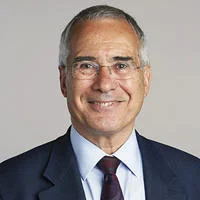
Professor Lord Nicholas Stern, IG Patel Professor of Economics and Government and Chair of the Grantham Research Institute
Professor Stern is the IG Patel Professor of Economics and Government, Chairman of the Grantham Research Institute on Climate Change and the Environment and Head of the India Observatory at The London School of Economics and Political Science. President of the British Academy, July 2013 – 2017, and was elected Fellow of the Royal Society in 2014.
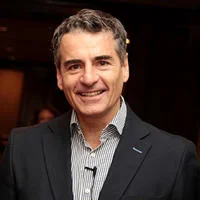
Professor Andrés Velasco, Dean of School of Public Policy, LSE
Andrés Velasco is the Dean of the School of Public Policy at The London School of Economics and Political Science. In 2017-18 he was a member of the G20 Eminent Persons Group. During 2015-16 he co-chaired the Global Panel on the Future of the Multilateral Lending Institutions. Mr Velasco was a presidential candidate in Chile in 2013. He also was the Minister of Finance of Chile between March 2006 and March 2010.

Professor Margaret MacMillan,Engelsberg Chair at LSE IDEAS
Margaret MacMillan is Emeritus Professor of International History at the University of Oxford and former Warden of St Antony’s College, University of Oxford. She specializes in the history of the British Empire and the international history of the 19th and 20th centuries. Margaret was appointed LSE IDEAS Engelsberg Chair in History and International Affairs in September 2021.

Professor Danny Quah, Dean of Lee Kuan Yew School of Public Policy, National University of Singapore
Danny Quah is Li Ka Shing Professor in Economics and Dean at NUS’s LKY School of Public Policy. His research is on economic growth and development, income distribution, and globalization, with current focus on inequality and social immobility within nations, and on Great Power politics and world order across economies. Quah is a member of LSE IDEAS Advisory Board, and was founding director of the LSE Saw Swee Hock Southeast Asia Centre, from when he was Professor of Economics and International Development at LSE.
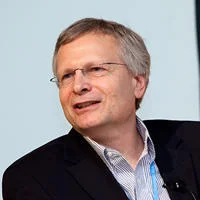
Professor Dani Rodrik, Ford Foundation Professor of International Political Economy, Harvard University
Rodrik is the Ford Foundation Professor of International Political Economy at Harvard's John F. Kennedy School of Government. He is an economist whose research revolves around globalization, economic growth and development, and political economy. His current work focuses on how to create more inclusive economies, in developed and developing societies.
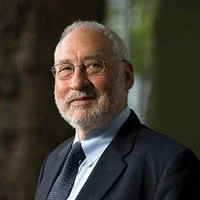
Professor Joseph Stiglitz, University Professor at Columbia University
Joseph E. Stiglitz is University Professor at Columbia University. He is the co-chair of the High-Level Expert Group on the Measurement of Economic Performance and Social Progress at the OECD, and the Chief Economist of the Roosevelt Institute. A recipient of the Nobel Memorial Prize in Economic Sciences (2001), he is a former senior vice president and chief economist of the World Bank and a former member and chairman of the US President’s Council of Economic Advisers.

Professor Jayati Ghosh, Professor of Economics, University of Massachusetts Amherst
Jayati Ghosh is Professor of Economics at the University of Massachusetts Amherst. Her research interests include globalisation, international trade and finance, employment patterns, macroeconomic policy, gender issues, poverty and inequality. She was the Chairperson of the Andhra Pradesh Commission on Farmers’ Welfare in 2004, and Member of the National Knowledge Commission reporting to the Prime Minister of India (2005-09).

Dr Keyu Jin, Associate Professor of Economics, The London School of Economics and Political Science
Dr. Keyu Jin is an Associate Professor of Economics at LSE. Her research is on international economics - such as why capital flows from poor to rich countries, how the global implications of U.S. monetary and fiscal policies have changed; as well as on how the rise of China impacts the global economy, from several perspectives - trade, capital flows, global interest rates and saving, demographics, productivity and technology.
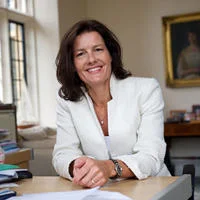
Professor Ngaire Woods,Dean of the Blavatnik School of Government, University of Oxford
Professor Ngaire Woods is the founding Dean of the Blavatnik School of Government and Professor of Global Economic Governance at Oxford University. Her research focuses on how to enhance the governance of organisations, the challenges of globalisation, global development, and the role of international institutions and global economic governance.

Professor Gabriel Zucman, Associate Professor of Economics at the University of California, Berkley
Gabriel Zucman is the Director of the James M. and Cathleen D. Stone Center on Wealth and Income Inequality at the University of California at Berkeley. He received his PhD in 2013 from the Paris School of Economics and taught at LSE before joining the Berkeley faculty in 2015. His research focuses on the accumulation, distribution, and taxation of global wealth and analyses the macro-distributional implications of globalization.
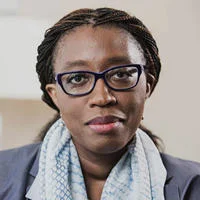
Dr Vera Songwe, United Nations Under-Secretary-General and Executive Secretary of the Economic Commission for Africa
Vera Songwe is the United Nations Under-Secretary-General and the 9th serving Executive Secretary of the Economic Commission for Africa (ECA). Songwe’s organisation reforms, focusing on "ideas for a prosperous Africa", have brought to the fore critical issues of macroeconomic stability; development finance, growth and private sector; poverty and inequality; the digital transformation and data; and trade and competitiveness.

Dr Nikhil Kalyanpu is an Assistant Professor in LSE’s International Relations Department. He researches issues at the intersection of international political economy, business-government relations, law, and global governance. More specifically, he analyses how the proliferation of global rules and legal forums can serve as a channel for economic protection and a mechanism to target political competition. His work is published in a number of leading academic journals including the European Journal of International Relations, International Organization,and Perspectives on Politics.
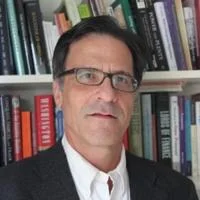
Professor Michael Pettis is a finance professor at Peking University and a Senior Fellow at the Carnegie Endowment. Prior to 2002, Pettis spent fifteen years on Wall Street running fixed-income trading and capital markets desks at JP Morgan, First Boston, and Bear Stearns, where he advised Latin American, Asian and Eastern European governments on debt and balance sheet strategies. During the last nine of these years he also taught finance at Columbia University.
He has published over 200 articles in various leading periodicals along with six books, the most recent of which, ‘Trade Wars Are Class Wars’ (Yale University Press, 2020), was awarded the Lionel Gelber Prize. His previous book, ‘Avoiding the Fall: China's Economic Restructuring, (Carnegie Endowment, 2013), was selected by the Financial Times as one of the top ten books on business and economics in 2013, while the one before that, ‘The Great Rebalancing’ (Princeton University Press, 2013), was selected in 2018 among Barron’s The 7 Best Books about the Financial Crisis.
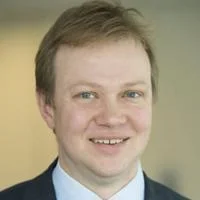
Brad W. Setseris the Whitney Shepardson Senior Fellow at the Council on Foreign Relations (CFR) and a leading commentator on international economic policy. He regularly blogs at Follow the Money, where he writes about global balance-of-payments, capital flows and sovereign debt with a focus on emerging markets. From 2021-22 Setser served as a senior advisor to the United States Trade Representative. He previously served as a deputy assistant secretary in the U.S. Treasury from 2011 to 2015, where he worked on euro crisis, foreign exchange policy, financial sanctions, commodity shocks and debt crises, and as a staff economist on the National Economic Council and the National Security Council.
Climate Finance in a Fractured World
The Commission’s eighth and final interim report briefly summarizes the findings of our evidence session, "Climate Finance in a Fractured World." The report outlines the participants’ discussion of the challenges of raising and distributing climate finance, and potential solutions to ensure that adequate and urgent action is taken to address the climate challenge.
Quest for Economic Leadership
The Commission’s seventh interim report briefly summarizes the findings of our evidence session, "Quest for Economic Leadership." The report outlines the participants’ reflections on the need for economic leadership as the world navigates the economic terrain wrought by overlapping global crises such as the COVID-19 pandemic and Russia’s invasion of Ukraine.
Global Trading System in Crisis
The Commission’s sixth interim report briefly summarizes the findings of our evidence session, "Global Trading System in Crisis." The report outlines the participants’ examination of the causes and consequences of the current crisis and exploration of potential solutions to make the global trading system more stable and inclusive.
Emerging Market Debt Crisis
The Commission’s fifth interim report briefly summarizes the findings of our evidence session, "Emerging Market Debt Crisis." The report outlines the participants’ discussion of the prospects of an impending debt crisis, its fundamental causes, and potential solutions to prevent and mitigate global debt crises.
Can the World Defeat Inflation Without an International Accord?
The Commission’s fourth interim report briefly summarizes the findings of our evidence session, "Can the World Defeat Inflation without an International Accord?" The report outlines the participants’ discussion on the timely and pressing issue of managing rising inflation since 2020, resulting from the global economic shocks of the COVID-19 pandemic and Russia’s invasion of Ukraine.
A New Bretton Woods: The International System in Historical Perspective
The Commission’s third monthly interim report summarizes the findings of our third evidence session, "A New Bretton Woods". The report outlines the Commissioners’ effort to provide a historical overview of previous efforts to reform global eocnomic covernance and to estbalish whether they provide any insights for today's policy makers.
Weaponizing the Global Economy: The Risks and Rewards of Sanctions and their Role in Economic Statecraft
The Commission’s second interim report summarizes the findings of our second evidence session, "Weaponizing the Global Economy: The Risks and Rewards of Sanctions and their Role in Economic Statecraft". The report outlines the Commissioners’ discussion on how increased economic independencies have changed the nature of economic statecraft and global economic governance.
The World in Polycrisis: a New Agenda for Global Economic Governance
The Commission’s first monthly interim report briefly summarizes the findings of our first evidence session, "The World in Polycrisis". The report outlines the Commissioners’ effort to identify the main challenges faced by the current global economic order and to take stock of the state of multilateral politics and how it must change to successfully meet these challenges.
How an SDR Denominated Bond Could Work
This is a joint publication by Brad Setser, Whitney Shepardson senior fellow at the Council on Foreign Relations and a Commissioner of the LSE Global Economic Governance Commission, and Stephen Paduano, the research director of the LSE Global Economic Governance Commission and a PhD candidate at the London School of Economics. The two proposed that the World Bank should issue an SDR denominated bond to mobilize funds to expand the World Bank's balance sheet. According to the reporting of Shabtai Gold of Devex, the idea is now under active consideration. Gold reports: "The idea is complicated, but "nothing is impossible," a World Bank source told Devex regarding the proposal. It could get done if the big shareholders want it to".
The European Central Bank and Special Drawing Rights (Paduano and Maret)
This Commission Working Paper reviews the ECB's informal position to SDR rechanneling. In October 2022, ECB President Christine Lagarde expressed opposition to SDR rechanneling to multilateral development banks on the grounds that it would not preserve the reserve asset characteristic of the SDRs and that it would violate the EU's prohibition on monetary financing. This Working Paper demonstrates that the current architecture for SDR rechanneling is incapable of meeting the G-20's $100 billion SDR rechanneling commitment without engaging the MDBs, that the hybrid capital proposal and SDR bond proposal would adequately preserve the reserve asset characteristic of the SDR, and that an SDR bond in particular would comport with the ECB's previous support for asset purchases that occur in the secondary market. Therefore, the Working Paper argues that the ECB should formally judge the hybrid capital proposal and SDR bond on their merits and exempt them from the prohibition on monetary financing, just as the ECB has exempted IMF facilities, including the RST and PRGT.
The magic of an SDR-denominated bond
This is a joint publication by Brad Setser, Whitney Shepardson senior fellow at the Council on Foreign Relations and a Commissioner of the LSE Global Economic Governance Commission, and Stephen Paduano, the research director of the LSE Global Economic Governance Commission and a PhD candidate at the London School of Economics. It proposes a novel way for multilateral development banks, namely the World Bank, to make use of high-income countries' surplus SDRs through the issuance of an "SDR bond."
SDRs and The Global Financial Architecture: History, Economics, Mechanics—and a Return to the Original System
This Commission Working Paper provides a historical over of the SDR system, an exploration of the mechanics, and a reform proposal. It proposes that the SDR system return to its original design: general allocations should be considered in good faith during all five-year basic periods, and the IMF should clarify and operationalize the "Unexpected Major Developments" provision of the Articles of Agreement such that special allocations are made automatically upon the breach of certain macro-critical thresholds: force-majeure shocks, global technical recessions, and a reversal of global capital flows.
Recordings from past events:
Thursday 23 March
Our panel discussed whether multilateral institutions are up to the challenge of financing the fight against climate change.
Monday 13 February
Our panel discussed international monetary cooperation in the context of the current state of the glonal economy.
Wednesday 16 November
Our panel discussed if a new reform agenda is needed if trade should continue to provide inclusive and stable development.
Tuesday 6 September
Commission experts discuss Professor Perry Mehrling's latest book 'Money and Empire: Charles P. Kindleberger and the Dollar System' with the author himself.
Thursday 28 July
Jayati Ghosh, Joseph Stiglitz and Jerome Roos discuss how crises originate and which global economic reforms are needed to prevent them in the future.
Tuesday 31 May
Rana Mitter, Margaret MacMillan, Ngaire Woods and Andres Velasco discuss integrating a rising power (i.e. China) into an existing and ill-fitting international system, how to account for and reverse the shortcomings of international organisations throughout the Global South, how to manage a global economy at war, how to establish a peaceful and durable post-war settlement, and more.
Click here to access the recordings of this webinar.
Tuesday 3 May
What are sanctions achieving? Are they working? What do they mean for the future of the global economy? Join the discussion between Nikhil Kalyanpur, Abraham L. Newman, LSE Director Baroness Minouche Shafik, and Rachel Ziemba.
Thursday 7 April 2022
In each crisis the world faces – whether the war in Ukraine or COVID-19, the rise of sanctions or surging energy prices – we find ourselves asking what this means for the US, for China, and for the future of global leadership. Catch up on this conversation between Dr Fred Bergsten and Professor Keyu Jin, moderated by Lutfey Siddiqi.
Thursday 31 March 2022
LSE Director Baroness Minouche Shafik is joined by LSE IDEAS Director Chris Alden, Grantham Research Institute Chair Lord Nick Stern, and Professor Keyu Jin to discuss some of the global economy’s most pressing problems and map out a new agenda for global economic governance.
2023 Team

Dr Rohan Mukherjeeis Executive Director of the commission. His research focuses on rising powers and how they navigate the power and status hierarchies of international order. His book, Ascending Order: Rising Powers and the Politics of Status in International Institutions was published in the Cambridge Studies in International Relations series with Cambridge University Press in autumn 2022. It shows that whether rising powers cooperate with, challenge, or try to reform an international order depends on the extent to which its core institutions facilitate symbolic equality with the great-power club. His regional focus is on the Asia-Pacific, particularly how major powers such as India, China, the United States, and Japan, and smaller states in South and Southeast Asia, manage the regional effects of global transitions.

Stephen Paduanois Research Director of the commissions. He is a PhD candidate at the London School of Economics. He studies Chinese investment and development policy in sub-Saharan Africa. His research is at the intersection of macroeconomics, development, and international political economy. Stephen’s PhD is funded by the Michael Leifer Scholarship, and his fieldwork is supported by the Sir Patrick Gillam Scholarship Fund. He has taught "China & The Global South" and "International Political Economy" at the London School of Economics, and he teaches "Critical Theories of International Relations" and "Global Development" at Sciences Po (Paris).
2022 Team
Stephen Paduano is Executive Director of the LSE Global Economic Governance Commission.
Adam Shaw is Deputy Director of the LSE Global Economic Governance Commission.
Dominik Leusderis Research Director of the LSE Global Economic Governance Commission.
Julia Ryng is Project Manager of the LSE Global Economic Governance Commission.