Latest news about the Department and its members, such as new appointments, publications, book launches, awards, speaking engagements, media coverage and standings in world and national ranks. We are also on social media. Follow us on Facebook, Twitter, Instagram and LinkedIn.
Curious about what we have been up to in the past? See our News Archive here
Latest News
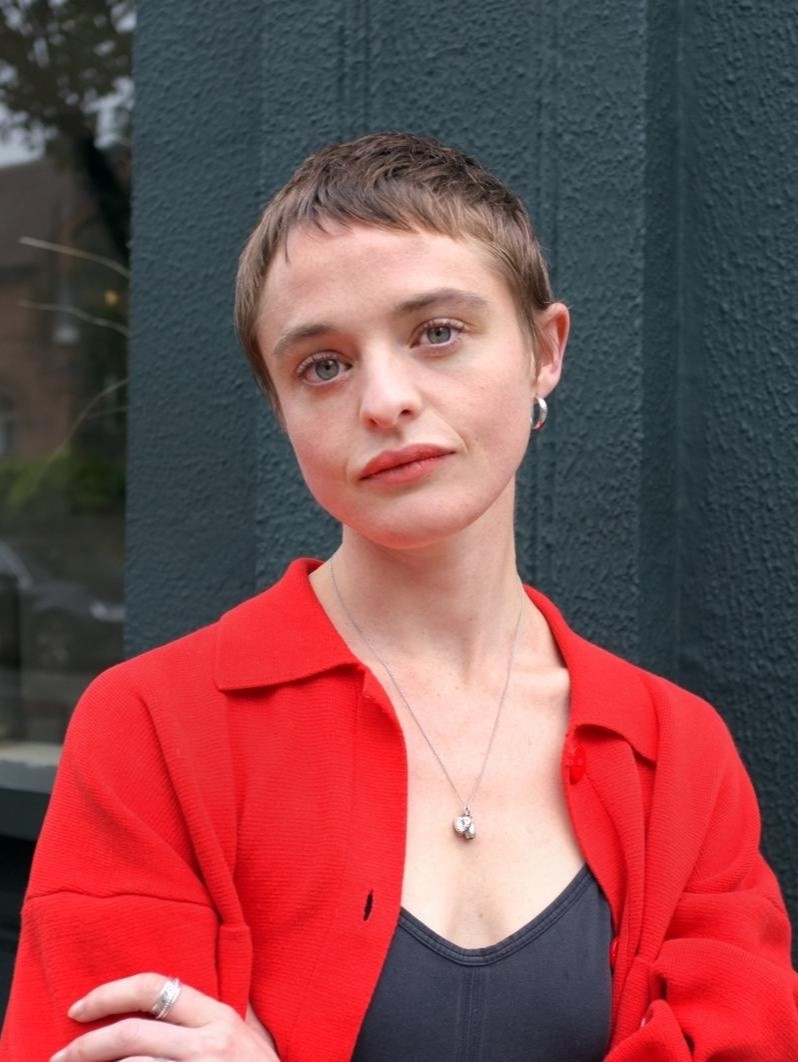
Welcome Dr Caitlín Doherty, the inaugural David McClure Visiting Fellow!
We extend a warm welcome to Dr Caitlín Doherty who will be joining us for the 2026-27 academic year as the inaugural David McClure Visiting Fellow. The fellowship, generously supported by the David McClure Trust Fund, assists writers and scholars who are committed to producing a significant, original non-fiction book or work for a mass readership. The fellowship will enable the creation of work intended for a general audience, that is rigorously researched, non-partisan, and of contemporary relevance.
Caitlín is a reporter and critic. She studied English Literature and the History and Philosophy of Science at the University of Cambridge and has a PhD in the history of aviation. After graduating, she worked as an editor at Verso Books, then New Left Review. She writes regularly for NLR and the New Statesman, and has been published by Harper’s, The Baffler, Film Comment, New Internationalist, and Jacobin.
Caitlín's work combines local narrative with global history, and focuses on European politics, economics, technology and culture. During the fellowship she will complete a study of the Swiss town of Davos, to be published by Faber & Faber and One Signal. She is thrilled to join the academic community of LSE and to have the opportunity to work with the renowned International History department.
Dr Roham Alvandi writes new essay for Engelsberg Ideas entitled 'The stakes of a Pahlavi restoration'
Dr Alvandi argues that Iran’s last Shah presided over rapid economic growth, social transformation, and expanding opportunity, particularly for women. Yet the unresolved political legacy of Pahlavi rule continues to haunt Iran’s opposition.
Read his essay HERE
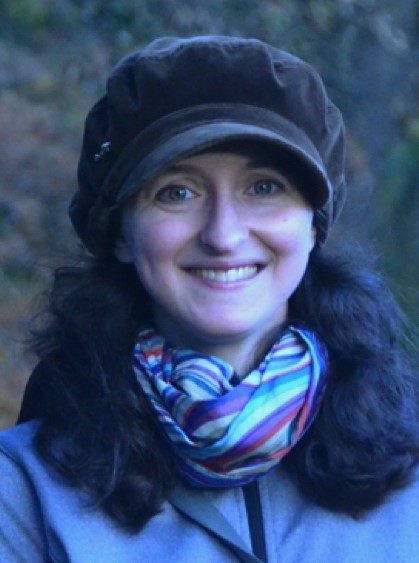
Dr Dina Gusejnova organises roundtable discussion: 'Education in the Age of Global Insecurity: Dilemmas of foreign policy in the face of war and authoritarianism'
Dr Gusejnova hosted a critical discussion at LSE as part of the Grimshaw Society Annual Symposium for the visit of Eleni Vossou from the European External Action Service.
This expert panel spoke on how conflict, authoritarian repression, and digital technologies threaten education and knowledge communities worldwide. They examined the intersections of international relations and education, focusing on policy implications from the Russian war against Ukraine, authoritarianism in Russia, Syria, and beyond.
Our distinguished speakers — including experts from LSE, Cambridge, the Finnish Institute of International Affairs, and the European External Action Service — explored how grassroots initiatives protect democratic values, debate sanctions on educational institutions, and consider obligations of international bodies toward epistemic communities at risk.
Dr Roham Alvandi makes appearance on CNN
Dr Alvandi spoke to CNN’s Eleni Giokos today about uprising in Iran against the Islamic Republic. He provided some historical perspective on the Iranian Revolution and President Jimmy Carter’s approach to Iran in 1979, in contrast with President Trump’s policy of sable rattling today.
Watch the interview HERE
Professor Kristina Spohr quoted in recent Sydney Morning Herald article on the Europe, Trump, and the Greenland brawl
She stated: "Europeans have to hold on to the principles of sovereignty, territory, integrity and self- determination – for the Greenlanders, the Danes and themselves altogether. Because only that ensures an international order where small and middle-sized powers are respected. And, for Arctic security at large, from Alaska and Greenland to northern Norway and Finland, it is imperative that allies cooperate and collectively build up their deterrence and defence capabilities vis-à-vis their imperialist and belligerent Russian neighbour and an increasingly assertive China." Spohr concluded that the erratic US president Trump "only understands clear red lines and therefore Europeans, as part of the EU and NATO, cannot allow themselves to be bullied."
Dr David Motadel and Dr Roham Alvandi are co-editors of new book 'The Making of Iranian Modernity'
The new volume celebrates Professor Houchang E. Chehabi, one of the leading scholars in the field of Iranian Studies. Since the 1980s, Chehabi’s interdisciplinary body of work has made major contributions both to the study of modern Iran’s social and cultural history, as well as to the understanding of Iran’s broader political evolution and place in the world.
View full details on the book HERE
Dr Jeff Hawn pens new article 'The Decline of Russia's Railroads' in online magazine Riddle
Dr Hawn's analysis of the declining condition of the state owned Russian railroads, points to broader systemic issues within the economy. In this analysis Jeff identifies that the Russian railroads which are a vital part of the broader Russian economy are in severe finicial trouble and beginning to see very tangible impacts on operations. With as much as 20% of rolling stock idle even as profits collapse by up to 90%. The railroads are still moving thanks to forced loans from Russian banks, but as Russia's currency reserves run dry and no clear solution appears. It seems likely Russia's railroads and its broader economy are facing a renewed crisis.
Read the article HERE
Professor Kristina Spohr spoke live on Firstpost to discuss Trump's Davos speech
She condemned his aggressive rhetoric, his bully-boy tactics, and totally destructive political actions that are rupturing the international legal world order and threatening to tear the transatlantic alliance apart.
She highlighted the importance of summitry and face-to-face encounters such as at Davos, especially to achieve some cooling of the inter-allied tensions over his complete obsession, his necessity to “get Greenland” at all cost for the US security.
She ended by adding that, if anything, Trump - the “great disruptor “ - is playing into Russian and Chinese hands – as the Putin’s war continues in Ukraine and China is vying for Taiwan.
Watch her speak HERE
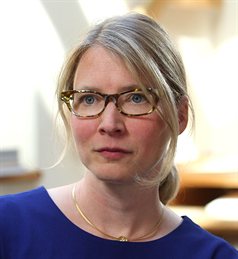
Professor Kristina Spohr discusses how Trump's ego is pushing NATO to the brink in her latest El Pais column
In "Power, Profit, & Personal Psychology” she examines how Trump’s ego and his obsession to demonstrate power & to “own” is pushing NATO (and the EU) to the brink.
She asserts that If Europeans believe in an international legal and institutional order they will have to put their Euros (or pounds) where their mouth is and hit back at Trump economically. They will have to call his bluff, otherwise NATO/EU will look hollow and Greenlanders will be the victims of a miserable sell-out, as their Arctic homeland, Kalaallit Nunaat, is turned into a US mineral extraction pit.
Preserving this unique Arctic nation and country, preserving our hard-won laws, norms, and principles in Europe, at all cost – that must be the political duty of Europe’s leaders. They must remind Americans that the USA's postwar strength and vast appeal lay in being an empire by invitation not an empire by imposition.
Read her column HERE
Professor Kristina Spohr appears in TV interview to discuss the current political situation in the Arctic
Professor Spohr gave an extensive TV interview on India's Firstpost global news outlet ahead of last week's meeting between Greenland’s and Denmark’s Foreign Ministers with US Vice President and Secretary of State in Washington.
She stressed the utmost importance of face-to-face talks at the highest levels at a time when temperatures and tensions rise as viewpoints are expressed 24/7 by megaphone diplomacy via social media. Equally she underlined the significance for NATO allies to reassess jointly the present security situation in the Arctic.
Watch her interview HERE
Professor Kristina Spohr weighs in on the Trump Greenland annexation discussion with two new articles
Professor Spohr has been busy commenting extensively on the world’s latest geopolitical hotspot Greenland in German media interviews.
She states: "With Trump’s bold Greenland-annexation talk, we are witnessing a brutal show of force and an act of intimidation against the Inuit and Europeans. This is plainly about his ego, resources, and profits; and a demonstration of American superpower. To channel the turmoil and avoid escalation, it is imperative", Spohr argues, "for Europeans to use NATO for intensive and proactive diplomacy – for the Greenlanders’ (and Arctic) security and defense firmly belongs within the Alliance."
Read her articles here:
- Free article available HERE
- Paid article available HERE
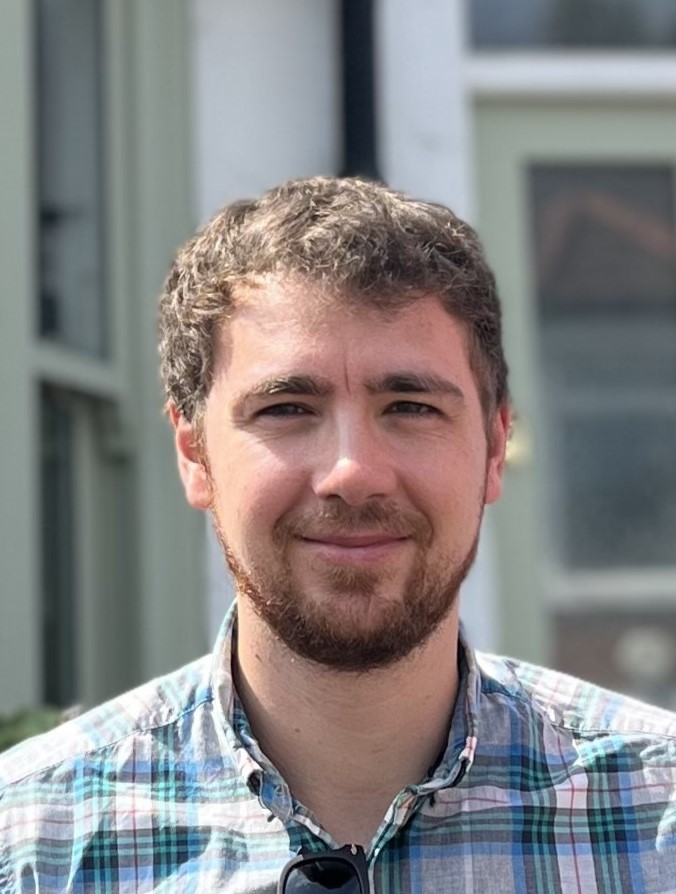
Dr Leo Shipp’s recent book received an excellent review in the journal Cultural and Social History
Dr Shipp's book 'The Poets Laureate of the Long Eighteenth Century, 1668–1813' received a glowing review in Cultural and Social History.
His book discusses how the office of the poet laureate of Britain was a prominent, relevant and respectable institution throughout the eighteenth century. First instituted for John Dryden in 1668, the laureateship developed from an honorific into a functionary office with a settled position in court (c.1689–1715), and was bestowed upon Robert Southey in 1813, whose tenure eventually transformed the office. Taking an interdisciplinary approach, this book examines the office’s institutional changes and public reception, the mechanics of each laureate’s appointment, and the works produced by the laureates before and after their appointments. It argues that the laureateship played a key part in some of the most vital trends in eighteenth-century culture.
Read the review HERE
Dr Charlotte Eaton has published a new article in the Journal of Latin American Studies
Dr Eaton (one of our Fellows) has published a new article entitled, ‘El peligro rojo’: Republican refugees and the construction of the ‘undesirable immigrant’ in Colombia, 1936–42.
The article examines the national and international context within which Colombian immigration policy developed in the mid-twentieth century, as well as the multiple actors who contributed towards its formulation. Focussing on Republican refugees from the Spanish Civil War, it traces how and why policymakers and public opinion in Colombia began to see these groups as potentially harmful to society. It also explores the various actions that these émigrés took to circumvent the various restrictions placed against them.
Read the article HERE
Dr Ron Po publishes new article
Dr Ron Po kicks off the new year with a new article in the International Journal of Maritime History: “Saving souls from the depths: The Society for Rescuing the Drowning (Zhengnitang) in Late Imperial China.”
It is open access and available HERE
The piece examines how organised life-saving along rivers in the nineteenth-century Qing Empire grew out of moral practice, local philanthropy, and everyday encounters with maritime danger, and considers how such Chinese initiatives can be situated within broader global approaches to maritime rescue at the time.