

Overview
Introduction
Challenge how you think about people, organisations and global business.
Designed for experienced professionals, the Executive Global Master's in Management (EGMiM) combines academic rigour, international perspectives and peer learning to explore leadership and management in a complex global environment.
Through a flexible modular format, you'll study alongside experienced professionals from around the world while exploring contemporary issues shaping organisations, markets and societies.
LSE ranked fifth in the world for Social Sciences and Management (QS World University Rankings by Subject 2026).
Flexible format for working professionals
- Modular format requiring approximately nine weeks away from work over the duration of the programme.
- Intensive teaching blocks designed around professional commitments.
- Complete the programme while continuing to live and work anywhere in the world.
Academic rigour with real-world relevance
- Explore contemporary leadership, management and organisational decision-making through evidence-based study.
- Learn through academic teaching, company visits and industry speakers.
Global exposure
- Study in London and participate in two international modules.
- Explore different business environments, cultures and markets
Applying learning in practice
- Examine contemporary management challenges through discussion, case studies and applied assignments.
- Draw on your own professional experience throughout the programme.
Executive network and community
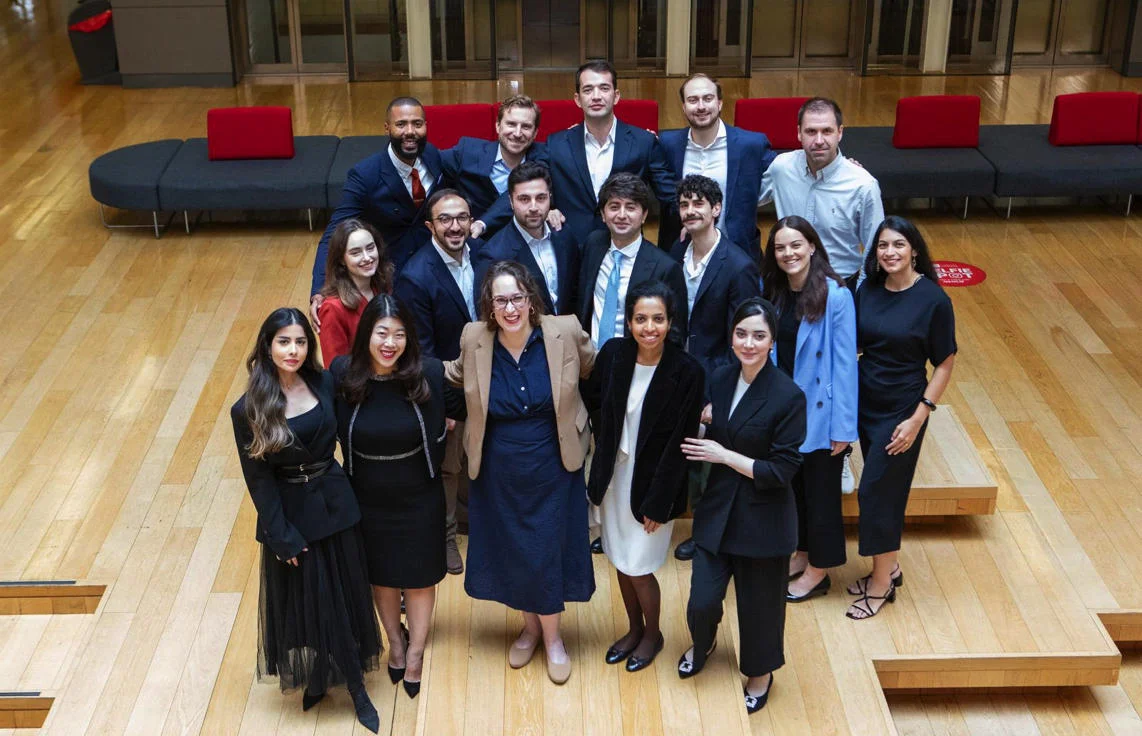
- Join an international cohort of experienced professionals.
- Connect with peers, faculty and alumni through networking events in London and during international modules.
- Lifelong access to LSE’s wider Executive Master's alumni community.
Career support and professional development
- Access professional development and career support through Professionals at LSE.
- Engage with alumni and executive professionals across a wide range of sectors and industries.
Preliminary readings
Specific course readings are shared once you have an offer, but if you're interested in general background reading for the programme, you may wish to read:
- D Kahneman Thinking, Fast and Slow (Farrar, Straus and Giroux, 2011)
- D Acemoglu and J Robinson Why Nations Fail: The Origins of Power, Prosperity, and Poverty (Crown Business, 2012)
- M Wallace and A Wray Critical Reading and Writing for Postgraduates (Sage, 2006)
- T Buzan The Mind Map Book (Penguin, 1993)
Entry requirements
- An upper second-class honours (2:1) bachelor’s degree, or international equivalent. Select your country from the dropdown list below to find out the entry requirements that apply to you.
- A minimum of five years' full-time, relevant work experience. The majority of students on the programme will have more than five years' experience.
- GRE or GMAT isn't required. If your previous academic experience doesn't give us enough information about your level of knowledge/attainment in quantitative subjects, we may suggest you submit these to boost your application.
Overseas
English language requirements
The English language requirement for this programme is Standard. Read more about our English language requirements.
Competition for places at LSE is strong. So, even if you meet the minimum entry requirements, this doesn't guarantee you an offer of a place.
If you're unsure whether you meet our entry requirements, please book a consultation and we'll be happy to discuss your suitability for the programme in more detail.
Programme content
Each module is designed to connect academic study with contemporary organisational challenges, creating opportunities to apply programme learning in your own professional context.
Practical learning from diverse business cultures
- Five modules in London, offering exposure to one of the world’s leading business hubs.
- Two modules in international locations, where you’ll immerse yourself in diverse business cultures. Our international locations for the 2025/27 cohort are Brazil and Vietnam.
Between modules, you can continue working full-time with access to our comprehensive online learning platform that supports your studies.
- 2027 intake programme calendar with course dates (coming soon)
Please note: module dates and international locations are subject to change.
Core courses
You'll undertake a series of core courses covering the essential pillars of management and leadership in today’s global business environment. Company visits and industry speakers help to translate academic learning to real-world application.
You'll complete the programme with a dissertation or capstone project, an opportunity to integrate your learning, focus on a topic linked to your interests, professional experience or organisational context. You may choose to:
- address a strategic challenge in your organisation
- explore a new area of interest
- or develop a business plan for your own venture.
The project brings together learning from across the programme through independent research and applied analysis.
Year 1
Foundations of Management, Strategy and Financial Control
This integrated course explores the evolution of key management disciplines and their relationship to questions of financial control. Drawing from economics, psychology, and sociology, it offers a framework for understanding modern business in its historical and organisational context. Through lectures and case studies you'll apply key concepts whilst engaging with contemporary themes such as sustainability and social impact.
Managerial Economics
This course explores how firms compete, how consumers make decisions and how markets operate. Drawing on managerial economics and game theory, you'll examine competition, strategy and organisational decision-making through case-based discussion and applied analysis.
Organisational Behaviour and Leadership
This course explores how individuals, teams and organisations function. Through interactive sessions, group discussions, presentations and coursework, you'll examine psychological theories and approaches used to understand management, leadership and organisational behaviour.
You'll reflect on your personal leadership style and its implications for working with others, while exploring leadership, team dynamics and organisational culture.
A personality assessment, a leadership evaluation and an optional one-to-one coaching session support reflection on your leadership approach and organisational practice.
By the end of the course, you'll be able to critically evaluate key theories of organisational behaviour and leadership and consider their application in organisational contexts.
Financial Management
This course examines financial decision-making in corporations and the role of finance in organisational strategy. The course combines analytical rigour with the examination of contemporary issues facing modern corporations.
You'll explore concepts including business strategy, valuation, capital structure and corporate finance, while examining how these approaches are applied to financial management challenges in organisational contexts.
The course also covers topics such as initial public offerings, mergers and acquisitions, private equity, leveraged buyouts and corporate cash holdings.
Marketing Strategy
Marketing is ultimately about understanding and shaping consumer behaviour. This course explores the analytical frameworks, technical tools and concepts that shape contemporary marketing strategy.
You’ll examine key theories in marketing management alongside emerging approaches, including the use of machine learning to analyse consumer preferences, decision-making journeys and purchasing behaviour.
Drawing on case discussion and applied analysis, the course explores how organisations use data and consumer insights to inform strategic marketing decisions.
Year 2
Strategy, Innovation and Entrepreneurship
This course focuses on how organisations respond to competitive pressures, pursue innovation and develop strategic direction in both established organisations and early-stage ventures.
You'll examine the long-term drivers of profitability, including dynamic capabilities and innovation.
The course also explores entrepreneurial approaches and mindsets associated with venture creation including creation logics, processes, and decision-making. Alongside for-profit firms, students examine social enterprises operating at the intersection of social impact and financial sustainability.
International Business Strategy in the World Economy
This course examines how multinational firms operate, compete and expand across global markets. You'll explore the evolution of international business, the growth of firms from emerging economies and the role of institutions in shaping organisational strategy.
Teaching combines lectures, case analysis, company visits and guest speakers.
Half of the course takes place during one of two international modules in an emerging market, exploring developments in technology, entrepreneurship and social entrepreneurship.
Digital Strategy and Innovation
We're living through a period of profound technological and organisational change. This course explores how advances in AI and computation are reshaping value creation, strategic decision-making and competitive environments.
You'll examine AI not simply as a tool, but as a changing context for organisations, markets and strategy. Through contemporary examples and analytical frameworks, the course considers how emerging technologies influence the way organisations create value, innovate and compete.
Dissertation/Capstone Project
This student-led independent study project allows you to choose between an academic dissertation or a capstone project. Both options require a 6,000-word report that demonstrates familiarity with relevant literature and analyses original data you've collected.
The dissertation focuses on an academic research question whereas the capstone project presents a new business idea.
This project provides the opportunity for you to demonstrate skills in critical thinking and writing, conduct original research, analysing evidence, and drawing conclusions from that research. You may choose a topic that reflects their academic interests, professional experience or organisational context.
Examples of previous topics include:
- barriers to developing local talent in top leadership jobs
- private equity industry in Azerbaijan
- women and leadership in the UAE
- AI bias and managerial decision making
- public sector employee motivation.
International modules
Global learning experience
In today's globalised business environment, organisations operate across diverse markets, cultures and institutional contexts. This programme examines management and leadership through an international lens, combining academic study with learning across three locations: London and two international destinations.
Students explore contemporary international business issues while considering how management practices differ across regions and organisational contexts.
London, UK
Five modules take place at LSE's campus in central London, where you'll engage with the School's long-standing tradition of academic debate and a vibrant international community. A wide range of events and activities take place throughout the year, including LSE's public lecture programme, alongside opportunities to experience London as a global centre of culture, business and government.
You'll have full access to LSE’s facilities including the famous LSE Library, and opportunities to broaden your professional and personal network with fellow LSE Executive Master’s students.
International modules
Two modules take place in international locations. Previous destinations have included Bangalore and Mumbai (India), Beijing (China), Istanbul (Turkey), Singapore and Cape Town (South Africa). The 2025/27 cohort will be visiting Brazil and Vietnam.
Selected to complement the programme's core curriculum, the modules provide exposure to different business environments, institutional settings and approaches to management across global markets.
First destination trip
The first international module, currently based in Brazil for the 2025/27 cohort, builds on learning from the first year of the programme. Students explore the country's business environment through visits to local and international organisations, while examining themes from across the core curriculum.
The module integrates perspectives from managerial economics, organisational behaviour and leadership, the foundations of management, financial management and marketing strategy.
Second destination trip
The second international module, currently based in Vietnam for the 2025/27 cohort, builds on the International Business Strategy in the World Economy course.
It explores how multinational firms expand into emerging markets and examines the opportunities and challenges they encounter in different institutional, economic and competitive environments.
You'll consider how organisations select overseas markets, choose entry strategies such as acquisitions, joint ventures, greenfield investments and exports, and respond to factors including regulation, infrastructure, competition and cultural differences. The module also examines the growth of multinational firms originating in emerging economies.
During each international module, you'll:
- combine classroom learning with company visits
- immerse yourself in the local business culture, with visits to local and multinational companies
- hear from industry practitioners and guest speakers across a range of sectors
- engage with academics and specialists from local universities to gain insight into the local landscape
- enjoy opportunities to connect with LSE’s local alumni communities, broadening your connections and networks.
Develop your understanding of leadership and management in international contexts. Find out more about Josefina’s experience in Mumbai.
Please note: International module locations are subject to change. Destinations are reviewed periodically in response to academic priorities, student feedback and external developments.
For the latest list of courses, please go to the relevant School Calendar page.
A few important points you’ll need to know:
We may need to change, suspend or withdraw a course or programme of study, or change the fees due to unforeseen circumstances. We’ll always notify you as early as possible and recommend alternatives where we can.
The School isn't liable for changes to published information or for changing, suspending or withdrawing a course or programme of study, due to developments in teaching practice, regulatory requirements that require us to comply, lack of demand, financial unviability of a course, or due to circumstances beyond our control, such as the loss of a key member of staff or where a location or building becomes unavailable for use.
Places are limited on some courses and/or subject to specific entry requirements so we cannot therefore guarantee you a place.
Changes to programmes and courses may be made after you’ve accepted your offer of a place – normally due to developments in the discipline or as a consequence of student feedback. We may also make changes to course content, teaching formats or assessment methods but these are made to improve the learning experience.
For full details about the availability or content of courses and programmes, please take a look at the School’s Calendar, or contact the relevant academic department.
Some major changes to programmes/courses are posted on our updated graduate course and programme information page.
For further information on how we comply with UK consumer protection law, see your consumer rights as a student.
Why study with us
Attend our Executive Impact Series
This series of extracurricular workshops takes place during your modules. They're designed to provide practical skills that complement your academic learning and help you to thrive in the ever-changing business world. Previous topics have included the business of storytelling and how to increase your presence and influence, these sessions are intended to develop your leadership skillset and elevate your executive impact.
Become part of our extensive global alumni community
Discover the inspiring journeys of our EGMiM alumni. From innovative leaders to impactful change-makers, our graduates are making waves across industries worldwide. See how the EGMiM programme has empowered them to achieve their professional and personal goals.
Gain access to the LSE Executive Master's Network
Join a global community of experienced professionals from across sectors - including management, healthcare, law, and public policy - through the LSE Executive Master's Network.
With hundreds of students and alumni from LSE’s portfolio of executive programmes, this network offers exclusive access to interdisciplinary connections that extend far beyond the classroom.
You'll engage with peers through in-person events and shared learning experiences, building relationships that support your career long after graduation. Find out more about these events in Carolina’s blog.
Explore the full range of programmes within the network on LSE’s Executive Master’s Degrees page.
Meet the department
Our mission
Welcome to the Department of Management. Our mission is to inspire superior management practices by fostering a comprehensive understanding of individuals, teams, organisations, and markets, along with the psychological, social, political, and technological contexts that influence them.
By studying with us, you'll gain access to a world-leading centre for education and research, uniquely positioned within a world-class social science institution at the heart of a truly global city.
The environment
Join a vibrant intellectual community comprising of world-renowned faculty, astute students, dedicated and responsive professional services staff, and high achieving alumni. Through pioneering research and high-level teaching, you'll receive comprehensive, intensive, and rigorous methodological training to help you become an expert in your specialist fields.
The rich and culturally diverse learning environment at LSE’s Department of Management, won't only enrich your experience through developing a broad perspective and understanding, but also unlock an invaluable network of global peers.
Create a better world
We go beyond the boundaries of a traditional business school by integrating diverse disciplines such as economics, marketing, data, and analytics. Our comprehensive approach ensures that students gain a profound and multifaceted understanding of the business world, equipping them with the skills and knowledge to excel in a dynamic global environment.
Join us in our vision to create a better world, where a profound understanding of management drives positive change in both business and society.
Discover more about our programmes and research.

Who's who
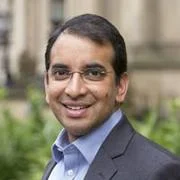
Dr Christine Côté










Why LSE
Russell Group University of the Year and 2nd in the UK
Times and The Sunday Times - Good University Guide 20271st in London for the 15th year running
The Complete University Guide - University League Tables 20275th in the world for the study of social sciences and management
QS World University Rankings by Subject 20266th in the world for leading the way in social and environmental sustainability
QS World University Rankings: Sustainability 2026Your application
Overview
In addition to meeting our minimum entry requirements you'll also need to submit the following with your application:
References
Two references are required: one academic and one professional, or two professional references.
Personal statement
Detail your interest and suitability for the programme, key career achievements, future career goals, what you hope to gain from the programme, and what you will contribute to the classroom.
CV
A current CV outlining your professional experience.
Employer support
Ensure your current employer supports your attendance at all classroom teaching modules.
See further information on supporting documents
Please note that programme transfers within LSE are not permitted for Executive Global Master's in Management candidates. If you've been offered a place on another graduate programme at LSE you won't be able to transfer to EGMiM, and similarly you won't be able to transfer from EGMiM to any other programme once you've been offered a place. Therefore please consider your choice carefully before submitting your application.
Programme and admissions enquiries
If you have further questions or would like to find out more, we encourage you to contact our programme admissions team. The team will discuss the programme, and its suitability for your background and your career goals. You can also visit our dedicated FAQ section for more information.
Head of Executive Programme Delivery
dom.egmim.admissions@lse.ac.uk
+44 (0) 7837002809
Sign up for a personal consultation to discuss your professional experience, programme eligibility and ask questions about the application process.
Who attends
Experienced working professionals seeking to develop their leadership, strategic thinking and global business understanding. Ideal candidates demonstrate:
- a desire to advance their career
- strong communication, problem-solving, and teamwork skills
- international experience
- people or project management experience
- ability to work and study in cross-cultural environments
- willingness to contribute to the classroom learning environment.
Browse our class directory to view the diverse profiles of our current EGMiM students
Find out what sets this programme apart
Read more about the LSE student experience on our student blog, The Student Lens
When to apply
Applications are considered on a rolling basis and can be submitted at any time. As places are limited and allocated throughout the admissions cycle, we encourage you to apply as early as possible.
Please see the "Fees and funding" section for details on any funding deadlines.
The programme will close once it becomes full.
Fees and funding
The table of fees shows the latest tuition fees for all programmes.
You're charged a fee for your programme. Your tuition fee covers registration and examination fees payable to the School, lectures, classes and individual supervision, lectures given at other colleges under intercollegiate arrangements and, under current arrangements, membership of the Students' Union. It doesn't cover fieldwork, travel or living costs in London.
Home
Home student fee
The fee above is for students starting in 2027/28. This is the total tuition fee for the whole programme.
The fees for this programme cover:
- tuition, course materials, some meals and events in London, and the international modules*
- accommodation is covered for the two international modules.
*Travel to all modules, and accommodation in London, isn't included in the fees.
If you're self-funded, an instalment plan is available to pay fees in five instalments across the course of the programme.
Read further information regarding the payment plan. Please contact the LSE Fees Office with any questions.
A pre-registration fee of £2,500 is required to secure your place on the programme and gain early access to online programme materials. This amount will be deducted from the overall tuition fee.
We currently ask offer holders to pay the pre-registration fee by 15 June or within 14 days of receiving their offer thereafter.
Please note that the pre-registration fee is non-refundable if you don't take up your place on the programme.
Overseas
Overseas student fee
The fee above is for students starting in 2027/28. This is the total tuition fee for the whole programme.
The fees for this programme cover:
- tuition, course materials, some meals and events in London, and the international modules*
- accommodation is covered for the two international modules.
*Travel to all modules, and accommodation in London, isn't included in the fees.
If you're self-funded, an instalment plan is available to pay fees in five instalments across the course of the programme.
Read further information regarding the payment plan. Please contact the LSE Fees Office with any questions.
A pre-registration fee of £2,500 is required to secure your place on the programme and gain early access to online programme materials. This amount will be deducted from the overall tuition fee.
We currently ask offer holders to pay the pre-registration fee by 15 June or within 14 days of receiving their offer thereafter.
Please note that the pre-registration fee is non-refundable if you don't take up your place on the programme.
For this programme, all students pay the same tuition fees, regardless of their fee status.
Scholarships
We have several scholarship schemes available in the department. Find out more about these opportunities, including application deadlines and eligibility criteria.
Please note that this programme isn't eligible for other financial support from LSE, as the programme is designed for students to continue working and earning a salary while they study.
Fee reduction
Students who have completed and passed an undergraduate or graduate degree at LSE and are beginning an Executive MSc at the School are eligible for a 10 per cent tuition fee reduction.
Students who have completed and passed two or more Summer School courses are eligible for a five per cent reduction.
If you meet the eligibility criteria for both discounts, the higher 10 per cent discount rate will apply.
Find out more about the LSE alumni discount.
Employer sponsorship
Our programme offers significant benefits and return on investment for your company or organisation. Many graduates emerge as well-rounded professionals, possessing a distinctive skill set that empowers them to foster growth, drive success, and spearhead innovation in their workplace.
We recommend discussing this opportunity with your employer and making a case for financial sponsorship if appropriate. Their investment in your education may yield valuable returns in the form of enhanced capabilities and leadership. We also offer corporate discounts to organisations sponsoring more than one employee on the programme. Please get in touch with our team to discuss this further.
Download the EGMiM Employer Brochure for full details of how the programme can benefit your employer, and use our handy building a business case tips to help kick start discussions with your them.
External funding opportunities
A wide range of funding opportunities are available to students from across the world who plan to study on a postgraduate programme in the UK, provided by several organisations and charities. We recommend that you look on our webpages as well as external resources, and apply for any appropriate funding available to you, including scholarships, grant schemes, and fellowships.
Explore external graduate funding opportunities
Private loans and government loans
- Private loans: Private loans are available as a funding option to some students. Find out more about available lenders and eligibility on LSE’s Private Loans webpage.
- Non-UK Government loans: Your government may also offer student loan funding. For example, eligible students from the United States may be able to access loans through the US Federal Student Aid programme. Contact the Education Ministry in your home country, or your national Embassy in London, to find out more about any government loan schemes available to you.
- UK Government loans: A postgraduate loan is available from the UK government for eligible students studying for a first master’s programme, to help with fees and living costs.
- Some other governments and organisations also offer tuition fee loan schemes.
If you're considering taking out a loan to fund your studies, think about this decision carefully and choose an option with repayment terms which will be affordable and reasonable for you after you graduate.
Find out more about tuition fee loans
Hardship funding
The EGMiM programme has access to a limited Hardship Fund for use in exceptional circumstances, which is available only to currently enrolled students. Any hardship funding will be restricted to a very limited amount per academic year, with a strict application process and selection criteria based on emergency circumstances. This should therefore not be relied upon as a guaranteed source of additional funding.
Learning and assessment
How you learn
The programme is designed for full-time working professionals, allowing you to maintain your career while studying.
- 17-month programme duration
- seven short (one to two week) intensive classroom modules, requiring a maximum of nine weeks out of the office
- practical learning modules from contrasting business cultures across the world
- located in London, and two international destinations
- in between modules, you work full-time from your home location with access to an online learning technology platform which complements the in-class sessions and maximises intersession communication
- modules are directly applicable to your role, enabling you to implement new knowledge and innovations in your workplace from day one
- you can live and work anywhere in the world while participating in the programme, joining a diverse and global cohort each year
- LSE is internationally renowned for its teaching and research, with academics bringing wide-ranging expertise to enrich your learning experience.
We have one intake per year, which begins every August. The Programme Calendar for the August 2027 intake listing all module dates will be made available soon.
Module hours
Classes typically run from Monday to Saturday, with a three-hour session in both the morning and afternoon. Alongside this are various social events, guest speakers, workshops and networking opportunities during the evenings of each module.
Study hours
As a rough guide, we estimate that you'll need to do one and a half hours of studying outside of the classroom for every one contact hour during the module.
Academic mentor: you’ll be assigned an academic mentor who you can meet with regularly to discuss your work. Your mentor can provide advice and guidance on academic issues and, where appropriate, personal concerns.
Programme team: you'll have a dedicated programme team to help support you throughout the course of the programme, who serve as the first point of contact for all queries.
Online resources: throughout the course of the programme you'll have access to our online learning platform so you can stay connected in between modules. Faculty may use this to plan intersession activities such as revision sessions and discussions. You'll submit assignments through the site. The programme team will use it to communicate with the class for important announcements and reminders. By using the online technology students will remain an active part of the LSE community from wherever they are based in the world.
Other academic support: at LSE, we offer lots of opportunities to extend your learning outside the classroom.
The Learning Lab is the place to discover and develop the skills you’ll need to reach your academic goals at LSE.
Through the Learning Lab, you can:
- attend practical workshops and one-to-one sessions on essay writing, conducting research, and on managing your reading lists, workloads, and deadlines
- develop your academic writing, reading, and critical-thinking skills to meet degree-level expectations
- work in study groups to strengthen collaboration, cross-cultural communication, and teamwork skills in a supportive environment.
Disability and Mental Health Service: we want all LSE students to achieve their full potential. Students can access free, confidential advice through our Disability and Mental Health Service. This is the first point of contact for students.
How you're assessed
Courses will be assessed through a variety of methods including essays, presentations, take-home exams and group work that help students understand how to put into practice the various components of effective management. There will also be a final dissertation or capstone project based on a topic of your choosing, which can relate to your organisation or personal and professional career goals.
Formative assessment
Most taught courses include formative coursework, which is not assessed – meaning it doesn't count towards your overall final course mark. Instead, this helps prepare you for summative assessments. We use a wide range of assessment methods such as essays, case studies, reports and quizzes. Feedback on formative assessments is an essential part of the learning experience.
Summative assessment
This counts towards your final course mark and degree award. Summative assessment for courses can include essays, class participation, assignments, group projects, or a combination of these methods.
Your final degree classification will be based on your performance across all courses.
Graduate destinations
Overview
Build your global network
Executive Global Master’s in Management (EGMiM) students join the programme from a very diverse range of industries, sectors and professional backgrounds, bringing diverse perspectives to classroom discussion and peer learning. Some students use their learning to make a career transition.
You'll join LSE's global network of over 241,000 students and alumni, connecting you to career development opportunities, as well as a supportive network of like-minded peers and leaders in global business and government worldwide.
Executive careers
EGMiM alumni have pursued careers in consulting, technology, finance, investment banking, retail, music and creative industries, pharmaceuticals, energy, e-commerce, law, construction, and NGO/third sector organisations.
If you have any specific questions or need further details, please email us to ask.
Where do our graduates go on to work?
For further information on where our graduates end up, including the sectors and prestigious companies EGMiM alum currently work at, visit the LSE's Graduate Destinations webpage (explore the data by searching by Department > Management and Programme > Executive Global MSc Management).
Career support
LSE Careers
You'll have access to LSE Careers, a resource designed to enhance your employability and help you stand out. LSE Careers maintains strong connections with top-tier employers across various industries.
Professionals at LSE
Upon joining the programme, you'll gain access to our exclusive Professionals at LSE - a network and programme of career management and professional development to support our working professional community.
You'll have access to one-to-one coaching sessions, online tools, resources and job opportunities specifically designed to help those already on the professional ladder take their career to the next level. Events will also be scheduled both during your modules and virtually between modules, to not only allow time for you to consider your next career move, but also to enable networking amongst LSE's executive student community.