

Recommended reading on sustainable economics
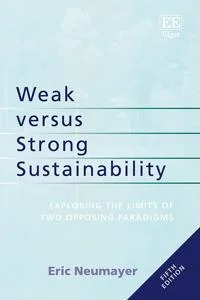
Weak versus Strong Sustainability: exploring the limits of two opposing paradigms. Eric Neumayer. Edward Elgar. 2025 (fifth edition, first published in 1999).
The originality of Eric Neumayer’s Weak versus Strong Sustainability lies in its systematic clarification and operationalisation of strong sustainability as a coherent paradigm for economic analysis, moving the debate decisively beyond loose notions of green growth and capital substitutability. Its influence extends well beyond environmental economics, informing newer research areas – such as green global value chains – that apply strong sustainability insights to understand how climate constraints and strategic dependencies reshape global production and investment in an era of rising geopolitical tension.
Recommended by Professor Riccardo Crescenzi, Professor of Economic Geography and Deputy Head of Department (Research), Department of Geography and Environment at LSE. (Green Global Value Chains for Sustainable Development by Riccardo Crescenzi and Oliver Harman will be published by Cambridge University Press later in 2026).
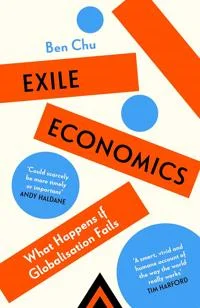
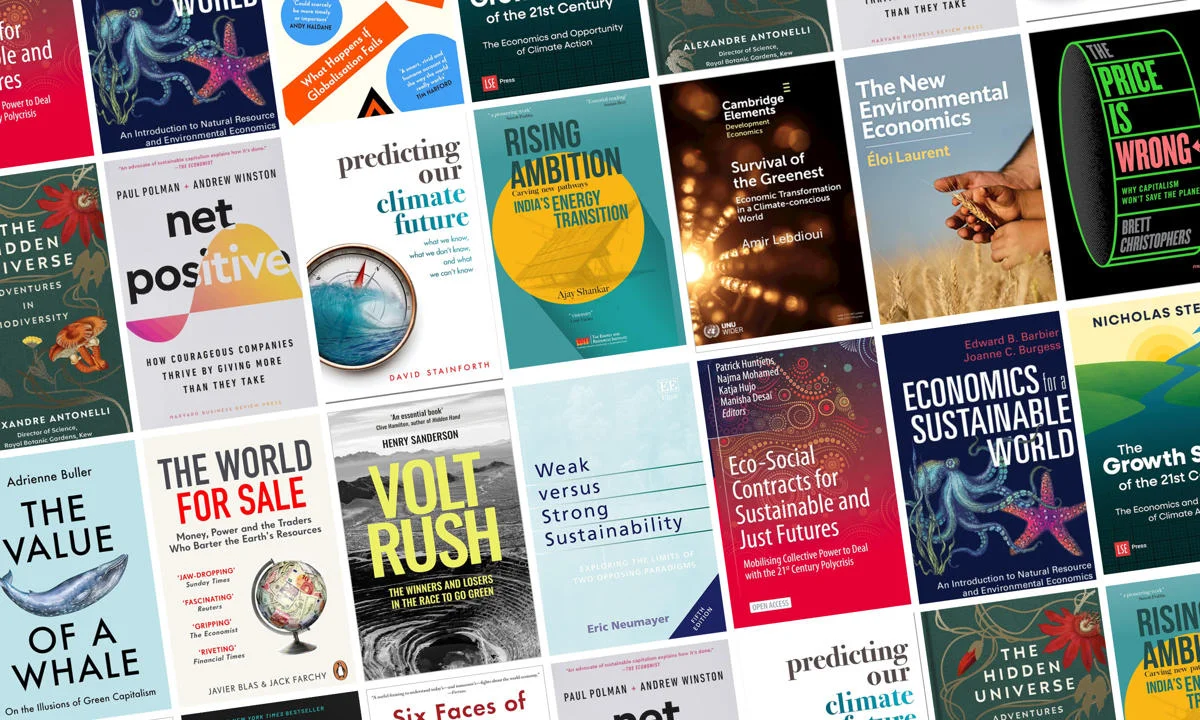
Exile Economics: what happens when globalisation fails. Ben Chu. Basic Books. 2025.
While focusing specifically on our fragmented global economy, Ben Chu’s Exile Economics has important consequences for climate-conscious economics. An easily digestible read – as you might expect from a leading journalist – the book indicates the geopolitical and environmental consequences of national economies attempting to go it alone (in the vein of Donald Trump’s tariff wars in the US, or Narendra Modi’s “Made in India” campaign), rather than collective and collaborative trade.
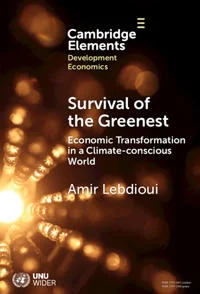
Survival of the Greenest: economic transformation in a climate-conscious world. Amir Lebdioui. Cambridge University Press. 2024.
This book from a powerful voice behind green industrial policy examines how nations can navigate the economic transformation, as well as what might happen within and between states as they drive this change forward "in a climate-conscious world”. Those interested in the latest academic literature on greening and development should glean a lot in its 100 pages. The book is a valuable addition to Cambridge University Press’s Elements in Development Economics series.
Recommended by Oliver Harman, Researcher, Department of Geography and Environment and Global School of Sustainability at LSE (Green Global Value Chains for Sustainable Development by Riccardo Crescenzi and Oliver Harman will be published by Cambridge University Press later in 2026).
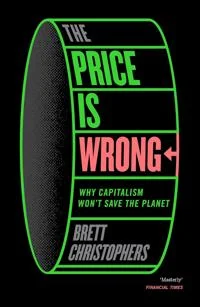
The Price is Wrong: why capitalism won't save the planet. Brett Christophers. Verso. 2024.
Brett Christophers challenges the widespread assumption that falling costs alone will drive renewables to displace fossil fuels, arguing that what actually governs investment is profitability and that renewables generate lower, riskier returns than incumbents. The book shows that private capital is structurally ill-suited to deliver decarbonisation at the pace and scale required, and makes the case for far greater public investment and state coordination. Essential reading for anyone weighing the limits of market-led approaches to the net-zero transition.
Recommended by Dr Alperen A Gözlügöl, Assistant Professor of Law, LSE Law School.
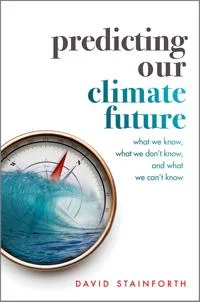
Predicting Our Climate Future: what we know, what we don't know, and what we can't know. David Stainforth. Oxford University Press. 2023.
An interdisciplinary book by LSE’s David Stainforth, Predicting Our Climate Future makes the complex world of climate modelling accessible and easy to understand. It is essential reading for anyone involved in climate policy who needs to grapple with the uncertainties inherent in model predictions and to prepare for a range of possible futures they reveal.
Recommended by Carmen Nuzzo, Professor in Practice and Executive Director at the TPI Global Climate Transition Centre, Global School of Sustainability, LSE.
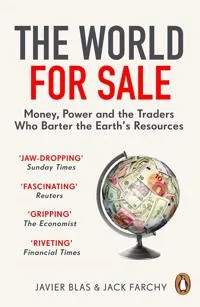
The World for Sale: money, power and the traders who barter the earth’s resources. Javier Blas and Jack Farchy. Penguin. 2022.
In The World for Sale, Javier Blas and Jack Farchy pull back the curtain on the commodity trading firms that control the flow of oil, metals and grain across borders, often with enormous environmental and social consequences. Any serious conversation about climate and new rare earth metals must reckon with the political economy of fossil fuel incumbency and the powerful commercial interests that sustain it and the elusive world of commodity traders.
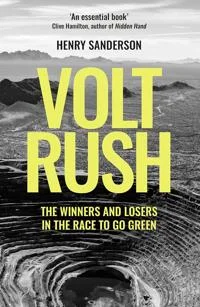
Volt Rush: the winners and losers in the race to go green. Henry Sanderson. Oneworld Publications. 2023.
Henry Sanderson’s Volt Rush follows the global scramble for lithium, cobalt and nickel – the critical minerals without which the energy transition cannot happen – from mines in the Congo and Chile to battery plants in China and Europe. This book is essential reading: it shows that decarbonisation creates its own resource dependencies and distributional challenges, raising urgent questions about whether the green transition can be made genuinely sustainable and equitable.
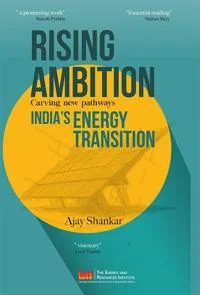
Rising Ambition: carving new pathways - India's energy transition. Ajay Shankar. Energy and Resources Institute. 2025.
Drawing on decades of experience in Indian industrial and energy policy, Ajay Shankar offers a rare insider's perspective on how the world's most populous country is navigating the shift to renewable ambitions. I recommend Rising Ambition because India's energy transition is one of the defining climate challenges of our time, and understanding its institutional, financial and industrial dimensions is critical for anyone working on decarbonisation in emerging markets.
Recommended by Sangeeth Selvaraju, Policy Fellow (Sustainable Finance – India and ASEAN), Grantham Research Institute on Climate Change and the Environment at LSE.
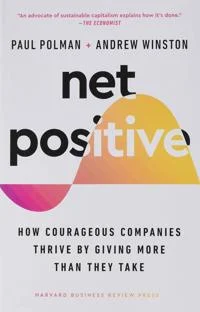
Net Positive: how courageous companies thrive by giving more than they take. Paul Polman and Andrew Winston. Harvard Business Review Press. 2021.
There are many books about corporate purpose and how businesses can organise themselves to create value for society alongside financial returns. Yet for a grounded exposition of a core set of guiding principles, Paul Polman and Andrew Winston's book is among the best. I routinely recommend it to LSE students and practitioners alike.
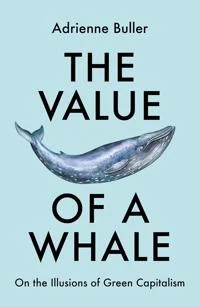
The Value of a Whale: on the illusions of green capitalism. Adrienne Buller. Manchester University Press. 2022.
For all the hype surrounding the potential for market-based solutions to the unfolding environmental crisis, there is a powerful critique. Adrienne Buller's The Value of a Whale offers a critical examination of "green capitalism" and its failure to address the root causes of ecological destruction. It is important reading – even for those who may disagree with the author's diagnosis and prognosis.
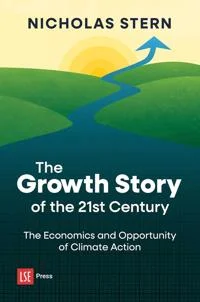
The Growth Story of the 21st Century: the economics and opportunity of climate action. Nicholas Stern. LSE Press. 2025.
No list of books on climate-conscious economics would be complete without a contribution from LSE's own Nick Stern. While not downplaying the challenges, The Growth Story of the 21st Century, available open access from LSE Press, is unashamedly optimistic about the possibilities of reconciling meaningful climate action and economic prosperity. It provides a compelling antidote to the gloom currently surrounding discussions of climate change.
Recommended by Dr Richard Perkins, Associate Professor of Environmental Geography, Department of Geography and Environment at LSE.
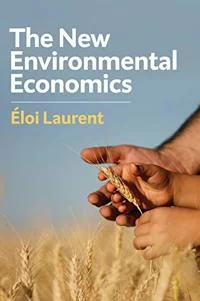
The New Environmental Economics: sustainability and justice. Éloi Laurent. Polity Books. 2020.
The key premise of The New Environmental Economics is that economics too often disassociates humans from nature, the economy from the biosphere, and sustainability from justice/fairness. Laurent provides a useful analytical framework to address this and argues that our current model has fallen well short of addressing the twin crises of inequality and ecological breakdown precisely because growth-based logic ignores both. Laurent proposes a justice-oriented alternative that centres human wellbeing in policy, guided by ethical principles and planetary boundaries.
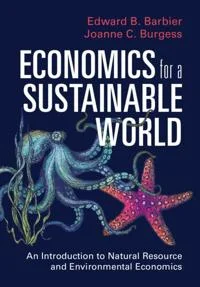
Economics for a Sustainable World: an introduction to natural resource and environmental economics. Edward B Barbier and Joanne C Burgess. Cambridge University Press. 2025.
Suitable for general readers, Economics for a Sustainable World takes a developmental approach to make the case that the economy is intrinsically dependent on nature. Using global case studies, it works through how existing economic tools can be applied to the real-world challenges of resource scarcity, pollution, mineral use, biodiversity loss and climate change. Pragmatic and grounded in policy, the book succeeds at making abstract economic principles tangible and relevant.
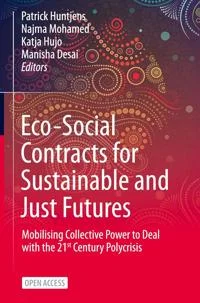
Eco-Social Contracts for Sustainable and Just Futures. Patrick Huntjens, Najma Mohamed, Katja Hujo and Manisha Desai (eds). Springer Nature. 2025.
Eco-Social Contracts for Sustainable and Just Futures argues that environmental economics alone is not enough to achieve sustainability and justice. It argues that our societies and their underpinning social agreements reflect a disconnect between humans and nature. Eco-social contracts represent a shift from human self-interest and the pursuit of wealth to situating humanity within all life on Earth, and treating all of it with care. The book draws on diverse real-world examples that are already emerging, giving us reasons to be optimistic about collectively enacting change.
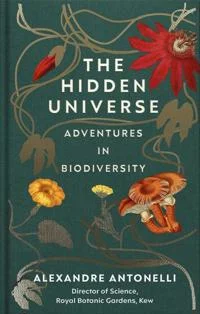
The Hidden Universe: adventures in biodiversity. Alexandre Antonelli. Ebury Press. 2021.
Alexandre Antonelli's The Hidden Universe provides a natural-science foundation for understanding what is at stake if we fail to look after nature. It offers a scientific perspective on biodiversity (defined in terms of not only genes and species but also the way ecosystems fit together), but it does not shy away from the economic stakes. Antonelli reminds us that over half of global GDP depends on biodiversity, which underpins almost every dimension of human existence, from food and medicine to fibre, clothing and building materials. Crucially, the book argues for valuing biodiversity for reasons beyond the economy too. It’s an engaging, informative read that provides the ecological substance that economic frameworks don't always explain.
Recommended by Elena Almeida, Head of Nature and Senior Policy Fellow at the Centre for Economic Transition Expertise (CETEx) at LSE.
Subscribe to LSE Research for the World

LSE Festival 2026: How to save the planet
Research for the World is the online magazine by LSE - the London School of Economics and Political Science. LSE is a world-leading university, specialising in social sciences and ranked top in the UK by The Times and Sunday Times Good University Guide 2026.
LSE Review of Books

Related content
Recommended reading on AI and technology
Recommended reading on the future of world trade
Recommended reads on race equity

Recommended reads for understanding the economy today
What inspired my research approach? Recommended reads from our academics