

Social and cultural psychology

Research discipline
The discipline of social and cultural psychology is broadly centred on understanding the ways in which culture and society shape how people think, behave and relate to one another.
In the Department of Psychological and Behavioural Science (PBS), our international experts come from multidisciplinary backgrounds to approach and draw on theories, concepts and methods to tackle the pressing issues of today, including a strong focus on inequality, the Global South, and responses to global emergencies.
Experts in our department work across the following broad themes and topics:
- Cognition
- Human development under adversity and conflict
- Global emergencies
- Community development
- Health and science communication
- Individual and social decision-making
- Perfectionism
- Cultural and societal change
- WEIRD psychology.
Our research is anchored in a shared evidence-based approach that is theoretically informed and policy relevant.
Expertise in the Department of Psychological and Behavioural Science
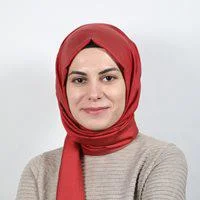
Key areas of expertise: Helping; identity; migration; religion; meta-science; social identity; bystander intervention; intergroup relations; prosocial behaviour; altruism; charitable donations.

Key areas of expertise: Contextual effects; group perception; person perception; ensemble perception; crowding; eye gaze perception; emotion; facial familiarity; age perception; psychophysics; eye tracking.
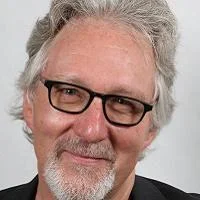
Key areas of expertise: Public understanding and public engagement; rhetoric and science communication; resistance and critical innovation studies; public opinion; common sense; conspiracy mentality; mass media monitoring and text analysis.

Key areas of expertise: Perfectionism; mental health; research methods; statistics.
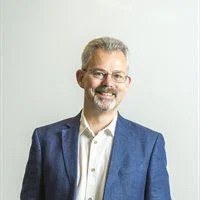
Key areas of expertise: Cognition and culture; evolutionary perspectives; categorisation and concepts; conspiracy theory; agency; self-construal; religion.
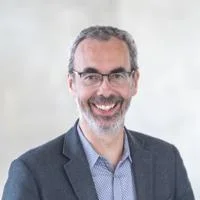
Key areas of expertise: Communication; misunderstandings; culture; perspective taking; listening; dialogue.

Key areas of expertise: Social identity dynamics; effect of mergers on group identities; how social identity can affect well-being; impact of multiple social identities on well-being and performance; social identity dynamics in leadership; ethics of online research.

Professor Sandra Jovchelovitch
Key areas of expertise: Social and community development; human development under contextual adversity; social representations; socio-cultural psychology of community; public sphere; Latin America.

Key areas of expertise: Belief revision, cognitive psychology, computational models.
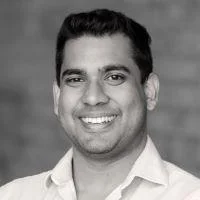
Professor Michael Muthukrishna
Key areas of expertise: Assimilation; behavioural sciences; corruption; cross-cultural psychology; cultural and social change; data science; democracy; economic psychology; entrepreneurship; human evolution; innovation; intelligence; multiculturalism; cultural evolution.

Key areas of expertise: Intergroup conflict; intergroup boundaries; political narratives; collective memory; contact research; social representations; dialogical interdependencies; qualitative methodology.

Key areas of expertise: Electoral psychology; Identity; Political psychology; Social identity
Key areas of expertise: Identity threat; stigma; Social Identity Theory; Social Representations Theory; stereotype threat; welfare benefits; unemployment.
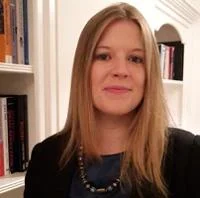
Dr Jennifer Sheehy-Skeffington
Key areas of expertise: Political psychology; intergroup relations & conflict; behavioural economics of poverty; Inequality & social stratification; power & status; evolutionary psychology.

Key areas of expertise: Persuasive communication; technology; political behaviour; attitude change; randomised experiments; quantitative methods; Bayesian statistics

Key areas of expertise: Cognitive psychology; experimental psychology; social cognition, armed conflict.