
Knowledge Exchange and Outreach

Our themes, knowledge exchange activities and projects
Our outstanding contribution to the field has been recognised by assessors in the 2021 Research Excellence Framework.
Our research was submitted with the Department of Government to the Politics and International Studies Unit of Assessment. 57.7 percent of the research outputs for this Unit were rated 'world-leading' and a further 33.3 percent were rated ‘internationally excellent’.
Impact case studies for the Politics and International Studies Unit of Assessment were awarded 100 percent 4 star and 3 star grades. The Research Environment also received 100 percent 4 star and 3 star grades.
REF Impact Case Study
Professor John Sidel, Sir Patrick Gillam Professor of International and Comparative Politics jointly in the Government Department has produced an Impact Case Study entitled Promoting policy reforms in the Philippines by Thinking and Working Politically in development.
His research has made a significant contribution to the Coalitions for Change (CfC) programme in the Philippines, by shaping its understanding of the political context for policy reform advocacy, advising on tactics and strategy, making decisive interventions on specific reform initiatives, and drawing lessons from successes and failures.
His research has also shown the importance of identifying constellations of interests - and building coalitions - stretching across government agencies, congress, business, and civil society in order to overcome resistance to reform from among the political elite and the oligarchy. CfC has successfully promoted reforms in disaster risk reduction, education, electoral processes, healthcare, land governance, public transportation and infrastructure, and tax policy.
Our ground-breaking work also generates high levels of public interest, a fact reflected in its frequent coverage by national and international media. It responds to that interest through an extensive programme of public lectures, attracting high-profile speakers from academia such as Anne Applebaum and John Mearsheimer, and practitioners of international relations such as London Assembly Member Sakina Sheikh, and Ziyanda Stuurman of the Abdul Latif Jameel Poverty Action Lab in South Africa.
Find out more about LSE REF Research
More about REF
The Research Excellence Framework (REF) is the system by which the UK’s higher education funding bodies assess the quality of research in publicly funded UK higher education institutions (HEIs). REF 2021 comprised three elements:
- academic outputs, comprising a portfolio based on the FTE of REF-eligible staff submitted;
- research impact, submitted as a number of impact case studies (ICSs) in proportion to the total FTE of REF-eligible staff submitted;
- research environment, comprising the total number of research degrees awarded between 2014 and 2020, total research income received over the same time period, and an environment statement detailing how the submitting unit(s) supported research and impact over the period.
Outputs, impact and environment were weighted 60:25:15 respectively. All three elements were graded on a scale from 0 (unclassified) to 4* (world leading) and the results were published as quality profiles showing the percentage of outputs, impact and environment considered to meet each of the starred levels. Submissions were invited to 34 Units of Assessment (UoAs); LSE made 15 submissions to 13 UoAs across the SHAPEsubjects.
For REF2021, HEIs were required to submit research outputs by all eligible members of staff. Each submitted member of staff could submit between one and five outputs, with the total number of outputs per UoA calculated as total FTE of staff multiplied by 2.5.
Staff were eligible for REF2021 where they were on a teaching-and-research or research-only contract of at least 0.2 FTE on 31 July 2020 and had a substantive connection to the submitting HEI. Research-only staff also had to be classified as independent researchers. HEIs were also required to identify which eligible staff had significant responsibility for research. LSE submitted 100% of its staff meeting these definitions, but other HEIs had eligible staff who did not have significant responsibility for research and hence had a submission rate of less than 100%.
Full glossary of REF terminology
Research for the World - March 2026
The power and constraints on international law in a political worldTheresa Squatrito
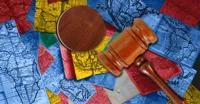
International courts can act in radically different ways in their judgments, despite international law governing all. In her book, Theresa Squatrito examines the political pressures shaping the international legal order.

International Courts and Politics
In this 20 minute talk, Dr Theresa Squatrito discusses her research on how international courts are regularly petitioned by states, international organisations, civil society groups and individuals to help settle disputes and interpret the law. What explains how international courts respond to these petitions?
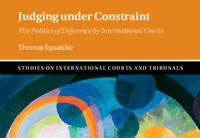
Judging under Constraint: The politics of deference by International Courts
(Cambridge University Press, 2025)
by Theresa Squatrito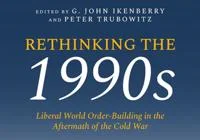
Rethinking the 1990s: Liberal world order-building in the aftermath of the Cold War
edited by G John Ikenberry and Peter Trubowitz

The Oxford Handbook of Transitional Justice
edited by Jens Meierhenrich, Alexander Laban Hinton and Lawrence Douglas

Why refugee return is not the solution to displacement crises | Coffee break research
In this 15 minute talk, Dr Stephanie Schwartz discusses her research on how refugee return can create new sources of conflict in refugees’ countries of origin, often leading to repeat displacement.
Research for the World - September 2025
The fluctuating fortunes of the marketRobert Falkner and Barry Buzan
With the rise of economic nationalism, it seems the once-dominant market is in retreat across the world. In his new book, co-authored with Barry Buzan, Robert Falkner explores the rise and fall of the market in global international society over the past 200 years.
Research for the World - September 2025
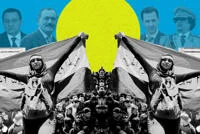
The struggle for freedom and democracy in the Middle EastFawaz Gerges
Western intervention in the Middle East has helped fuel a cycle of violence and repression across the region, argues Fawaz Gerges in his latest book.

Congratulations to Professor Toby Dodge awarded MBE!
Professor Toby Dodge has been appointed a Member of the Order of the British Empire (MBE) for services to UK interests in Iraq in the King's Birthday Honours List 2025.
Commenting on the award, Professor Dodge said: “After publicly opposing the invasion in 2003, my role in its aftermath has been focused on seeking to find ways of reducing the damage the invasion caused and helping the Iraqi people to regain control over and rebuild their state and sovereignty.”
Professor Dodge’s research focuses on the role of the postcolonial state in the international system, with Iraq as a key case study.
A book-length study authored by Professor Dodge about the rebuilding of Iraq after regime change, Iraq; the Reconstruction of a Disaggregated State; Violence, Identity and Corruption will soon be published by Cambridge University Press. The book is based on a series of interviews with senior Iraqi politicians, civil servants, army officers, party officials and political activists, carried out across Iraq between 2003 and 2024.
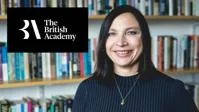
Professor Tomila Lankina elected as Fellow of the British Academy
We're thrilled to announce that Tomila Lankina, Professor of International Relations in the department, has been elected as a Fellow of the British Academy in recognition of her outstanding contribution to the humanities and social sciences.
Tomila has expertise in democracy and authoritarianism, mass protests and historical drivers of human capital and political regime change in Russia and other countries. She is currently researching social structure and inequality.

Video: What are Trump's ICE raids really about?
To mark World Refugee Day 2025, Dr Stephanie Schwartzreflects on Trump’s immigration crackdown and the extreme measures sparking nationwide protest. Is this restoring order or eroding democracy?
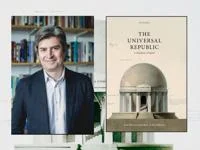
Book Review: The Universal Republic: A Realistic Utopia?
In the LSE Review of Booksblog, Simon Arthur reviews Mathias Koenig-Archibugi's latest book The Universal Republic: A Realistic Utopia?
The Market in Global International Society: An English School Approach to International Political Economy
by Barry Buzan and Robert Falkner
In an excerpt from the introduction to the book, they explain how its rise to dominance resulted in a profound transformation of the international order.
Read an excerpt from the introduction
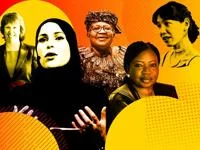
Research for the World - September 2024
Why does diplomacy have a woman issue?Professor Karen E Smith
Just 20 per cent of ambassadorships worldwide are held by women. Research from Karen E Smith explores the under-representation of women in diplomacy, why so few women rise to senior positions in the area, and how these barriers can be overcome.
Why is the Middle East at war? US intervention explained
Professor Fawaz Gerges
The pivotal 1953 coup in Iran, orchestrated by the CIA and MI6, toppled the democratically elected Prime Minister Muhammad Mossadegh.
Renowned scholar Fawaz Gerges explains how this event set a precedent for an American foreign policy of intervention in the region, shaping the political landscape of the Middle East.
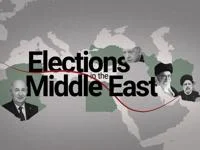
Elections in Iran and the Middle East
Professor Fawaz Gerges
As Iran prepares to elect a new President, Professor Fawaz Gerges analyses how democratic processes vary across the Middle East, and how the future of the region will be shaped by its voters.
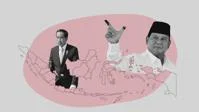
The 2024 Indonesian election: from Widodo to Subianto?
Professor John Sidel
With a population of 275 million, Indonesia is the world's third largest democracy and what happens in its 2024 election is really important.
Professor John Sidel explains Indonesia's trajectory as a stable and consolidated democracy over the last 25 years and what the future likely holds.
The downsides of being a nuclear superpower
Dr Lauren Sukin, Department of International Relations
Do the leaders with the biggest nuclear arsenals wield the most power on the global stage? Not necessarily, says Lauren Sukin – when it comes to conflict between nuclear states, there are circumstances when a country’s strength can also be to its disadvantage.

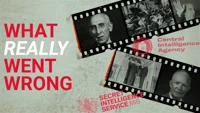
What really went wrong in the Middle East
Professor Fawaz Gerges, Department of International Relations
America’s concern over Communist Russia and its attempt to establish a Pax Americana led it to make disastrous foreign policy decisions in the Middle East, the consequences of which can still be felt today, argues Fawaz Gerges in a new book.
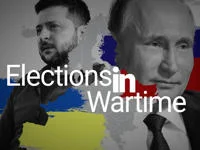
Elections in Wartime
Are there elections taking place in wartime?
Mariia Zolkina, DINAM Research Fellow in the Department of International Relations, explains the cases of Ukraine and Russia.
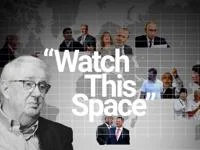
2024: a year of unpredictable elections
Professor Michael Cox, LSE IDEAS
In the coming year, people around the world will go to the polls. This short video introduces the implications of key elections.
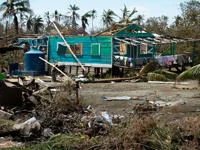
Research for the World magazine November 2023
Prioritising the climate: why international organisations are reinventing policy from the bottom-upInternational organisations like the International Monetary Fund are rapidly overhauling their policies to prioritise climate change, despite disagreements between powerful states on how to address the issue. New research by Noah Zucker explores why climate change is quickly moving to the fore of the global governance agenda.
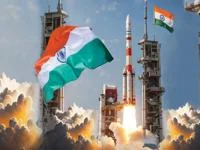
Research for the World magazine September 2023
Why does India want to be a space power? Chandrayaan-3 and the politics of India's space programmeResearch by Dimitrios Stroikos explores how India's space programme has developed.
Read the article and watch the video
LSE Research Showcase July 2023
Diplomacy in the Digital AgeDr Federica Bicchi, Associate Professor of International Relations
How is digitalisation impacting diplomacy? Often referred to as the second oldest profession in the world, diplomacy is undergoing a profound transformation because of technological changes. Digitalisation is affecting all traditional diplomatic functions, from information gathering to negotiation, as well as all diplomatic tools, from embassies to dispatches. These challenges will have an impact on global conversations about foreign affairs, which explains why the debate is so contentious.
Watch the video(30 mins)
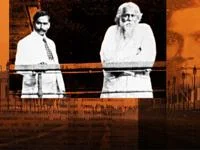
Research for the World magazine March 2023
Uncovering the complexities of anti-colonial Indian thoughtResearch by Martin Bayly explores how key thinkers of the early 20th century India viewed their nation’s place in the world.
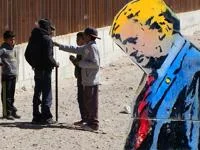
Research for the World magazine March 2023
The power of images: understanding the importance of pictures in politicsA new book by William Callahan from the Department of International Relations at LSE outlines the crucial role visual media plays in international politics.

Research for the World magazine March 2023
Are we in danger of over-romanticising the military?A new book by Katharine Millar explores how the call to "support the troops" has evolved in the UK and US over the decades.
William A Callahan wins grant from British Academy
The 20 person team of scholars has been granted £1.5 million to study 'Chinese Global Orders'.
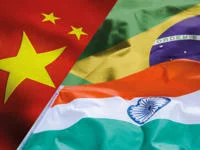
Research for the World magazine November 2022
Rising powers and their desire for statusA new theory put forward by Dr Rohan Mukherjee suggests rising powers will often make material sacrifices to attain status on the international stage. However, if not treated equally, they will challenge this very order.
LSEIQ Podcast; What's the future of capitalism?
Joanna Bale talks to Lea Ypi, David Hope, Julian Limberg and Tomila Lankina about defining freedom, debunking trickle-down economics and defying the Bolsheviks.
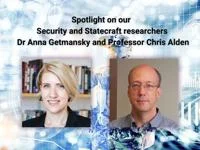
Spotlight on our Security and Statecraft researchers: Anna Getmansky and Chris Alden
Dr Anna Getmanskyand Professor Chris Aldendiscuss their research on digital diplomacy, China in Africa and refugee integration in Turkey.
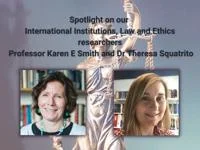
Spotlight on our International Institutions, Law and Ethics researchers: Professor Karen E Smith and Dr Theresa Squatrito
Professor Karen Smith and Dr Theresa Squatrito reflect on the International Institutions, Law and Ethics research cluster in the Department.
They discuss their own research into how the European Union engages with the rest of the world, and international organisations and courts. They consider who the users and beneficiaries of their research are, and the global impact on the discipline from the COVID-19 pandemic.
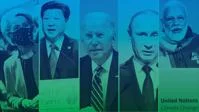
What is the role of great powers in the international politics of climate change?
Dr Robert Falknerhas been exploring this issue.
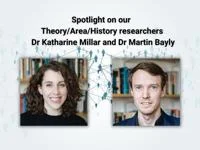
Spotlight on our Theory/Area/History researchers: Dr Katharine M Millar and Dr Martin Bayly
Dr Katharine M Millar and Dr Martin Bayly discuss their research into the relationship between violence and social relations and the social order; and into the frontier spaces of imperial rule. They identify the main beneficiaries of their research, and the collaborative work stemming out of such a rich and pluralist research environment.
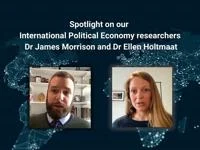
Spotlight on our International Political Economy researchers: Dr James Morrison and Dr Ellen Holtmaat
Dr James Ashley Morrisonand Dr Ellen Holtmaatdiscuss their most recent research into historical International Political Economy, and into private sustainability standards, and who benefits from their research.
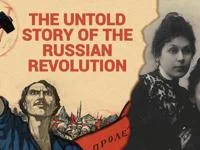
The Untold Story of the Russian Revolution
When knowledge is power, inequality is inevitable: why the Bolsheviks were never going to "level up" society.
Tomila Lankina's new book and film explores why existing hierarchies of status and power are so hard to dismantle.
William A Callahan's book Sensible Politicswins ISA's International Political Sociology Best Book
The Committee was impressed by the book's interdisciplinarity.

Confronting grief: the state's role in remembering those lost to COVID-19
Katharine Millar, Yuna Han and Martin Baylyargue how leaders must look beyond the pandemic.
The Perpetuation of Social Hierarchies and Inequality in Russia
Watch Tomila Lankinadiscuss her new book as part of LSE Research Showcase 2021.
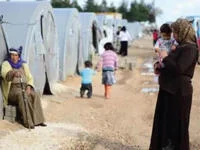
Security fears driving hostility towards refugees in Turkey
Anna Getmansky's research uncovered unexpected reasons for negativity towards those seeking safety.
Diplomacy at a distance: COVID-19's impact on global statecraft
Tristen Naylor reflects on the long-term impact of moving the 2020 summit of the G20 online.
The way COVID-19 is officially commemorated will shape how we respond to future waves
The government should plan how to commemorate COVID-19 now, or risk heightened social division, write Katharine Millar, Yuna Han and Martin Bayly.
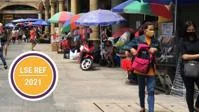
Promoting policy reforms in the Philippines by Thinking and Working Politically in development (REF 2021)
Professor John Sidel's research has made a significant contribution to policy reform advocacy in the Philippines, shaping important development programmes’ understanding of the political context.

Influencing EU policy on international trade agreements (REF 2014)
ITPU provided expert analysis on trade agreements for EU's International Trade Committee

Strengthening global regulation of emerging nanotechnologies (REF 2014)
Research has highlighted the importance of transparency and reporting for nanotechnology products
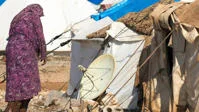
Strengthening policies to protect human rights and prevent genocide (REF 2014)
LSE research influenced EU policies intended to protect human rights and to prevent genocide.

Fading Rainbows project
Building on a significant report from members of the LSE Department of International Relations on national grief and remembrance in relation to the COVID-19 pandemic, Fading Rainbows was an LSE Festival 2021 partnership by LSE Library with Frith Manor Primary School in Barnet and artist Becci Kenning to develop teaching resources for Year 5 children. The aim was to help the children understand the COVID-19 pandemic and encourage them to express their feelings about the impact it has had on their lives.
Check out our Research News page for full details of articles, media coverage and research from faculty and PhD candidates in the department.