
Easting the west: theorizing the postliberal conjuncture from China





Join us for a fireside chat that introduces the new book by Chenchen Zhang, Easting the West: Theorizing the Postliberal Conjuncture from China.
The rise of the global right has led observers to speak of the end of the liberal international order. What does it mean to theorise the postliberal conjuncture from China, and what does it mean to trace the idea of “the West” from without?
Easting the West: Theorizing the Postliberal Conjuncture from China explores how ideas of “the West” and articulations of China/West difference are produced and mobilised in Chinese political discourse. Drawing on the dazzling, chaotic, and jargon-laden world of social media, the author will discuss the book which examines reactionary formations in digital China as a constitutive site of ideological production in the postliberal moment. It shows how political sensibilities can converge across conventional geopolitical and ideological fault lines, and how critiques of liberal contradictions and imperialism can be repurposed for authoritarian and ethno-nationalist projects.
Meet our speaker
Chenchen Zhang is an Associate Professor in International Relations at Durham University. Her current research interests span postcolonial nationalism, cultural politics, and transnational solidarity. She is a co-host of the Shicha podcast.
Discussants
Shakuntala Banaji is Professor of Media, Culture and Social Change in the Department of Media and Communications at LSE. Professor Banaji's research addresses the intersection between socio-political contexts, media, identities, social justice and social change.
Karin Narita is a Research Associate on the Right Worlds project at Queen Mary University of London. Prior to this, she was a postdoctoral researcher at the University of Sheffield and has previously taught at QMUL and King's College London. Her research lies at the intersection of international relations and right-wing ideologies with a focus on Japan and East Asia. Her monograph Culture Must Be Defended: Japanese Conservatism and International Relations is forthcoming.
Christian Sorace is an Associate Professor of Global China at the University of Cambridge and a Fellow of Corpus Christi College. His work explores political concepts and practices in China and Mongolia, spanning the study of ideology, discourse, urban planning, air pollution, and aesthetics.
Chair
Jasmine K Gani is an Assistant Professor of International Relations in the Department of International Relations at LSE.
More about this event
The Department of International Relations at LSE is now in it's 99th year - one of the oldest as well as largest IR departments in the world, with a truly international reputation. Throughout 2027 we will celebrate our centenary with a series of events and initiatives involving faculty, students, alumni and the public. We are ranked 2nd in the UK and 5th in the world in the QS World University Ranking by Subject 2026 tables for Politics and International Studies. We are ranked No 1 in the UK for International Relations in the Guardian University Guide 2027 subject rankings.
If you are planning to attend this event and would like details on how to get here and what time to arrive, as well as on accessibility and special requirements, please refer to
LSE aims to ensure that people have equal access to these public events, but please contact the events organiser as far as possible in advance if you have any access requirements so that arrangements, where possible, can be made. If the event is ticketed, please ensure you get in touch in advance of the ticket release date.
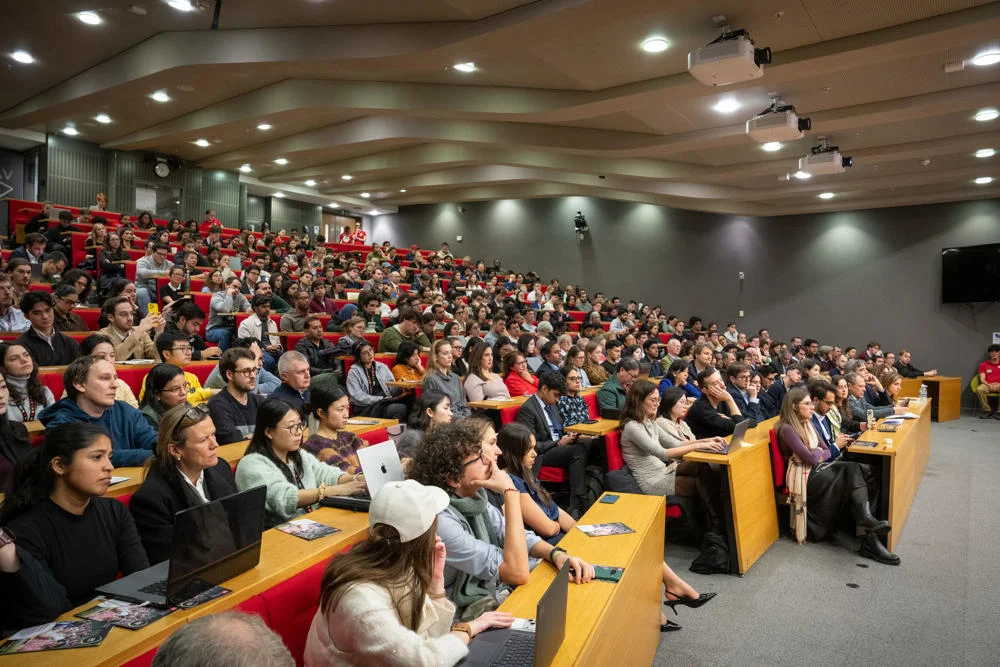
Photographs taken on behalf of LSE are often used on our social media accounts, website and publications. At events, photographs could include broad shots of the audience and lecture theatre, of speakers during the talk, and of audience members as they participate in the Q&A.
If you are photographed participating in an event Q&A but would not like your photograph to be stored for future use, please contact ir.events@lse.ac.uk
We aim to make all LSE events available as a podcast subject to receiving permission from the speaker/s to do this, and subject to no technical problems with the recording of the event. Podcasts are normally available 3-5 working days after the event. Podcasts and videos of past events from the Department of International Relations can be found at Events.
Follow us on Bluesky @lseir
Follow us on X/Twitter: @LSEIRDept
Follow us on Facebook: LSEIR
Follow us on Instagram: lseir
Follow us on LinkedIn: LSE Department of International Relations
Check out our website for more information about our events and event podcasts: www.lse.ac.uk/international-relations
Many speakers at LSE events also write for LSE Blogs, which present research and critical commentary accessibly for a public audience.
LSE has now introduced wireless for guests and visitors in association with 'The Cloud', also in use at many other locations across the UK. If you are on campus visiting for the day or attending a conference or event, you can connect your device to wireless. See more information and create an account at Join the Cloud.
Visitors from other participating institutions are encouraged to use eduroam. If you are having trouble connecting to eduroam, please contact your home institution for assistance.
The Cloud is only intended for guest and visitor access to wifi. Existing LSE staff and students are encouraged to use eduroam instead.
From time to time there are changes to event details so we strongly recommend that if you plan to attend this event you check back on this listing on the day of the event.
Whilst we are hosting this listing, LSE Events does not take responsibility for the running and administration of this event. While we take responsible measures to ensure that accurate information is given here this event is ultimately the responsibility of the organisation presenting the event.
LSE holds a wide range of events, covering many of the most controversial issues of the day, and speakers at our events may express views that cause offence. The views expressed by speakers at LSE events do not reflect the position or views of the London School of Economics and Political Science.
Subscribe to the LSE Events newsletter