

LSE celebrates second annual Impact Prize
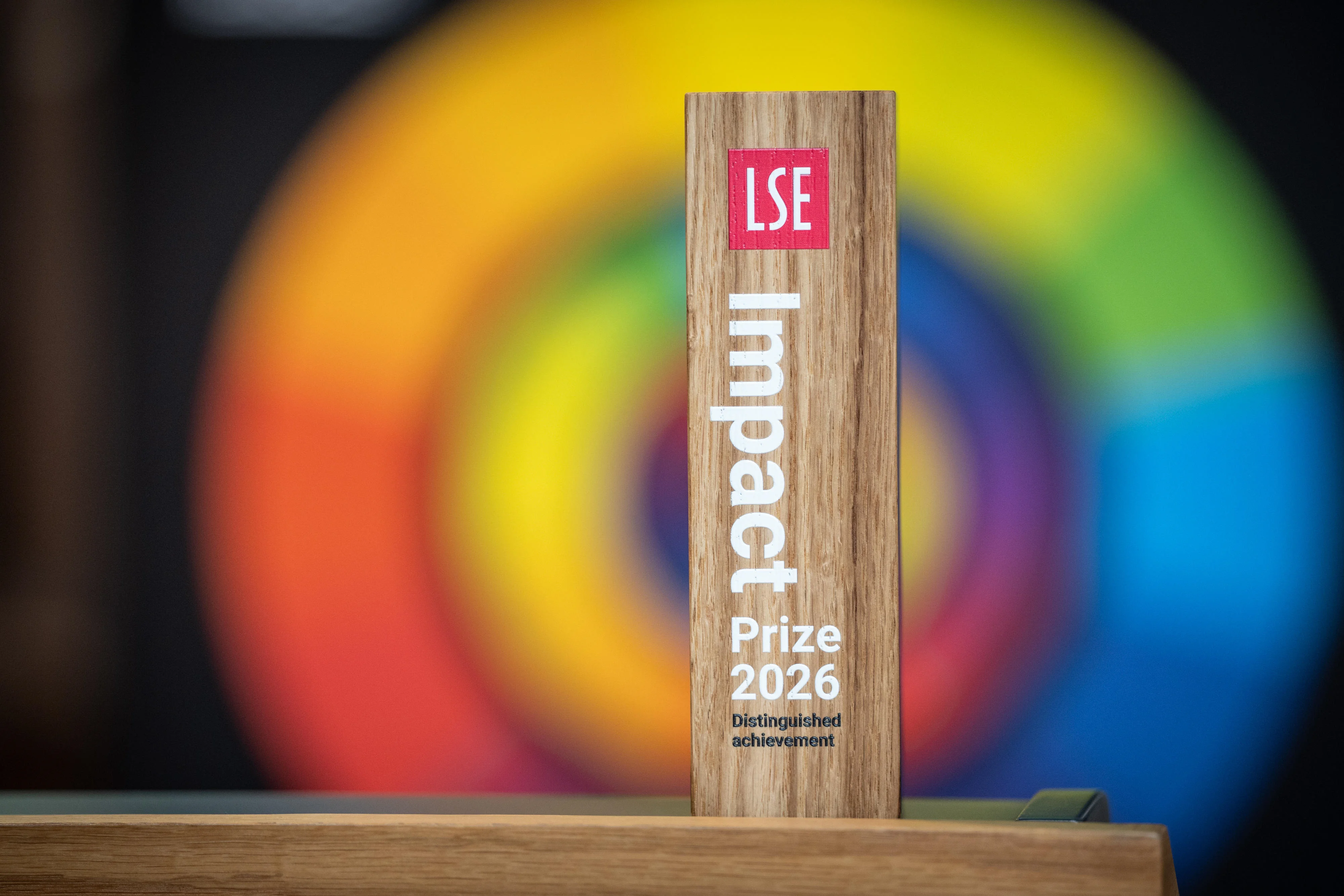
LSE has celebrated its second annual Impact Prize to recognize excellent engagement, impact, and impact culture across the School.
Prizes were awarded in eight categories, celebrating outstanding impact from colleagues at all career stages. The judging panel chose from 64 high-quality applications or nominations from across 27 of the School’s departments and research centres.
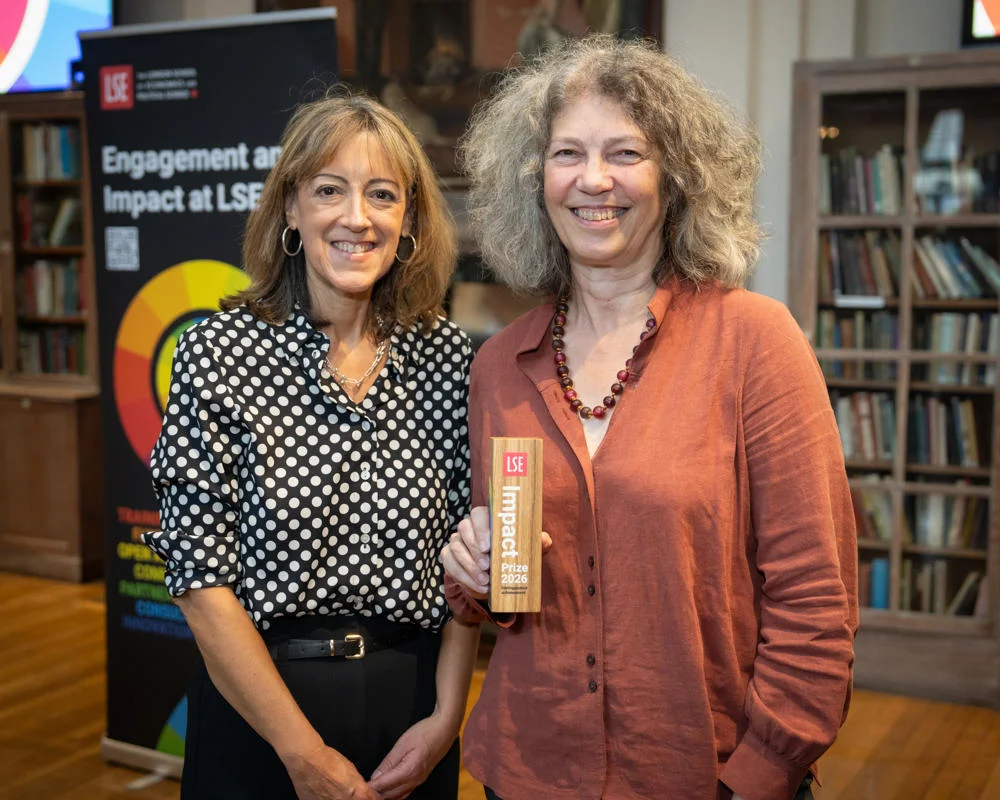
In 2026, for the first time an award was given for Distinguished impact achievement to recognise outstanding and sustained impact from a body of research. This was awarded to Professor Sonia Livingstone from the Department of Media and Communications, whose research has fundamentally reshaped how governments, regulators, and technology companies worldwide understand children's rights in the digital environment. Over three decades, her scholarship on children, media, and media literacy has exemplified how outstanding academic research can inform and underpin international policy frameworks.
Impact Prize Winners
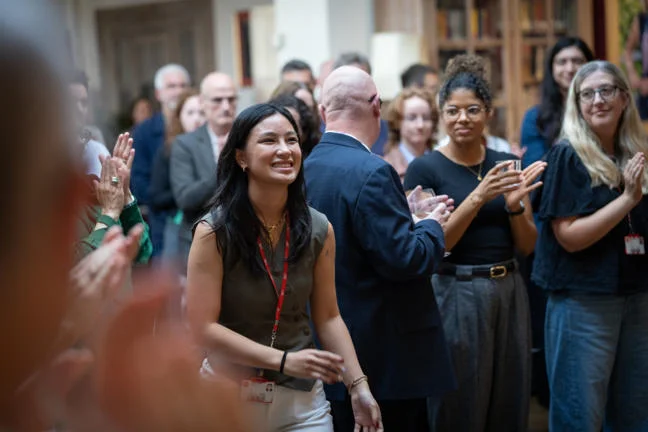
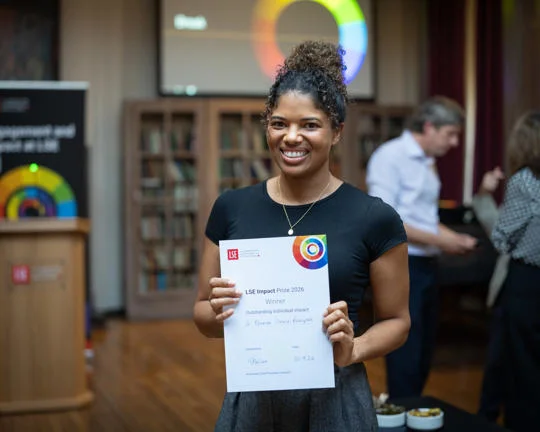
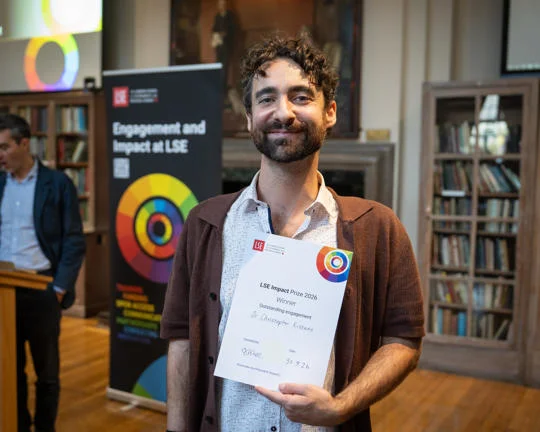
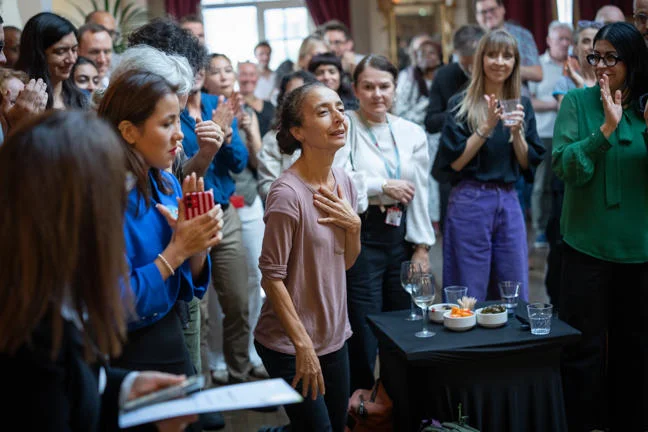
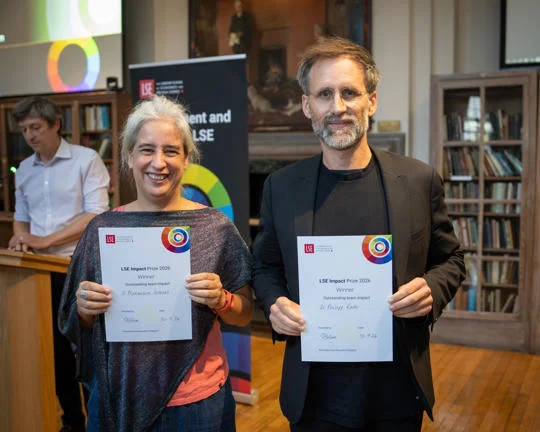
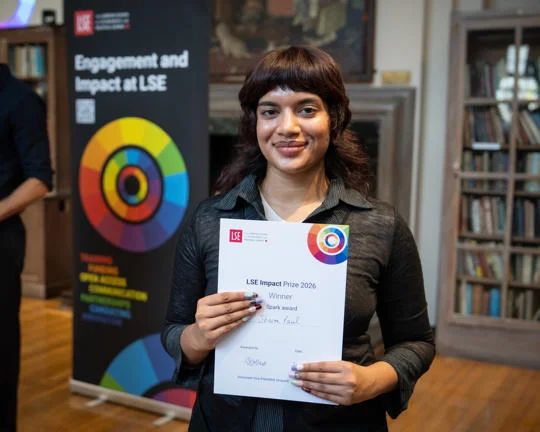
Other winners included:
Theint Theint Thu (Department of Government) for outstanding PhD impact for her her work with migrant and conflict-affected communities along the Thailand-Myanmar border.
Dr Noah Walker-Crawford (Grantham Research Institute on climate change and the environment, Department of Anthropology) received the Rising Star award for his work helping lawyers understand how climate science can be used as legal evidence, to support stronger and more successful climate justice claims against corporations and governments.
Dr Abenaa Owusu-Bempah (LSE Law School) for outstanding individual impact for her work changing how courts, lawyers and policymakers understand the use of rap music as evidence in criminal cases.
Professor Neil Cummins and Dr Chris Kissane (Department of Economic History) for outstanding engagement for their exhibition "No Irish Need Apply? The Economic History of the Irish in England" which was on display at EPIC, the Irish Emigration Museum in Dublin, over the Summer.
Professor Shirin Madon (Department for International Development) for outstanding impact culture for her work with local fieldworkers in rural Karnataka, India.
Dr Philipp Rode, Charlie Hicks and Dr Alexandra Gomes (LSE Cities) for outstanding team for UrbanMiles, a digital tool designed to spark thoughtful conversations about how we use cars and fairly share our urban streets, including recent work with the Oxfordshire Transport Citizens' Assembly.
Sharon Paul (Care Policy and Evaluation Centre) received the Spark award for innovation for her project “Climate Check”, the first tool designed to operationalise climate-health research at the point of welfare practice, connecting residents most at risk to the support they are owed, and generating the population-level evidence base that public bodies need to invest in climate resilience where it is most urgently required.
Winners of most categories received £7,500 towards future engagement and impact activities.
Professor Susana Mourato, LSE Vice President and Pro-Vice Chancellor (Research) said: "At a time when the value of universities is increasingly being questioned, we have to demonstrate the difference we make. The LSE Impact Prize is a powerful reminder of what that means in practice: outstanding social science research reaching beyond the university, changing policy and practice, and ultimately changing lives for the better. That impact is an important part of how universities earn and sustain public trust and legitimacy.”
Professor Elizabeth Stokoe, LSE Associate Vice President (Impact) said:
“It was particularly heartening to see the contributions of people at different career stages, across so many of our Departments and Centres, and across so many different job types, including our professional services staff, recognised throughout the submissions.”
View full details of 2026 winners, runners up and highly commended nominees here.
Read about the LSE Impact Prize here.