

On European fragmentation and the single currency in an uncertain world
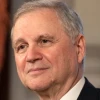


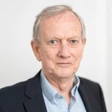
In this public event, Ignazio Visco, Governor Emeritus of the Bank of Italy, will discuss Europe's role in an increasingly fragmented and uncertain world with Jörg Kukies and Vicky Pryce.
The challenges facing Europe, and particularly the European Union, arising from the policies of the second Trump administration are certainly paramount. These challenges are not limited to bilateral trade, but cover a wide range of issues, including energy, defence, digital services and payments. The uncertainty generated by several US policy decisions, including those relating to domestic affairs, appears to be affecting the international monetary system, leading some commentators to question whether the US dollar will maintain its status as the main international reserve currency. According to some, these developments may lead the European Union to fulfil its geopolitical potential, at least in line with the size and depth of its economy. Some even suggest that the euro may finally become a fully-fledged reserve currency out of all this.
However, these claims are debatable, particularly given the significant institutional fragmentation within the EU and the substantial differences in national legislation, issues which were also highlighted in last year’s Letta and Draghi reports. Europe still needs to take strong action to address the challenges of the pre-Trump era. Without first responding properly to demographic, technological and market challenges, one might question the Union’s ability to maintain its current economic and financial strengths. Once defined and agreed, policies and structural reforms must be courageously implemented and adequately communicated — a challenge in itself. At the international level, it is important to pursue ways to limit impediments to the free movement of goods, services, capital, people and knowledge, while maintaining sufficient cooperation and pursuing economic efficiency. At the same time, the welfare and equity consequences of technical change and market openness within the EU and globally must be given more consideration than has been the case in recent decades.
Meet our speakers and chair
Ignazio Visco is Governor Emeritus of the Bank of Italy. After a long career with the Bank of Italy that began in 1972, Ignazio Visco was appointed Governor in November 2011 and renewed in November 2017; his second term ended on October 31, 2023. The following November he was awarded the title of Governor Emeritus by the Board of Directors of the Bank of Italy.
As a governor Mr Visco was a member of the Governing Council and General Council of the European Central Bank, of the Board of Directors of the Bank for International Settlements and of the Boards of Governors of the International Bank for Reconstruction and Development and the Asian Development Bank.
From 1997 to 2002 he was Chief Economist and Head of the Economics Department of the OECD in Paris. Mr Visco graduated from the University of Rome and obtained a Ph.D. in Economics from the University of Pennsylvania. The author of numerous articles and books on economics and finance, he also taught Econometrics and Economic Policy at “Sapienza” University of Rome.
Jörg Kukies is a German economist and politician who served as Minister of Finance in the government of Chancellor Olaf Scholz from November 2024 to May 2025. He is a member of the Social Democratic Party. Kukies spent 17 years working at investment bank Goldman Sachs, where he rose to become co-chief of Germany Austria and head of the securities division in the region. From 2018 to 2021, Kukies served as State Secretary at the Ministry of Finance under minister Olaf Scholz, in the government of Chancellor Angela Merkel. From 2021 to 2024, Kukies was a State Secretary in the German Chancellery; in this capacity, he also served as Chancellor Scholz's sherpa for G7 and G20 summits.
Vicky Pryce is Chief Economic Advisor at the Centre for Economics and Business Research.
Iain Begg is a professorial research fellow at the LSE European Institute.
More about this event
Established in 1991, the LSE European Institute is a world-leading centre for the study of Europe in its global context. With eight master’s degrees and a doctoral programme, a vibrant research community, and a world-leading public events programme, our work spans political economy, politics and policy, culture and society, and migration.
Follow us: Instagram, LinkedIn, Bluesky, Twitter, YouTube, and Soundcloud.
Join our mailing list to receive news about EI events.
From time to time there are changes to event details so we strongly recommend that if you plan to attend this event you check back on this listing on the day of the event.
Whilst we are hosting this listing, LSE Events does not take responsibility for the running and administration of this event. While we take responsible measures to ensure that accurate information is given here this event is ultimately the responsibility of the organisation presenting the event.
Many speakers at LSE events also write for LSE Blogs, which present research and critical commentary accessibly for a public audience. Follow LSE British Politics, LSE Business Review, LSE Impact, LSE European Politics and the LSE Review of Books to learn more about the debates our events series present.
If the event is live streamed, automated live captions will be available. Please note that this feature uses Automatic Speech Recognition (ASR) technology, or machine generated transcription and is not 100% accurate.
Photographs are regularly taken at LSE events both by LSE staff and members of the media and events are routinely filmed. Photographs from events taken by LSE staff are often used on LSE's social media accounts, with videos being made available on the LSE Player. If you have any concerns about this please contact the event organiser in advance of the event.
Please contact the Press Office if you would like to request a press seat or have a media query about this event, email LSE.Press.Events@lse.ac.uk. Please note that press seats are usually allocated at least 24 hours before each event.
We aim to make all LSE events available as a podcast subject to receiving permission from the speaker/s to do this, and subject to no technical problems with the recording of the event. Podcasts are normally available 1 week after the event. Podcasts and videos of past events can be found online.
Event updates and other information about what’s happening at LSE can be found on our Facebook page and for live photos from events and around campus, follow us on Instagram.
Livestreams and archive videos of past lectures are shared on our YouTube channel while event podcasts can be found on the LSE Player.
Attending our events in-person or online? Join the conversation using #LSEEvents.
If you are planning to attend this event and would like details on how to get here and what time to arrive, as well as on accessibility and special requirements, please refer to LSE Events FAQ. LSE aims to ensure that people have equal access to these public events, but please contact the events organiser as far as possible in advance if you have any access requirements so that arrangements, where possible, can be made. If the event is ticketed, please ensure you get in touch in advance of the ticket release date. Access Guides to all our venues can be viewed online.
LSE has now introduced wireless for guests and visitors in association with 'The Cloud', also in use at many other locations across the UK. If you are on campus visiting for the day or attending a conference or event, you can connect your device to wireless. See more information and create an account at Join the Cloud.
Visitors from other participating institutions are encouraged to use eduroam. If you are having trouble connecting to eduroam, please contact your home institution for assistance.
The Cloud is only intended for guest and visitor access to wifi. Existing LSE staff and students are encouraged to use eduroam instead.
From time to time there are changes to event details so we strongly recommend that if you plan to attend this event you check back on this listing on the day of the event.
LSE holds a wide range of events, covering many of the most controversial issues of the day, and speakers at our events may express views that cause offence. The views expressed by speakers at LSE events do not reflect the position or views of the London School of Economics and Political Science.