

Datafication and Digital Rights in East Africa
The Datafication and Digital Rights project sought to understand how digitisation and datafication reshape public communications and the informal economy.
Principal Investigator: Alcinda Honwana
Co-investigator: Rosemary Okello-Orlale
Co-investigator: Gianluca Iazzolino
Co-investigator: Peter Chonka
Co-investigator: Stephanie Diepeveen
Co-investigator: Daivi Rodima-Taylor
More and more aspects of people’s daily lives in East Africa are mediated through digital platforms. As internet connectivity continues to expand at a rapid pace, ever larger numbers of people are using networked devices, and thereby producing increasing amounts of data.
This ‘datafication’ can be a source of value for many different actors – states, businesses big and small, civil society organisations and individuals. It is harvested in multiple ways by the devices and platforms people use, fed back into technologies for everyday activities, and informs how digital platforms operate and how we interact with them.
Little is known in global South contexts about the processes that harvest and commercialise data, and how they relate to citizens’ rights and agency
The project sought to understand how digitisation and datafication are reshaping public communications and the informal economy in East Africa. By focussing on Kenya, Ethiopia and Somalia, the project explored how the ‘datafication’ of everyday experiences and economic activity affects the nature of digital rights for citizens, vis-à-vis states, the market and each other.
Researchers
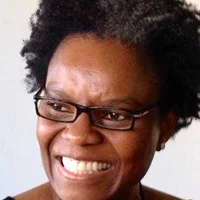
Alcinda Honwana
Alcinda Honwana is Visiting Professor at the Firoz Lalji Institute for Africa and Centennial Professor at the Department of International Development. Alcinda's research focusses on youth politics, social movements and political protest.
Email: A.M.Honwana@lse.ac.uk

Rosemary Okello-Orlale
Rosemary Okello-Orlale is a quantitative data analyst interested in public policy, education and making data work for public good. She is the Director of Africa Media Hub at Strathmore University Business School and head of the Strathmore Data Analytics Centre.

Gianluca Iazzolino
Gianluca Iazzolino's main research interests are ICTs, digital finance and informal economy with a focus on the relationship between technological innovation and power dynamics.
Email: g.iazzolino1@lse.ac.uk

Pete Chonka
Peter Chonka is a Lecturer in Global Digital Cultures at King’s College London Department of Digital Humanities. His research focuses on the impacts of new media technologies on state reconstruction and culture in the Horn of Africa.
Email: peter.chonka@kcl.ac.uk

Stephanie Diepeveen
Stephanie Diepeveen is a Research Associate in the Bennett Institute for Public Policy at the University of Cambridge. Her research examines everyday politics, forms of power and new media technologies in East Africa.
Email: snd31@cam.ac.uk

Daivi Rodima-Taylor
Dr Daivi Rodima-Taylor is a social anthropologist at the Boston University African Studies Center. Her research focuses on informal economies and local innovation, fintech and inclusion, migration and diaspora studies, Africa and Eastern Europe.
Email: drodima@uci.edu
Issues around digital rights are increasingly crucial to citizens’ power in public communication, and for their control of economic and financial resources. However, little is known in contexts in the ‘Global South’ about the processes that harvest, operationalise and commercialise data, and how they relate to citizens’ rights and agency.
In the economic realm, datafication processes are most visible in the proliferation of digital platforms providing a wide range of financial services. Data analytics are now used to create digital footprints and credit scores for consumers and informal entrepreneurs, driving a shift from the digitisation of payments to the wider ‘datafication’ of citizens.
In the communications sphere, social media platforms can profile users to target advertisements and services. Algorithms provide personalised information that may align with users’ existing preferences. However, they also reflect biases, and can help create ‘echo chambers’ that limit exposure to alternative views.
Most emerging research has focused exclusively on Anglo-American countries and developed economies, paying little attention to issues of algorithmic governance and data extractivism in the ‘Global South’. However, regions like East Africa are hardly peripheral to issues of datafication.
There are four key reasons behind our choice of Kenya, Ethiopia and Somalia as a starting point for examining these processes.
1) East Africa has long served as a laboratory for technological innovation and experimentation – sometimes led by actors in the region, sometimes by external forces. 2) local context is clearly important, but we know very little about how different languages, culture and norms of online engagement affect processes of datafication.
3) datafication processes are taking place rapidly, appearing to profoundly shape communications and finance in East Africa.
4) social, economic and geopolitical stakes are high and contestable. Questions around who owns data, who has access to it, and through what infrastructure are not necessarily clearly defined or easily answered.
The primary goals of the Datafication and Digital Rights Network were twofold:
- To establish a sustainable and equitable Network of interdisciplinary researchers and practitioners, from East Africa and internationally, that is capable of effective collaborative research and public engagement activities;
- To develop collaborative and ambitious research proposals driven by policy and practitioner challenges in East Africa in the datafication of social and economic activities, with the ultimate purpose of advancing scientific and academic knowledge.
Our Network interrogated five intersecting dimensions of datafication processes:
1) Back-end processes (algorithmic functionality, interfaces and targeting);
2) Front-end user experiences and their feedback into back-end processes;
3) Data governance and management, with linkages to citizens’ rights;
4) Organisational structures and practices; and
5) The regional and international contexts informing infrastructure and learning.
To explore these dimensions in both the public sphere and the economy, the Network was structured into three working groups: (i) examining datafication and the public sphere; (ii) exploring datafication in the economy; and (iii) coordinating knowledge translation activities.
The aim was to answer the questions: How is the performative power of digital platforms negotiated within specific socio-economic settings? To what extent are users aware of the algorithmic strategies of digital platforms, often based on data extraction and behavioural nudging? Which tactics are enacted at grassroots levels to counter or mitigate these strategies?
The Network had three sets of participants: co-investigators who led on Network activities; Network partners with specific expertise who directly participated, including policy organisations, tech firms and country/sector experts; and wider stakeholder groups. Engagement with wider policy, legal and practitioner stakeholders were discussed in depth in the Pathways to Impact.
The Network was led by Professor Alcinda Honwana. As an inter-regional advisor at the United Nations, Professor Honwana is experienced in leading and engaging with both academic and policy worlds, bringing the skills to convene and grow this Network of researchers, practitioners and policy organisations.
- 'Informal Economic Associations And Datafication In East Africa', Rodima-Taylor, D. & Kimani, M.
The "Hustling Day in Silicon Savannah" comic has been funded by the UKRI DIDA grant "Datafication and Digital Rights in East Africa", which focused on the socio-economic implications of digital technologies in Kenya, Ethiopia and Somalia.

UKRI works in partnership with universities, research organisations, businesses, charities and government to create the best possible environment for research and innovation to flourish.