

Localised Evidence and Decision-making (LEAD)
Addressing the need for locally-relevant evidence in public health decision-making.
Lead Investigator: Cristin Alexis Fergus
LSE Principal Investigtor: Tim Allen
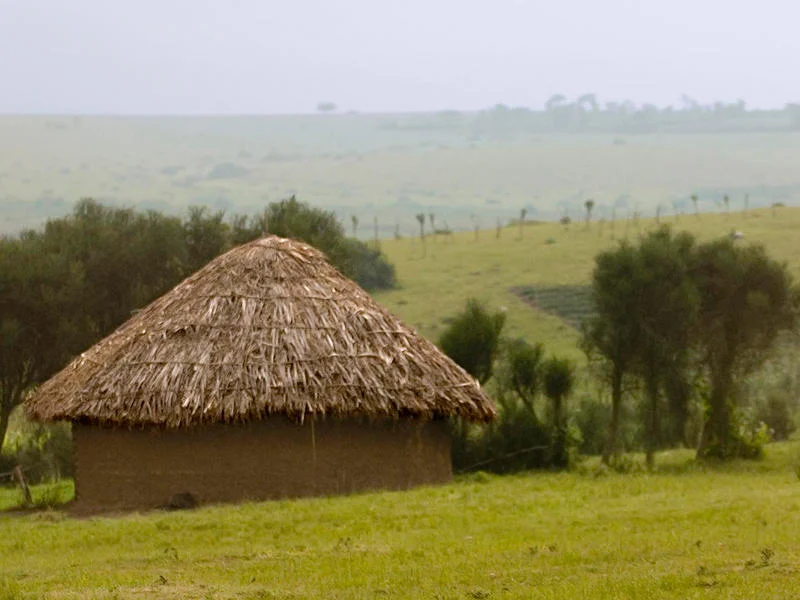
In areas of sub-Saharan Africa, public health practitioners are part of a larger global health system, wherein they implement disease-specific, global health interventions. While these are largely devised and financed by external agents, the information and evidence needed for effective decision-making at the national and sub-national levels have not been extensively studied.
Despite some work on knowledge translation for use in global health policy, there is a surprising lack of information on what is actually useful from a practice standpoint
Through new research and an extensive series of workshops the project created explicit links between local practitioners and the development evidence, identifying local evidence needs and elucidating the complexity of implementation from the local perspective. Using a complex systems approach, this information informed the methodological choices and development of evidence fit for purpose.
The LEAD Project focused on the transmission and control of schistosomiasis and soil-transmitted helminths around the African Great Lakes Region, with fieldwork in epidemiologically-relevant areas of Kenya, Malawi, Tanzania and Uganda.
Global health has become a multi-billion dollar industry whose product is a set of interventions aimed at decreasing the burden of disease in developing countries. The industry’s emphasis of the UN's Millennium Development Goals and Sustainable Development Goals on specific disease problems encourages a biomedical, disease-specific approach to tackling ill-health, despite the social-economic-political basis for their persistence.
In recent years, there has been a focus on the utilisation of evidence-based decision-making in global health. While an emphasis on the localisation of this approach is often part of the rhetoric, its realisation has been challenging in practice. The processes of decision-making at different localities are inherently heterogenous and the evidence needs of local practitioners are not well understood.
The LEAD Project addressed these issues with a synergistic approach to evidence development and utilisation between local public health practitioners and researchers at LSE and London School of Hygiene and Tropical Medicine. While there has been some work on knowledge translation for use in global health policy and practice, there is a surprising lack of information on what is actually useful from a practice standpoint, especially from the perspective of local actors. The LEAD Project identified and responded to the needs of local actors by taking advantage of recent technological and computational advances, in particular the processing and identification capabilities of artificial intelligence for application in global health.
The main objectives were:
- To identify evidence needs of public health practitioners and explore how perceived challenges may impede the use of evidence when implementing global health interventions in their localities.
- To understand perceptions of transmission and interventions for the control and elimination of schistosomiasis and soil-transmitted helminths.
- To respond to the needs of practitioners by taking advantage of technological and computational advances, especially artificial intelligence and simulation for application in global health.
Workstream One
Define local perceptions on disease problem, evidence and decision-making
Activity 1. Participatory modeling
The LEAD Project facilitated the participatory modeling method Participatory Systems Mapping in a series of workshops in Uganda and Malawi. Participants, including health practitioners from the village, district, and national levels in the public and private sectors, developed complex systems maps around schistosomiasis transmission.
Activity 2. Engagement activities
Following the workshops, three engagement activities were established to foster communication and involvement with the LEAD Project. This included: co-authored publications and assistance with publication interests of participants; an online community forum for engagement with components of Workstream 2; and a follow-up meeting with participants near the end of the project.
Workstream Two.
Integrate local perceptions and evidentiary needs into the development of evidence
Activity 3. Assembly of available evidence for a public database
The systems maps produced in the workshops went through a minimal cleaning and normalisation process to maintain the integrity of participant input and minimise our biases. These maps were then synthesised to prioritise factors and develop a list of attributes directly and indirectly related to transmission of schistosomiasis. Finally, web scraping and content mining was used to assemble a database of factors.
Activity 4. Computational modeling
Through the workshops, the project was able to gather information about the evidence gaps for individuals working in a variety of positions in the health sector. Based on feedback and discussions with participants, the LEAD project developed spatial agent-based models fit for purpose, e.g. to facilitate intervention effectiveness evaluation for resource allocation. This included a user-friendly interface adapted to the needs of public health practitioners.
Journal papers
Authors: Authors: Cristin A. Fergus, Bono Ozunga, Noah Okumu, Melissa Parker, Solomon Kamurari & Tim Allen. Published in BMJ Global Health.
After cycles of health interventions have failed to deliver promised reductions of schistosomiasis in Uganda, new research examines new ways of incorporating expert perspectives into the evidence needed for more effective health decision-making.
The researchers used a combination of participatory systems mapping and computational modelling to incorporate new voices into the understanding of disease transmission at national and subnational levels. The findings demonstrate that a wider range of perspectives in the policy, oversight and implementation of schistosomiasis control can create a sustainable reduction in disease transmission.
COVID-19 Riskscapes: Viral Risk Perceptions in the African Great Lakes (2022)
Authors: Elizabeth Storer, Kate Dawson & Cristin A. Fergus. Published in Medical Anthropology.
Drawing on fieldwork across Uganda and Malawi, the article explores how two mobile, trans-border figures – truck drivers and migrant traders – came to be understood as shifting, yet central loci of perceived viral risk. The paper argues that political decision-making processes, with specific reference to the influence of COVID-19 testing regimes and reported disease metrics, aggravated antecedent geographies of blame targeted at mobile "others". We find that using grounded riskscapes to examine localised renditions of risk reveals otherwise neglected forms of discriminatory discourse and practice.
COVID-19 information dissemination in Uganda: Perspectives from sub-national health workers (2021)
Authors: Cristin A. Fergus, Elizabeth Storer, Moses Arinaitwe, Solomon Kamurari & Moses Adriko. Published in BMC Health Services Research.
Health workers at the sub-national level are often on the frontline of disseminating information about COVID-19 to communities. To ensure communities are receiving timely and accurate information, it is vital health workers are kept abreast of the most recent recommendations and guidance.
To understand how information and evidence about COVID-19 is engaged at the subnational level in Uganda, FLIA researchers conducted an electronic survey among health workers in the Ugandan health system. The research finds that understanding the sources of information used by health workers can support the transfer of timely information, which in turn increases the use of time- and place-specific information by the Ugandan population.
Authors: Cristin A. Fergus and Georgina Pearson. Published in the Journal of Public Health Policy.
Even with efforts to facilitate use of evidence in health policy and practice, limited attention has been paid to researchers’ perspectives on use of their research in informing public health policy and practice at local, national and global levels. This systematic literature search identifies published primary research related to schistosomiasis or soil-transmitted helminths and surveys corresponding authors.
Results indicate differences by locations of authors and in research conduct, especially for research conducted in low- and middle-income countries, as exemplified in research leadership discussed elsewhere. These findings highlight a need for additional efforts to address structural barriers and enable engagement between researchers and decision-makers.
Localising evidence for decision-making: participatory approach to inform schistosomiasis control
Authors:Cristin Fergus, Tim Allen, Melissa Parker, Georgina Pearson, Liz Storer & Kate Dawson. European Journal of Public Health (2020), 30.
The work aimed to develop localised evidence for decision-making for schistosomiasis control in Uganda, Malawi, and Tanzania. Workshops were conducted with practitioners from the Ministries of Health at various levels and partner organisations to identify evidence needs for their decision-making processes and perceptions of disease transmission and control activities. Participatory systems mapping was used to identify factors directly and indirectly related to transmission. The maps were synthesised to a master complex systems map, which served as the blueprint for a generalised spatial agent-based model and specific ABMs tailored to the evidence needs of decision-makers.
Participatory systems mapping for localised evidence and decision-making: helminth control
Authors: Georgina Pearson, Melissa Parker, Liz Storer, Tim Allen & Cristin Fergus. European Journal of Public Health, Volume 30, Issue Supplement 5. (2020).
This research follows workshops with district and national-level MoH personnel in Uganda and Malawi using PSM to elicit insights into local modes of schistosomiasis transmission and control, and group discussions on evidence needs and use in implementing control programmes. PSM maps are analysed, triangulated with thematic analysis of group discussion transcripts.
Participation, public health and politics: reflections on participatory mapping workshops on schistosomiasis transmission.
Authors: Georgina Pearson, Melissa Parker, Tim Allen & Cristin A. Fergus. Working paper (2021).
Reports
Uganda information and evidence rapid assessment survey report
Authors: Cristin A. Fergus & Elizabeth Storer, with support from Moses Adriko and Moses Arinaitwe.
This is a report for the Uganda Ministry of Health, reflecting a survey conducted between 3 December 2020 and 15 January 2021.
Artistics outputs
Cartoon: The breakdown in mass drug administration for bilharzia
As part of a series of six comics on public authority in different countries across Africa, Ugandan artist Dianah Bwengye has collaborated with researcher Gloria Kiconco to illustrate why mass drug administration in Uganda has failed to adequately control schistosomiasis (bilharzia) in many areas. The cartoon contextualises issues raised by district health officers and local communities on health control programmes, following a trip to Jinja, on the northern shore of Lake Victoria, and Pakwach in the Uganda’s northwest.
Diagram: The life cycle of the schistosome
Incorporated into the cartoon, researchers created a diagram to illustrate the life cycle of the schistosome, as a tool to disseminate contextually relevant knowledge about the transmission of schistosomiasis.
Shifting Spaces from Coronavirus: Unfolding perspectives from the African Great Lakes Region
Drawing on diverse spatial and temporal moments, this blog series introduced insights from the coronavirus response in Malawi, Uganda, Tanzania and Kenya.
As the coronavirus pandemic marks out an uneven presence across the region, the project will capture local perceptions of the virus and the diverse protections taken against it. This blog series published the experiences of health workers and the general population within the shifting spaces of health information, access and provision of health services, disease perceptions and local personal protections.
We foregrounded experiences in contrasting rural and urban contexts from epidemiologically diverse areas, and offered insights in the context of changing government and civic responses to these extraordinary times. Together, the blogs presented a dynamic contribution as to the realities of the virus as they take shape across the African Great Lakes Region.
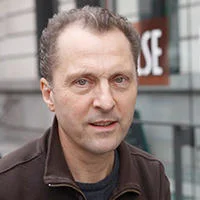
Tim Allen
Tim Allen is Director of the Firoz Lalji Institute for Africa and Professor of International Development at LSE.
Email: t.allen@lse.ac.uk
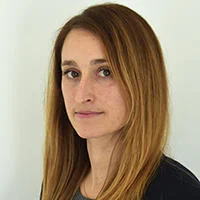
Cristin Alexis Fergus
Cristin was Lead Investigator for the LEAD Project and PhD researcher in the LSE Department of International Development, where she examined aspects of evidence for decision-making within global health.
Email: c.fergus@lse.ac.uk
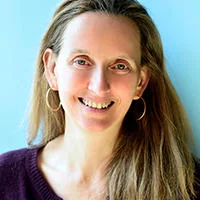
Melissa Parker
Professor Melissa Parker was an adviser on the LEAD Project. She is a medical anthropologist at the Department of Global Health and Development, LSHTM. Melissa has training in Human Sciences and a DPhil from Oxford University.
Email: melissa.parker@lshtm.ac.uk
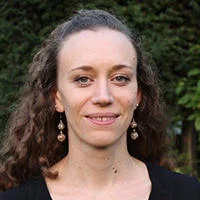
Georgina Pearson
Georgina was a research fellow on the LEAD Project and is a Clinical Lecturer in Public Health in the Population Health Research Institute at St George’s, University of London. She also holds a PhD from the LSE Department of International Development.
Email: g.f.pearson@lse.ac.uk

Dr Liz Storer
Liz was a researcher on the LEAD Project. Her research is based in North-West Uganda and uses ethnographic methods to explore local understandings of health and misfortune.

Kate Dawson
Kate is a research assistant on the LEAD Project and holds a PhD in Human Geography and Urban Studies from LSE, where she examined the socio-natural politics of urbanisation in Accra, Ghana.
Email: k.e.dawson@lse.ac.uk

Duncan Njue
Duncan is a development consulting expert with Finnish Consulting Group - Kenya. He holds an MSc in Development Management from the LSE and a BEng in Chemical and Process Engineering from Moi University.

Halfan Hashim Magani
Halfan Hashim Magani is an Assistant Lecturer at the University of Dar es Salaam, where he previously received an MA in Development Management, an MA in History, and previously a BA in Education.

Moses Adriko
Moses Adriko is the Program Officer for NTD Control Program with over 10 years experience in NTD Control Program at the Division of Vector Borne & NTD Control of the Uganda Ministry of Health.

Arinaitwe Moses
Arinaitwe Moses is a programme officer within the Uganda ministry of health NTD control program. He works on NTD burden, designing and implementing country specific NTD control interventions and evaluating impact.
This partnership between LSE, SOAS, LSHTM, and PostiveNegatives received a Bloomsbury SET Arts Humanities and Social Sciences (AHSS) award to commission and produce visual media that follow on the LEAD project’s research findings related to schistosomiasis and soil transmitted helminths in Uganda and Malawi.
Based at SOAS and led by Principal Investigator Dr Polly Savage, the award supported the production of two visual outputs that communicate the LEAD project’s research in accessible and meaningful ways.
This project is supported by the work of Dr Polly Savage (PI, Department of the History of Art and Archaeology, SOAS), Dr Benjamin Dix (Director, PositiveNegatives), Dr Tim Allen (Director, LSE FLCA, LEAD Project), Dr Melissa Parker (LSHTM), Cristin Fergus (Lead Investigator, LSE LEAD Project), Kara Blackmore (LSE).
The Centre for Public Authority and International Development explores how forms of public authority shape and are shaped by interlocking global challenges with risks and opportunities for development and inclusive growth.

The London School of Hygiene & Tropical Medicine is renowned for its research, postgraduate studies and continuing education in public and global health.

PositiveNegatives produce literary comics, animations and podcasts about contemporary social and humanitarian issues. We combine ethnographic research with illustration, personal testimonies, education and advocacy materials.
Centre for Health, Agriculture, Development Research and Consulting – CHAD, is a Malawi registered company providing research, internships and consulting services to both local and international organisations.

The LEAD project is funded by the Bloomsbury SET programme. The Bloomsbury SET (Science, Economics, Technology) programme connects places, people, businesses, ideas and infrastructures to bring forward innovative scientific and technical solutions to help safeguard human health.
Photo credit: UN Women