

Curriculum

The Executive MSc in Cities is structured as a sequenced, interdisciplinary learning journey over the course of 18-months. Participants begin by framing and interrogating complex urban challenges, before developing the analytical tools needed to understand cities as economic, social and environmental systems. They then progress to strategy design and, subsequently, to the practical challenges of delivery and implementation.
Programme Structure
Year One
The first year of the programme is made up of five modules, which are delivered from September to July. Alongside the core curriculum, participants will also engage in leadership training designed strengthen their abilities as urban leaders.
Each module consists of collaborative work, blended learning materials, live teaching weeks, and assessment.
Modules combine:
- Faculty-led lectures and seminars
- Case-based learning and applied analytical exercises
- Workshops, group work and peer learning
- Engagement with practitioners and city leaders
- Blended learning materials, consisting of pre-recorded lectures, readings, and activities, to be completed by participants in their own time, at their own pace.
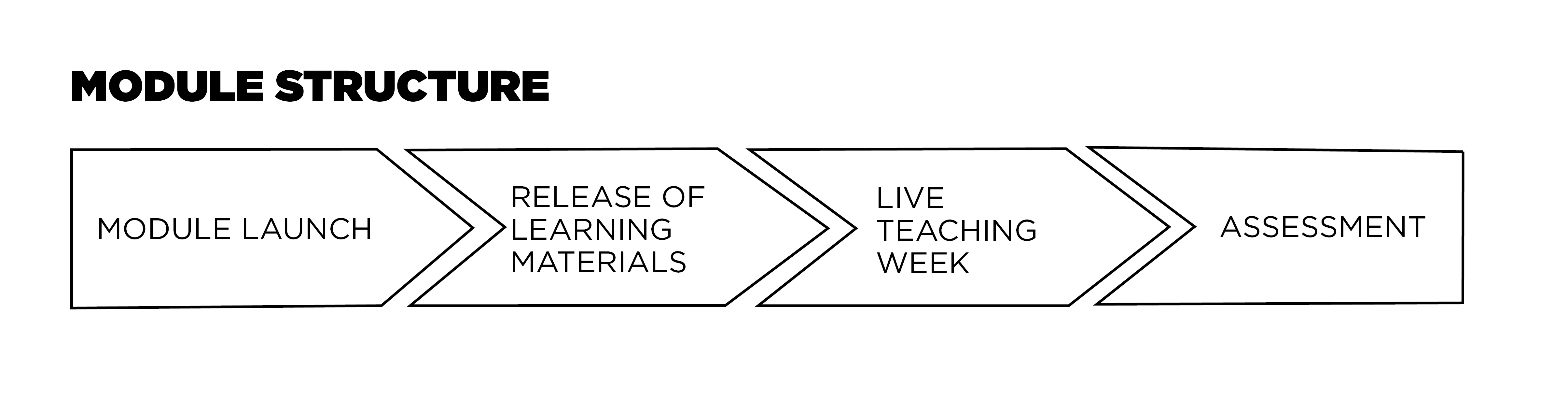
This modular structure allows participants to maintain full‑time professional roles while progressively building knowledge, analytical capability and leadership confidence.
The programme uses a learning platform called LearnWorlds. Three weeks prior to each live teaching week participants will receive the module learning materials, which include recorded lectures, readings, and learning activities. These are to be completed ahead of the live teaching week, in the participants own time.
All participants must attend five one-week live teaching weeks, either in-person at LSE or remotely. Live teaching includes a mix of seminars, case challenges, workshops, group work, site visits, presentations and pitches. Live teaching expands on the teaching delivered via LearnWorlds and offers participants the opportunity to discuss, debate, and interrogate.
Teaching takes place Monday to Friday from 11:00 to 15:00 local London time,
As part of the hybrid-flex teaching model, all Executive MSc in Cities participants have the option to attend live teaching in-person or remotely. Please see our Hybrid-Flex page for further information.
Participants are assessed through a combination of presentations and essays from Modules 1-4. The assessment for Module 5 will be a series of workshops, presentations, and a policy brief. The EMC Lab prepares participants for the final piece of assessment, the Urban Consultancy Project, which they will complete in final six months of the programme.
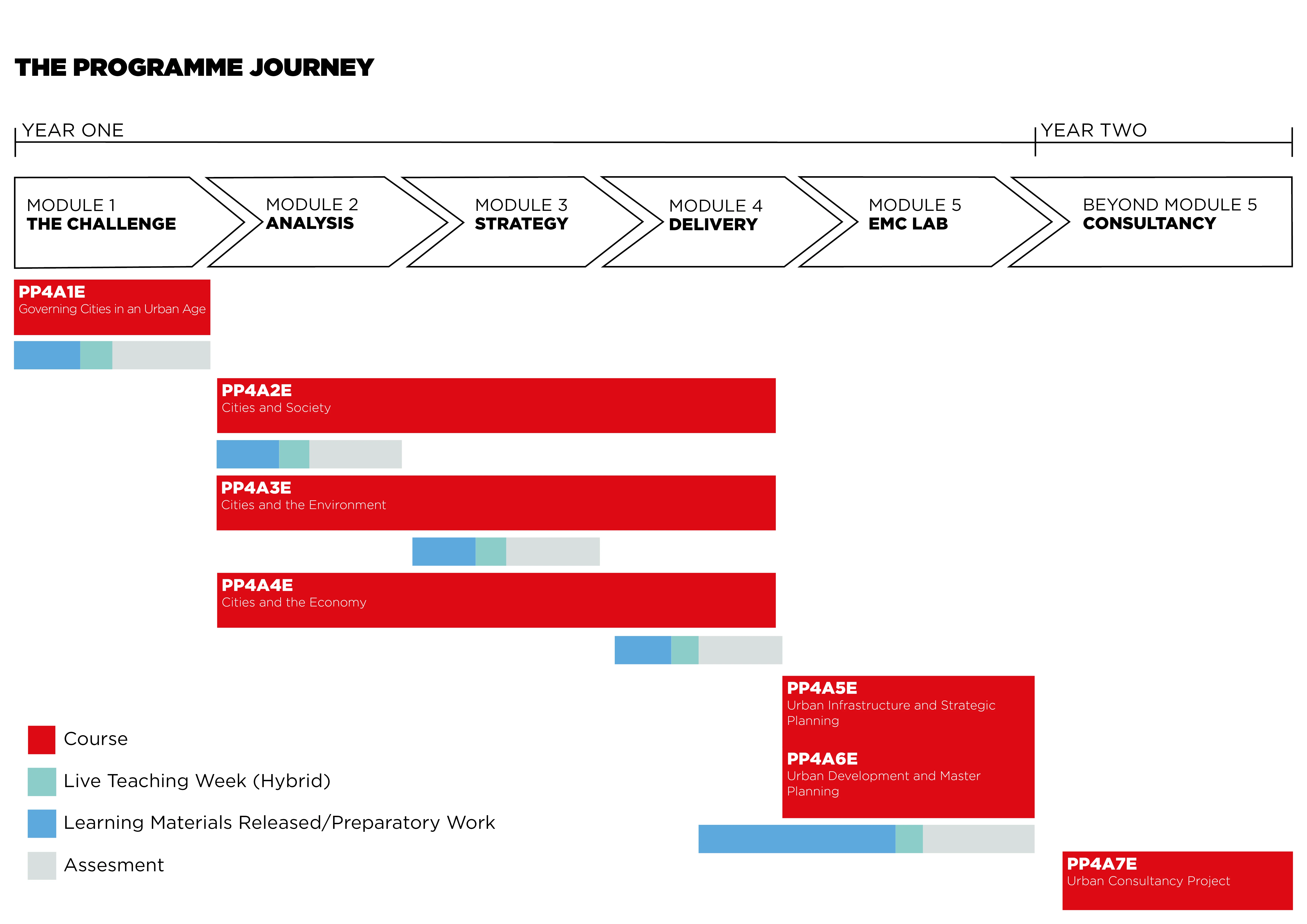
Module One introduces participants to the key challenges facing their own cities. Module Two develops the analytical tools needed to diagnose these challenges in depth. Modules Three and Four then examine how urban strategies are delivered through environmental and economic lenses. The fifth module, the EMC Lab, synthesises all Year One learning and prepares participants for the applied Urban Consultancy Project in Year Two.
Dates for the 2026/27 Cohort
The 2026/27 Programme begins in September 2026. All participants must attend all five live teaching weeks in full.
- Teaching Week One: 28 September to 2 October 2026
- Teaching Week Two: 23-27 November 2026
- Teaching Week Three: 22-26 February 2027
- Teaching Week Four: 26-30 April 2027
- Teaching Week Five: 21-25 June 2027
Year Two
Following the completion of the modules, participants will then undertake a compulsory six-month urban consultancy project, hosted by either your own organisation or an external organisation.
During Year One, the programme will have introduced the project, outlined its requirements and milestones, and assigned each participant a supervisor. Participants will begin work on the project in September of Year Two and submit their final output in February.
Core Courses
All Executive MSc participants will undertake five core courses and choose a single elective course.
An introduction to the structural dynamics that shape the way cities are governed, planned and managed in different regions across the globe. The course outlines the key environmental, social and economic drivers that determine urban change in the 21st century.
Teaching is conducted in Module 1.
Course code: PP4A1E
The connections between how cities are configured and the impact on different social, ethnic and economic groups – including migrants, youth and the elderly - are explored in a course that investigates how the design and planning of cities can either promote social inclusion or exacerbate divisions in urban society.
Teaching is conducted in Modules 2, 3 & 4.
Course Code: PP4A2E
Recognising the critical role that cities play in successfully responding to the global ecological and climate crisis, the course identifies how the negative impacts of urban development on the environment – linked to urban sprawl, motorisation and resource use – can be reversed through innovative governance, green policies and practices that transform the way we develop and inhabit cities and regions in the future.
Teaching is conducted in Modules 2, 3 & 4.
Course Code: PP4A3E
This applied course investigates how city governments, investors and firms can drive inclusive local development in a competitive global economy. Using case studies and real-life examples, the course identifies better ways to measure the city economy and looks at how urban policy can play a key role in steering it through industrial strategies, investments in innovation and fiscal policy.
Teaching is conducted in Modules 2, 3 & 4.
Course Code: PP4A4E
The six-month final report allows participants to develop a tailor-made consultancy designed to respond to the actual urban needs of an organisation or city of their choice, including public sector agencies, corporations and companies, NGOs and international bodies.
Participants will complete this course in the final six months of the programme (Year Two).
Course Code: PP4A7E
Elective Courses
All Executive MSc in Cities participants undertake one of the following elective EMC Lab courses during Module 5:
A collaborative group-based workshop brings together participants with representatives of an external organisation to provide input and practical insights on infrastructure development and strategic planning for cities.
Teaching is conducted in Module 5 (the EMC Lab).
Course code: PP4A5E
A collaborative group-based workshop engages participants with real-life clients, landowners and city authorities to tackle selected planning, design and development issues on a major urban regeneration site.
Teaching is conducted in Module 5 (the EMC Lab).
Course code: PP4A6E