

Research Projects

Our funded projects involve a range of stakeholders and contribute to multiple disciplinary agendas.
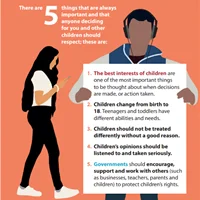
This project seeks to examine how children's rights to provision, protection and participation are being enhanced or undermined in the digital age, and aims to build on current evidence of online risks and opportunities for children worldwide.

CICLA is a three-year multi-disciplinary project that examines China’s International Communication strategy in Latin America, particularly in relation to the implications for journalism and the public sphere in the region.
Digital Futures for Children centre (DFC)
Digital Futures for Children (DFC) is a joint LSE and 5Rights research centre. It supports an evidence base for advocacy, facilitates dialogue between academics and policymakers and amplifies children's voices, in accordance with the UN Committee on the Rights of the Child’s General comment No. 25.

The Digital Futures Commission was a research collaboration of unique organisations that invites innovators, policy makers, regulators, academics and civil society, to unlock digital innovation in the interests of children and young people.
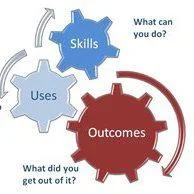
From Digital Skills to Tangible Outcomes (DiSTO)
The DiSTO project develops and improves measures and models of people’s digital skills, digital engagement, and outcomes of Information and Communications Technologies (ICT) use - mapping these onto social inequalities.

A multi-method study of the mental health risks and benefits of digital technology use. A collaboration between King’s College London and the LSE, this project explores adolescents’ online experiences and their relationship to changes in mental health.

A child-rights approach to online age assurance and parental consent solutions. The project is an EU-funded research and development initiative bringing together twelve partners including academic institutions, NGOs and technology providers.

EU Kids Online is a multinational research network. It seeks to enhance knowledge of European children's online opportunities, risks and safety. It uses multiple methods to map children's and parents' experience of the internet, in dialogue with national and European policy stakeholders.
This project, funded by the UK Department of Culture, Media and Sport, aims to independently evaluate the effectiveness of the Common Sense Digital Citizenship Curriculum, previously taught in US schools and now being developed and customised for schools in the UK.

Global Kids Online
Global Kids Online is an international research project that aims to generate and sustain a rigourous cross-national evidence base around children’s use of the internet by creating a global network of researchers and experts, and a research and impact toolkit, to inform and promote children’s rights in the digital age.

JournalismAI is a global initiative, supported by the Google News Initiative (AI), that empowers news organisations to use artificial intelligence responsibly. We support innovation and capacity-building in news organisations to make the potential of AI more accessible and to counter inequalities in the global news media around AI.

The Justice, Equity and Technology Table is a collaborative network-building effort to address the impacts of data-driven policing on racialised communities throughout Europe. The Table aims to build a broad set of visions and strategies of confronting discriminatory policing and the use of data-driven technologies.

Funded by CHANSE/ESRC, PlatFAMs examines the embeddedness of digital platforms in the lives and practices of modern families by researching three-generations (children, parents, grandparents) in five European countries (Norway, Estonia, UK, Romania and Spain).

Polis is LSE's media think-tank, aimed at working journalists, people in public life and students in the UK and around the world. Polis is a hub of people and ideas which regards journalism not simply as a practical skill, but also as a historical-political practice to be situated within broader changes in public life.

Adopting an evidence-based approach to REthinking MEdia Literacy and DIgital Skills in Europe, REMEDIS seeks to provide a framework for evidence-based evaluative research of media literacy and digital skills.
The project involves longitudinal research with children aged 12 to 17 to offer evidence on how to enhance and maximise long-term positive impacts of the ICT environment on multiple aspects of children’s well-being by stimulating resilience through the enhancement of digital skills.
A selection of past projects conducted within the Department of Media and Communications

With a focus on ADHD, self-harm and eating disorders, we explore adolescents’ mental health vulnerabilities and the risks and benefits associated with digital technology use.
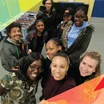
This project investigated youth perspectives and priorities for Brexit negotiations through focus groups and a national YouGov survey

Constructing AcTive CitizensHip with European Youth, was a project funded under the Young 5a stand of the European Union’s Horizon 2020 programme.

Funded by the UK’s Information Commissioner’s Office, this project led by Prof Sonia Livingstone sought to address questions and evidence gaps concerning children’s conception of privacy online.

This project examined the role that communication plays in promoting and hindering community among London’s diverse populations.
CO:RE examined children’s digital experiences relating to their health, lifestyles, participation and digital citizenship, well-being, safety, and security. The LSE team coordinated the theoretical dimension of the research.
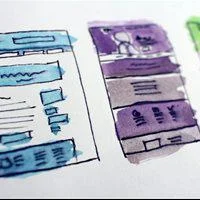
In light of raising concerns about advertising practices targeting children, the study examined children's exposure to online marketing content in social media, online games and applications.
Data Walking
An innovative research process for producing radical data through collaborative walks. Data walking creates a process for observing, reflecting on and seeking to intervene in how data influences civic space.
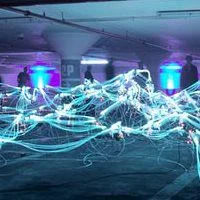
The Digital Intermediaries Project investigated issues of media pluralism and privacy within the context of media convergence.
The Digital Privacy & Data Literacy project was a training programme to train 600+ information and library professionals in the New York metropolitan area.

This project investigated identity management on social media by LGBTQ migrants. The work was led by Łukasz Szulc and was funded by the European Union’s Marie Skłodowska-Curie Actions scheme.
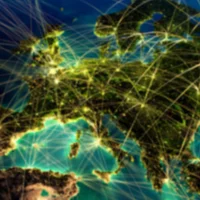
This project suggested alternative futures for national news institutions by collecting and combining data and analysis from and for industry, policy-makers, and journalists working with and within European news agencies.

The project contributed to an exciting and emerging area of international scholarship, and aimed to offer insights that can assist government in developing long-term strategic relations with media.

Heteropolitics was a project in contemporary political theory purporting to contribute to the renewal of political thought on the ‘common’ (communities and the commons) and the political in tandem.

This project aimed to co-produce a consultation model based on reflection and understanding between all groups affected by copyright policy – thereby contributing to more effective and sustainable media policy outcomes.
Building on a successful teaching partnership which has lasted over a decade, the Department of Media and Communications and the Annenberg School for Communication and Journalism at University of Southern California extended their partnership into researching the profound implications of media and communications technologies for our shared futures.
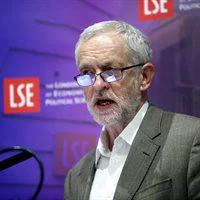
This small-scale project aimed to both present a sound and theoretically informed analysis of the various (or unison) mainstream media representations of the rise of Jeremy Corbyn as a candidate for the Labour leadership and of his portrayal as the new leader of the largest opposition party in the UK.

The project aimed to further research and innovation in the area of young children’s digital literacy and creative design skills.

MOMRO developed a Knowledge Exchange and Impact toolkit designed to ensure that research is used to maximise opportunities and minimise risks online for children around the world.

A broadly interpreted framework for research which touched on a wide range of themes, including social movements, London identities, migration, and media and digital industries.

A 30-month research project under the ESRC and AHRB Cultures of Consumption programme, which focussed on the relationship between consumption and citizenship, asking whether and, if so, how, people's media consumption gives them the resources to connect to wider publics.
The Media Policy Project was led by Dr Damian Tambini and aimed to start conversations between policy makers, civil society actors, and media professionals about contemporary media research.

This research project focussed on understanding how the different histories and politics of European countries shaped the variety of attitudes towards the European "migration crisis", which peaked in 2015-16.

Funded by UKRI (ESRC), this network researched how the digital environment intersects with the traditional influences on children – family, school, peers. The project aimed to build new practice models to improve children and young people’s mental health outcomes.
This project asked how consumers are now represented within the new culture of regulation and, on the other hand, how consumers themselves understand their changing role within communications and financial service regulation, this in turn potentially influencing their response to communications and finance-related risks.

This project examined how children's rights to provision, protection and participation are being enhanced or undermined in the digital age.
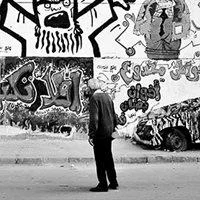
Personalised Media and Participatory Culture in collaboration with AUS
The project examined the role that the internet and digital networks can and do play in helping what might be characterised as traditional young Arab audiences to emancipate themselves from the gatekeeping functions of print and broadcast media and to co-create their own media cultures.

This research project examined new media practices in Africa and their relation to processes of change on the continent. Over the course of three years, this comparative project carried out pioneering and innovative research on the social effects of the rapid spread of new media in Africa.

This three-year, mixed method, participatory research project explored the nature and experience of digital privacy and "data rights" of adult low-income people in the United States.

Funded by the NSPCC, this project reviewed the evidence related to outcomes and effectiveness for children’s helplines so as to inform the future planning of effective service delivery.

In this three-year project, the researchers undertook a series of qualitative case studies to investigate how children and young people, along with their parents, carers, mentors and educators imagine and prepare for their personal and professional futures in a digital age.

This project asked what if massively increased ‘connection’ and ‘connectivity’ has a price, and that price is the undermining of freedom, avalue regarded as generally essential to the fulfilment of human life?

This project examined the role of digital communication in the making of cities of refuge. More particularly, it focussed on urban communities’ digital responses to sudden, unplanned and/or unwelcome change resulting from irregular migration into the city.

The Social Theory Network linked the LSE Departments of Media and Communications and Sociology, providing a platform for interdisciplinary debates on social theory.

This project was a multi-year ethnographic study that investigated how creative software learning experiences in music and video production also develop understandings of science, technology, engineering and math (STEM) in young people aged 14-18.
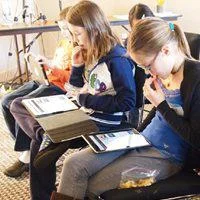
Working with an ordinary London school, the researchers followed the networks within and beyond a single class of 13-14 year olds at home, school and elsewhere over the course of an academic year - using digital networking technologies to reveal both patterns of use and the quality and meaning of such engagements as they shape the learning opportunities of young people.

The Euro Crisis in the Press was an interdisciplinary and comparative study of the way the crisis is covered in the press across the Eurozone. The project investigated press coverage as a platform for the dissemination of public discourses about the crisis and as an indicator of public understanding.
The T3 Commission sought to identify current trends and policy or strategy opportunities and challenges. Its report set out an agenda for policy by governments, the industry and civil society including specific recommendations.

This three year project (2015-2018) researched the rapidly growing population of infants, toddlers and pre-schoolers who are embracing online interactions via iPads, tablets and smartphones.

This project used design methods and public engagement to investigate how to make data-based, automated decision-making understandable to people, how to communicate the processes through which automated systems operate and implications for personal data privacy and collective data governance, and to engage with complex issues of algorithmic transparency.

The goal of this project was to analyse and map the ethical practices of European hardware and software entrepreneurs, maker and hacker spaces, and community innovators.
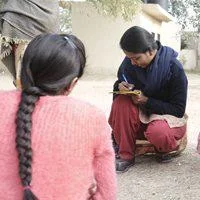
The study aimed to provide ways of reducing violence and hate speech, while retaining the most positive aspects of messaging apps. The project intended to formulate a typology of digital misinformation in India that would be helpful to regulators, technology companies, civic campaigners, those interested in media literacy and political education.
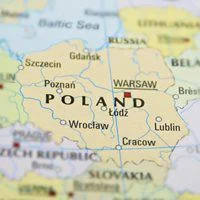
This project explored communicative strategies and the discursive construction of the ‘people’ in Polish political discourses across the political spectrum. It evaluated how the produced image sits within the broader historical discursive production of ‘Poles’, their values and qualities.