

Connect
About
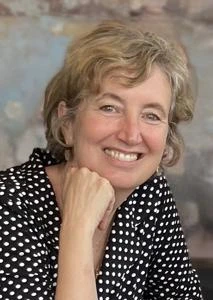
Suzanne Hall is Professor of Sociology at LSE. Her research interests are in urban marginalisation and street livelihoods; migration, racial bordering and urban multiculture; and gender, space and labour. She is the author of The Migrant’s Paradox: Street livelihoods and marginal citizenship in Britain (University of Minnesota Press, 2021) and City Street and Citizen: The measure of the ordinary (Routledge, 2012) and co-author with Ricky Burdett of The SAGE handbook of the 21st Century City (SAGE, 2018).
Key Expertise: Urban inequalities, Migration, Livelihoods and Work, Racialisation, Ethnography
Research
Suzi’s research engages with urban marginalisation and livelihoods in deprived parts of cities. Her work has focused on the edge economies of migration, racial borders, and more recently, on gender, space and labour. Her research on urban marginalisation and street livelihoods ethnographically explores the nuances of the socio-economic life of high streets in the context of urban inequality. This was brought together in her London-based book on City Street and Citizen: The measure of the ordinary.
Her ESRC research project across five deindustrialised UK cities examined the intersections of global migration and urban marginalisation through hundreds of face-to-face surveys, varied socio-spatial observations and mappings. In exploring street economies across Birmingham, Bristol, Leicester, London and Manchester, the research highlights the local realities of the discriminatory impacts of the state-driven Hostile Environment and austerity politics, the Great Recession, and ongoing changes to the world of work. A core publication on this body of research is The Migrant’s Paradox: Street livelihoods and marginal citizenship in Britain.
Working alongside researchers in South Africa, and supported by a Philip Leverhulme prize, a project on the migrant margins explored the spaces and livelihoods shaped by women from the DRC who had sought refuge in Cape Town. This project traced their navigation of the city and revealed how gender, space and labour are conditioned by racial borderscapes. This subsequently culminated in a comparative journal article with Sara Farris on ‘Racial borderscapes and the ungrounding of migrant life: thinking with space, gender and labour’.
Suzi is now expanding on her body of research to focus on how young women navigate conditions of youth unemployment from the context of marginalised parts of UK cities.
Suzi is part of the Urban Sociology research cluster.
Teaching
Suzi teaches on the MSc City Design & Social Science programme on social and political formations of urban space, planning and design, and she convenes an undergraduate module on Racial Borderscapes.
Suzi welcomes enquiries from prospective PhD students in her area of research interests. Please note that she is not taking on new PhD students for the 2027-28 session.
Engagement and impact
Suzi’s research engages with wide audiences, including the public, practitioners and policymakers
Recent media mention:
- (2023) Research featured in The Guardian article by Aditya Chakrabortty, ‘First it was no to Polish plumbers then Afghan refugees. Now the right doesn’t want any migrants at all’. May.
Collaborative reports published with The Runnymede Trust:
- (2021) Alexander, C., Carey, S., Hall, S., and J. King, Revisiting Brick Lane: The Impact of COVID-19 on an Ethnically Diverse High Street, The Runnymede Trust.
- (2020) Alexander, C., Carrey, S., Lidher, S., Hall, S. and J. King, Beyond Banglatown: Continuity, Change and New Urban Economies in Brick Lane, The Runnymede Trust.
Collaborative research with Latin Elephant:
- (2018) King, J., Hall, S., Roman-Velazquez, P., Fernandez, A., Mallins, J., Peluffo-Soneyra, S. and N. Perez , Socio-economic Value at the Elephant and Castle, August.
Commissioned collaborative research for the GLA:
- (2017) We Made That and LSE Cities, High Streets for All, the Mayor of London, Greater London Authority, September.
Research Film
- (2015) Ordinary Streets. A film. Made with Sophie Yetton, LSE Cities.