

Before healthcare fully embraces generative AI, we need better evidence and regulation
Healthcare systems the world around are under growing strain, facing mounting financial pressures, competing priorities and a global shortage of healthcare workers.
These challenges are compounded by the rise in noncommunicable diseases (NCDs), which are now responsible for 41 million deaths annually, representing 74 per cent of all deaths worldwide. Digital health and artificial intelligence technologies (DHAITs) hold considerable promise for alleviating these pressures.
Dr Robin van Kessel, Co-Director of the AI and Digital Lab at LSE Health, explores how digital health tools are implemented and regulated. In a recent report for LSE Consulting, Dr van Kessel and colleagues explored some of the barriers preventing these technologies being adopted more widely into our healthcare systems and how they can be overcome.
AI is a 70-year-old overnight phenomenon
Despite the current hype, Dr van Kessel points out that AI has been used in healthcare for decades. For example, in areas from radiology to diagnostics, it has been used to analyse scans and identify abnormalities on X-rays and MRI images.
“AI is a 70-year-old overnight phenomenon,” he says, highlighting how embedded it has become in some healthcare areas.
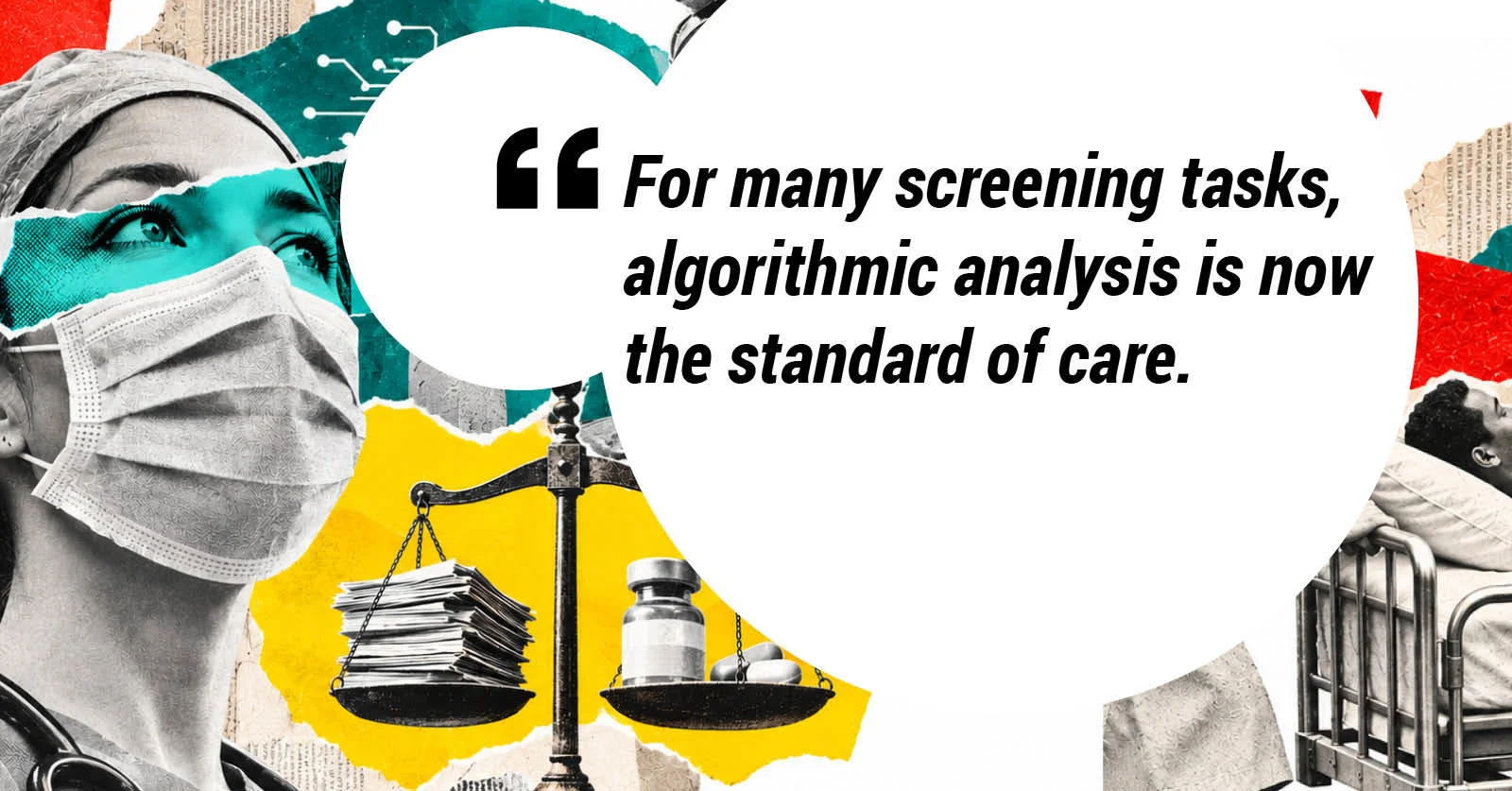
“For many screening tasks, algorithmic analysis is now the standard of care. If I had a scan that hadn't been analysed with one of these models, I would want a second look, because in those narrow, well-defined tasks the models consistently match or exceed what a human reader can do,” he emphasises.
While the use of AI in these areas of healthcare is well accepted, Dr van Kessel argues the introduction of generative AI, such as large language models that help clinicians work through a differential diagnosis, presents a completely different challenge. Diagnostic support is one of the most promising uses of large language models in healthcare, and it is also one of the most studied. A systematic review published in 2025 in JAMA by Suhana Bedi and colleagues found that around one in five evaluations focused on diagnosis, but only five per cent of all evaluations used real patient data. Dr van Kessel explains that “we know a lot about how these models perform on test questions and much less about how they perform in a consultation.”
On top of that, he illustrates how “generative tools raise a distinct set of problems for health systems, from regulation and evidence generation through to how the technology itself behaves, which makes them unlike anything we have had to integrate before.”
What does good evidence on AI integration look like?
When deciding if generative AI should be integrated into our healthcare systems, we need evidence to understand what that integration could look like and to avoid harm. However, agreement on what constitutes good evidence in this area has been difficult.
AI researchers and healthcare researchers often work to very different standards with differing expectations and views on what amounts to acceptable evidence levels.
“For generative AI, there is still no shared understanding of what good evidence looks like,” says Dr van Kessel, “and we have not yet reached consensus on even the baseline study designs.
“There is a real tension as the computer science community often sees clinical evidence standards as hard to accommodate for such a fast-moving technology. Meanwhile, the health research community expects any technology entering patient care to meet established standards. Both positions have merit, but there is an important level of nuance that tends to get lost in these exchanges,” he continues.
To try and tackle this issue, Dr van Kessel and colleagues have created a taxonomy of digital health and AI tools designed to support more targeted and appropriate evidence collection. “No two digital health technologies are the same,” he stresses, highlighting how evidence collection and regulation for one tool might not be suitable for another.
Rather than create an exhaustive list, the taxonomy is intended to evolve alongside the technology. “This is not meant to be a final taxonomy. If it were, we would have missed the point, seeing as these technologies keep evolving, and building blocks will need to be added and retired over time.”
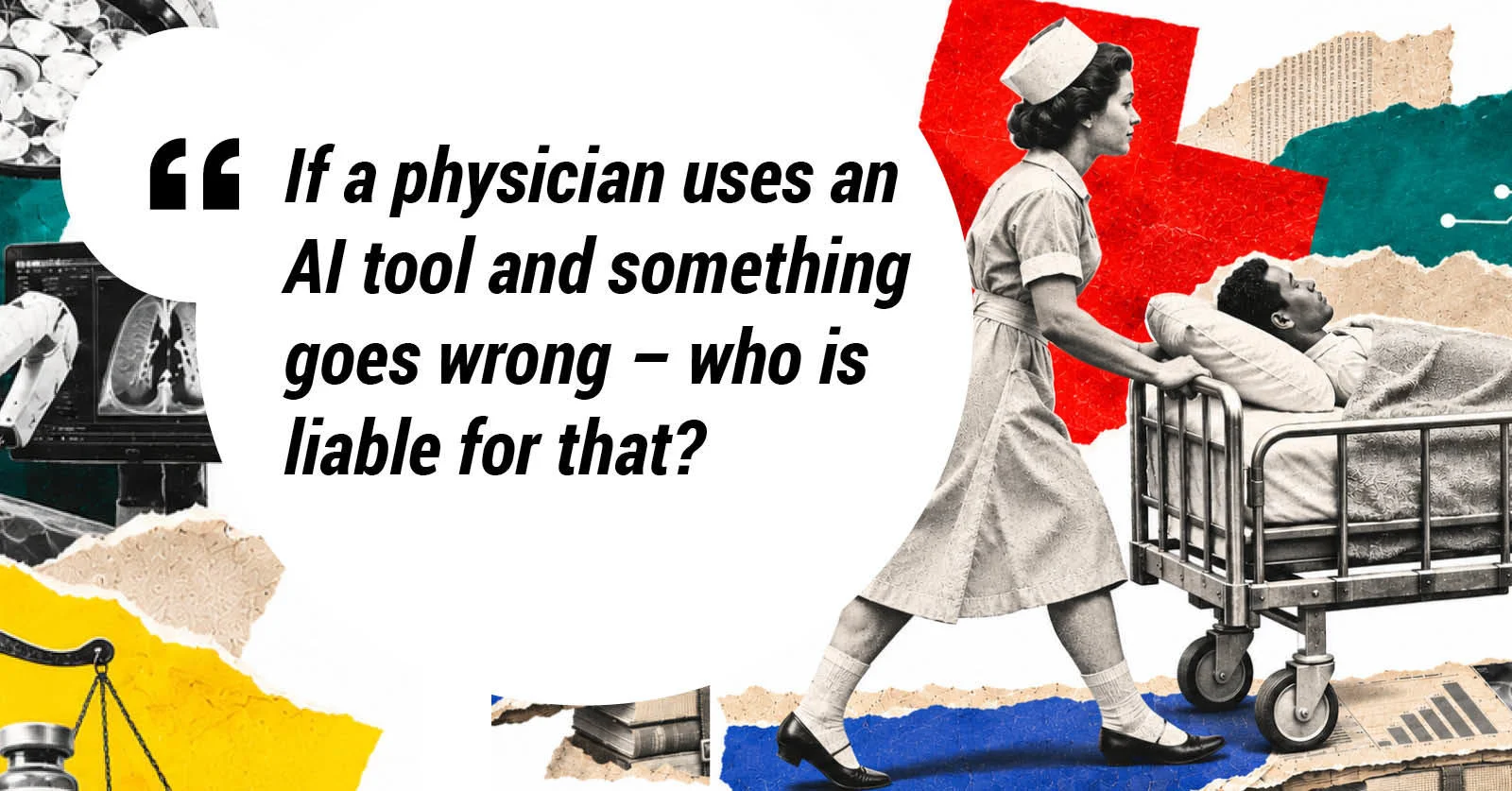
If a physician uses an AI tool and something goes wrong, who is liable for that?
Gaps in the guidance on generative AI use
To create the taxonomy, Dr van Kessel reviewed various guidance documents from bodies such as the National Institute of Health and Care Excellence (NICE) and found significant gaps around generative AI use.
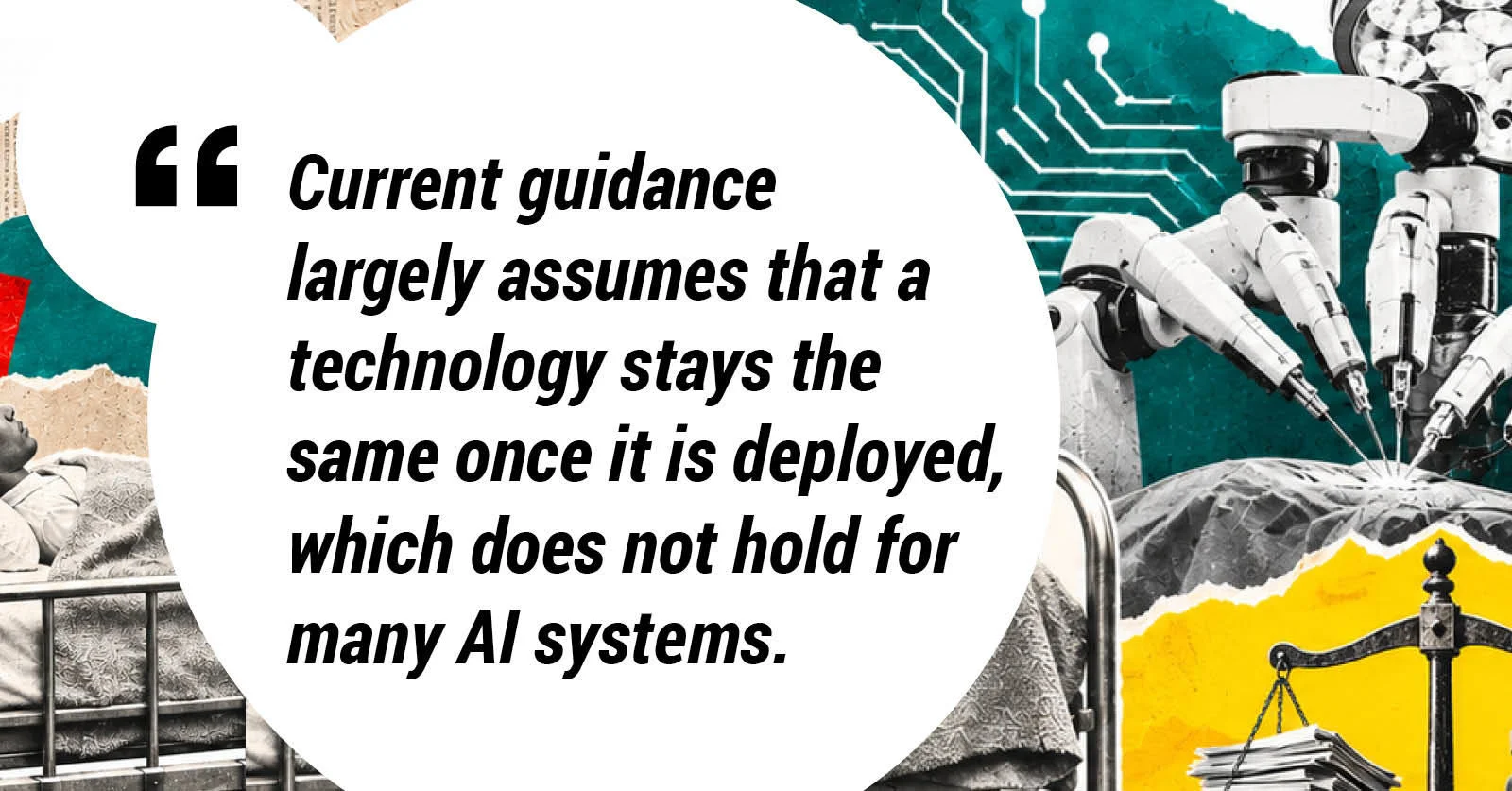
“Current guidance largely assumes that a technology stays the same once it is deployed, which does not hold for many AI systems,” he explains. “If you ask your language model of choice the same question 20 times, for example, you get 20 different answers. And if you change three words in your question, and ask it another 20 times, you're going to get 40 different answers. That level of intricacy is currently not recognised in the evidence guidelines.”
This feeds into two other major issues Dr van Kessel believes stand in the way of generative AI tool adoption in healthcare systems. One is the substantial lack of training for healthcare practitioners using AI tools. This means many lack the confidence and skills to use the technology effectively.
The other related issue is around liability. If a physician uses an AI tool and something goes wrong, who is liable for that? The doctor? The hospital? The AI company? “This is something that is consistently reported in qualitative research with physicians,” explains Dr van Kessel. ‘‘They are wary to use AI in case something goes wrong. They don’t know where they stand.”
Context is important
In creating the taxonomy, Dr van Kessel explored the frameworks available for digital technology and AI use in six countries – the UK, France, Germany, South Korea, US and Canada – and highlighted different areas of strength across these jurisdictions.
However, he also argues that context is important. What might work for one country may not be suitable for another, with very few universal answers available around the use of AI in healthcare.
For example, in areas where mental health services are unavailable or very limited, a mental health chatbot might be better than no support at all. In contrast, in systems with abundant support, a chatbot might be insufficient.
“It's about understanding what the needs of the environment are and what resources are available,” he explains.
While overarching guidance and bringing together the best parts of legislation from different countries can be beneficial, Dr van Kessel also believes there needs to be nuance and understanding of local needs with local decision-makers best placed to know what should or should not be adopted in their systems.
Going forwards, Dr van Kessel argues that healthcare systems need better ways to evaluate generative AI, greater use of real-world evidence and more flexible approaches to testing and adopting new technologies.
Without those changes, many of the tools that promise to transform healthcare may struggle to move from innovation to implementation.
Dr Robin van Kessel was speaking to Charlotte Kelloway, Media Relations Manager at LSE.
Subscribe to LSE Research for the World

Research for the World is the online magazine by LSE - The London School of Economics and Political Science.

Related content
Can we use AI to predict mental health crises?

Can the NHS crisis be solved by partnering with tech start-ups? The cautionary tale of Babylon Health
How far should we trust the voice of AI?