

Solving homelessness through partnership: philanthropy, finance, and social entrepreneurship
Speakers



Chair

Homelessness is an urgent social problem in the UK and other countries. But solving homelessness can seem an unmanageable challenge. Homelessness is driven by complex interactions of structural factors, place-based context and individual trajectories. Prevention is more effective and less costly than crisis response, yet receives limited attention.
Can private action - social entrepreneurship, philanthropy, and new forms of private capital deployment – make a difference?
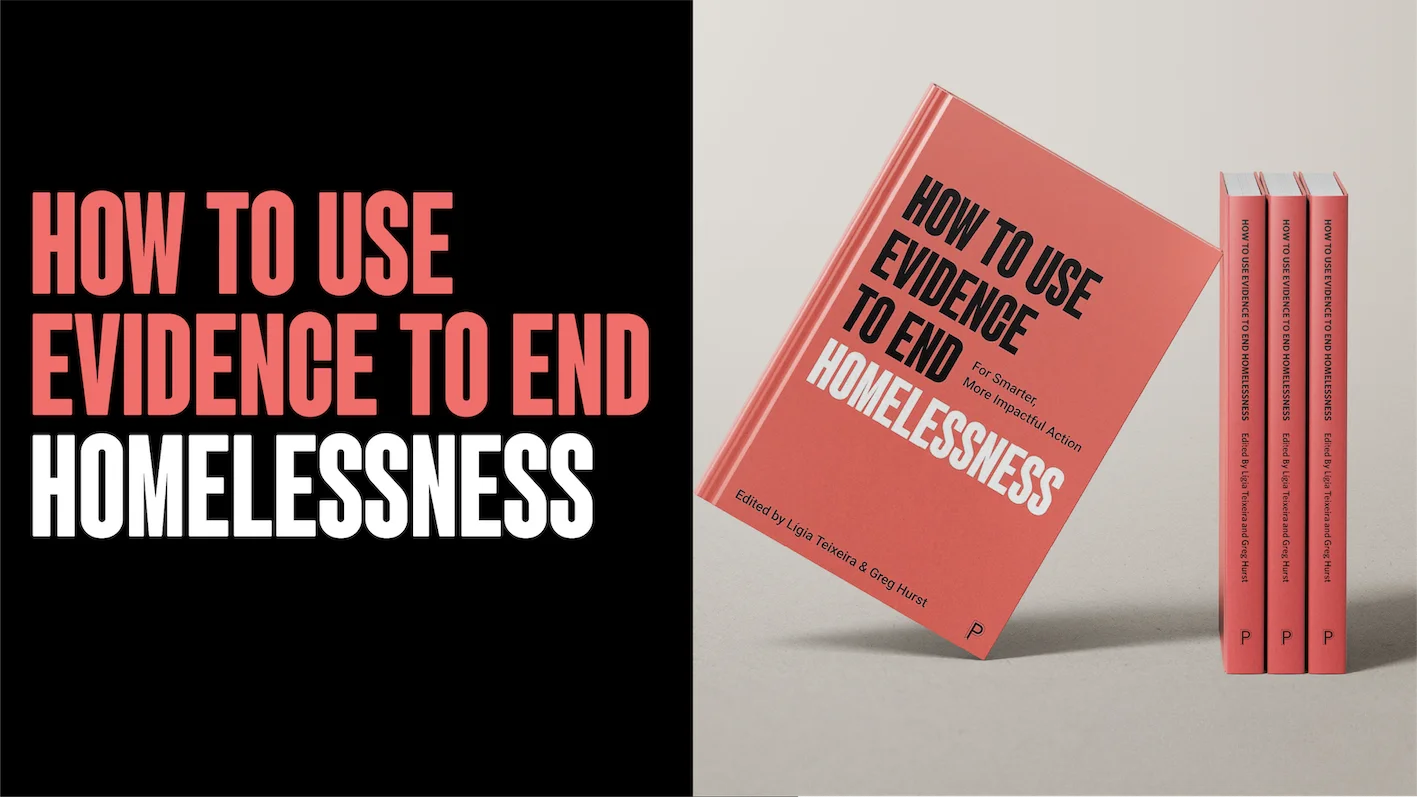
This event launches a new edited volume How to Use Evidence to End Homelessness, including a chapter by Jonathan Roberts: "Social entrepreneurship: creating social impact in the homelessness field". It will explore important questions about the role of private action in solving homelessness. Join our panel of experts as they consider:
- What’s the role of private action – social entrepreneurship, philanthropy, voluntary action – in enabling sustainable solutions?
- How can we have effective cross-sector partnerships?
- What can new mechanisms of capital allocation and finance achieve?
- Within such private action - how we ensure rigour, the best use of evidence, and that our efforts are focused in the right place in complex systems?
Meet our speakers
Jonathan Roberts
Jonathan Roberts is Professor (Education) in Civil Society and Public Policy at the Marshall Institute at the London School of Economics. He leads the development of teaching activities at the Institute, where he designed the ground-breaking executive MSc in Social Business and Entrepreneurship. Jonathan’s research interests include philanthropic funding systems, social justice philanthropy, hybrid organisations, social enterprises, and the interaction of government with private action for public benefit. He is currently leading a research study into the role and performance of philanthropy in five global financial centres. His work has been published in social policy, education, sociology and public administration journals.
Dr Lígia Teixeira
Lígia Teixeira works on how societies prevent and respond to homelessness. Her work focuses on closing the gap between ambition and impact: particularly where good intentions are undermined by fragmented systems, weak delivery, or a lack of learning about what works. She works at the intersection of government, civil society, and philanthropy, supporting leaders to make better decisions about both what to do and how to do it well. Trained in political theory, her interest in homelessness grew from questions of power, justice, rhetoric and the role of the state – shaped during her time at the London School of Economics, where, walking through Lincoln’s Inn Fields, she first confronted the reality of rough sleeping.
She is the founding Chief Executive of the Centre for Homelessness Impact, which she established in 2018 to strengthen the use of evidence, data, and learning across homelessness systems in the UK and beyond. She is particularly interested in how complex systems change, how prevention can be embedded in policy and practice, and how long-term investment and learning translate ambition into better outcomes for people.
Sarah Hopley
Sarah Hopley is Head of Venture Studio at Crisis, the national charity for people experiencing homelessness in the UK. She leads the charity's impact investment strategy to back early-stage ventures working to end homelessness and housing insecurity. She also sits on Crisis's Strategic Leadership Group and Housing Delivery Board, and holds board observer roles at portfolio companies.
Before Crisis, Sarah worked in commercial roles in property and proptech, latterly at Appear Here, where she made London's retail space accessible to the brands and businesses usually locked out of it.
Sarah is a Year Here Fellow and holds an Executive MSc in Social Business and Entrepreneurship from LSE, where she was a Marshall Scholar. She won Social Investment Champion at the 2024 WISE100 Awards from Pioneers Post and NatWest.
Meet our chair
Dr Kerryn Krige
Kerryn Krige is a Senior Lecturer in Practice at the Marshall Institute, specialising in social entrepreneurship and the social and solidarity economy. She teaches on the Executive MSc Social Business and Entrepreneurship and the MSc Social Innovation and Entrepreneurship at LSE, and is course convenor for the online certificate and one-week executive courses, in social enterprise.
She brings extensive experience from across the social entrepreneurship and non‑profit sectors, bridging theoretical and practice perspectives. Kerryn led the development of the social and solidarity economy policy for the South African government and the African Union, co‑founded the African Network of Social Entrepreneurship Scholars, and previously headed the Network of Social Entrepreneurs at GIBS, University of Pretoria. Her research examines social entrepreneurship in diverse contexts, including two national mapping studies in South Africa and a six‑country study for the ILO. Current projects include a collaboration on social enterprise in Benin, and the development of new case studies using the Charles Booth archives as well as ventures supported by the 100X Impact Accelerator. She has served as an independent trustee on CSI, impact‑finance, and social enterprise boards, and currently sits on the board of research network EMES (https://emes.net/).
LSE holds a wide range of events, covering many of the most controversial issues of the day, and speakers at our events may express views that cause offence. The views expressed by speakers at LSE events do not reflect the position or views of the London School of Economics and Political Science.