
Who builds world order when the hegemon won't?

The central question is no longer who will lead the world. It is how cooperation can continue when no one reliably does.
For eighty years, the world economy rested on a simple assumption: powerful nations would provide the public goods that allowed everyone to prosper. That assumption is rapidly failing. The United States increasingly treats its alliances and market access as assets to monetise rather than institutions to sustain, while China has yet to convince much of the world that it can provide trusted leadership.
The debate on US-China rivalry therefore is asking the wrong question.
Drawing on economics, international relations, and recent experience from Asia and beyond, Danny Quah proposes a different model of international cooperation. Instead of waiting for great powers to restore the old order, countries with the strongest incentive to preserve stability can build “multilateral-enough” institutions through flexible coalitions, shared incentives, and practical collaboration. Inadvertent cooperation becomes the norm. Agreements such as the CPTPP, RCEP and the WTO’s interim appeal arrangement suggest that effective international rules no longer require universal consensus—or hegemonic permission. Great Power presence and sponsorship are optional.
But if the world's rules will be written by whoever needs them most rather than whoever's biggest, how should the UK navigate this new international landscape?
Meet our speaker
Professor Danny Quah is Li Ka Shing Professor in Economics at the Lee Kuan Yew School of Public Policy. His research interests lie in international economic relations, economic growth and development, and income inequality and social mobility. Quah's current projects (1) study the modern practice of economic statecraft, including how to build future multilateralisms; and (2) analyze the impact of fraying multilateralism on economic growth and social mobility.
Discussant
Dr Sichen Li is an Assistant Professor in the Department of International Relations at LSE. From 2024 to 2025, she was a Postdoctoral Research Fellow at the Niehaus Center for Globalization and Governance at Princeton University. She earned her PhD in Political Science from UC San Diego in 2024.
Her research examines the challenges that geopolitics poses to globalisation. She also studies how firms respond to political tensions by adjusting their investment strategies, as well as how the public in the US and China reacts to great power competition.
Chair
Professor John Sidel is Sir Patrick Gillam Chair in International and Comparative Politics (Joint appt: LSE Government & LSE IR) and Director of the Saw Swee Hock Southeast Asia Centre. He is a specialist on Southeast Asia and has conducted extensive research in Indonesia and the Philippines in particular.
More about this event
The Department of International Relations at LSE is now in it's 99th year - one of the oldest as well as largest IR departments in the world, with a truly international reputation. Throughout 2027 we will celebrate our centenary with a series of events and initiatives involving faculty, students, alumni and the public. We are ranked 2nd in the UK and 5th in the world in the QS World University Ranking by Subject 2026 tables for Politics and International Studies.
The Saw Swee Hock Southeast Asia Centre (SEAC) is a multidisciplinary, regionally-focused academic centre at LSE. Building on the School's deep academic and historical connections with Southeast Asia, SEAC seeks to foster world-leading academic research focused on the region’s cultural, economic, political, religious, and social landscapes, drawing on the LSE’s signature strengths in the social sciences, history, and law.
If you are planning to attend this event and would like details on how to get here and what time to arrive, as well as on accessibility and special requirements, please refer to
LSE aims to ensure that people have equal access to these public events, but please contact the events organiser as far as possible in advance if you have any access requirements so that arrangements, where possible, can be made. If the event is ticketed, please ensure you get in touch in advance of the ticket release date.
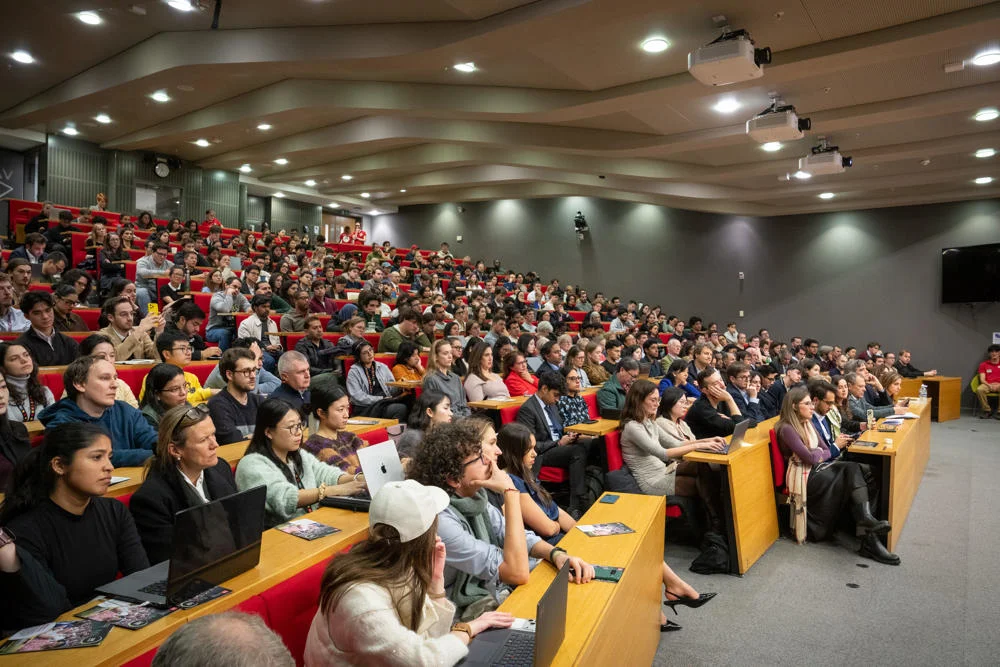
Photographs taken on behalf of LSE are often used on our social media accounts, website and publications. At events, photographs could include broad shots of the audience and lecture theatre, of speakers during the talk, and of audience members as they participate in the Q&A.
If you are photographed participating in an event Q&A but would not like your photograph to be stored for future use, please contact ir.events@lse.ac.uk
We aim to make all LSE events available as a podcast subject to receiving permission from the speaker/s to do this, and subject to no technical problems with the recording of the event. Podcasts are normally available 3-5 working days after the event. Podcasts and videos of past events from the Department of International Relations can be found at Events.
Follow us on Bluesky @lseir
Follow us on X/Twitter: @LSEIRDept
Follow us on Facebook: LSEIR
Follow us on Instagram: lseir
Follow us on LinkedIn: LSE Department of International Relations
Check out our website for more information about our events and event podcasts: www.lse.ac.uk/international-relations
Many speakers at LSE events also write for LSE Blogs, which present research and critical commentary accessibly for a public audience.
LSE has now introduced wireless for guests and visitors in association with 'The Cloud', also in use at many other locations across the UK. If you are on campus visiting for the day or attending a conference or event, you can connect your device to wireless. See more information and create an account at Join the Cloud.
Visitors from other participating institutions are encouraged to use eduroam. If you are having trouble connecting to eduroam, please contact your home institution for assistance.
The Cloud is only intended for guest and visitor access to wifi. Existing LSE staff and students are encouraged to use eduroam instead.
From time to time there are changes to event details so we strongly recommend that if you plan to attend this event you check back on this listing on the day of the event.
Whilst we are hosting this listing, LSE Events does not take responsibility for the running and administration of this event. While we take responsible measures to ensure that accurate information is given here this event is ultimately the responsibility of the organisation presenting the event.
LSE holds a wide range of events, covering many of the most controversial issues of the day, and speakers at our events may express views that cause offence. The views expressed by speakers at LSE events do not reflect the position or views of the London School of Economics and Political Science.
Subscribe to the LSE Events newsletter