
Europe in a post-liberal world: in conversation with Pedro Serrano



Join Pedro Serrano, the European Union Ambassador to the United Kingdom, at this event to discuss Europe in a post-liberal world.
Europe stands at a crossroads. Since the end of World War II, the international liberal order – largely underpinned by the United States – created the conditions for European integration, with the European Union playing a pivotal role in deepening and expanding rules-based multilateralism.
Today, the founding principles of the international liberal order – the rule of law, democracy, free trade, and collective security – are being challenged in a world where military force, zero-sum competition, and the weaponisation of interdependence increasingly define international relations.
This event will examine how these shifts are testing and reshaping Europe: its identity, its priorities, institutional structures, and its role on the global stage. It will look to answer the following questions: How can the EU adapt to a world defined by power politics? And what might an ‘independent’ Europe look like in a post-liberal era?.
During this event, we will have the opportunity to hear first-hand from Ambassador Serrano, as well as LSE experts.
Meet our speaker
Pedro Serrano is the European Union Ambassador to the United Kingdom. A Spanish career diplomat, Mr Serrano has been an EU official since 2003. He was Chief of Staff to the European Union’s High Representative for foreign affairs and security policy and EC Vice President Josep Borrell Fontelles until October 2022. His previous roles include that of Deputy Secretary General for Common Security and Defence Policy and Crisis Response at the European External Action Service (EEAS) and Diplomatic Advisor to the President of the European Council Herman Van Rompuy.
Pedro Serrano was also the first EU Ambassador to the United Nations, in New York, after the entry into force of the Lisbon Treaty.
Discussants
Federica Bicchi is Associate Professor of International Relations in the Department of International Relations at LSE. Her current research focuses on contemporary trends in European diplomacy, especially in relation to the digitalisation of diplomacy and developments in European foreign policy cooperation. Her theoretical perspective contributes to the “practice turn” in International Relations.
Spyros Economides is Associate Professor in International Relations and European Politics at LSE and Research Coordinator, Hellenic Observatory Research Cluster on Politics & Geopolitics. His current research concentrates on: the ‘West’ in contemporary international relations; the external relations and security policies of the EU; Europeanisation and foreign policy, and the EU’s relationship with the Western Balkans.
Chair
Karen E Smith is Professor of International Relations Theory in the Department of International Relations at LSE. Her main research interests lie in the fields of foreign policy analysis and the study of international organisations. She has recently published on feminist foreign policy, the role of women in diplomacy and foreign policy-making, the European Union’s diplomacy at the United Nations, and the role of groups in UN multilateralism.
More about this event
The Department of International Relations at LSE is now in it's 99th year - one of the oldest as well as largest IR departments in the world, with a truly international reputation. Throughout 2027 we will celebrate our centenary with a series of events and initiatives involving faculty, students, alumni and the public. We are ranked 2nd in the UK and 5th in the world in the QS World University Ranking by Subject 2026 tables for Politics and International Studies.
The European Institute (EI) at LSE is a world-leading centre for the study of Europe in its global context. With eight master’s degrees and a doctoral programme, a vibrant research community, and a world-leading public events programme, our work spans Political Economy, Politics & Policy, Culture & Society, and Migration.
The European Foreign Policy Unit (EFPU) acts as a hub for global expertise, analysis and commentary on European foreign policy. It addresses the foreign policies of all European countries, as well as of the European Union. The EFPU aims to host, facilitate and promote research on topics related to European foreign policy, through research and teaching resources, with the aim to help academic experts, students and practitioners navigate the changing landscape of European foreign affairs.
If you are planning to attend this event and would like details on how to get here and what time to arrive, as well as on accessibility and special requirements, please refer to
LSE aims to ensure that people have equal access to these public events, but please contact the events organiser as far as possible in advance if you have any access requirements so that arrangements, where possible, can be made. If the event is ticketed, please ensure you get in touch in advance of the ticket release date.
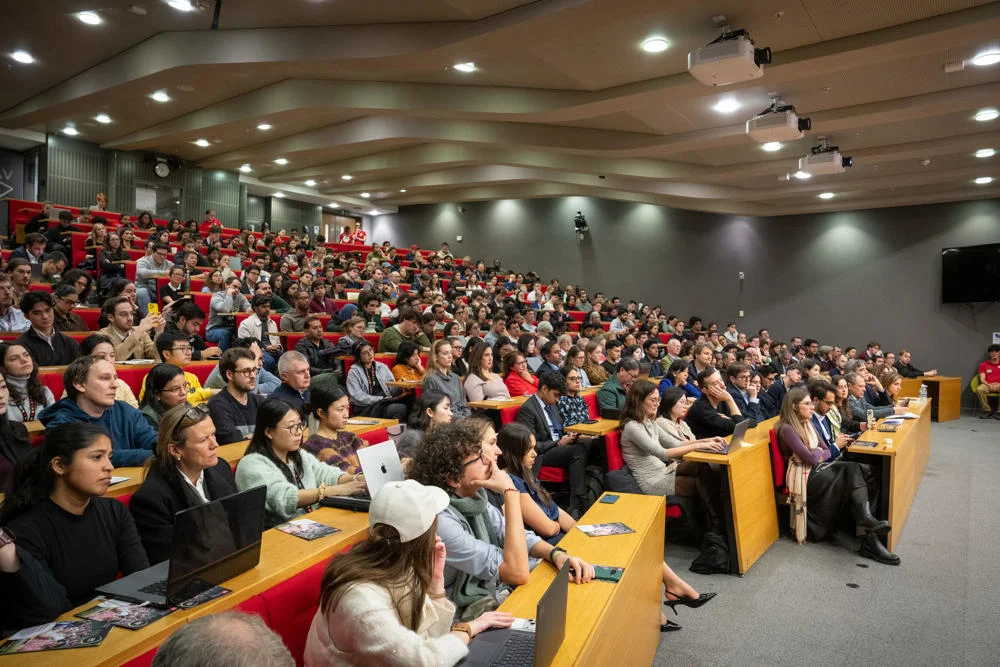
Photographs taken on behalf of LSE are often used on our social media accounts, website and publications. At events, photographs could include broad shots of the audience and lecture theatre, of speakers during the talk, and of audience members as they participate in the Q&A.
If you are photographed participating in an event Q&A but would not like your photograph to be stored for future use, please contact ir.events@lse.ac.uk
We aim to make all LSE events available as a podcast subject to receiving permission from the speaker/s to do this, and subject to no technical problems with the recording of the event. Podcasts are normally available 3-5 working days after the event. Podcasts and videos of past events from the Department of International Relations can be found at Events.
Follow us on Bluesky @lseir
Follow us on X/Twitter: @LSEIRDept
Follow us on Facebook: LSEIR
Follow us on Instagram: lseir
Follow us on LinkedIn: LSE Department of International Relations
Check out our website for more information about our events and event podcasts: www.lse.ac.uk/international-relations
Many speakers at LSE events also write for LSE Blogs, which present research and critical commentary accessibly for a public audience.
LSE has now introduced wireless for guests and visitors in association with 'The Cloud', also in use at many other locations across the UK. If you are on campus visiting for the day or attending a conference or event, you can connect your device to wireless. See more information and create an account at Join the Cloud.
Visitors from other participating institutions are encouraged to use eduroam. If you are having trouble connecting to eduroam, please contact your home institution for assistance.
The Cloud is only intended for guest and visitor access to wifi. Existing LSE staff and students are encouraged to use eduroam instead.
From time to time there are changes to event details so we strongly recommend that if you plan to attend this event you check back on this listing on the day of the event.
Whilst we are hosting this listing, LSE Events does not take responsibility for the running and administration of this event. While we take responsible measures to ensure that accurate information is given here this event is ultimately the responsibility of the organisation presenting the event.
LSE holds a wide range of events, covering many of the most controversial issues of the day, and speakers at our events may express views that cause offence. The views expressed by speakers at LSE events do not reflect the position or views of the London School of Economics and Political Science.
Subscribe to the LSE Events newsletter