

Research reports

Long-form report drawn from research project or stand-alone conference; usually multi-authored and co-branded; expect two months at minimum for publication turnaround.
Recent Reports
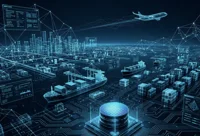
Geopolitics of the AI Supply Chain: Control, Dependency, and National AI Ecosystems in the US, EU, China, and the UAE
September 2026
By Kenddrick Chan, Songruowen Mar and Ce HaoThis research report examines national AI policy environments, as well as cross-border dependencies and forms of control within the AI supply chain, through a comparative framework spanning the United States, the European Union, the People’s Republic of China, and the United Arab Emirates.
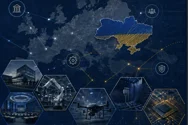
From Ukraine’s Wartime Adaptation to Europe’s Defence Readiness: Learning from Ukraine’s Adaptive Governance in the Defence Sector
September 2026
by Matthew B. Arnold, Viktoriia Roller and Khrystyna ZhyvogliadEurope’s defence challenge is more than drones and budgets; it is about whether the defence institutions of states and their wider security apparatuses can keep pace with modern warfare and increasing hybrid threats. This Research Report uses Ukraine’s wartime experience to develop a holistic concept of adaptive defence governance and explores its lessons for enhancing Europe’s defence readiness during peacetime.

Apps at War: Army+, Reserve+ and the Rise of Digital Defence Governance in Ukraine
May 2026
by Matthew Arnold, Viktoriia Roller, Khrystyna ZhyvogliadUkraine’s Army+ and Reserve+ applications show how digital tools can transform mobilisation and military administration by re-engineering core governance processes, not simply adding apps on top of bureaucracy. By achieving a high degree of digital defence governance, Ukraine is reshaping the structural conditions under which it can sustain its defence effort – from how it mobilises people to how it supports serving personnel – and, in doing so, expanding what is politically and administratively possible in a long war. Army+ and Reserve+ are central to an adaptive governance approach that seeks to sustain a protracted war under democratic constraints, using digital channels to make mass military service more rule-bound, transparent, and legible to citizens and servicemembers, while constraining arbitrary bureaucratic discretion. Ukraine’s democratic allies should study its model to identify elements that could be adapted within their own national contexts.
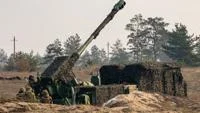
PARTNERING WITH UKRAINE | Rearming Europe through defence industrial cooperation
April 2026
by Tamar JacobyFour years into the full-scale war in Ukraine, the 2026 conflict in the Persian Gulf has spurred new international interest in cooperation between Europe and Ukraine beyond military aid. This research report from Tamar Jacoby asks why meaningful steps have not yet been taken to seriously integrate European and Ukrainian security, addressing the various fledgling models and joint-initiatives, and their lessons, thus far. The paper concludes with recommendations for policymakers, manufacturers, investors, and beyond, for building on these experiments – Europe’s future security may turn on the results.
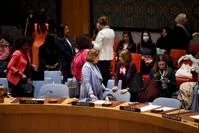
Strengthening the Representation of Women in Diplomacy: Lessons from the Field
February 2026
By Karen E. Smith and Marta KozielskaThis report situates the challenges to women’s representation in diplomacy within their broader institutional and socio-political contexts and identifies practical, actionable, and transferable solutions. Through our dialogues, we identified a range of structural, institutional, and cultural barriers and co-created a practical toolkit, based on proven practices, that address them. The solutions encompass critical priority areas for action across diplomatic institutions, including data collection, fairer recruitment and career progression, expanded professional development, and improved work-life balance
How Myanmar’s War Became the World’s Second Biggest Drone Fight
January 2026
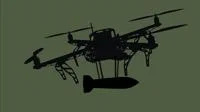
by Matthew B. ArnoldMyanmar’s war is currently the world’s second most intense conflict for drone attacks after Russia’s invasion of Ukraine. It is a nationwide uprising in which diverse rebel groups with significant youth participation and technological capability confront a well established military backed by China and Russia. Both the military and opposing armed groups make extensive use of drones, whose accessibility and adaptability allow new attack methods that overcome major operational constraints. Myanmar’s experience shows that simple, inexpensive drones can be employed at scale across a wide array of operational contexts. As such, the war offers a ground truth: drones are being mainstreamed into modern warfare far beyond the confines of the Russia-Ukraine war.

Unlocking the Peace Premium
January 2026
by Jason Miklian, Mark van Dorp, and John KatsosThis research report from IDEAS’ UN Business and Human Security Initiative, and commissioned by Interpeace’s Finance for Peace Initiative, is designed to deliver a conceptual and evidentiary basis of how businesses and the private sector can better contribute to peace outcomes. The report - authored by Jason Miklian, Mark van Dorp and John Katsos - presents a comprehensive evidence-based summary of how businesses have positively impacted peace, drawing on case studies and dissecting the mechanisms through which companies can affect peace in different sectors.
All Reports
From Globalisation to Geopolitics: The Changing Dynamics of World Order and their Implications for the EU
November 2025
This research report from LSE IDEAS’s Europe Initiative and the Friedrich Naumann Foundation for Freedom, authored by Richard Higgott, discusses this shift from globalisation to geopolitics. The paper analyses the changing dynamics of world order including ‘middle powers’, the role of strongman leaders, and the implications for the European Union – concluding with strategic recommendations for European policymakers.
Brexit - A Critical Audit in the Cold Light of Day
November 2025
This research report from the LSE IDEAS Europe Initiative and the Friedrich Naumann Foundation for Freedom, authored by Iain Begg, distinguishes and critically analyses three broad categories – economic, social, and governance – of Brexit’s impact on the UK and EU, highlighting the uneven effects on various sectors and groups.
Energy Security in the Baltics: Perceptions in the Midst of the Russia-Ukraine War
April 2025
Amidst the geopolitical complexities of Eurasia, the strategic employment of energy resources has emerged as a potent tool for projecting power. Since coming to power, Vladimir Putin has wielded energy security as a means to exert influence across the region, with the pinnacle of this influence underscored during the February 2022 escalation of the Russia-Ukraine war. This paper delves into perceptions on energy in Estonia, Latvia, and Lithuania amidst the Russia- Ukraine war, specifically focusing on attitudes towards energy security, renewable energy sources, and energy efficiency.
Ukraine's Drone Ecosystem and the Defence of Europe: Lessons Lost Can't be Learned
April 2025
Ukraine’s unique capabilities in drone warfare have significantly contributed to halting the largest land invasion in Europe since 1945. Given the looming threat of escalation on its eastern flank, NATO allies have a problem: falling short in understanding Ukraine’s drone ecosystem risks abdicating the strategic momentum in drone warfare to Russia and its allies. Through primary interviews with military, government, and civilian actors, we argue that the core characteristics of this ecosystem represent lessons to be learned themselves. Unfolding across the categories of speed, scale, and urgency, we recommend to NATO allies three policy proposals stemming from our analysis: the establishment of an institutionalised joint venture system for defence technologies, a systematic civil-military liaison structure, and the commitment to binding defence contracts in exchange for soliciting Ukrainian drone expertise. We conclude by pointing towards the sober truth: NATO countries cannot learn the lessons from Ukraine’s drone ecosystem if they concede to Russia’s strategic goals.
International Order Strategies: Past and Present
November 2024
At an important time in foreign policy planning, a new era of "strategic competition" widely noted by policymakers in Washington and allied capitals has produced a new wave of strategic thinking and evolving strategic practices aiming to maintain or modify "international order". This collected research report aims to clarify the how strategies for international order are being understood and formulated today, and how this strategic thinking and planning differs from past eras of strategic competition, toward an assessment of its policy implications today.
Security Challenges in the Black Sea: NATO, the wider region and the global order
October 2024
Russia’s war on Ukraine poses a broader challenge to the West, particularly in the Black Sea. A vital area for European trade and grain exports from Ukraine, the Black Sea also contains significant natural gas reserves, crucial in helping Europe further reduce dependency on Russian gas. This paper examines the geopolitical significance of the Black Sea, Russia's strategy to assert control over it and NATO's imperative to enhance security.
The Decline and Rise of Hegemonic Narratives: From Globalisation and the 'Asia-Pacific' to Geopolitics and the 'Indo-Pacific'
April 2024
Ideas and words have consequences. The 'Asia Pacific' as an economic understanding of region is giving way, some would say has given way, to the 'Indo-Pacific' as a geopolitical understanding of region. This paper explores the ideational and discursive consequences of this juxtaposition. It focuses on the shift from the theoretical and practical implications of the waning ideational hegemony of neo-liberal economics to the growing hegemony of geopolitical security concerns.
Crisis and Adaptation of the Islamic State in Khorasan
February 2024
The paper discusses the conditions of the Islamic State in Khorasan and how its strategy and structures evolved after the Taliban takeover in Afghanistan in August 2021. The author also assesses the potential for the Islamic State in Khorasan to recover strength and expand its activities again in the future, in the context of Taliban counter-terrorism.
The Decline and Rise of Hegemonic Narratives: From Globalisation and the 'Asia-Pacific' to Geopolitics and the 'Indo-Pacific'
April 2024
Ideas and words have consequences. The 'Asia Pacific' as an economic understanding of region is giving way, some would say has given way, to the 'Indo-Pacific' as a geopolitical understanding of region. This paper explores the ideational and discursive consequences of this juxtaposition. It focuses on the shift from the theoretical and practical implications of the waning ideational hegemony of neo-liberal economics to the growing hegemony of geopolitical security concerns.
Crisis and adaptation of the Islamic State in Khorasan
February 2024
The paper discusses the conditions of the Islamic State in Khorasan and how its strategy and structures evolved after the Taliban takeover in Afghanistan in August 2021. The author also assesses the potential for the Islamic State in Khorasan to recover strength and expand its activities again in the future, in the context of Taliban counter-terrorism.
The following report summarises the proceedings of a conference held at LSE IDEAS in June 2023, summarising each contributor on the historical context and current state of competitive politics within four authoritarian or strong man-led powers: President Erdogan’s Turkey, Prime Minister Modi’s India, Ayatollah Khamenei’s Iran, and President Putin’s Russia.
The following report summarises the proceedings of a conference held at LSE IDEAS in June 2023, summarising each contributor on the historical context and current state of competitive politics within four authoritarian or strong man-led powers: President Erdogan’s Turkey, Prime Minister Modi’s India, Ayatollah Khamenei’s Iran, and President Putin’s Russia.
Winter Is Coming: the Baltics and the Russia-Ukraine WarDecember 2022
In this LSE IDEAS Special Report, the authors focus on the impact of the Russia-Ukraine war on the Baltics. The report highlights both collective and country-level impacts and responses to the conflict. It is argued that Estonia, Latvia and Lithuania have been among the top supporters of Ukraine, not merely in terms of military aid, but also with regards to providing substantial diplomatic and humanitarian support during Ukraine’s darkest hour since the breakup of the Soviet Union. Moreover, it is argued that this literal and metaphorical winter will be a key challenge, not only for Ukraine, but also for the Baltics. Given how closely the fate of Ukraine is intertwined with Estonia, Latvia, and Lithuania, the manner in which the Baltics and NATO respond to the winter could significantly influence the Russia-Ukraine war. A key strategic priority for the Baltics and NATO should be to promote resilience of everything from defense to energy security. Accordingly, the Report concludes with a variety of key policy recommendations aimed at the Baltics, EU and NATO.
The latest Forum for China-Africa Cooperation (FOCAC) took place in Dakar, Senegal in November 2021. Among the huge range of pledges and agreements, one of the most extensive was capacity building through scholarships, targeted training and people-to-people exchanges. In this Occasional Paper, Kenneth King analyses China’s pledges not just in the sphere of formal education, but across the many different sectors of China’s collaboration with Africa for the next three years.
Beyond Autonomy: Rethinking Europe as a Strategic Actor
February 2022
Strategic autonomy has become the buzzword of the European policy scene in recent years, with a slew of reports and policy proposals dedicated to the subject, and high-level support among European leaders. But big questions remain about what the concept actually means and what its implications are for Europe and the EU. Drawing on contributions to a recent high-level workshop as well as the five briefings contained in this volume, this introductory chapter has sought to make the case for moving ‘beyond autonomy’ in five key respects - conceptually, thematically, geographically, temporally, and politically. Only by doing this are we able to move the debate on autonomy forward and highlight a number of key debates and issues on which greater attention from policymakers is needed. In this report from LSE IDEAS and the Friedrich Naumann Foundation, the five briefings in this report do just this, by highlighting new directions for policy debate and academic research on the concept of strategic autonomy, all of which take us into new domains.
Maximising business contributions to sustainable development and positive peace: A human security approach
January 2022
This report examines how business can contribute to meeting the challenges of a world struggling to achieve the Sustainable Development Goals, recover from the COVID-19 pandemic and make changes to traditional models of capitalism and investment. Faced with growing pressures from customers, employees, investors, and the wider public, business leaders have sought to respond with commitments to the SDGs, alongside adopting new ethical standards on human rights, transparency, and good governance.