

Research projects

Alongside academic excellence, the European Institute strives to produce research that makes a difference beyond academia, promoting and informing UK and European evidence-based public debate and policy development.
Current projects
Global Perspectives on Europe (GLOPE)
GLOPE is a Jean Monnet Chair project led by Dr Mareike Kleine at the European Institute and co-funded by the European Union’s Erasmus+ Programme. The project is running from September 2025 to 2028 and aims to internationalise EU studies by embedding a global perspective into teaching, research, and outreach—especially for audiences beyond Europe.
Justice Interactions and Peacebuilding (JUSTINT)
Focused on the four former Yugoslav countries: Serbia, Bosnia and Herzegovina, Kosovo and Croatia, the JUSTINT project provides a novel way of analysing how post-conflict justice practices advance or hinder peace-building by studying the interactive and dynamic aspects of discourse.
Policy Crisis and Crisis Politics. Sovereignty, Solidarity and Identity in the EU Post 2008 (SOLID)
The project aims at explaining how crisis and resilience can go together. It will study the political crisis of the European Union after 2008 through the lens of a coalition-centered approach. How did coalitions unravel and (re-)establish themselves in order to address the sectoral crises? How deeply has such coalition formation under duress impacted on established channels of representation?
Past projects
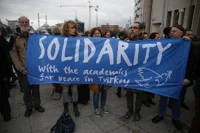
This project focused on the conditions in which the exiled scholars leave Turkey and the ways in which they build up lives in Western Europe, specifically in Germany, France, and the UK. This study aimed to understand the new forms of intellectual exile in the new wave of global authoritarianism. More importantly it sought to give us clues to the changing role of intellectuals and academia in the world. Our main goal was to re-analyse the notion of exile through an interdisciplinary approach that brings together history, anthropology and political philosophy.
This research project was led by Esra Özyürek, Professor in European Anthropology and Chair in Contemporary Turkish Studies.

The aim of the project was to offer a political economic assessment of the major reforms of the state in advanced capitalist states over the last forty years, otherwise known as ‘supply-side’ reforms. This research project on the political economy of the neoliberal state was begun through 2016-2017 and then funded as full time research by a British Academy Mid-Career Fellowship from 2017-2018. The research was finalised in a monograph and adapted to form the basis of a new European Institute MSc course for 2019-2020.
This research project was led by Abby Innes, Assistant Professor in Political Economy.

This research project aimed to investigate the implications of a recent piece of legislation in Turkey that had triggered countrywide urban renewal, purportedly to disaster-proof the country’s building stock. It built on the growing body of critical scholarship on mainstream approaches to resilience and disaster preparedness, which has thrown into sharp relief the contradiction between their invocations of disaster’s indiscriminateness and their uneven sociopolitical effects.
This research project is led by Dr Eray Çaylı, Leverhulme Trust Early Career Fellow.
The Dahrendorf Forum was a joint initiative between LSE and the Hertie School of Governance in Berlin, funded by Stiftung Mercator and honouring the legacy of former LSE Director Lord Ralf Dahrendorf.
The current research cycle, running from September 2017 to August 2019, was entitled The Future of Europe: Strategic Options for an Era of Uncertainties.
Professor Iain Begg, Professorial Research Fellow at the European Institute, is Academic Director of the Dahrendorf Forum at LSE. He and Professor Kevin Featherstone, Head of the European Institute, co-chair the Working Group 'The Future Of European Governance'.
The EUDEMOS project studied how the political choices offered to citizens shape democratic perceptions and electoral behaviour in Europe.

This project ran from 2019-2021 and was jointly conducted by the Fafo Research Foundation, NUPI (both Oslo), the University of Oxford, the Institut Français du Proche Orient (Amman) and LSE. It analysed the challenges resulting from the disparities in sharing the burden and responsibility for forced migrants worldwide and how states have responded to these challenges.
This research project is led by Natascha Zaun, Assistant Professor in Migration Studies.

Generation Brexit was created to give young people in the UK and EU a voice in the Brexit negotiations.
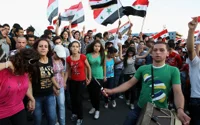
The ‘Integration and Well-Being of Syrian Youth in Turkey’ research project was funded by the Research Council UK (RCUK) and the Scientific and Technological Research Council of Turkey (TUBITAK). It was a joint effort between the European Institute and the Institute of Global Affairs at the London School of Economics and the Migration Research Centre at Koç University. The overall project aimed to assess the needs of Syrian refugee youth in Turkey and to provide concrete policy recommendations for their integration.
This research project was led by Rebecca Bryant (LSE).
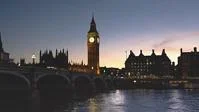
The Commission aimed to inform the national debate on Britain’s membership of the European Union, with high quality, evidence-based and balanced analysis.

Running from 2016 until 2021, the LSE Programme: Brexit and Beyond was a dedicated series to stimulate the public debate and informed discussion about this most pivotal topic.
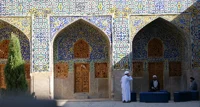
Since the early 2000s, Muslim Diasporas in Europe and the USA have raised a growing interest in the public and academic spheres. While building upon this interest, this research aimed to bring an original contribution to the field by adopting a transnational perspective that focuses on the religious policy of Turkey towards its diaspora. The study concentrated on the imams sent to Europe and the USA to work in the mosques managed by the Turkish Directorate of Religious Affairs (Diyanet).
This research project was led by Mehmet Kurt, Marie Curie Fellow.

Since the 2007 financial crisis, most EU countries have been unable to return to their pre-crisis growth path. From many European capitals, we hear incessantly that structural reforms are the key to economic growth. Although this view has led many countries in Europe into implementing reform programs, we still lack a clear understanding of structural reforms. The almost exclusive focus on product and labor market regulations (in detriment to other important reforms such as trade liberalization) has contributed to this dearth of analysis. This project aimed to fill this gap.