

Eurosclerosis 2.0 in a Changing World: From Repetition to Rupture
Speaker
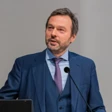
Join us for this event with the Governor of the Bank of Belgium, Pierre Wunsch.
In this keynote talk Belgian central bank Governor Pierre Wunsch will draw on his recent policy paper and argue that Europe is stuck in an Eurosclerosis 2.0 period: despite a long cycle of repeated “EU grand plans”, growth has again fallen to very low levels, with a persistent innovation gap compared to the US and China. Mr Wunsch asserts that the old European recipes – typically higher spending and more Europe – no longer work in a world that has fundamentally changed and where EU policy ambitions have broadened to the extent that they increasingly lead to internal conflicts, such as between climate targets and trade openness. The inconvenient truth is that a deeper policy discussion based on a more realistic sense of Europe’s geopolitical importance and transparency about trade-offs, rather than a comforting narrative of “Europe-can-do-it-all”, is necessary to explore ways out of Eurosclerosis. He illustrates this through the lens of three policy challenges (technology, institutional set-up and geopolitical positioning) but also sets this against the background of deep societal choices: can Europe still thrive as a low-risk / low-return society?
Meet our speaker and chair
(Guillaume) Pierre Wunsch is Governor at the National Bank of Belgium, member of the ECB’s Governing and General Council, member of the European Systemic Risk Board, member of the Board of Directors of the Bank for International Settlements, IMF Governor, Chairman of the Resolution College, member of the High Council for Finance, member of the Board of Directors of the National Accounts Institute. He is also Chair of the Board of Governors of the King Baudouin Foundation.
He was Director of the Strategic Finance Cell at the Ministry of Finance during the financial crisis of 2008. He holds a PhD in Economics (UCL) and a Master’s degree in Public and international Affairs (Princeton).
Paul de Grauwe is John Paulson Chair in European Political Economy at the LSE European Institute.
More about this event
Established in 1991, the LSE European Institute is a world-leading centre for the study of Europe in its global context. With eight master’s degrees and a doctoral programme, a vibrant research community, and a world-leading public events programme, our work spans Political Economy, Politics & Policy, Culture & Society, and Migration.
Follow us: Instagram, LinkedIn, Bluesky, Twitter, YouTube, and Soundcloud.
Join our mailing list to receive news about EI events.
OMFIF (@OMFIF), the Official Monetary and Financial Institutions Forum, is an independent forum for central banking, economic policy and public investment.
Any questions?
Contact us at ei.events@lse.ac.uk.
From time to time there are changes to event details so we strongly recommend that if you plan to attend this event you check back on this listing on the day of the event.
Whilst we are hosting this listing, LSE Events does not take responsibility for the running and administration of this event. While we take responsible measures to ensure that accurate information is given here this event is ultimately the responsibility of the organisation presenting the event.
LSE holds a wide range of events, covering many of the most controversial issues of the day, and speakers at our events may express views that cause offence. The views expressed by speakers at LSE events do not reflect the position or views of the London School of Economics and Political Science.
LSE holds a wide range of events, covering many of the most controversial issues of the day, and speakers at our events may express views that cause offence. The views expressed by speakers at LSE events do not reflect the position or views of the London School of Economics and Political Science.