

Post-Europe: in conversation with Yuk Hui
Speaker
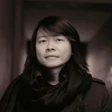

In a time when studies of Europe’s cultural identity are still dominated by the critique of Eurocentrism – the critique of Europe’s pretention to being the civilisational model for all to follow – Yuk Hui’s work stands out.
Attempting to think a ‘Europe beyond Eurocentrism’, Hui insists that de-coupling Europe from its past is not just about ‘imposing a decolonial political correctness upon discourse’. Striking a bold and original path, Hui calls us ‘to carry the European heritage further without imposing a linear form of universalisation’. Envisioning a project of thinking that is prepared to confront what is now a truly global condition, one where everyone is uprooted by the homogenising forces of technological-economic planetarisation, Hui argues that we must all learn – both in the West and the East – to become ‘post-Europeans’.
Meet our speaker and chair
Yuk Hui is Professor of Philosophy at Erasmus University Rotterdam, where he holds the Chair of Human Conditions and serves as the founding director of the Erasmus Institute for Philosophy and Technology. Hui is currently jury chair of the Berggruen Prize for Philosophy and Culture, and convenor of the Research Network for Philosophy and Technology. He is the author of several monographs, translated into more than a dozen languages, the most recent of which are Machine and Sovereignty (2024) and Post-Europe (2024).
Simon Glendinning is Head of the European Institute and Professor of European Philosophy at LSE. He is the author of several books, including a two-volume text on European cultural identity, Europe: A Philosophical History.
More about this event
Established in 1991, the LSE European Institute is a world-leading centre for the study of Europe in its global context. With eight master’s degrees and a doctoral programme, a vibrant research community, and a world-leading public events programme, our work spans political economy, politics and policy, culture and society, and migration.
Follow us: Instagram, LinkedIn, Bluesky, Twitter, YouTube, and Soundcloud.
Join our mailing list to receive news about EI events.
This event is part of the European Institute's Beyond Eurocentrism Programme. The Beyond Eurocentrism programme aims to explore how the shape and shaping of Europe – its political-economy, its political policy making, or its political culture – needs to be rethought in a time of the exhaustion of Eurocentrism.
X Hashtag for this event: #LSEEI
From time to time there are changes to event details so we strongly recommend that if you plan to attend this event you check back on this listing on the day of the event.
Whilst we are hosting this listing, LSE Events does not take responsibility for the running and administration of this event. While we take responsible measures to ensure that accurate information is given here this event is ultimately the responsibility of the organisation presenting the event.
Many speakers at LSE events also write for LSE Blogs, which present research and critical commentary accessibly for a public audience. Follow LSE British Politics, LSE Business Review, LSE Impact, LSE European Politics and the LSE Review of Books to learn more about the debates our events series present.
If the event is live streamed, automated live captions will be available. Please note that this feature uses Automatic Speech Recognition (ASR) technology, or machine generated transcription and is not 100% accurate.
Photographs are regularly taken at LSE events both by LSE staff and members of the media and events are routinely filmed. Photographs from events taken by LSE staff are often used on LSE's social media accounts, with videos being made available on the LSE Player. If you have any concerns about this please contact the event organiser in advance of the event.
Please contact the Press Office if you would like to request a press seat or have a media query about this event, email LSE.Press.Events@lse.ac.uk. Please note that press seats are usually allocated at least 24 hours before each event.
We aim to make all LSE events available as a podcast subject to receiving permission from the speaker/s to do this, and subject to no technical problems with the recording of the event. Podcasts are normally available 1 week after the event. Podcasts and videos of past events can be found online.
Event updates and other information about what’s happening at LSE can be found on our Facebook page and for live photos from events and around campus, follow us on Instagram.
Livestreams and archive videos of past lectures are shared on our YouTube channel while event podcasts can be found on the LSE Player.
Attending our events in-person or online? Join the conversation using #LSEEvents.
If you are planning to attend this event and would like details on how to get here and what time to arrive, as well as on accessibility and special requirements, please refer to LSE Events FAQ. LSE aims to ensure that people have equal access to these public events, but please contact the events organiser as far as possible in advance if you have any access requirements so that arrangements, where possible, can be made. If the event is ticketed, please ensure you get in touch in advance of the ticket release date. Access Guides to all our venues can be viewed online.
LSE has now introduced wireless for guests and visitors in association with 'The Cloud', also in use at many other locations across the UK. If you are on campus visiting for the day or attending a conference or event, you can connect your device to wireless. See more information and create an account at Join the Cloud.
Visitors from other participating institutions are encouraged to use eduroam. If you are having trouble connecting to eduroam, please contact your home institution for assistance.
The Cloud is only intended for guest and visitor access to wifi. Existing LSE staff and students are encouraged to use eduroam instead.
From time to time there are changes to event details so we strongly recommend that if you plan to attend this event you check back on this listing on the day of the event.
LSE holds a wide range of events, covering many of the most controversial issues of the day, and speakers at our events may express views that cause offence. The views expressed by speakers at LSE events do not reflect the position or views of the London School of Economics and Political Science.