

Zeynep Koyuncu

This year, to celebrate International Women’s Day and honour its theme, #GiveToGain, we wanted to platform our wonderful alumni mentors who have been volunteering their invaluable time and insights with our current MSc students as part of our EI Alumni Mentorship Programme.
On this occasion, we caught up with one of our amazing mentor-mentee duo, Zeynep and Rio, who are both very passionate about advancing gender equality, to hear about their experience getting paired up together on the mentorship programme.
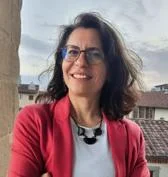
Zeynep Aydemir Koyuncu
Alumni mentor
Class of 2003, MSc EU Policy Making
Partnerships and Resource Mobilization Manager at UNICEF, previously at UN Girls’ Education Initiative (UNGEI) and UN Women
This year’s IWD theme encourages us to give our support to enable advancement for gender equality, something closely aligned with your career. Can you tell us briefly about your work and journey getting into this career?
Zeynep: Since my early ages, I’ve always felt the urge to fight against inequalities and injustice, and stand with the most marginalised and discriminated people. Working with and for young people, survivors of conflicts and natural disasters, feminist activists, women-led organisations, workers’ organisations - and many more across geographies, have all shaped who I am and what I have done throughout my professional life.
I’ve always believed in the power of intergenerational partnerships and collectives, be it formal or informal, to address the development challenges and inequalities. I have worked to co-create and grow such structures in all mandates I held at the European Union, UN Women and UNICEF. Speaking of gender equality and women’s rights, we need to boost our alliances and collective minds even more to dismantle the strong pushback we are facing.
What motivated you to participate in the EI’s Alumni Mentorship Programme?
Zeynep: This is my third year with the EI’s Alumni Mentorship programme. I am also part of the "Ask an Alum" initiative of LSE. I cannot emphasise how much I enjoy learning from and sharing this intergenerational space with my mentee. Every mentee is an inspiration for me. I had a very fulfilling academic year at LSE for my MSc degree with full scholarship, and I see the EI Alumni Mentorship programme as way of giving back - but not only that - it’s also a way to continue to be nourished and refreshed by having first-hand insights from early career folks.
What has been the most fulfilling part about supporting a current MSc student as an alumna?
Zeynep: I especially enjoy the initial conversations where I try to make sense of the gems of the young person on the other side of the screen. The regular conversations with Rio, and with my past mentees provide a powerful, safe feminist space that both of us create. This is very valuable and fulfilling for a development professional, and gives me a lot of hope for the future knowing that these wonderful minds are there.
Would you recommend other alumni to mentor our current MSc students?
Zeynep: Absolutely. This is an excellent programme that is carefully curated and managed. What I also appreciate is that the mentor and mentees are free to design it flexibly at their own pace and expectations. This is unique for a mentorship programme.
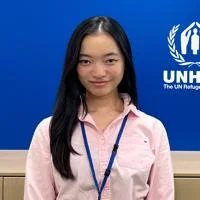
Rio Fuseya
MSc student mentee
Class of 2026, MSc International Migration and Public Policy
Can you tell us more about yourself and your programme of study?
Rio: As an aspiring professional in international organisations, I am committed to promoting inclusive societies and ensuring that mobility translates into meaningful opportunities and dignity for all. I am also particularly passionate about women’s empowerment, a dedication shaped by my time at Ochanomizu University, Japan’s only national women’s educational institution. Being part of that environment instilled in me a belief that gender equality must remain central to building just and inclusive societies, and it is a focus I intend to carry throughout my career.
In my current programme, I am investigating the challenges posed by international migration and resulting policy responses, exploring mobility and borders as sites of contestation. The courses examine perspectives emerging from the everyday practices of migration in Europe and beyond, while analysing competing representations of migrants and post-migration communities. The programme also provides insights into contemporary sociological perspectives on migrant integration and the many forms of cultural politics that shape social inclusion, helping me develop a critical understanding of how migration, policy, and sociopolitical responses intersect. Through research projects, case studies, and policy analysis, I am gaining practical experience in applying theoretical knowledge to real-world migration issues.
What inspired you to get paired with an alumni mentor?
Rio: I joined this programme because I was eager to connect with someone who had once walked a similar path at LSE and could offer insight into navigating the transition from graduate study to professional life. As I explore different career pathways and refine my academic interests during my master’s, I hoped to gain guidance on developing my employability skills and navigating opportunities within the sectors I care about.
Having access to a mentor who has first-hand experience in these spaces provides a source of perspective and encouragement that might not otherwise be possible. More than anything, I was excited about the opportunity to build a one-to-one connection with someone whose work and career trajectory I deeply admire.
What have been your main takeaways so far from working with your mentor?
Rio: One of the most meaningful aspects of this mentorship has been the opportunity to connect with someone who shares a deep commitment to women’s empowerment. Having a mentor who is actively working in this field has been incredibly inspiring.
Through our conversations, I have gained insight into what it looks like to advance gender-responsive agendas strategically and practically. From leading gender-responsive refugee response capacity-building programmes for local authorities, government officials, frontline responders, and NGOs, to programmes focused on strengthening civil society capacities and multi-stakeholder partnerships to advance women’s rights, Zeynep’s experiences have given me a clearer understanding of how meaningful change can happen through collaborative action.
It also made me reflect on how I can stay present in these spaces moving forward and begin establishing my own presence within the conversations and networks shaping this field.
Would you recommend the programme to future students?
Rio: I would absolutely recommend this programme to future students. Having the opportunity to build a meaningful, long-term connection with someone who has already navigated the path you hope to pursue is powerful. Zeynep is a source of encouragement for me to keep building my passion, and she’s helped me clarify my goals and given me greater confidence as I move forward.
I hope that one day I will be able to support and encourage younger students in the same way my mentor has supported me.
Thank you Zeynep and Rio for sharing your experience with us!
International Women's Day 2026 at the European Institute