

Zahra Henry on education, entrepreneurship and building a more connected Caribbean
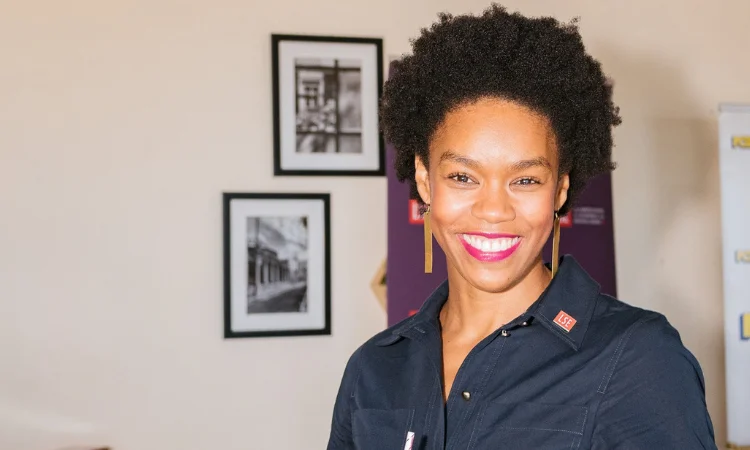
In October 2025 a devastating hurricane hit Jamaica killing dozens of people and causing billions of dollars in damages. A year on since Hurricane Melissa the country is still grappling with the aftermath and recovery is still a major challenge. To mark Black History Month and this year’s theme of Honouring Our Communities, Zahra Henry (MSc International Social and Public Policy 2020), founder and CEO of ZLH Careers and Deputy Leader of the LSE Alumni Association Jamaica, has spoken to us about her work to support relief efforts, how she’s building a community of LSE alumni in the Caribbean and internationally, and how her LSE education has helped to shape her thinking.
Relief efforts in the aftermath of Hurricane Melissa
Following Hurricane Melissa, I worked closely with two friends to mobilise support for affected households in South Trelawny. My fellow LSE alumna Kimonique Powell and a school friend Decoda Davis had already built trust and momentum through working together previously, so it felt natural to join forces when the hurricane struck.
We established the fundraising campaign - “Mek Smady Christmas Merry” (Jamaican patois for “Make someone’s Christmas Merry”) - to help affected families rebuild a secure basic living space. But from the beginning, we were also thinking beyond immediate relief. Hurricane Melissa made visible how interconnected our vulnerabilities are. A damaged farm is not simply an agricultural problem. It affects food security, household income, employment and communities. A damaged school is not simply an infrastructure problem. It affects learning, family life, workforce development and eventually the economy.
One of the most valuable things I learned was how much effective disaster response depends on understanding the ecosystem of actors and resources. The question then is how you connect those assets effectively.
So I would like us to become better at designing policy and programmes around systems rather than isolated interventions.
Jamaica and its future in the Caribbean
The hurricane and the road to recovery has also reinforced something I have believed for a long time: Jamaica cannot think about its future entirely in isolation from the Caribbean. That begins with how we educate young people. Preparing students for AI, digital transformation and a global labour market is important, but education also has to cultivate identity and citizenship: an understanding of who we are, where we come from and our responsibilities to one another. If our education systems prepare young people only to compete globally, without also giving them a sense of responsibility for the societies that produced them, we eventually have to ask: who will remain to build the Caribbean?
I would also like us to recover a stronger sense of Caribbean regionalism. I have been interested in regional integration since my undergraduate years and my internship at the CARICOM Secretariat. Jamaica is a powerful cultural nation, but our long-term interests are also bound up with those of our neighbours. Our economies, labour markets, educational systems, cultural industries and climate vulnerabilities overlap.
Education is central to that future.
The stepping stones of Zahra’s career
I was working at Jamaica's Ministry of Culture and had reached a point where I could not clearly see the next step in my role. I needed another avenue for growth and income.
Education has always carried enormous value in Jamaican society, and as I had strong language skills, I began teaching French, Spanish and eventually English, all as second languages to non-native speakers. At the same time there has always been a thread of developing talent in my life. Jamaican recording artistes that were decades older than I, would ask me to manage them. I worked in my father's business and found myself onboarding and supporting people. I gave friends advice about their education and careers.
Then I asked myself “What can I offer the economy that people need and will pay for?”. And so ZLH was born with career coaching becoming a natural extension of the teaching. Over time, the work has expanded again into business consulting, strategic planning, programme development, partnerships and institutional consulting.
Today, ZLH works at three interconnected levels: individual professionals and entrepreneurs, growth-oriented businesses, and institutions developing programmes and enabling environments. What looks from the outside like several different services is, to me, one vocation expressed in different forms and encapsulated in my ZLH slogan: “Developing talent, unlocking opportunity, building bridges across the globe.”
Being named among Jamaica’s Top 100 Most Powerful and Influential Businesswomen (2026) was certainly affirming, but ultimately I am proudest of seeing ideas, opportunities and possibilities I once envisioned translate into lasting impact. Across policy, programmes, entrepreneurship, careers and institutional work, I can look back and see people and organisations whose trajectories are different because of something I conceived, initiated or set in motion.
LSE Alumni Association Jamaica and the global network
Community creates continuity. People spend an intense period of their lives at an institution such as LSE, and then disperse across countries, professions and sectors. A local alumni community creates a bridge between that shared experience and everything that comes afterwards.
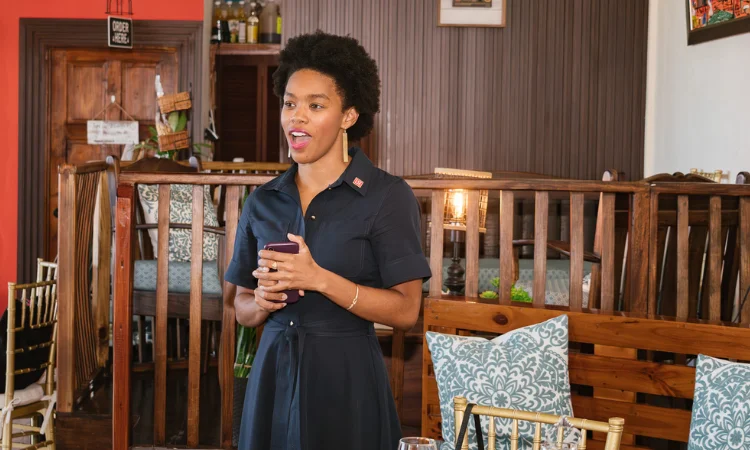
The value of an LSE education does not have to end when you leave London. One of the things I value about LSE is that there are multiple overlapping communities within the larger global alumni network. A friend from my International Social and Public Policy programme, Anshu Choudhary, leads the LSE's Women's Alumni Network. I have friends and fellow alumni connected with communities in India, Trinidad and Tobago and elsewhere. Those relationships create possibilities that are much broader than one national alumni association. There is enormous potential in asking not simply, “How do we stay connected to LSE?” but “What can this network actually enable us to do together?
Researching Caribbean and Black and minority ethnic students experiences at LSE
My interest in social policy actually emerged from working in Jamaica's cultural sector. At the Ministry of Culture, I was working with musicians, performers, promoters, dancers, theatre practitioners and other people within Jamaica's creative economy. It became increasingly clear to me that you cannot build a sustainable industry without thinking about the social conditions of the people who make that industry possible.
That led me towards social policy. I think of social policy, broadly, as the area of public policy most directly concerned with human development: how societies educate people, protect them, develop their capabilities and enable them to participate fully in social and economic life. Sustainable, economic and industrial policy requires robust social policy for the human beings behind the economy.
At LSE, I was able to explore that thinking much more rigorously. My research examined Caribbean students’ perspectives on education reform and argued that education must help students understand who they are, prepare them to participate productively in the economy, and equip them for active citizenship. My article, “Identity, Industry and Citizenship: Students’ Perspectives on Basic Education Reform in the Caribbean Community”, was published in the peer-reviewed journal of the International Society for Educational Planning in 2021.
LSE also gave me the opportunity to work on a separate research project examining the experiences of Black and minority ethnic doctoral students in the UK. One of the strongest lessons from that work was that access to academia is not determined by academic merit alone.
That helped me understand decolonisation in very practical terms. Representation affects who gets recognised, mentored, supervised and ultimately becomes part of the next generation of academics. Increasing diversity within academia, therefore, helps create the conditions through which future generations can enter it.
Advice for Jamaican and wider Caribbean new graduates and prospective students
Leave no stone unturned. Careers make much more sense backwards than they do while you are living them. My advice to graduates: do not become so attached to a job title that you fail to recognise an opportunity to develop a capability. Build a professional portfolio, not simply a CV. Pay attention to the skills, relationships, experiences, cultures and perspectives you are accumulating.
And stay curious. Some opportunities will advance your career immediately; others may simply make you a more interesting, capable and multidimensional human being. You will not always know which is which at the time.
For Jamaican and other Caribbean students in particular, I would say: go out into the world, learn everything you can and build global relationships, but remain connected to where you come from. Not everyone will return home permanently, nor should international experience be seen simply as a temporary departure before coming back. Go as far as your life and ambitions take you, but keep asking what you can build, connect and contribute along the way, and how some of that can strengthen the Caribbean.
October 2026