

David Luke
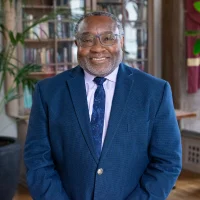
David Luke is a professor in practice and strategic director at the Firoz Lalji Institute for Africa and an Extraordinary Professor at North-West University in South Africa.
Specialising in African trade policy and trade negotiations, Professor Luke has decades of experience in policy advisory services, managing and catalysing research, building partnerships, training and capacity development for private sector and government.
Can you tell us about your work and what brought you to the Institute?
My field of specialisation is African trade policy. My path to the Institute stems from both personal and professional roots. Following undergraduate and graduate studies at LSE and SOAS, I began my academic career in Canada before spending nearly thirty years working within international organisations as a trade policy bureaucrat. My postings took me to Geneva, Harare, Pretoria, and Addis Ababa, and involved policy-related discussions in over 90 countries. These experiences gave me a distinctive insight into the complexities of global trade policy. Immersed in the nuances of African trade policy following roles as an adviser at the African Union Commission and as director of the Africa Trade Policy Centre at the UN Economic Commission for Africa, I was able to observe first-hand the ways in which trade shapes development, industrialisation, and economic transformation across the continent.
My focus incorporates the broader normative impacts of trade, particularly regarding inequality, inclusion, gender, and sustainability. This vantage point has been instrumental in shaping my understanding of the multifaceted challenges and opportunities that arise within the international trade system, especially as they relate to Africa’s developmental aspirations.
The turning point came during a memorable dinner on a warm evening by the Atlantic coast in Freetown, Sierra Leone, just before the onset of the pandemic in early 2020. In conversation with FLIA’s director, Professor Tim Allen, we discussed the possibility of my return to LSE, this time as a professor in practice at FLIA. The opportunity was immediately attractive. Unlike my previous roles, which were bound by diplomatic protocols and institutional priorities, this position grants me the freedom to pursue policy-focused research on themes that have long captured my interest.
What are the major research projects you’ve worked on at FLIA?
My work at FLIA has been greatly facilitated by the strong institutional support provided by both FLIA and LSE, particularly in terms of accessing and managing research funding. This backing has enabled me to initiate and lead several collaborative research projects. The first of these, How Africa Trades, was published in 2023. This book offered an in-depth analysis of the structure of African trade, exposing the underlying limitations that hinder its potential as a catalyst for economic transformation and identified key areas that require policy focus and reform. I was especially pleased that the book was published on an Open Access basis by LSE Press, allowing it to be freely downloaded and read across Africa. The book won the UK Business Council for Africa 2024 best business book prize.
I subsequently led another book project titled How Africa Eats, which was published in 2025, also on an open access basis. This study undertook a systematic investigation into food deprivation across the continent, highlighting the stark reality that a quarter of Africa’s population faces severe daily food insecurity. The research examined the complex, interrelated dynamics of agricultural policies, trade, and climate change in generating this outcome. By analysing these factors in detail, the project aimed to shed light on the causes of food insecurity and inform more effective strategies to address it.
At present, I am leading a third collaborative research initiative that focuses on industrial policy making in Africa. The project's primary objective is to evaluate and challenge the assumption that a universal or 'golden' policy template exists for fostering industrial development, especially in a context of rapid technological advancement and mounting sustainability pressures. As part of this research, we are conducting four comprehensive country case studies in Ethiopia, Kenya, Morocco and Senegal. We want to demonstrate the importance of the approach and process of 'experimenting and learning'. Devising and refining appropriate interventions requires a process of trial and adaptation, with sustained commitment from a developmental state that possesses the capacity to build and maintain a political and policy focus on economic transformation. The findings and analysis from this research may ultimately form the basis for a third book, tentatively titled How Africa Makes Industrial Policy.
Can you tell us about your engagement with sustainability policies and trade?
I have maintained a particular focus on how new sustainability initiatives are influencing trade flows and, conversely, how trade itself is shaping the development and implementation of sustainability policies and the implications for African countries. Working collaboratively with the African Climate Foundation (ACF) and other partners, I have taken the lead in publishing two comprehensive reports. These reports examine the potential implications and economic impacts that African countries may face from the introduction of the European Union’s Carbon Border Adjustment Mechanism (CBAM), and the carbon shipping tax currently being debated at the International Maritime Organization. Both policies represent significant shifts in the global regulatory landscape and stand to have considerable effects on African economies engaged in international trade.
With the support of ACF, I have also initiated an annual series of policy briefs focused on the intersection of trade and climate sustainability. These briefs highlight and explain emerging developments that link trade and climate action, ensuring that African policymakers remain well informed about issues and trends that affect the continent’s economic and environmental future.
How has your time at the Institute shaped your research?
The Institute, together with the wider LSE community, offers a vibrant environment for both formal and informal engagement on a broad array of topics related to Africa. Regular interactions with colleagues and students have provided invaluable opportunities for discussion and the exchange of ideas, often leading to fresh perspectives and deeper insights. Notably, it is sometimes the more informal conversations that prove most illuminating, sparking new lines of enquiry and reflection.
In addition, the continuous arrival of visiting scholars and experts to the LSE campus further enriches this atmosphere. These visitors bring diverse viewpoints and expertise, contributing to dynamic dialogues on issues and trends that are actively reshaping our world. Such encounters have been a source of inspiration and intellectual stimulation throughout my time at the Institute.
I have benefited from opportunities to travel, attend meetings, and participate in conferences through my affiliation with the Institute. These experiences have enabled me to broaden my professional network and establish new connections with peers in the field, further enhancing the collaborative and innovative spirit that characterises the Institute and LSE as a whole.
What do you most enjoy about working with the Institute?
One of the aspects I have most valued about working with the Institute is the atmosphere of relative informality, which nevertheless sits alongside a clear expectation of rigorous research and a consistently high standard of scholarship upheld by all FLIA affiliates. This balance fosters both approachability and excellence, making the Institute an inspiring environment for academic work.
Informality and excellence are reflected in the Institute’s Africa@LSE blog, which stands out as a globally recognised platform, offering an important source of ideas and information about the African continent. It plays a significant role in shaping discourse and knowledge on Africa, both within and beyond the academic community.
Another highlight is the Programme for African Leadership, which has now reached its 14th cohort. PfAL is often regarded as FLIA’s ‘crown jewel’, providing African students and friends of Africa at LSE with meaningful opportunities to reflect on the nature of leadership at various levels of the African economy and society today. The programme also encourages social engagement and the building of friendships—some of which become lifelong bonds, nurtured by the spirit of Ubuntu.
The annual Africa Summit, now approaching its eleventh year, stands as a hallmark event organised by the students with FLIA support. This summit is much more than a gathering; it provides students with a unique opportunity to hone their skills in organising and executing a major international conference. The experience gained in staging such a significant event is invaluable and equips students with practical skills that extend beyond the classroom.
In addition to skill development, the Africa Summit represents a vital platform for Africa-focused debate and reflection within the LSE community. By bringing together diverse voices and perspectives, the summit contributes meaningfully to ongoing discussions about contemporary policy issues on the continent. Its continued success underscores the Institute’s commitment to providing LSE students with space to engage thoughtfully with African issues and advance the academic and public discourse surrounding them.
Personally, I have found great enjoyment in taking part in these summits, and my involvement with them dates back to before my return to LSE in 2021. Each summit has offered fresh insights and reinforced the importance of student-led initiatives in shaping Africa-related dialogue at the School.
I have also appreciated the management style at the Institute, which is marked by inclusivity and collegiality. The professional support team is dedicated to facilitating solutions and removing obstacles, including assisting with the complexities of the UK’s immigration requirements. Their efforts help to ensure that research, outreach, and other engagements continue seamlessly, making the Institute a supportive and effective place to work.
My affiliation with the Institute enabled me to contribute to academic teaching and curriculum development. Drawing on my research and practical experience, I designed a new graduate-level course on Trade Policy and Development, which I currently teach at the School of Public Policy. This course is structured to provide students with a comprehensive understanding of the complex relationship between trade policy and development outcomes, equipping them with both the theoretical frameworks and practical tools necessary for critical analysis in this field.
I have also enjoyed contributing to Africa-focused projects through the Trade Policy Hub at LSE Enterprise/LSE Consulting.
What do you think is the value of having a dedicated Africa Institute at LSE?
LSE cannot truly claim to be a global university without the presence of an Africa Institute. The significance of the African continent on the world stage is rapidly increasing. With its population projected to account for a fifth of the global population by 2050, Africa is anticipated to emerge as a major economic powerhouse.
LSE has already established strong connections with Africa through an extensive African alumni network and its highly regarded scholarship, teaching, and training. In light of the continent’s growing impact, the School cannot afford to remain on the periphery. It is essential that LSE offers both the space and the opportunities necessary for scholarship on Africa to flourish. By fostering an environment where research and academic enquiry about Africa can grow and thrive, LSE will ensure that it remains at the forefront of global social science education and research in our rapidly changing world.
What do you think have been the highlights of the last 10-years of the Institute?
The quality of scholarship on Africa at LSE stands out, demonstrated by both the breadth of research output and its tangible impact. As already noted, among the Institute’s most notable achievements are initiatives such as the Africa at LSE blog series, the Programme for African Leadership (PfAL), and the annual Africa Summit. Each of these has played a significant role in advancing the study and understanding of African issues within the School and the wider academic community. Their collective success highlights the Institute’s commitment to fostering rigorous scholarship and meaningful engagement with the African continent.
What do you hope we will be able to achieve in the next 10-years?
In the coming ten years, it is essential that the Institute continues to build on its current strengths, maintaining the high calibre of scholarship, programmes, and events that have characterised its work so far.
As the Institute transitions to its new home at the Firoz Lalji Global Hub at 35 Lincoln's Inn Fields, I also hope that we will further develop our creatives-in-residence visiting fellowships that provide space for African creatives to work on their projects within a supportive environment. We should aim to expand this initiative to include the appropriate celebration of African culture in all its richness. This should encompass not only literature and art, but also the vibrant realms of African fashion, music, and cuisine, ensuring these vital elements of cultural expression are given their due prominence within the Institute's activities.
The Institute must remain attuned to Africa’s evolving role on the global stage. As the continent’s significance continues to grow, it is important that the Institute’s activities reflect and respond to these changes. Recognising Africa’s shifting position will enable the Institute to provide relevant, timely, and impactful contributions to scholarship and policy debates, further strengthening LSE’s reputation as a leader in global social science research and education.
Key publications
Books
How Africa Eats: Trade, Food Security and Climate Risks (2025)
How Africa Trades (2023)
Book chapters
Implementing the AfCFTA: A Sluggish Start (co-authored with Max Mendez-Parra) in Sonia E. Rolland (ed.) Research Handbook on Trade Law and Development. Research Handbooks in International Economic Law Series. Edward Elgar, Cheltenham, 2025,
How Africa-Europe Trade Arrangements Can Harmonize, Not Collide (Chapter 5 in David McNair ed. Why Europe Needs Africa Carnegie Endowment, 2024).
Women, Peace, and Security and the African Continental Free Trade Area: Consolidating the Nexus (co-authored with Nadira Bayart) in South African Foreign Policy Review Volume 4: Ramaphosa and a New Dawn for South African Foreign Policy (2022).
Reports
The Impact of Geopolitical Dynamics on Global Trade: The Case of the African Automotives Sector (joint publication with ODI Global, 2025)
Trade and Climate Sustainability Policy Briefs (joint publication with the African Climate Foundation, 2025)
Navigating Climate Action: Assessing the Economic Impacts and Trade-Offs of a Carbon Shipping Tax for African States (joint publication with the Africa Policy Research Institute and the African Future Policies Hub, 2024)
Implications for African Countries of a Carbon Border Adjustment Mechanism in the EU - The African Climate Foundation (joint publication with the African Climate Foundation, 2023)
A New Trade Deal for Africa, Please! (2023)German and French versions also available: Die Kurzversion (Deutsch) Le Résumé (Français) (co-written with Jaimie MacCloud)