

Souad Mohamed
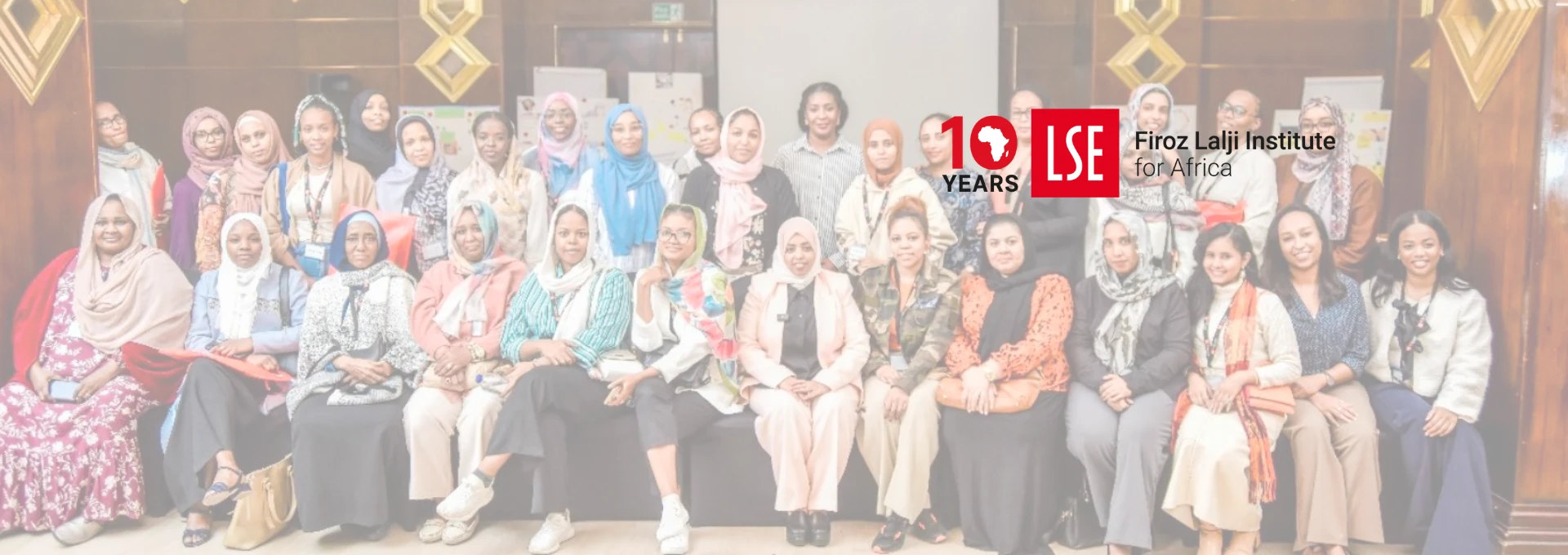
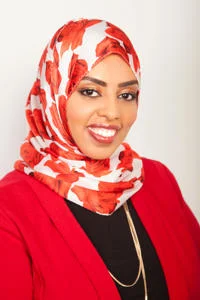
Dr Souad Mohamed is a senior strategic advisor and multidisciplinary scholar shaping leadership capability and national transformation across Africa, the UK, and the Middle East. A Visiting Senior Fellow at LSE’s Firoz Lalji Institute for Africa, she also advises institutions, boards, and governments on executive leadership, inclusive policy, and evidence-based transformation.
Can you tell us about your work and what brought you to the Institute?
My work sits at the intersection of leadership development, governance, and societal transformation. Over the past decade, I have focused on empowering emerging and established leaders across Africa, the UK, and the Middle East, particularly in contexts marked by complexity, rapid change, or crisis. My research and practice centre on evidence-based leadership capability-building, inclusive decision-making, and the wider social and institutional conditions that enable leaders and communities to thrive.
What brought me to the Institute was its genuine commitment to nurturing principled, future-focused African leaders who can shape the continent’s development with clarity and integrity. The mission resonated deeply with my belief that leadership is a public responsibility, one that must be exercised with humility, purpose, and accountability. Importantly, the Institute recognises Africa not as a single story, but as a continent of many histories, ideas, and identities, an approach that aligns with my own values and practice.
I joined the Institute as a Visiting Senior Fellow and teach on the Programme for African Leadership (PFAL), working with exceptional young leaders who are already creating meaningful change across government, civil society, and the private sector. PFAL provides a space where leadership is explored as a lived practice shaped by identity, responsibility, and the realities facing African societies today.
It has been a privilege to contribute to an environment where research, policy, and leadership practice come together, and where leaders are encouraged to be both visionary and grounded in service.
How did your time at the Institute shape your research?
My time at the Institute profoundly sharpened the trajectory of my research, especially through my work on Sudanese women’s leadership during times of conflict and displacement. The Institute offered an intellectual home where my inquiry was shaped directly by the lived experiences of Sudanese women navigating displacement, uncertainty, and the realities of rebuilding their lives after the 2023 conflict.
Engaging with PFAL’s diverse cohorts and later leading projects on Sudanese women in the diaspora enabled me to situate my research within real, ongoing human contexts, rather than purely academic settings. The Sudan project highlighted the critical roles Sudanese women play in sustaining their communities during crisis, rebuilding confidence, leadership capacity, and collective agency while navigating displacement and profound uncertainty.
This work also deepened my long-standing interest in the human dimensions of transformation, an area I first explored in my doctoral research on the indirect human costs of technology adoption, highlighting how leadership, trust, and cultural context can determine whether systems survive or collapse.
Ultimately, my work at the Institute strengthened my commitment to producing knowledge that does more than analyse leadership; it supports leaders on the ground, informs practice, and amplifies voices too often overlooked in global discussions on governance and transformation.
What did you most enjoy about working with the Institute?
What I valued most was the Institute’s authentic commitment to societal impact. The work is grounded in urgency, purpose, and the realities facing African leaders today. Whether through the Sudanese women’s leadership initiative, PFAL teaching, or various projects and events, the Institute consistently created spaces where academic rigour met lived experience.
I am particularly inspired by the Institute’s culture of collaboration and intellectual generosity. The regular Lunch and Learn sessions, cross-disciplinary conversations, and the contributions of researchers, communication specialists, and programme teams created an environment where learning was continuous and multidimensional. This culture of inclusion, where diverse perspectives are welcomed, and creativity, art, and storytelling often form part of FLIA events, made the Institute feel like a true intellectual home.
Working alongside exceptional colleagues was equally rewarding. Their courage, creativity, and commitment to impact across the continent and diasporas remain one of the most fulfilling aspects of my work.
Above all, their warmth, professionalism, and shared commitment to purpose made my experience at the Institute deeply inspiring. I have worked in many places, but I can genuinely say this has been one of the most inclusive, collaborative, and intellectually rich environments I have been part of.
What do you think is the value of having a dedicated Africa Institute at LSE?
A dedicated Africa Institute at LSE provides an essential intellectual and strategic space at a time when global change is accelerating. Its value lies in positioning Africa not as a subject of study, but as a generator of knowledge, innovation, and leadership insight. The Institute ensures that African perspectives shape global debates and that scholarship remains grounded in the continent’s diverse realities and aspirations.
What makes the Institute distinctive is its ability to integrate three critical dimensions:
- Rigorous academic research that offers methodological clarity and intellectual depth.
- Practical engagement that ensures research is informed by lived experience, policy realities, and community insight.
- A creative and human dimension, reflected across FLIA events through dialogue, culture, art, and storytelling, which recognises that leadership is both analytical and imaginative, requiring empathy, ethical judgment, and cultural understanding.
This combination enables African leaders, scholars, and partners to co-create solutions to pressing priorities such as governance, inequality, climate resilience, youth transitions, gender equity, conflict, and inclusive economic development.
Ultimately, the Institute strengthens LSE’s role as a global convening space while honouring Africa’s intellectual contributions and diversity. It prepares the next generation of African leaders to navigate uncertainty with confidence, discernment, and integrity, qualities essential for shaping a more just and sustainable world.
What do you think have been the highlights of the last 10 years of the Institute?
The Institute’s greatest achievement over the past decade has been its ability to redefine how Africa is engaged in global scholarship, moving from representation to co-creation. It has created a space where African knowledge, identity, and leadership are celebrated as sources of insight, not exceptions to it.
Key highlights include:
- PFAL’s impact equips emerging African leaders with the skills, networks, and confidence to drive change while remaining grounded in their identities and values.
- Research excellence across themes central to the continent’s future, governance, conflict, youth leadership, public authority, gender, climate, development, and humanitarian transitions, producing work that is contextually grounded and policy relevant.
- A collaborative culture that brings together scholars, practitioners, policymakers, and communities in ways that honour Africa’s complexity and diversity.
- Creative approaches to leadership development, recognising that leadership is deeply human, requiring imagination, ethics, cultural awareness, and the capacity to navigate uncertainty.
- A flagship humanitarian initiative supporting Sudanese women leaders through displacement, delivered in collaboration with the Sigrid Rausing Trust and Haggar Group, which demonstrated measurable impact and showcased FLIA’s capacity to respond rapidly and effectively to crises
The Institute has shown that strengthening African leadership is not about “fixing gaps,” but enhancing the qualities, perspectives, and cultural strengths African leaders already possess.
What do you hope we will be able to achieve in the next 10 years?
Over the next decade, I hope the Institute will deepen its role as a catalyst for leadership, knowledge, and societal transformation across Africa. There is immense potential to strengthen pathways between research, policy, and leadership capability-building, ensuring insights generated within the Institute translate into meaningful change in communities, institutions, and national systems.
I also hope we expand our work with leaders operating in contexts of conflict, displacement, and rapid transition. Building on initiatives such as the Sudanese women’s leadership project, the Institute is uniquely positioned to amplify voices and support leaders who carry the responsibility of rebuilding trust, institutions, and social cohesion.
Another priority is to harness the richness of our alumni network, deepening collaboration between African scholars, practitioners, and global partners to co-create solutions around climate resilience, governance, gender equity, entrepreneurship, and inclusive development.
Finally, I hope the Institute continues to challenge global narratives, recognising Africa as a continent of ideas, innovation, and leadership insight, not a single story. By anchoring research and capability-building in Africa’s diverse realities, the Institute can equip leaders not only with knowledge but with the moral courage, creativity, and clarity needed to shape a more equitable and sustainable world.