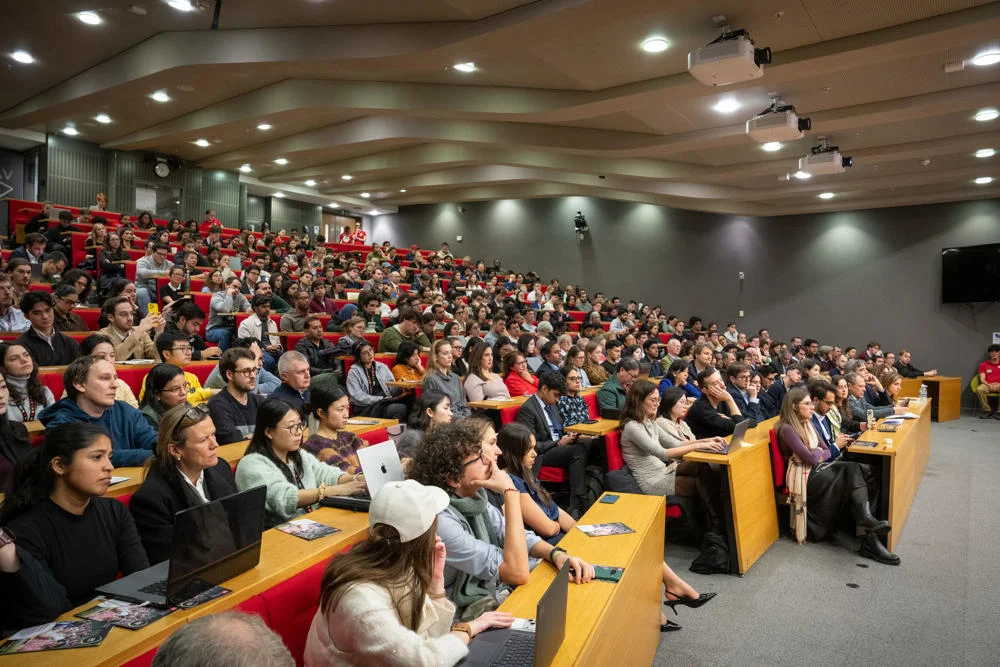

A society free from poverty: how do we get there and what would it look like?

Speakers

The event challenges the old adage, 'The poor will always be with us', by envisaging a future free from poverty. The speakers will identify the gains for children and for society as a whole from ending child poverty and the gains for workers, families and the economy from ending bad jobs.
We will discuss some of the key policies and strategies that can bring a society free from poverty into reality, including re-thinking care and tackling inter-generational inequalities.
Meet our speakers and chair
Abby Jitendra (@abbyabhaya, @abbyabhaya.bsky.social) is Principal Policy Adviser at the Joseph Rowntree Foundation. Abby is working on developing a new programme of work on care, family and relationships. Her areas of expertise include energy policy and regulation, destitution, household debt and social security. Abby previously worked at Citizens Advice, leading a team of policy researchers and campaigners to stand up for consumers as energy companies failed and costs increased. Before that, she had oversight of policy and research at anti-poverty charity Trussell. She is a trustee of Quaker Social Action.
Abigail McKnight is Director of the Centre for Analysis of Social Exclusion at LSE. Abigail’s research interests include inequality, poverty, wealth, social mobility, higher education and employment policy. She has recently held research grants from Itla Children’s Foundation, the European Commission, the Nuffield Foundation, the Low Pay Commission and the Social Mobility Commission. She is a Fellow of the Royal Society of Arts, Manufactures and Commerce (RSA) and has worked in CASE since 1999.
Thomas C. Stephens (@TCStephens) is Teaching Fellow at the LSE School of Public Policy and Associate Fellow of the New Economics Foundation. Tom was recently awarded a PhD in Social Policy at LSE, for a thesis on "Work and wellbeing in modern Britain: an application of the Capability Approach". At NEF, he conducts (mainly quantitative) research on good work and early years education and care, while his academic research focuses on exploring and the wider circumstances of workers - such as care, family and health-related commitments they manage alongside work; and the choices they have over alternative work opportunities.
Tania Burchardt is Associate Director of the Centre for Analysis of Social Exclusion and Associate Professor in the Department of Social Policy at LSE.
More about this event
This event is part of the LSE Festival: Visions for the Future running from Monday 16 to Saturday 21 June 2025, with a series of events exploring the threats and opportunities of the near and distant future, and what a better world could look like. Booking for all Festival events will open on Monday 19 May.
The Centre for Analysis of Social Exclusion (CASE) examines different dimensions of social disadvantage, and analyses the impact of public policy.
The Department of Social Policy is an internationally recognised centre of research and teaching in social and public policy. From its foundation in 1912 it has carried out cutting edge research on core social problems, and helped to develop policy solutions.
Hashtag for this event: #LSEFestival
Join our mailing list
Sign up to receive email updates from LSE Events including the latest news and event announcements.
Podcast & video
A podcast of this event is available to download from A society free from poverty: how do we get there and what would it look like?
A video of this event is available to watch at A society free from poverty: how do we get there and what would it look like?
Podcasts and videos of many LSE events can be found at the LSE Public Lectures and Events: podcasts and videos channel.
Many speakers at LSE events also write for
, which present research and critical commentary accessibly for a public audience. Follow
, the
, the
,
and the
to learn more about the debates our events series present.
For events that are livestreamed, automated live captions are available. Please note that this feature uses Automatic Speech Recognition (ASR) technology, or machine generated transcription and is not 100% accurate.
Photographs taken on behalf of LSE are often used on our social media accounts, website and publications. At events, photographs could include broad shots of the audience and lecture theatre, of speakers during the talk, and of audience members as they participate in the Q&A.
If you are photographed participating in an event Q&A but would not like your photograph to be stored for future use, please contact events@lse.ac.uk.
Please contact the Press Office if you would like to request a press seat or have a media query about this event, email
. Please note that press seats are usually allocated at least 24 hours before each event.
We aim to make all LSE events available as a podcast subject to receiving permission from the speaker/s to do this, and subject to no technical problems with the recording of the event. Podcasts are normally available 1 week after the event.
of past events can be found online
Follow LSE public events on X for the latest updates on all our events and ticket releases.
Livestreams and archive videos of past lectures are shared on our YouTube channel while event podcasts can be found on the LSE Player.
Event updates and other information about what’s happening at LSE can be found on our Facebook page and for live photos from events and around campus, follow us on Instagram.
Attending our events in-person or online? Join the conversation using #LSEEvents.
If you are planning to attend this event and would like details on how to get here and what time to arrive, as well as on accessibility and special requirements, please refer to
. LSE aims to ensure that people have equal access to these public events, but please contact the events organiser as far as possible in advance if you have any access requirements so that arrangements, where possible, can be made. If the event is ticketed, please ensure you get in touch in advance of the ticket release date.
Access Guides to all our venues can be viewed online
.
LSE has now introduced wireless for guests and visitors in association with 'The Cloud', also in use at many other locations across the UK. If you are on campus visiting for the day or attending a conference or event, you can connect your device to wireless. See more information and create an account at Join the Cloud.
Visitors from other participating institutions are encouraged to use
. If you are having trouble connecting to eduroam, please contact your home institution for assistance.
The Cloud is only intended for guest and visitor access to wifi. Existing LSE staff and students are encouraged to use
instead.
LSE holds a wide range of events, covering many of the most controversial issues of the day, and speakers at our events may express views that cause offence. The views expressed by speakers at LSE events do not reflect the position or views of The London School of Economics and Political Science.
From time to time there are changes to event details so we strongly recommend that if you plan to attend this event you check back on this listing on the day of the event.
LSE holds a wide range of events, covering many of the most controversial issues of the day, and speakers at our events may express views that cause offence. The views expressed by speakers at LSE events do not reflect the position or views of the London School of Economics and Political Science.
Subscribe to the LSE Events newsletter