Overview
Introduction
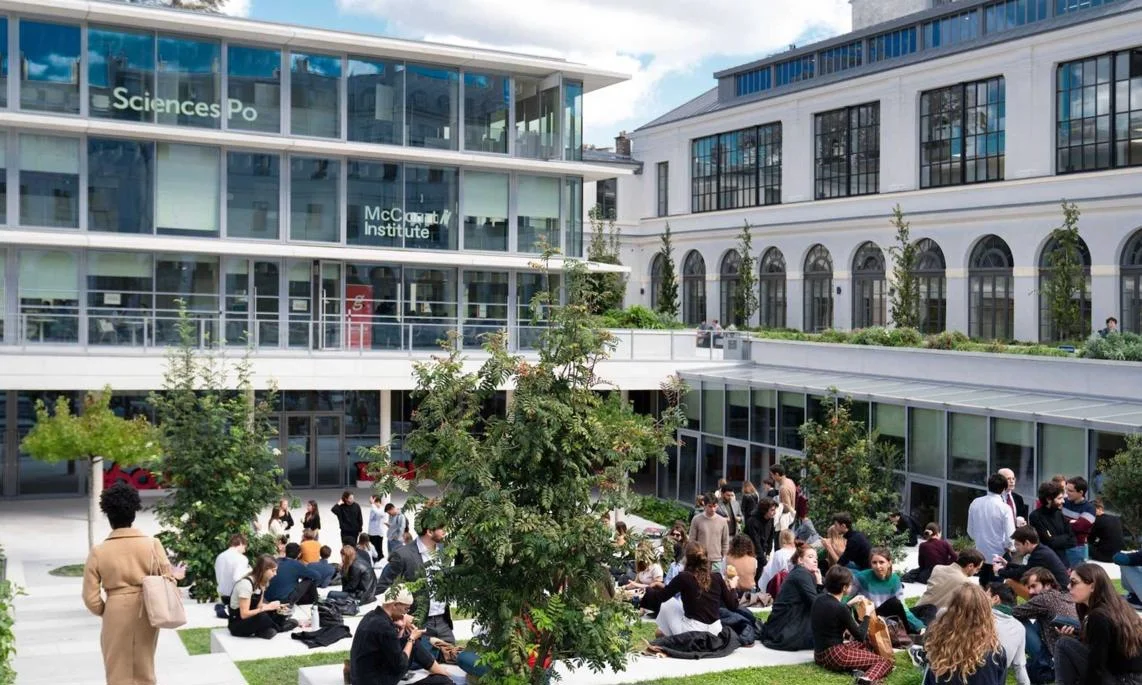
The double degree is an ideal choice for early-stage professionals who want to gain expertise in policymaking and analysis and study in two historic European cities – London (LSE) and Paris (Sciences Po).
During the first year (at Sciences Po), you’ll develop your core skills in economics, politics and policymaking and specialise in one of eleven policy streams. You’ll have opportunities to take part in innovative projects such as the Public Policy Incubator programme – working alongside researchers and external partners to develop practical solutions to public policy challenges.
The second year (at LSE) builds on this learning, drawing on our strengths in empirical methods, political science and economic analysis. While at LSE, you can choose a second specialism – either in a complementary or a separate area from your first year.
You’ll complete a six-month Capstone project working on a real-world policy problem with an external partner – enhancing your professional skills and CV for your future career.
You’ll benefit from the combined resources, opportunities and networks of both prestigious institutions and gain the professional and international experience to thrive in your future career. This programme provides a gateway to high-impact roles in government, NGOs, not-for-profits, international organisations and private firms.
Students from this programme graduate with two degrees – a Master of Public Policy from Sciences Po and a Master of Public Administration from LSE.
Entry requirements
Candidates must meet the entry requirements for both LSE and Sciences Po. For more information about Sciences Po's entry requirements, please visit their website.
Applications are administered by a joint admissions board of representatives consisting of both LSE and Sciences Po, but the admissions process for the degree is managed by Sciences Po.
There is no formal requirement for previous professional work experience, but students starting the LSE MPA normally have one year of professional experience and many have two or more years of experience.
Find out more about the admissions process and entry requirements.
Please select your country from the dropdown list below to find out the entry requirements that apply to you.
Overseas
English language requirements
The English language requirement for this programme is Higher. Read more about our English language requirements.
Competition for places at LSE is strong. So, even if you meet the minimum entry requirements, this doesn't guarantee you an offer of a place.
However, please don’t feel deterred from applying – we want to hear from all suitably qualified students. Think carefully about how you can put together the strongest possible application to help you stand out.
Programme content
Year 1
First year at Sciences Po
- Sciences Po Common Core
- Public Economics Course
- Governance, Democracy and Public Policy course
- Policy Analysis and Policy Evaluation
- Management, project management and negotiations (or substitute the Policy Incubator)
- Policy stream courses
- Elective courses
- Language courses
Find out further details about the content and classes in each category listed above by viewing their relevant policy stream page on the Sciences Po website. Click on MPP Semester 1 and Semester 2 for details.
Year 2
Second Year at LSE
Courses to the value of three units from the options of an MPA course list
For the latest list of courses, please go to the relevant School Calendar page.
A few important points you’ll need to know:
We may need to change, suspend or withdraw a course or programme of study, or change the fees due to unforeseen circumstances. We’ll always notify you as early as possible and recommend alternatives where we can.
The School isn't liable for changes to published information or for changing, suspending or withdrawing a course or programme of study, due to developments in teaching practice, regulatory requirements that require us to comply, lack of demand, financial unviability of a course, or due to circumstances beyond our control, such as the loss of a key member of staff or where a location or building becomes unavailable for use.
Places are limited on some courses and/or subject to specific entry requirements so we cannot therefore guarantee you a place.
Changes to programmes and courses may be made after you’ve accepted your offer of a place – normally due to developments in the discipline or as a consequence of student feedback. We may also make changes to course content, teaching formats or assessment methods but these are made to improve the learning experience.
For full details about the availability or content of courses and programmes, please take a look at the School’s Calendar, or contact the relevant academic department.
Some major changes to programmes/courses are posted on our updated graduate course and programme information page.
For further information on how we comply with UK consumer protection law, see your consumer rights as a student.
Why study with us
Discover more about our students and department.
Meet the department
The LSE School of Public Policy (SPP) is a global community united by a shared commitment to LSE’s founding mission: to understand the causes of things and work for the betterment of society.
Our master’s programmes combine academic rigour with real-world relevance, tailored to suit professionals at every stage of their career — from emerging leaders to seasoned executives.
SPP now welcomes a thriving community of more than 400 students who all share a passion for learning and developing new perspectives as they prepare to develop policies to transform societies around the world. As an SPP student, you’ll join a diverse and dynamic cohort, learning from world-renowned faculty and distinguished guest speakers with experience in governments around the world.
SPP is at the heart of LSE – ranked the top university in London and fifth in the world for social science and management subjects (QS World University Rankings by Subject 2026). Situated in the centre of a global city, LSE is the perfect place to study and contribute to public policy debates.
Our programmes enable students to develop rigorous and empirical skills underpinning evidence-based policymaking. Students learn how to apply these skills to real-world problems and contexts. We also offer a wide range of opportunities beyond the classroom for students to develop their professional skills and prepare for their future careers, these include:
- Professional Skills Accelerator programme
- Policy in Practice seminar series
- Alumni mentorship scheme and career Q&A sessions
- Global Public Policy Network (GPPN) – hear from our participants
- MBA Impact Investment Network and Training (MIINT) – hear from our MIINT 2025 participants.
Connect with us on:
- Linkedin: LSE School of Public Policy
- Instagram: @lsepublicpolicy
- YouTube: https://www.youtube.com/@lseschoolofpublicpolicy
- X/Twitter: @lsepublicpolicy.

Why LSE
University of the Year 2025 and 1st in the UK in 2025 and 2026
Times and The Sunday Times - Good University Guide 2025 and 20261st in London for the 15th year running
The Complete University Guide - University League Tables 20275th in the world for the study of social sciences and management
QS World University Rankings by Subject 20266th in the world for leading the way in social and environmental sustainability
QS World University Rankings: Sustainability 2026Your application
Overview
The admissions processes for the MPP/MPA Double Degree are managed by Sciences Po and any queries about the process should be directed to Sciences Po.
All applications are considered by an admissions panel which is composed of representatives from both LSE and Sciences Po.
Data sharing
Double degrees and certain other degrees and scholarships require that LSE shares personal data with another university or partner. In our agreements we will use the School’s standard data sharing template for universities and partners in the EU and EEA and in an adequate country. Standard contract clauses will be used for any other country. If you have any questions about this or how your personal data will be treated by LSE, please contact the Data Protection Officer via glpd.info.rights@lse.ac.uk or check our Student Privacy Notice.
Information Events
- SPP Information Sessions
Throughout the year we'll be hosting online SPP programme information sessions for prospective students. These sessions provide an opportunity for prospective students to interact with our faculty and students to find out more about a specific SPP programme. Details of upcoming sessions can be found on our website and we also encourage you to register your interest to hear more about our upcoming sessions.
- LSE information events and videos
LSE also have a number of webinars, videos, student blogs and student video diaries which will help you gain an insight into what it's like to study more broadly at LSE
LSE representatives also travel around the world to meet with prospective students at information fairs and events
Find details on LSE's upcoming visits
- Visit LSE
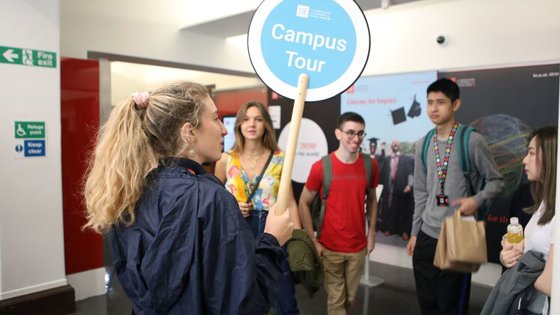
Come on a guided campus tour, attend an undergraduate open day, drop into our office or go on a self-guided tour.
Find out about opportunities to visit LSE.
Contact us
- Admissions: Contact Sciences Po
- Year two queries: spp.doubledegrees@lse.ac.uk
Fees and funding
The table of fees shows the latest tuition fees for all programmes.
You're charged a fee for your programme. At LSE, your tuition fee covers registration and examination fees payable to the School, lectures, classes and individual supervision, lectures given at other colleges under intercollegiate arrangements and, under current arrangements, membership of the Students' Union. It doesn't cover living costs or travel or fieldwork.
Home
Year 1 (at Sciences Po, 2026/27):
Home students: visit Sciences Po website (calculated based on circumstances)
Year 2 (at LSE, 2027/28):
Home students: £34,100
Overseas
Year 1 (at Sciences Po, 2026/27):
Overseas students: visit Sciences Po website (calculated based on circumstances)
Year 2 (at LSE, 2027/28):
Overseas students: £34,100
At LSE, your tuition fees, and eligibility for any financial support, will depend on whether you’re classified as a home or overseas student (known as your fee status). We assess your fee status using The Higher education (Fee Limit Condition) (England) Regulations 2017.
Fee reduction
Students who have completed and passed an undergraduate degree at LSE and are beginning taught graduate study at the School are eligible for a 10 per cent tuition fee reduction.
Students who have completed and passed two or more Summer School courses are eligible for a five per cent reduction.
If you meet the eligibility criteria for both discounts, the higher 10 per cent discount rate will apply.
Find out more about the LSE alumni discount.
Funding for the second year, at LSE
We recognise that the cost of living in London may be higher than in your home town/city or country and we provide generous scholarships to help both home and overseas students.
We offer some needs-based awards for this programme, including the Graduate Support Scheme. Competition for these awards and scholarships is strong. To apply for an award, you must have an offer of a place and submit a Graduate Financial Support application before the funding deadline during your first year at Sciences Po.
In addition to our needs-based awards, we offer scholarships for students from specific regions of the world and awards for certain subjects.
You can’t apply for a Graduate Support Scheme or LSE scholarship once you’ve joined the School.
Please note: we do expect students who register for a programme to have sufficient funds for the duration.
Government tuition fee loans and external funding
The UK Government offers a postgraduate loan for eligible students studying for a first master’s programme. This is designed to help with fees and living costs. Some other governments and organisations also offer tuition fee loan schemes.
Find out more about tuition fee loans.
Further information
Learn more about fees and funding opportunities.
Learning and assessment
How you learn
Students will begin their studies at the School of Public Affairs at Sciences Po in Paris.
How you learn
You'll normally have two to three hours of classroom-based teaching each week for each course that you take. This will usually add up to around 12-15 hours per week in class. As the MPA Double Degree is a full-time programme, you'd be expected to spend the equivalent number of hours studying as you'd spend working if you were in full-time employment (35-40 hours per week in total). For the MPA Capstone and (for those who choose to do one) the Policy Paper or Dissertation, there is less classroom-based teaching. Capstone groups determine how and when they're going to work on their project and the majority of Policy Paper and Dissertation work is done independently.
Teaching hours vary according to courses and you can view indicative details in the Calendar within the Teaching section of each course guide.
Our students
As a student at LSE in your second year of your double degree you’ll be based at our central London campus.
LSE is an international community, with over 140 nationalities represented amongst its student body. We celebrate this diversity through everything we do. LSE is based on one campus in the centre of London. Despite the busy feel of the surrounding area, many of the streets around campus are pedestrianised, meaning the campus feels like a real community.
Your time at LSE is not just about studying, there are plenty of ways to get involved in extracurricular activities. From joining one of over 200 societies, or starting your own society, to volunteering for a local charity, or attending a public lecture by a world-leading figure, there is a lot to choose from.
The School of Public Policy at LSE also has an active student community and extracurricular activities:
- Association of Public Policy Students (APPS)
The Association of Public Policy Students (APPS) is an elected body of SPP students that serve as a resource for the student community. Throughout the academic year, the APPS’s numerous committees and initiatives provide opportunities for students to engage with other classmates in professional and social activities.
- Womxn’s Network
The School of Public Policy’s (SPP) Womxn’s Network is a student-run organisation focused on the advancement and empowerment of students within the SPP and broader LSE community who are marginalised by the intersectionalities of gender and/or sexuality. The Network aims to further encourage the inclusion of marginalised voices within policymaking through various events and forums designed to promote learning and open discussion.
- Public Sphere Journal (PSJ)
The Public Sphere Journal (PSJ) is a journal of international policy studies produced by SPP students which features evidence-based research in economic policy, public management, international affairs, development studies and social policy. The PSJ offers students an opportunity to combine their unique professional and personal experiences to create a journal of international policy studies, from the initial call for papers through to the print and launch.
External networks
- Turner MBA Investment Impact Network and Training (MIINT)
The Turner MBA Investment Impact Network and Training (MIINT) Competition gives students the opportunity to gain hands-on experience in impact investing by sourcing and conducting due diligence on real-world, early-stage impact investment opportunities. The MIINT is supported by LSE's Marshall Institute. Hear from our 2025 MIINT participants.
- Global Public Policy Network (GPPN)
The Global Public Policy Network (GPPN) is a partnership between seven prestigious universities in public policy. GPPN is a platform for institutional partnership, research collaboration, and student exchange. Members of the GPPN have organised an annual international conference for the students and deans from member schools to meet and discuss pressing issues of global public policy. GPPN members have also established exchange and dual degrees programmes, allowing students to benefit from this international network of the most prestigious public affairs schools in the world. Hear from our 2024 GPPN conference participants.
LSE student societies and activities
Your time at LSE is not just about studying, there are plenty of ways to get involved in extracurricular activities. From joining one of over 200 societies, or starting your own society, to volunteering for a local charity, or attending a public lecture by a world-leading figure, there is a lot to choose from.
Life in London
As a student at LSE, you’ll be based at our central London campus. Find out what our campus and London have to offer you on academic, social and career perspective.
LSE is based on one campus in the centre of London. Despite the busy feel of the surrounding area, many of the streets around campus are pedestrianised, meaning the campus feels like a real community.
London is an exciting, vibrant and colourful city. It's also an academic city, with more than 400,000 university students. Whatever your interests or appetite you'll find something to suit your palate and pocket in this truly international capital. Make the most of career opportunities and social activities, theatre, museums, music and more.
Want to find out more? Read why we think London is a fantastic student city, find out about key sights, places and experiences for new Londoners. Don't fear, London doesn't have to be super expensive: hear about London on a budget.
How you're assessed
At Sciences Po, assessments will vary depending on the policy stream and course selected. Further information can be found on the relevant policy stream webpage.
At LSE, we use a range of formative assessment, such as essays, problem sets, case studies, reports, quizzes, mock exams and many others. Summative assessment may be conducted during the course or by final examination at the end of the course. An indication of the formative coursework and summative assessment for each course can be found in the relevant course guide.
Graduate destinations
Overview
A particularly attractive feature of the Sciences Po-LSE MPP/MPA double degree is the outstanding opportunity for developing professional skills and experience to give you a head start over other graduates in seeking post-study employment in a relevant sector. The double degree is an excellent career decision with many global employers attracted to both the intellectual rigour and the practical applications of the course. The degree equips professionals with the skills to make an immediate impact for employers in the public sector, private companies, non-governmental and inter-governmental organisations around the world, including government departments and agencies, consultancies and international development agencies.
Students will benefit from the careers support and resources of both prestigious institutions.
Further information on graduate destinations for this programme
Career support
Sciences Po
The School of Public Affairs at Sciences Po educates the next generation of policy-shapers committed to serving the common good. The young professionals that emerge are innovative and responsible, efficient and socially engaged. They take on roles that require a panoramic view of public affairs, whether in the public or the private sector, at a local, national, European or international level, and in any of a vast array of fields (public administration, consulting, the economy, security and defence, health, energy and sustainable development, culture, new technologies, digital innovation, the list goes on).
Career resources include:
- Career News: weekly news including only professionnal informations and opportunities
- Career Breakfasts: recruiting session
- Career Meetings: presentation of companies, institutions, organisations, recruitment process and opportunities
- Career Inside: on site visit, meet with collaborators, network
- Job’s Round Table: conference on a professionnal sector
- Career Advisors Community: professionnals who accompany the students during their last year
- Fairs: participation to the School to present the academic offer and employability of our students
Find out more about graduate career paths and support resources avaiable at Sciences Po: careers actions and opportunities at Sciences Po School of Public Affairs and Sciences Po Carrières
London School of Economics and Political Science
At the heart of the SPP is an emphasis on helping our students shape and enhance their future careers in policy-related fields. SPP students come to LSE from very diverse professional backgrounds, and it is our priority to support each of you as you move to the next stage of your career.
LSE Careers offers students a programme of support throughout their studies and after graduation.
In particular, students at LSE SPP have access to:
- one-to-one coaching in all aspects of career planning and professional development careers discussions with the School of Public Policy's Careers Consultant
- a weekly SPP Careers newsletter, compiled by a student employee, with relevant short-term and long-term opportunities
- Q&A events with alumni working in particular sectors of interest
- SPP-only discussions to employers including through visits to offices to discuss career options and learn about different employment sectors
- access to LSE Careerhub, listing hundreds of opportunities, from short-term volunteering and internships to full-time positions for experienced professionals
- Careers Impact Sessions which takes place early in year 1, followed by a networking evening with employers in relevant sectors
- specialist careers seminars run by LSE Careers, including sessions on CVs and cover letters, career management, networking, interviews and advice specific to particular employment sectors
Many leading organisations give careers presentations at the School during the year. LSE Careers has a wide range of resources available to assist students in their job search. Find out more about the support available.
SPP Professional Skills Accelerator
The SPP also offers an extensive and tailored programme of Professional Skills for Public Policy which is especially designed to complement the skills and insights that you gain as part of your programme curriculum and equip you with the necessary skills for the next step in your career.
You'll benefit from a series of training workshops with experienced practitioners and experts in key areas of professional development such as leadership, negotiation and persuasive communication.
Alumni mentorship and Q&As
Our alumni connect regularly with our students throughout their studies and share their expertise through our alumni/student mentoring scheme and our career Q&A series.
Policy in Practice (PiP) and Dean’s Dialogue seminars
We run regular seminars through the year to connect you with policy practitioners in a range of fields, either to learn more about the work of particular organisations and sectors or to develop new skills. These seminars provide students with an opportunity to connect classroom learning to real world scenarios.
Find out more
Explore LSE
Student life

Student support
Accommodation

Meet, visit and discover LSE