

Our impact

We foster strong research collaborations across disciplines and with non-academic partners. We also co-produce research with partners and the people involved in the research, so that the research we do matters to those who are being asked to participate. We are politically engaged scholars, who combine our research with our worldly concerns.
Below is a selection of our current impact and knowledge exchange projects.
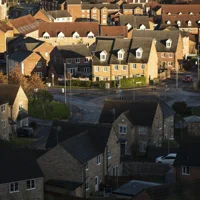
A Tale of Two Towns
The aim of this project, led by Dr Sacha Hilhorst, is to produce a short policy publication based on her research. Her PhD research was a political ethnography of two post-industrial towns in the Midlands, which sought to understand why many local residents had become deeply suspicious of the political system. She will now work with citizens and activists in her field sites to identify policy implications, which will be written up in a digital report to be published by the think tank Common Wealth.
The grant for this project is funded through the PhD LSE KEI Fund.

A Dialogue on Dynamics of Racism in Turkey
This project will be carried out in collaboration with Istos, an independent publishing house based in Istanbul. It involves a one-day event in Istanbul, in which a range of speakers – journalists, activists, lawyers, academics – will be invited to lay the framework for an open-ended dialogue around the subject of racism in Turkey. The aim of these talks will be to provide concrete ideas for developing anti-racist strategies, and to open an ongoing conversation by identifying the stakes, considering different frames, and paying attention to what must be considered for such strategies. Istos intend to publish a collected book of essays, published in Turkish, which will be authored by the speakers and based on the talks.
The project is led by the PhD Candidate Helen Mackreath, and is supported through the LSE KEI PhD Fund.
Pilot Community Engagement Project with London's Turkish-speaking LGBTI+ Migrants
This project, led by Dr Hakan Sandal-Wilson, seeks to promote knowledge exchange with the London-based migrant LGBTI+ community group Mesopotamian and Anatolian Queers for Azadî (MAQFA), resulting in the co-production of materials that will allow for improved services to Turkish-speaking LGBTI+ communities. The project also seeks to facilitate understanding about Turkish-speaking LGBTI+ migrants’ experience in their wider communities, remedying a lack of visibility and support in these spaces. This pilot community engagement project with Turkish-speaking LGBTI+ migrants and diaspora communities living in London, then, aims to empower LGBTI+ migrants by identifying needs, initiating conversations, and making research findings from my published and ongoing scholarship on migration, gender, and sexuality accessible to community leaders in order to increase the visibility of LGBTI+ experiences.
The project is funded through the LSE Sociology Impact Grant, with support from the LSE Knowledge Exchange and Impact (KEI) funds.
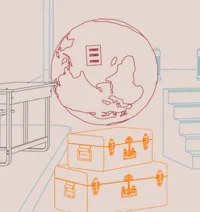
Archive Stories
Archive Storiesis a website that forms a central part of Dr Sara Salemand Dr Mai Taha’s ongoing project around community, radical, creative and anticolonial archival practices. We wanted to create a space for conversations about archiving beyond institutional archives, to think through the possibilities that open up when we imagine the archive as expansive and as encompassing everything around us. The website rejects the notion of a complete archive, instead seeing archiving as an incomplete and always-expanding practice.
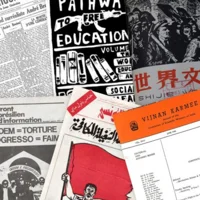
Revolutionary Papers
Revolutionary Papersis an international, transdisciplinary research and teaching initiative on anticolonial, anti-imperial and related left periodicals of the Global South. It includes over forty university-based researchers, as well as editors, archivists, and movement organisers from around the world. The initiative looks at the way that periodicals played a key role in establishing new counter publics, social and cultural movements, institutions, political vocabularies and art practises. Dr Mahvish Ahmad; Dr Chana Morgenstern (Faculty of English, University of Cambridge) and Dr Koni Benson, Department of History, University of the Western Cape) are the lead researchers.
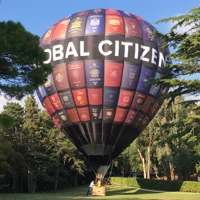
Golden Passports and Visas: The global Market in Residence and Citizenship
Dr Kristin Surak’s research into ‘golden passport’ and ‘golden visa’ programmes addresses how these schemes are about gaining mobility and options in a world with huge inequalities between citizenships. This research was presented to the European Parliament and you can read more about it here. Dr Surak’s book The Golden Passport: Global Mobility for Millionaires (Harvard University Press, 2023) looks into citizenship by investment programs that feed on global inequalities of citizenship.
This video explores and summarises Dr Surak's research on golden passports.
Configuring Light: Staging the Social
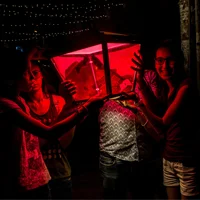
Led by Dr Don Slater, Dr Elettra Bordonaro, and Dr Joanne Entwistle (KCL), Configuring Light: Staging the Social is an interdisciplinary research programme that explores the role lighting plays in people’s everyday lives. Working with lighting professionals, local government, community groups and residents, it aims to help build a better social knowledge base and professional best practice in lighting design and urban planning. Projects apply creative qualitative social research methods to better understand the spaces that designers are working on, and ensure that lighting and other design elements support the social lives of the diverse people trying to live there. The programme is international in scope, including work on public spaces, social housing, retail centres and districts in Europe, Latin America, Australia and the middle east.
We are currently part of EnlightenME, a four-year Horizon2020 project on lighting and well-being in ageing populations: working with older citizens and carers in three cities (Amsterdam, Bologna and Tartu) we are carrying out social research, community engagement and co-design workshops to develop age-friendly lighting installations that will allow us to explore age-related design options in strategic urban sites.
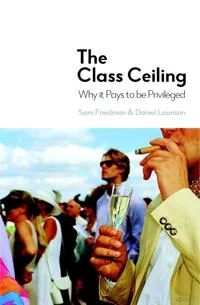
The Class Ceiling: Why It Pays to Be Privileged
Professor Sam Friedman's research on social mobility in Britain’s elite professions draws from his book The Class Ceiling: Why it Pays to be Privileged, co-authored with Daniel Laurison. He further investigates the impact of class within the UK Civil Serviceand highlights the challenges women, particularly from working-class backgrounds, face in such roles. Men from these backgroundsare more likely to embrace and disclose their origins, while women tend to conceal theirs due to perceived judgment. Additionally, Friedman has also recently asked – with Aaron Reeves and Eve Worth – Is there an Old Girls Network in the UK?They found that over a century, elite private girls' school alumni were 20 times more likely to attain top positions than other women, yet less so than male-only school counterparts. They argue that this is rooted in the ambivalent objectives of elite education for girls, which has historically experienced tension between promoting academic achievement and upholding traditional gendered social norms.

Overseas Domestic Worker Visa – Capacity-Building and Policy Outreach
Though the grassroots union Voice of Domestic Workers capture invaluable testimonies from their members about their lack of rights, they are currently unable to quantify the scale of this issue when the government and journalists ask them for data. By designing, disseminating, and analysing a survey with the domestic workers, we will generate evidence of the abuse that happens behind closed doors, and hopefully change the current Overseas Domestic Worker Visa. The project is led by the PhD Candidate Matt Reynoldsand supported through the LSE KEI PhD Fund.
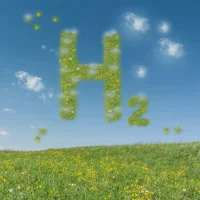
Integrating Rural Socio-Economic Development with Decentralised Green Hydrogen
This project brings together stakeholders from a community energy project, farmers associations, developments trusts, and a green hydrogen pilot project in Scotland. Through a professionally facilitated workshop, participants will be invited to explore the possibilities, benefits, and challenges of collaborating on first smaller scale green hydrogen projects. Aiming at the creation of a conceptual framework and clear policy recommendations, the project seeks to intervene into the emergence of the hydrogen economy in Scotland by increasing the chances for the successful participation of small, rural renewable energy producers. The project is led by the PhD Candidate Johannes Hollenhorstand supported through the LSE KEI PhD Fund.

Mapping ‘the Streets’: Young Women Rappers and Violence in East London
East London is renowned as the birthplace of Grime, a genre in which rap plays a significant role (Bramwell 2015; James 2021). While women have played a vital role in this scene, it has predominantly been male-dominated (Ramsden 2022). Dr Baljit Kaur, as part of her ESRC Postdoctoral Fellowship project titled 'Mapping ‘the Streets’: Young Women Rappers and Violence in East London,' is returning to a youth club in an East London borough. Here, she aims to delve into the lives of young women rappers whose narratives about structural and interpersonal violence are often marginalised within the rap scene. This project will provide a platform for young women involved in the rap scene to express their real-life experiences of violence, which are interwoven into the social fabric of East London.

Disembodied Territories
Disembodied Territoriesis a creative project that explores radical uses of maps and mapping in light of the colonial and racist history of technologies of mapping and maps themselves. The projects asks: how can we map against our own epistemic displacements while most of the maps we know are devices of that displacement? Co-curated by Dr Sara Salem, the project features over 50 contributions from filmmakers, artists, academics, architects and visualisers who map the ways in which the African continent keeps reinventing, resummoning, or unbounding itself from dominant frames of place-making.
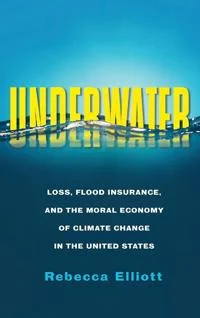
Underwater: Loss, Flood Insurance, and the Moral Economy of Climate Change in the United States
Dr Rebecca Elliott’s research examines transformations in the calculation and distribution of flood risk as the American state responds to the rising costs of flood losses. It has been featured in a video by the Thomson Reuters Foundation on the state of flood insurance in the US. The video is titled Flood insurance is...complicated. Here's why.

Kuwaitscapes
Kuwaitscapes is a card game that developed from the LSE Middel East Centre Kuwait Programme research project 'Public Space in Kuwait: From user behaviour to policy-making'. Part-funded by the Department of Sociology and co-created by Alexandra Gomes (LSE Cities), the cards are contextualised to Kuwait’s socio-cultural conditions and its built environment. This game facilitates the discussion of real urban issues, engaging everyone (from kids to adults, from lay citizens to planners and designers), while reducing the knowledge gap on urban planning and design within the Kuwait society. To read more about the cards, get to know all the members of the team and download the game, just visit Kuwaitscapes.