

The sociology of elite power today: introducing the Oxford Handbook of the Sociology of Global Elites
Speakers
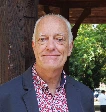
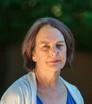

This event will bring a range of eminent speakers together to reflect on the nature of elite power in the 2020s. The panel will highlight cutting-edge scholarship recently published in the Oxford Handbook of the Sociology of Global Elites. A key focus will be on the challenge that elites pose to democratic political regimes, and what elites do to control multiple spheres from the shape of cities to regional politics.
Students, academic researchers and wider public audiences who are concerned about elites and changing forms of power today will find the event of great interest. No prior knowledge of the Handbook is expected.
Meet our speakers and chair
Will Davies is Professor of Politics at Goldsmiths, University of London. He is a sociologist and political economist whose research covers neoliberalism, happiness science, environmental politics, and anti-expert politics. Uniting this diverse body of work is an interest in the relationship between knowledge and power, drawing on the ideas of Michel Foucault, Luc Boltanski, and Max Weber. He is Co-Director of the interdisciplinary Political Economy Research Centre and convenes the BA in Politics, Philosophy and Economics programme.
Caroline Knowles is a Honorary Professor at the School of Society and Environment, Queen Mary University of London. A non-fiction writer based in London, her work explores how cities are made, how questions of spatial justice shape urban life, and how migration transforms places across the world. Drawing on sociology, anthropology and geography, her research and writing examine how cities can become fairer and more inclusive. She is also Professor Emerita at Goldsmiths, University of London and previously directed the British Academy’s Urban Infrastructures of Well Being and Cities and Infrastructures programmes, leading interdisciplinary research on urban sustainability, climate change and migration across the Global South.
María-Luisa Mendez is a Professor at the Institute of Urban and Territorial Studies at the Pontifical Catholic University of Chile and Director of the Nucleus Millennium Insecurity and Urban Cohesion (NUMIC) . A sociologist whose research focuses on social mobility, social stratification and urban conflict, she examines the lived experiences of inequality and socio-spatial change. Her work explores the subjective dimensions of class, place attachment and social cohesion, and she is the author of Upper Middle Class Social Reproduction (Palgrave, 2019), The Politics of the Elite (Routledge, 2023) and co-editor of the Oxford Handbook of the Sociology of Global Elites (OUP, 2026).
Mike Savage is a Professorial Research Fellow at LSE’s International Inequalities Institute. Mike played a formative role in the creation of the III, as founding co-Director with the late Prof John Hills. Between 2015 and 2020, he was Director of LSE’s International Inequalities Institute. He played a key role in securing the Atlantic Fellows programme to be a flagship of the III. This is the largest global programme in the world devoted to challenging inequalities, and he was its founding Director in 2016-17. Since 2019, he has convened the III’s Wealth, Elites and Tax Justice research theme, which has enjoyed major policy and academic impact.
Annette Lareau is the author of the award-winning books Unequal Childhoods, Home Advantage, and Listening to People. With Blair Sackett, she also authored We Thought It Would be Heaven: Refugees in an Unequal America. She is one of the editors (with Maria Luisa Méndez and Mike Savage) of The Oxford Handbook of the Sociology of Global Elites. She is writing articles and a book on wealthy families using qualitative data from 80 racially-diverse US families in the top 1% of the US. She is Professor (emeritus) in the Department of Sociology at the University of Pennsylvania. In the 2026 Autumn term, she will be a Visiting Professor in the Department of Sociology at LSE.
Aaron Reeves is Professor of Sociology at LSE. His work studies the causes and consequences of social inequality, with a focus on the political economy of health, welfare reform, and processes of elite formation. His research has been published in the American Sociological Review, American Journal of Sociology, The Lancet, British Medical Journal, and Socio-Economic Review.
From time to time there are changes to event details so we strongly recommend that if you plan to attend this event you check back on this listing on the day of the event.
Whilst we are hosting this listing, LSE Events does not take responsibility for the running and administration of this event. While we take responsible measures to ensure that accurate information is given here this event is ultimately the responsibility of the organisation presenting the event.
LSE holds a wide range of events, covering many of the most controversial issues of the day, and speakers at our events may express views that cause offence. The views expressed by speakers at LSE events do not reflect the position or views of the London School of Economics and Political Science.