

SPP students attend NXT Fellowship in India
In March our students Meghan Howat (MPA in Data Science for Public Policy), Isabella Ridout (MPP/MPA double degree with Sciences Po) and Anmol Das (MPA) were selected to travel to India represent LSE School of Public Policy (SPP) at the NXT Fellowship; a highly selective immersion programme in India which provides emerging global leaders with the opportunity to gain first-hand understanding of India's strategic trajectory, economy and role in the new world order. Our students report back on their experience and the benefits of taking part.
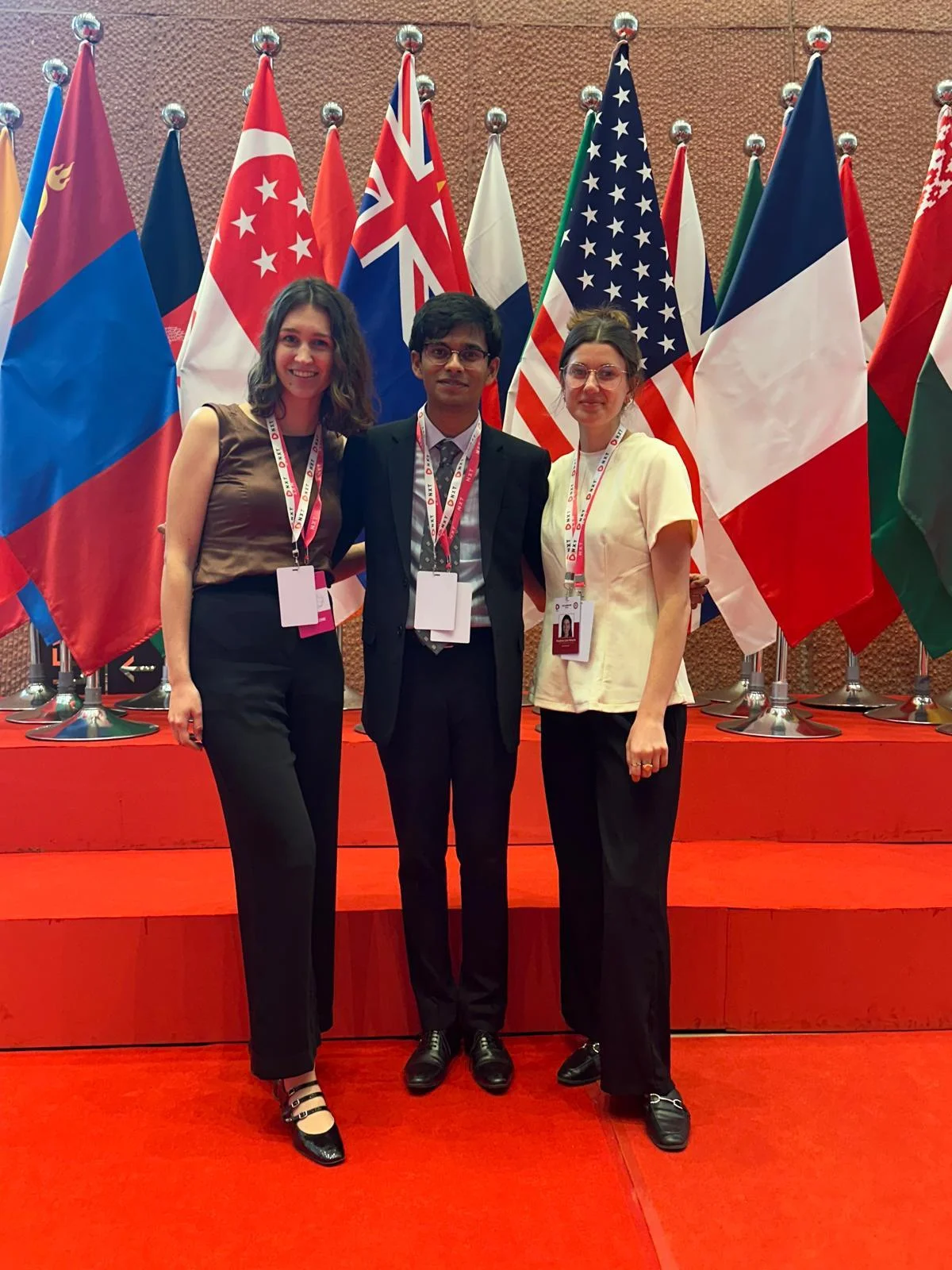
What can you tell us about the NXT Fellowship? Who is it designed for and what is the objective?
The NXT Fellowship is designed for university students across the globe to engage deeply with India across its political, economic, cultural, and social spheres. The programme features interactions with policymakers, masterclasses on different aspects of the ‘India story’, and visits to significant cultural and historical sites, including the Taj Mahal and the Neemrana Fort Palace. The Fellowship ended with attendance of the NXT Conclave, a three-day meeting for global leaders and policymakers to discuss India’s trajectory in a variety of policy domains, from technology to sustainability to cinema.
What were the main activities you took part in during your trip? What did you discover about India’s culture and heritage?
During the fellowship, we attended lectures covering topics from India's economic trajectory to its defence strategy with experts like Dr K.V. Subramanian and Lt. Gen. PJS Pannu. We also participated in industrial site visits, such as touring Piccadily Distilleries and Videotex International, to observe manufacturing operations first-hand. The experience culminated at the NXT Conclave 2026 hosted at the Bharat Mandapam, featuring addresses from Prime Minister Narendra Modi and various union ministers, alongside interactions with former heads of government such as former Prime Minister of Australia, Scott Morrison, and members of India’s Gaganyaan manned space mission.
What were your key takeaways or learning points from the conference?
For first time visitors to India, the conference was an excellent chance to experience a taste of day-to-day life in Delhi while simultaneously understanding the country’s current political priorities and opportunities for growth.
A major highlight of the conference was attending LSE graduate Mitali Nikore's masterclass on women-led development as the engine of India's $5 trillion ambition. The session provided a striking analysis of how the disproportionate burden of unpaid care work acts as a shadow economy, and we explored how targeted policy interventions, such as designing urban care clusters, are critical to overcoming these structural barriers.
It was very valuable to learn about large-scale policy initiatives in India, like the breast cancer screening programme launched after the last NXT conclave, or a nationwide initiative to connect the country to India’s Unified Payment Interface (UPI) by establishing bank accounts.
What do you think are the main benefits of taking part?
Participating in the fellowship gave us extraordinary access to leaders across the Indian policy sphere, from former ambassadors like Ajay Bisaria to university professors to prominent economists. Interacting with them gave us a deeper understanding of the opportunities and challenges shaping current policymaking in India.
How are you planning to use your learnings in your future studies and career goals?
Anmol: The NXT Fellowship directly ties into my goal of building a career in the Indian policy space. My learnings about India’s economic and industrial trajectory will directly inform my MPA specialism in International Political Economy at LSE. Specifically, I plan to utilise these practical insights to deepen my academic research on trade, regulatory incentives, and infrastructure development.
Meghan: The NXT Fellowship gave me an on-the-ground understanding of the policy challenges and opportunities India faces. I hope to work in climate policymaking and food systems transformation, so it is invaluable to better understand the food system that feeds one-sixth of the world’s population and faces significant climate risks. I look forward to incorporating this understanding into future research and policy on climate resilience and food systems transformation.
Bella: Incredible momentum is building in India and attending the NXT Fellowship and Conclave in Delhi, just weeks after India’s AI Impact Summit highlighted this. India’s ambitions in tech policy and the AI race can only be properly understood through the lens of India’s broader growth story and its economic and development goals. I am grateful to NXT for the opportunity to begin this understanding, and look forward to continuing to deepen it throughout my career.