

Louis Flamencourt
MPP/MPA Double Degree (Sciences Po-LSE) Class of 2025

Name: Louis Flamencourt
Programme: MPP/MPA Double Degree (Sciences Po-LSE), Class of 2025
Job title: Research Assistant at European Central Bank
With a strong interest in building a career at the intersection of economic research and public policy, Louis Flamencourt chose the MPP/MPA Double Degree at Sciences Po and LSE for its unique blend of professional and research-focused training. The programme equipped him with the analytical skills, international perspective, and policy expertise needed to contribute to purpose-driven, evidence-based policymaking. Since graduating, Louis has continued to pursue his passion for research through a predoctoral position at the European Central Bank and is preparing to begin a PhD in Economic Policy and Political Economy at UCL. He has also recently entered the international academic community, presenting his dissertation research examining how financial sector expansion shapes economic welfare and inequality, at leading conferences.
Here, Louis reflects on how the double degree helped shape his career path, what inspires him about the evolving relationship between policy and academic research, and his advice for those looking to pursue a career in policy-oriented research.
Can you tell us about your dissertation topic?
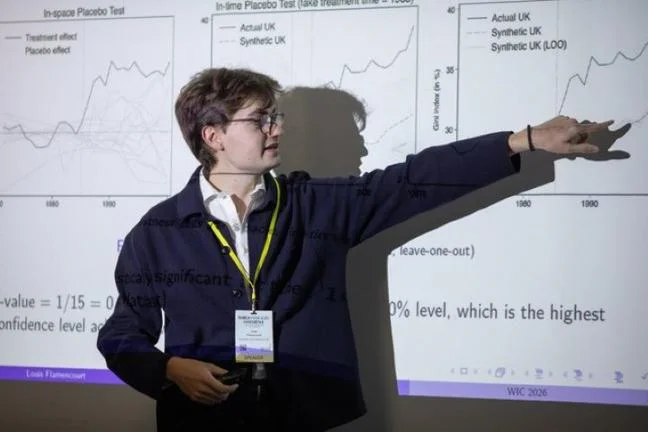
My MPA dissertation examines how financial sector expansion shapes economic welfare and inequality, especially as financial deregulation is increasingly framed as a lever to boost growth. Focusing on the UK’s 1986 ‘Big Bang’ deregulation of the London Stock Exchange, I study how this shock reconfigured the distribution of income and welfare over the long run. Using this episode, my findings suggest that:
- Sudden financial deregulation durably increased living‑standards inequality in the UK by roughly six Gini points.
- Following these reforms, the UK moved from the 12th to the 2nd most unequal high‑income economy in the world, behind the US.
- Gains from financial expansion were disproportionately concentrated at the very top of the wealth distribution and in a small number of regions, i.e. London and the South East.
- These regions now exhibit both higher inequality and weaker growth performance relative to less unequal regions, consistent with the view that high inequality may be weighing on the UK’s long‑run economic performance.
Taken together, my results stress that financial deregulation is not a distribution‑neutral policy tool. While it may support short‑term growth, it durably reshapes how the gains from growth are shared, with important implications for both equity and long‑term economic welfare.
What were the highlights from presenting your work at conferences over the summer?
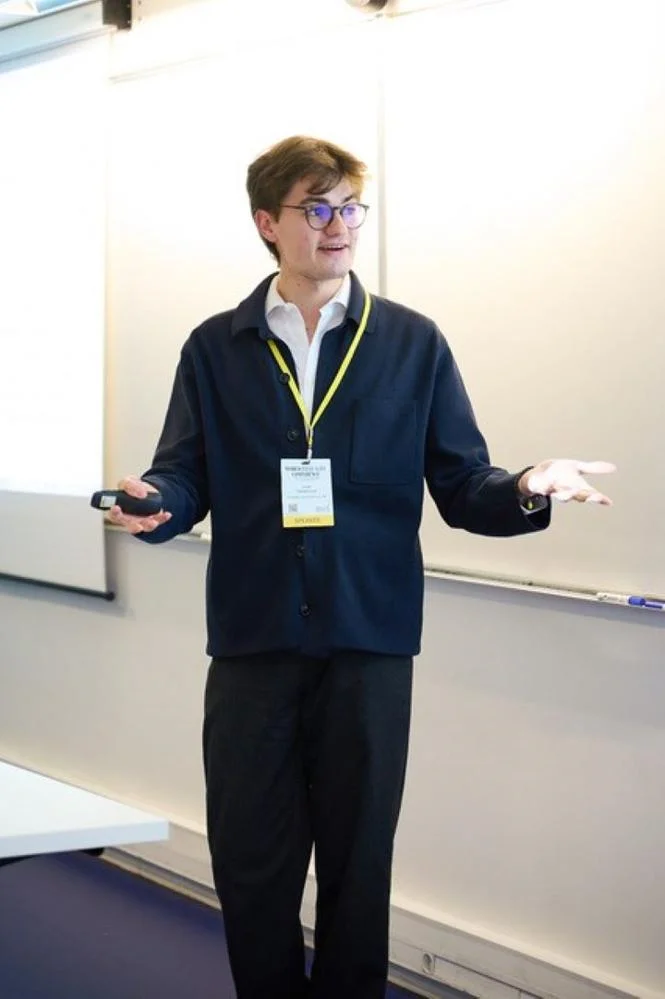
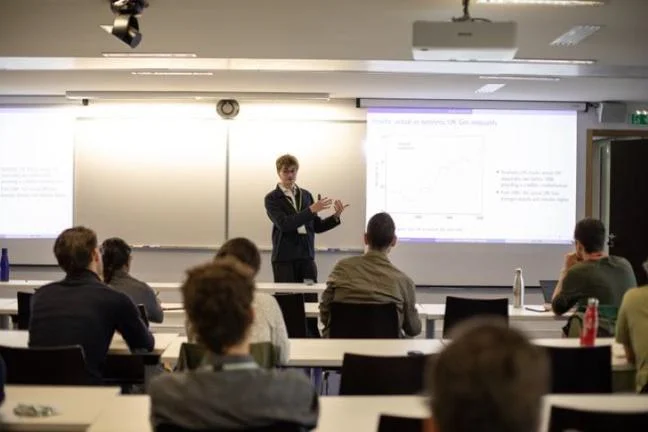
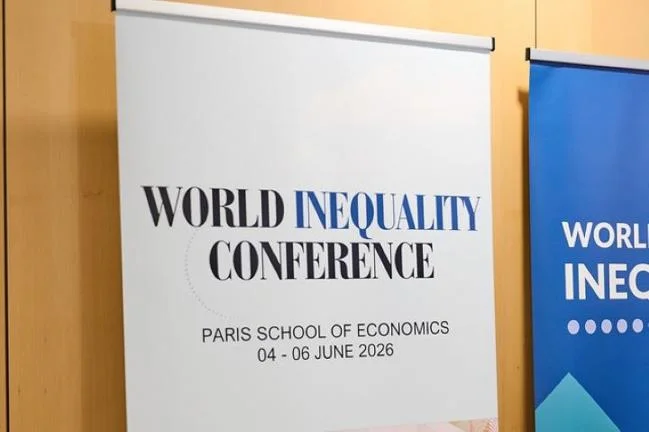
I recently had the opportunity to present my research at the World Inequality Conference at the Paris School of Economics and at the Royal Economic Society Annual Conference at Newcastle University. As my first experience presenting at academic conferences, this was an important milestone. The discussions, questions, and feedback from other academics were invaluable, and the connections I made confirmed that academia is the right next step for me.
A particular highlight was witnessing the launch of the Global Justice Report at the World Inequality Conference in Paris. This major report outlines how human development and equality can be grounded in planetary habitability and traces an economically and ecologically consistent transition path from 2026 to 2100. I was struck by the shift in narrative it offered: sustainability and planetary habitability were framed not as a pessimistic future, but as an optimistic scenario we can work towards if we act collectively, and now!
Photos from academic conferences (2026)
What’s next for you in your post-SPP journey?
After my MPA, and increasingly interested in academic research in economic policy, I decided to spend a year at the European Central Bank as a predoctoral research assistant, focusing on financial markets research applied to the eurozone. This experience further confirmed that the right next step for me lies in academic research.
In the autumn, I will be starting a PhD in Economic Policy and Political Economy at UCL’s Institute for Innovation and Public Purpose. Supervised by Professor Mariana Mazzucato, founding director of the Institute, I will investigate the contribution of the financial services sector to political‑economy outcomes and inequality. In particular, I will explore what it means to build a financial sector oriented toward the common good: directed toward missions (such as advancing the ecological transition), co‑created and participative (involving all stakeholders), and with rewards socialised and shared (rather than rents extracted by a small, geographically concentrated minority). My project aims to challenge the current rhetoric that further financial development and deregulation will automatically benefit growth, to understand at what cost, and to propose a mission‑driven alternative way of thinking about financial development. I am very excited to be embarking on this new journey and to be back in London.
Why did you choose to study the MPP/MPA Double Degree with Sciences Po/LSE?
I chose the double MPP/MPA programme between Sciences Po and LSE because I knew I wanted to work in the policy world to help shape outcomes‑oriented, purpose‑driven, evidence‑based public policy. Having grown up and completed university education across France and Britain, I chose Sciences Po to open the doors of French and European policymaking institutions, and LSE to connect with UK institutions and international organisations. In the end, I pursued both routes; this was the perfect double degree for me.
From the outset, I was interested in a career at the intersection of economic research and policy, but did not yet have a clear sense of what that path looked like. This double degree helped clarify those paths. Its great strength is that you are given the tools to find your own trajectory rather than follow a pre‑laid path. I am very grateful to my international cohort and to the diversity of professors who taught me; all of them contributed to broadening my perspectives.
How have your studies and time at LSE SPP influenced your career journey and approach to your work?
My studies at Sciences Po and LSE have lastingly shaped my academic and professional trajectory. One of the degree’s major strengths is that it combines both professional and research‑focused training, which are often separated between MSc (professional) and MRes (research) programmes. The MPA’s unique blend was exactly what I was looking for.
Studying advanced empirical methods at LSE and policy evaluation at Sciences Po gave me strong foundations in quantitative, data‑driven policy research, while the Capstone Project at LSE provided hands‑on policy experience with real‑world applications. I now think more intentionally about my work: it is not just about doing your best or aiming for perfection, but about understanding your public above all else. Grounding your work at the level of the people and communities you are interacting with or working for is what makes it impactful.
At university, it is easy to stay in our ivory towers, disconnected from the lived realities of many, and some academics celebrate this pseudo‑elitism. In reality, we must do the exact opposite: meet people where they are! This is the key to humble policy made for and by the people, rather than top‑down. I strive to implement this in my work as much as possible and learnt much of it by engaging with a diversity of people during my studies.
I was interested in a career at the intersection of economic research and policy, but did not yet have a clear sense of what that path looked like. This double degree helped clarify those paths (...) I am very grateful to my international cohort and to the diversity of professors who taught me; all of them contributed to broadening my perspectives.
What are the benefits of being part of the LSE SPP alumni community?
The SPP alumni community is a vibrant group of talented people working across the world. One of my highlights has been participating in the alumni mentorship programme as a mentor. I enjoyed both giving advice and learning from my mentee; the two‑way learning relationship was particularly enriching.
Being part of this community means having access to a network of peers who are committed to public service and policy innovation. It is a space where people share opportunities, ideas, and support, and where conversations begun at LSE can continue long after graduation.
Who or what inspires you?
I am inspired by a recent shift whereby academics spend less time confined to their offices and more time engaged in the public arena. For a long time, academia has been extremely self‑centred: producing impactful research, but often keeping it within universities, conferences, and a small set of journals.
More recently, I have noticed academics pushing their ideas into public debates on television, in podcasts, in op‑eds, and directly in government and policy spheres. This transition from the office to the public is, to me, what academia should be about: conducting in‑depth research not merely to please peers, but to advance public debate and the policy agenda.
In France, my home country, I have been particularly inspired by Professor Gabriel Zucman’s work at the Paris School of Economics and UC Berkeley on a wealth tax on centimillionaires and billionaires, aimed at reducing inequality and funding our strained welfare states. Whether one agrees with the proposal or not is not the main point; the inspiration lies in putting such ideas at the forefront of democratic debate, expanding the Overton window. In the UK, I am much inspired by the policy work of Professor Mariana Mazzucato, who calls for an extensive rethink of how we teach and practice economics, centred on the question of value: who creates it, how it is shared, and what it means to do policymaking for the common good.
Economics is often stuck in a purely positive approach to problems, but as a social science I believe economists should urgently embrace normative questions. I am inspired by those who step into the public arena and publicise their work, even when they know they will face fierce opposition.
What is the best advice you have received? Do you have any advice for our students who are pursuing careers in your sector?
One piece of advice that stayed with me comes from Christine Lagarde, President of the ECB, in a recent conference statement: “Take risk, don’t overcalculate and don’t over‑strategize,” and “Rely on love. Give love, receive love, it will build your confidence, and it will give confidence to others.” I couldn’t agree more.
To anyone interested in a career in policy‑applied research, my advice is: don’t simply do what everyone tells you to do or thinks you should do. People are usually poorly placed to put themselves in someone else’s shoes. Trust your gut and choose opportunities where you feel you truly belong and are aligned. Your priority should be to find your community; once you have found it, everything else will make much more sense.
Do you have a book or podcast recommendation for the SPP community?
I recommend The Common Good Economy: A New Compass by Mariana Mazzucato, which has just been published. Not simply out of loyalty to my supervisor, I genuinely believe this book is a must‑read for aspiring economic policymakers who ask what it means to shape our economies and societies around the common good. In a world marked by pessimism, conflict, and political backlash, rebuilding a positive narrative is, in my view, a crucial first step forward.
As for podcasts, I recommend listening to selected episodes of “The Exchange” by the New Statesman. Each episode is a long‑form interview with policymakers, academics, and public figures who delve into the substance of their work and their views on societal and political reform, while also sharing personal stories about their trajectories. It is also valuable to hear someone’s voice rather than only reading their words; much of a person’s tone and nuance is lost when moving from oral to written communication.
Can you describe your SPP experience in 3 words?
Disruptive. Widening. Humbling.
Tell us an interesting fact that your fellow alumni might find interesting?
An interesting fact that fellow alumni might appreciate is that LSE’s institutional model was in fact shaped by a Franco‑British encounter. The London School of Economics was founded in 1895 by Sidney and Beatrice Webb, Graham Wallas and George Bernard Shaw, members of the Fabian Society. During a trip to Paris, Sidney and Beatrice met Émile Boutmy, founder of the École libre des sciences politiques (today Sciences Po), and were inspired by the French model of higher education pioneered there. They decided to import elements of this model to create LSE’s academic framework, which was then unique within the Anglo‑Saxon higher‑education landscape dominated by older private, often medieval universities such as Oxford, Cambridge and St Andrews. In this sense, Sciences Po is LSE’s older sister university.
Louis is happy to connect via LinkedIn.
Published in August 2026.