

How the TV drama Toxic Town captures the slow violence of industrial and environmental harms
In 2025, Netflix released a new drama, Toxic Town, to considerable critical acclaim. The series explores the harms caused by toxic waste contamination, based on the real-life fight for justice by mothers in the former steelworks town of Corby. Parents sought legal recognition of the connection between toxic waste exposure experienced by pregnant mothers and high rates of disabilities in children.
In 2009, the High Court of Justice in London delivered a landmark ruling on the case. The Court found in favour of the parents, holding the local authority liable for the negligent disposal of toxic waste during the reclamation of the steelworks.
Despite this groundbreaking legal victory, the legacies of the toxic waste scandal are still being felt today. Corby residents continue to report high infant mortality rates and clusters of rare cancers. Many are calling for a public inquiry to clearly identify sites of toxic waste contamination and the enduring harms they have caused to generations in the town.
For Dr Roxana Willis, Assistant Professor in LSE Law School, the story captured in Toxic Town is deeply personal. "These issues are close to my heart," she explains at an LSE Research Showcase talk. "Corby is my hometown, and my council estate is an area likely affected by this waste scandal." Dr Willis’s father worked in the town’s steelworks without adequate protective gear and would later die of lung cancer. Dr Willis makes clear, "the toxic harms stemming from the steelworks live on."
As campaigners continue to fight for justice in Corby, how does the law recognise the impact of industrial and environmental injuries that affect multiple generations? Drawing on her research for the book, A Precarious Life, which looks at crime and conflict on her housing estate, Dr Willis explores how Toxic Town reveals the gulf between how violence is understood in law, and how violence is experienced by communities like Corby.
While the criminalisation of poverty is less explicit today, suspicions about unemployment, disability and the immoral poor continue to circulate and harm populations.
How the law understands violence
Violence in criminal law in England and Wales, explains Dr Willis, is typically understood as interpersonal, where individuals use physical force against others.
Yet this hasn’t always been the prevailing definition of violence. The notion of violence as occurring between individuals is distinctly modern.
Prior to the Enlightenment, violence permeated the social order. Duelling and other forms of fighting were seen as legitimate, even celebrated, ways to manage conflict and the use of personal force shaped relations in the domestic sphere, whether between masters and servants, husbands and wives, or parents and children.
The Enlightenment period heralded new bourgeois notions of the "virtuous rational man". As Dr Willis explains, "rather than relying on brute strength to settle matters, the new ‘moral man’ became someone who relied on reason to overcome conflict." By contrast, the use of violence was now seen as animalistic, impulsive and primitive.
Changing views of poverty
The "virtuous rational man" wasn’t only above the use of violence. He was also characterised as "self-made, self-sufficient, and personally responsible for his life choices. This moral character was contrasted with the immoral antithesis – that of the work-shy and dependent other."
This new moral framework, with its emphasis on individual autonomy, not only had a dramatic impact on understandings of violence. It also affected how poverty was viewed. Previously, poverty had been understood through the lens of innocence and charitable giving was encouraged. Now a new division emerged between the "moral poor", seen as blameless and deserving of support, and the "immoral poor", associated with dishonesty, laziness, criminality and dependency.
Of course, the use of violence as a way of maintaining class and power relations didn’t disappear. Instead, force became covert. For the middle classes, the establishment of the police in the 19th century became a way to settle disputes, typically in their own favour, rather than take force into their own hands. Coercion and violence functioned more indirectly, such as through targeting the socially disadvantaged with punitive poor laws and the workhouse system.
Ill health and premature death are part and parcel of the working lives of the least advantaged. Yet when the worker falls ill, they must carry the blame.
Dr Willis stresses that "while the criminalisation of poverty is less explicit today, suspicions about unemployment, disability and the immoral poor continue to circulate and harm populations."
For example, Dr Willis points to the impact of the past decade-and-a-half of austerity on those living with disability. Media headlines disparaging so-called "benefit scroungers" have masked the devastating consequences of austerity policies on disabled people, many of whom experienced untimely death.
Bearing the blame for unemployment and ill health
The continuing stigma and criminalisation of poverty, ill health and disability has been deeply felt in Corby. Dr Willis observes that for the town’s residents, "the toxic waste scandal highlighted by Toxic Town is yet another layer of harm woven into a complex tapestry of enduring state injury."
The negligent disposal of toxic waste followed the devastating levels of unemployment caused by the closure of the town’s steelworks in 1980. About 30 per cent of Corby’s population lost their jobs, the second-highest rate of unemployment in the UK at the time.
Government policies in the period, such as the right to buy council housing, exacerbated Corby’s struggles. As properties were purchased in more desirable parts of the town, other areas like Dr Willis’s estate became sites of "concentrated disadvantage" that lacked social amenities. Rates of heroin addiction rose, as did incidents of interpersonal violence, which were reported widely in the media.
The longstanding moral framework that emphasises individual autonomy and responsibility meant not only that unemployment and its consequences were blamed on the workers themselves, but the harmful, long-term effects of industrial labour were also overlooked.
The law must respond better to the slow violence of toxic waste and the structural violences that compound existing harms.’
How the long-term effects of industrial labour are dismissed
A number of studies have found that workplace exposure to carcinogenic substances is the second largest cause of lung cancer in the UK. According to a local health report, between 1993 and 2010, rates of lung cancer in Corby were 50 per cent higher than the national average. A class action lawsuit was recently launched against insurers of British Steel for failing to provide adequate protective gear for steelwork employees.
Yet the connection between the town’s hazardous working conditions, unemployment and illness has often been dismissed in favour of explanations that place responsibility in the hands of the workers. Following the introduction of a lung screening programme in Corby in 2019, a GP was quoted in a local paper stating that "we know that many people in our town have been smokers, and that this increases the risk of breathing problems and lung diseases, as well as cancer."
This erasure of the injuries of industry shaped a deeply painful medical encounter experienced by Dr Willis and her family, when her father was diagnosed with terminal lung cancer in 2015. Despite her father’s long-term labour in the steelworks without adequate protection, the doctor deemed his illness the result of smoking.
Dr Willis recalls, "the shock of the moment forced me into silence. I couldn’t find the words to speak up for my Dad. I didn’t explain that he quit smoking 30 years before, or that he used to work in the coke ovens of the works, where he’d regularly cough up mucus and blood during his shifts. In the silence, my father was left to carry the blame and shame for the painful, premature death that lay ahead."
Dr Willis explains how this spectre of shame and stigma has shaped the lives of so many experiencing unemployment and illness in Corby. "Ill health and premature death are part and parcel of the working lives of the least advantaged. Yet when the worker falls ill, they must carry the blame - they smoked, they failed to look after their bodies, they ate bad food, they didn’t exercise enough. The underlying message is that the worker, now spat out of the capitalist system of labour, brought their untimely, often painful, deaths on themselves."
State accountability for industrial and environmental harm
For Dr Willis, "Toxic Town reveals a different side of violence" – namely, the slow, enduring, yet so often unrecognised, violence of industrial and environmental injury.
Dr Willis observes that parents in Corby have "carried the trauma for their children’s disabilities, illnesses, and loss of life, in a town with limited provision for maternal, general and mental health care, all while battling job insecurity and economic instability". By contrast, "there has been a marked absence of state accountability for the injuries that state policies have caused", including those related to the negligent disposal of toxic waste.
Corby is not the only place battling for recognition of such violence. Following the heartbreaking death of seven-year-old Zane Gbangbola, believed to have been killed by gas from landfill following 2014 floods in Chertsey, Surrey, Zane’s Law seeks to require councils to keep public registers of contaminated sites and ensure regular inspections and clean-ups.
Zane’s Law has had the support of the Mayor of London, Sir Sadiq Khan, the UK Green Party, and councils in Lewes, Brighton and Hove, and Adur. Yet its widespread adoption was dealt a recent blow when North Northamptonshire County Council – which covers the area of Corby – became the first in the UK to reject Zane’s Law in March 2026. Local Green Party councillor, Ben Williams, asked: "if north Northamptonshire, of all places, does not speak up for stronger contaminated land protections, then who will?"
In light of this continuing fight for state accountability for industrial and environmental injuries, Dr Willis concludes: "it seems to me that the law’s current conception of violence as primarily interpersonal needs to be reassessed. The law must respond better to the slow violence of toxic waste and the structural violences that compound existing harms."
This Research Showcase talk was written up by Rosemary Deller, Research Engagement Manager at LSE.
LSE Research Showcase is a series of 20-minute talks from LSE researchers to enjoy on your coffee break. Catch up on YouTube.
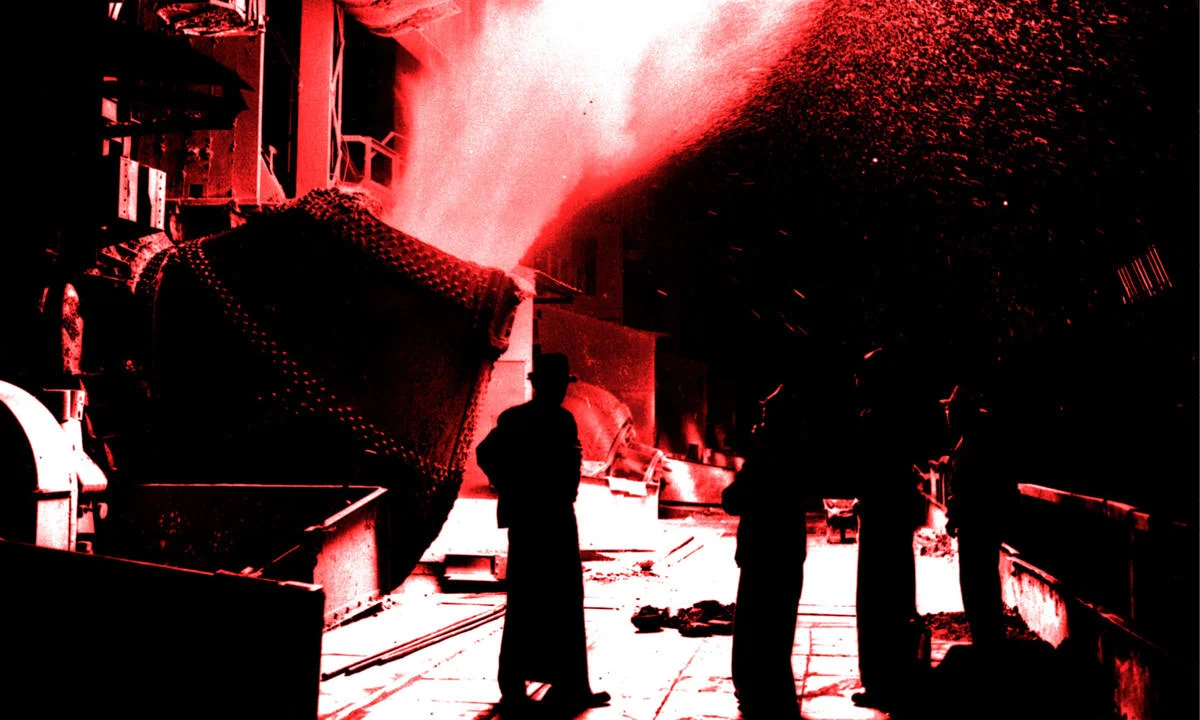
Image credit: Corby Steelworks, 1950s. Courtesy of Willie Cowie
Subscribe to LSE Research for the World

LSE Festival 2026: How to save the planet

Research for the World is the online magazine by LSE - the London School of Economics and Political Science. LSE is a world-leading university, specialising in social sciences and ranked top in the UK by The Times and Sunday Times Good University Guide 2026.

Related content
Can climate lawsuits make polluters pay for global warming?

The hidden costs of air pollution
Tell, don’t ask: how to mobilise climate action on social media