

From hunger to instability: why global hunger matters for UK national security
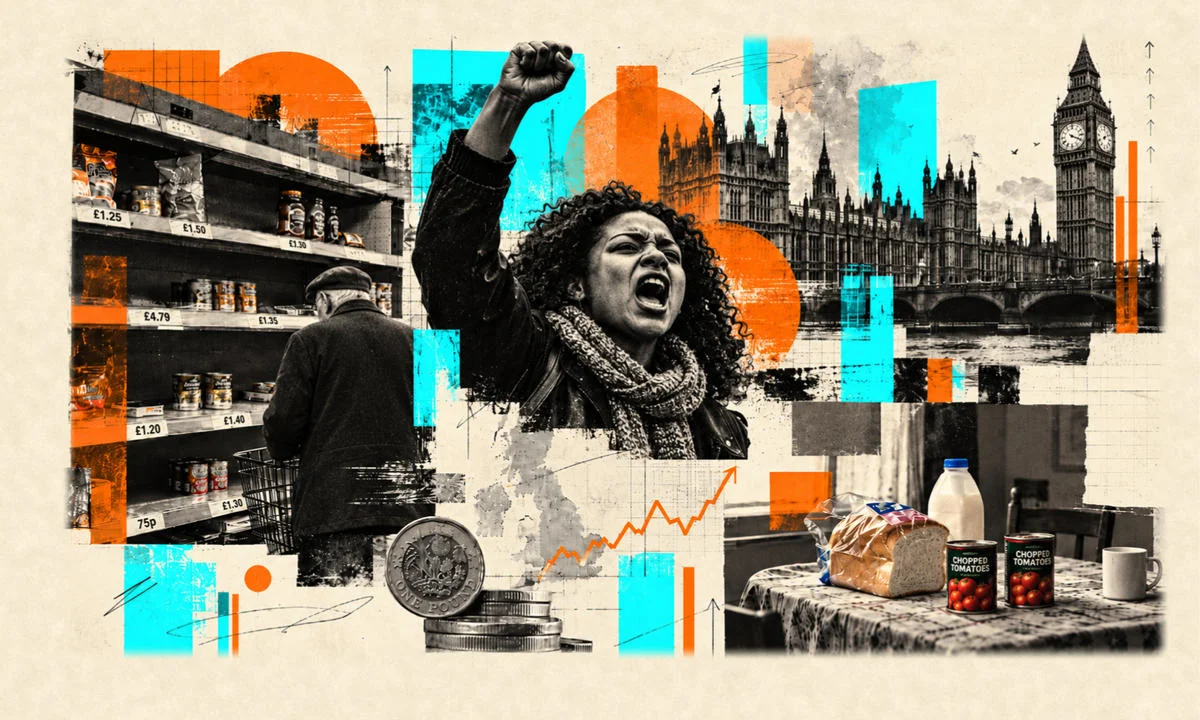
Hunger is often understood as a consequence of conflict. Violence can destroy livelihoods, disrupt markets and prevent food and humanitarian assistance from reaching those who need it.
However, the relationship can also work in the other direction. Food insecurity can undermine trust in governments and create conditions in which political instability and conflict become increasingly likely.
A new report commissioned by United Against Malnutrition & Hunger and authored by Professor Stuart Gordon, Department of International Development at LSE, examines this underexplored relationship. From Hunger to Instability: why global hunger matters for UK national security uses examples from countries including Sudan, Nigeria, Sri Lanka and Yemen to examine how food stress affects inequality, political institutions and political choices.
What happens when hunger becomes political?
The key question is what happens when difficulties affording food stop being experienced simply as an individual or household problem and become evidence of wider political failure.
“The turning point is when people understand that their hardship isn't simply a personal misfortune, but it's something that is shared, unjust and attributable to political decisions and particular political leaders,” explains Professor Gordon.
Sudan provides one example of this process. In 2018, protests over bread prices in the city of Atbara developed into a wider challenge to President Omar al-Bashir’s rule, drawing on longstanding grievances around corruption and economic mismanagement. Professional associations and civil society networks helped turn dispersed grievances into sustained collective action.
“The explanation is not that the price of bread brought down a president. It's that food hardship became a concrete expression of a broader failure of government and a basis around which people could organise.”
This distinction is important to the report’s wider argument. Hunger can become politically significant when it interacts with existing economic and political pressures, rather than acting as an isolated cause of instability.
The turning point is when people understand that their hardship isn't simply a personal misfortune, but it's something that is shared, unjust and attributable to political decisions and particular political leaders.
Hunger as a “threat multiplier”
The report describes hunger as a “threat multiplier”, meaning that it can intensify pressures that are already present.
“The report describes a threat multiplier as something that intensifies existing pressures, rather than simply producing a predetermined outcome,’’ explains Professor Gordon. ‘‘A food price shock might be absorbed where households have support and institutions respond fairly, but the same shock can be much more dangerous where people already face exclusion, violence or a government that they distrust or hate.”
This does not mean that hungry people should be regarded as a security threat – hunger does not automatically make people violent – so the report focuses attention on the circumstances in which people become more vulnerable to coercion or recruitment by armed groups.
This approach reflects the difficulty of establishing a simple causal relationship between hunger and conflict. In many cases the two occur together, but that does not demonstrate which is the main force, or whether both are symptoms of other issues.
“One of the main analytical challenges was separating a plausible relationship from an overstated course or claim. We found in many cases hunger and conflict occurred together, but it didn't establish which is driving which, or whether both reflect other problems, such as political exclusion.”
The research considers the sequence of events and the conditions that shape their outcomes, rather than treating an association between hunger and conflict as proof of causation.
Food hardship [can] became a concrete expression of a broader failure of government and a basis around which people … organise.
Building a picture from the warning signs
Warning signs need to be considered together. Food prices are important, but they need to be weighed up alongside many other factors: household incomes, harvest and climate pressures, the functioning of markets and transport routes, gaps in assistance, displacement, and political responses. For example, a rise in food prices may look very different when combined with falling wages, blocked transport routes and the withdrawal of social safety nets.
The report also argues that these pressures need to be examined below the national level. National averages can conceal severe hardship among particular groups, including displaced families and poorer urban households.
Identifying these warning signs should create an opportunity for action rather than simply another assessment.
The report calls for food-price volatility, harvest failure, market disruption and malnutrition to be incorporated into wider assessments of fragility and conflict. It also stresses the importance of local organisations in understanding what changes in food access and livelihoods mean for particular communities.
“Foreseeability is not perfect prediction, and those indicators don't make violence inevitable, but they provide grounds for proportionate early action while there are still choices to be made rather than disasters to be resolved.”
Going beyond the immediate crisis
The UAMH report also examines malnutrition and its potential effects on the resilience of households and societies over much longer periods.
“Because societal resilience is built over years, not during emergencies, chronic undernutrition, particularly in early life, can impair physical and cognitive development, affect learning, and reduce later earning opportunities.”
At the household level, poorer nutrition can leave families with fewer resources to absorb illness, unemployment or sudden price increases. At the national level, the report considers how the longer-term effects of malnutrition can constrain productivity and the resources available for public services.
“Malnutrition does not automatically produce weak institutions or political violence. But it can erode some of the foundations on which resilience depends.”
Malnutrition does not automatically produce weak institutions or political violence. But it can erode some of the foundations on which resilience depends.
From warning to action on food insecurity
Earlier action depends on having the financing, policies and institutions needed to respond before food insecurity develops into a wider crisis.
What’s required is predictable, multi-year support for nutrition, livelihoods and social protection and financing that can be released when credible warning thresholds are reached. The report also highlights the importance of protecting food access, supporting local supply chains, addressing barriers to humanitarian assistance, and incorporating climate adaptation, land governance and conflict prevention into a broader approach to resilience.
In relation to how food security could be integrated into the UK’s wider approach to conflict prevention, the report recommends diplomacy, development and, if appropriate, defence engagement.
The challenge is partly institutional: warnings, funding and decision-making can sit in different parts of government, while uncertainty can make decision-makers reluctant to act.
“The gap persists partly because warning funding and decision-making sit in very different places within UK government. Agencies may identify a serious risk, but budgets are inflexible, responsibilities are fragmented, and decision-makers inevitably wait for greater certainty.”
Professor Gordon points to the 2011 Horn of Africa crisis and the famine in Somalia as an example of the gap that can exist between warning and response.
Improving accountability means asking not only what money was eventually spent, but what governments knew, what options were available and why decisions were made.
The report therefore makes the case for treating prevention as a process that brings together humanitarian action, development, diplomacy and other areas of policy, rather than waiting until a crisis has become overwhelming.
Preventing global hunger
For Professor Gordon, the next stage of research is to move beyond understanding why some crises escalate and investigate which forms of prevention actually work.
This means examining places where similar food pressures did not lead to instability, as well as cases where they did, and looking at the role played by social protection, trusted institutions, local mediation and timely assistance.
He also argues that research should follow households and communities over time rather than relying primarily on national-level data in order to move from better warning to better decisions.
“The ambition should be more than a better warning system. It should be stronger evidence about how to turn warning into decisions that actually prevent suffering and enhance strategic objectives for the UK as well.”
Professor Stuart Gordon was speaking to Helen Flood, Media Relations Officer at LSE.
Subscribe to LSE Research for the World

Research for the World is the online magazine by LSE - The London School of Economics and Political Science.
Image uses elements of AI image generation
Professor Stuart Gordon

Related content
How Africa eats: identifying and stopping the hunger crisis

Paying humanitarian aid digitally can help society’s most vulnerable: a study with Afghan women
Dependency politics: how foreign aid shapes electoral behaviour