

About
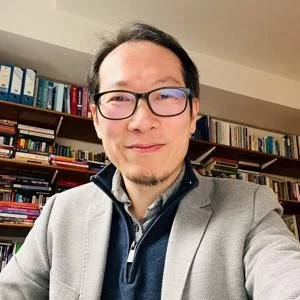
Professor Hyun Bang Shin is Professor of Geography and Urban Studies at the London School of Economics and Political Science.
Professor Shin is an internationally recognised scholar in urban studies whose research has profoundly influenced critical urban theory and practice, particularly in non-Western contexts. By challenging conventional perspectives and entrenched paradigms, he has contributed to reshaping the understanding of contemporary urban transformation, foregrounding the socio-political dynamics of cities in rapidly developing world regions and highlighting the intersections of state power, global capital, and urban inequality.
Spanning four core themes—gentrification, urban political economy, urban struggles, and the circulation of urbanism— Professor Shin’s scholarly contributions provide critical insights into the processes and impacts of urban transformation (see his Research web site for more details on these themes). His widely cited publications, including Planetary Gentrification and Global Gentrifications: Uneven Development and Displacement, have become essential readings for academics and practitioners alike. These works, along with his five other books (see below) and numerous journal articles, book chapters, and public writings, exemplify his dedication to addressing pressing urban challenges, advancing critical urban scholarship, and advocating for social justice in the context of the rapid urbanisation of the global South and the global East.
In addition to his influential research, Professor Shin has held pivotal roles in advancing urban studies. As Director of the Saw Swee Hock Southeast Asia Centre at LSE (2018–2023), he established it as a global hub for interdisciplinary scholarship. His tenure as editor of the International Journal of Urban and Regional Research (2021–2024) saw the publication of critical studies that expanded the field’s boundaries. As a trustee of the Urban Studies Foundation (2016–2023), he championed research funding and mentorship for emerging scholars worldwide. Since 2009, he has co-organised The Urban Salon, fostering vibrant discussions on architecture, cities, and international urbanism.
To view more details, please visit Prof Shin’s personal website.
View Hyun’s CV here.
View Google Scholar
Research interests
- Cities
- Infrastructure
- Comparative studies
- Displacement
- Gentrification
- Housing
- Mega-events
- Mega-projects
- Urban (re-)development
- Urban policy
- Urban politics
- City-making
- Urbanisation
- Urbanism
East Asia; Southeast Asia; China; Korea; Malaysia; the Philippines; Singapore; Thailand; Vietnam; Ecuador; Kuwait
Construction and Property; Consultancy; Policy and Regulatory Bodies; Public Administration
Research
The Urban Spectre of Global China: Mechanisms, Consequences, and Alternatives for Urban Futures
This collaborative project is based on a British Academy grant for its Tackling the UK's International Challenges programme. The project ran from April 2019 to April 2022 and examined four large-scale property development projects of Chinese capital, to question the ways in which the urban has been reconfigured by China’s global expansion. Visit the project web pagefor further details.
Asian Capital and the Rise of Smart Urbanism
This project was supported by a research grant from the LSE Middle East Centre’s Kuwait Programme, to undertake a SEAC project between September 2019 and June 2021, which aimed to analyse and compare how Asian cities have risen to become reference points for the development of cities in the Global South. The project examined the experience of building new cities branded as smart cities in Kuwait and the Philippines. The Kuwait study was funded by the Kuwait programme Research Grant from the LSE Middle East Centre. Visit the project web pagefor further details.
COVID-19 and Southeast Asia
COVID-19 presented huge challenges to governments, businesses, civil societies and people from all walks of life, but its impact is very much variegated, affecting society in multiple negative ways, with highly uneven geographical and socioeconomic patterns. COVID-19 revealed existing contradictions and inequalities in our society, and compelled us to question what it means to return to 'normal'. In this regard, the research team at LSE Saw Swee Hock Southeast Asia Centre, led by Professor Hyun Bang Shin, reflected upon what the crises meant for urbanisation, governance and connectivity in Southeast Asia, and contemplated post-COVID-19 urban futures by initially focusing on three themes in particular: community-based initiatives in response to COVID-19; movements of different groups of people in and out of Southeast Asia; digital and technological infrastructures and visualisation. The project resulted in an Open Access edited volume, COVID-19 in Southeast Asia: Insights for a Post-Pandemic World, and a number of blogs on LSE Southeast Asia Blog. Visit the project web pagefor further details.
Professor Shin’s scholarly contributions span four key areas: gentrification, urban political economy, urban struggles, and the circulation of urbanisms. His work on gentrification redefines gentrification as a global yet context-specific process, challenging Western-centric paradigms in urban studies. His research on urban growth politics extends to examining mega-events and megaprojects as tools of state power and capital accumulation, revealing their socio-economic impacts and inequalities. His research on urban struggles underscores the importance of cross-class alliances and context-sensitive interpretations of urban rights. He has also advanced understanding of the global circulation of urbanism, particularly how state-driven urban models in East and Southeast Asia shape global urban futures, often perpetuating inequalities. For each of his key research areas, please visit his research website here.
Professor Shin's research relates to these Department of Geography and Environment research themes: