

Dr Marie Petersmann
About
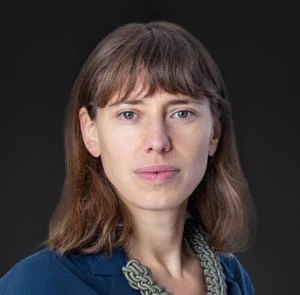
Marie Petersmann is an Assistant Professor of Law at LSE Law School, and Director of the Sustainability Law & Policy Clinic (SLPC) of LSE's Global School of Sustainability (GSoS). Her work focuses on international law, ecology, and critical theory. She holds a PhD from the European University Institute (Florence) and an LLM from the Graduate Institute (Geneva). Marie is the author of When Environmental Protection and Human Rights Collide: The Politics of Conflict Management by Regional Courts (Cambridge University Press, 2022). She sits on the Editorial Board of the Review of European, Comparative & International Environmental Law (RECIEL), and is series editor at Amsterdam University Press. Prior to the LSE, Marie was Senior Researcher at Tilburg Law School (2020-2023), Resident Fellow at the Istituto Svizzero in Rome (2022-2023), Postdoctoral Fellow at the Copernicus Institute of Sustainable Development in Utrecht (2019-2020), and Teaching Associate at the Strathclyde Center for Environmental Law and Governance in Glasgow (2018-2019).
Research
Research Interests
Marie’s research focuses on reparative legal action and climate justice in the Anthropocene. In 2022, she was awarded a ‘Veni’ grant from the Dutch Research Council (NWO) for her project Anthropocene Legalities: Reconfiguring Legal Relations within More-than-human Worlds(2022-2025). Her work draws on legal theory, ecological philosophy, feminist posthumanism and critical Black studies to explore the potential and limitations of rights-based approaches in environmental litigations.
- Legal theory
- Ecological philosophy
- Feminist posthumanism
- Critical Black studies
Publications
When Environmental Protection and Human Rights Collide: The Politics of Conflict Management by Regional Courts (Cambridge University Press, 2022)
Conflicts between environmental protection laws and human rights present delicate trade-offs at times when concerns for social and ecological justice are ever more intertwined in environmental and human rights discourses. When Environmental Protection And Human Rights Collide retraces how the legal ordering of environmental protection evolved over time and progressively merged with human rights concerns, thereby leading to a synergistic account of their relation. An ideal of synergy facilitated legal interconnections between environmental protection laws and human rights. This, the book argues, is not a neutral stance, but a framing invested with political meaning about how ‘humans’ ought to relate to and live within ‘nature’. The book explores the world-making effects this framing performs, and the role played by legislators, experts and adjudicators in (re)producing it. While it questions, contextualises and problematises how and why this dominant framing was construed, it also reveals how the conflicts that underpin this relationship – and the victims these conflicts affect – have mainly remained unseen. The book unveils the argumentative tropes and adjudicative strategies used in the environmental case-law of regional human rights courts to understand how these overlooked conflicts are judicially mediated in practice. In doing so, the book opens space for new modes of politics, legal imagination and representation.
Reviewed in the European Journal of International Law (EJIL), Transnational Environmental Law, International & Comparative Law Quarterly, International Wildlife Law & Policy and RECIEL
Awarded ‘Best Doctoral or Habilitation Thesis in Public international law, Private international law, European law or Comparative law’ by the Swiss Society for International Law (2020).
Les sources du droit à l’eau en droit international (Paris: Éditions Johanet, 2013)
Ce livre aborde les diverses problématiques qui touchent à la reconnaissance du droit humain à l’eau potable. Mais s’agit-il d’un droit à la fois contraignant, universel et autonome ? Pour répondre à cette question, l’auteurice passe en revue l’ensemble des sources du droit international, en portant une attention particulière aux divers documents qui ont été publiés au cours de la dernière décennie, depuis l’observation générale n° 15 du Comité des droits économiques, sociaux et culturels, jusqu’à la Déclaration de Rio+20. Cette analyse détaillée permet de définir la forme, la nature et la portée du droit à l’eau tel qu’actuellement reconnu en droit international. Ces réflexions sur le statut juridique du droit à l’eau permettent ainsi de faire le point sur les avancées progressives enregistrées par celui-ci en termes de reconnaissance et d’application, tout en relevant les lacunes qui persistent.
- ‘Tapping into and Tipping Over the Carbon Budget: Historical Responsibilities for Carbon Appropriation’ LSE Legal Studies Working Paper 55/2025
- ‘Hope in Climate Justice: Tales of Transition and its Refusal’ (2025) LSE Legal Studies Working Paper 25/2025, 1-12.
- Tola Amodu, Nicola Lacey, Jill Marshall, Marie Petersmann, and Sarah Trotter, ‘Hope and the Role of Law: A Conversation’ (2025) LSE Legal Studies Working Paper 27/2025, 1-12.
- ‘Entangled Harms: A Reparative Approach to Climate Justice’ (2025) Leiden Journal of International Law 1-22.
- Re-pairing Ecologies of Harm: Resisting the Material and Legal Infrastructures of “Cancer Alley”’ (2025) LSE Legal Studies Working Paper No. 11/2025
- 'Refusing Algorithmic Recognition' (2025) European Journal of International Law (EJIL)
- ‘Law and the Inhuman: Introductory remarks’ (with Julia Dehm, Kathleen Birrell, and Afshin Akhtar-Khavari), Critical Legal Thinking (2024)
- ‘The Inhuman as Refusal’ (with Sarah Riley Case and Juliana M. Streva), Critical Legal Thinking (2024)
- 'Reordering the European Ground – Regrounding the European Legal Order?' (2024) 3:1 European Law Open 180–189
- '“Re/de/composing” International Law' (July 2024), Völkerrechtsblog Symposium ‘ReflectiÖns on Dis:Order in International Law’
- 'The EU Charter on Rights of Nature – colliding cosmovisions on non/human relations' in Alvarez-Nakagawa and Douzinas, (eds.) Non-Human Rights: Critical Perspectives (Elgar, 2024)
- 'Constitutionalizing in the Anthropocene: An Introduction' (2024) Journal of Human Rights and the Environment 15 (1) 1-3 editorial introduction to a co-edited special issue (with contributions by David Chandler, Frédéric Neyrat, Floor Fleurke, and Johan Horst)
- 'Constitutionalizing in the Anthropocene' (2024) Journal of Human Rights and the Environment 15 (1) 4-22 (with Hans Lindahl, Phillip Paiement, Floor Fleurke, Han Somsen, Michael Leach)
- 'On Phantom Publics, Clusters and Collectives: Be(com)ing Subject in Algorithmic Times' (2023) AI & Society (with Dimitri Van Den Meerssche)
- Marie Petersmann, ‘Becoming Common – Ecological Resistance, Refusal, Reparation’, in M. Arvidsson and E. Jones (eds), International Law and Posthuman Theory (Routledge, 2024), 222-243 [in Open Access].
- ‘'In the Break (of Rights and Representation): Sociality Beyond the Non/Human Subject’, (2023) International Journal of Human Rights
- 'Life Beyond the Law – From the “Living Constitution” to the “Constitution of the Living”' (2023) 82:4 Heidelberg Journal of Int. Law [ZaöRV] 769-797
- 'Tech-based Prototypes in Climate Governance: On Scalability, Replicability, and Representation' (2022) 33 Law and Critique 319-333 (with Andrea Leiter)
- 'Earth System Law: Exploring New Frontiers in Legal Science' (2022) 11 Earth System Governance 100126 (with Louis Kotzé, Rakhyun Kim, Catherine Blanchard, Joshua Gellers, Cameron Holley, Harro van Asselt, Frank Biermann, Margot Hurlbert)
- 'Response-abilities of Care in More-than-Human Worlds' (2021) 12:1 Journal of Human Rights and the Environment 102-124
- '“I Wish There Was a Treaty We Could Sign”: An Inquiry into the Making of the Global Pact for the Environment' (2021) 28:2 Indiana Journal of Global Legal Studies 7-80
- 'Sympoietic Thinking and Earth System Law: The Earth, its Subjects and the Law' (2021) 9 Earth System Governance 100114
- 'Contested Indigeneity and Traditionality in Environmental Litigation: The Politics of Expertise in Regional Human Rights Courts' (2021) 21:1 Human Rights Law Review 132-156
- 'The Unconstructable Earth: An Ecology of Separation' (2021) 15:1 Law and Humanities 134-141
- 'Cittadini Sentinella: Percepire Catastrofi tra Covid-19 e Cambiamento Climatico' (2020) 4 L’Altro Diritto 39-56 (with Anna Berti Suman)
- 'Narcissus’ Reflection in the Lake: Untold Narratives in Environmental Law Beyond the Anthropocentric Frame' (2018) 30:2 Journal of Environmental Law 235-259
- 'The Integration of Environmental Protection Considerations within the Human Rights Law Regime: Which Solutions Have Been Provided by Regional Human Rights Courts?' (2015) 24:1 Italian Yearbook of International Law 191-218
- 'Citizen Sensing and Ontopolitics in the Anthropocene: Engaging with Covid-19 and Climate Change', in Stefania Milan, Emiliano Treré and Silvia Masiero (eds), COVID-19 from the Margins: Pandemic Invisibilities, Policies and Resistance in the Datafied Society (Institute of Network Cultures, 2021) 225-240 (with Aanna Berti Suman)
- 'Is Climate Change a Human Rights Violation?' in M. Hulme (ed), Contemporary Climate Change Debates: A Student Primer (Routledge, 2019) 160-173
- 'Rights and Expertise: Assessing the Managerial Approach of the Court of Justice of the European Union to Conflict Adjudication' in Freya Baetens (ed), The Legitimacy of Unseen Actors in International Adjudication (Cambridge University Press, 2019) 297-320
- 'When Environmental Protection and Human Rights Collide: Four Heuristics of Conflict Resolution' in Christina Voigt (ed), International Judicial Practice on the Environment: Questions of Legitimacy (Cambridge University Press, 2019) 239-261‘
- 'Conflicts between Environmental Protection and Human Rights' in James R. May and Erin Daly (eds), Human Rights and the Environment: Legality, Indivisibility, Dignity and Geography (Edward Elgar Publishing, 2019) 288-299
- 2026: Outstanding Support from a Supervisor Award, LSE Legal Advice Centre
- 2026: LSE Research Committee, Grant for a conference on 'War on Terror: Legacy, Justice, Art' (10,000£)
- 2024: Teaching Award and LSESU Nomination for ‘Educating for Impact’, LSE Law School
- 2024: LSE Research Committee, Grant for a conference on ‘Underworlds: Sites and Struggles of Global Dis/Ordering' (10,000£)
- 2023: KNAW Award for an Early Career Partnership for a conference on ‘Law and the Inhuman’ (10,000€)2022-2025:
- Dutch Research Council (NWO) ‘Veni’ Grant to fund my research project on ‘Anthropocene Legalities: Reconfiguring Legal Relations Within More-than-human Worlds’ (320,000€)
- 2021: two British Academy seed-funding grants for a workshop on ‘Coloniality, Decoloniality and Extractive Anthropocenes’ and the creation of an ‘Anthropocene Times Network’ (8,000£)
- 2021: Dutch SectorPlan grant for a workshop on ‘(Re)Configuring More-than-human Normativities: Strategic Litigation, Collective Actions & Sensing Technologies’ (14,000€)
- 2019-2020: Swiss National Science Foundation Early Postdoc Mobility Grant to fund my research project on ‘The Global Pact and the Making of the Environment’ (75,750CHF)
- 2020: Swiss Society for International Law, Award for ‘Best Doctoral or Habilitation Thesis in public international law, private international law, European law or comparative law’
- 2019: European Society of International Law (ESIL), Young Scholar Prize, Honourable Mention
- 2018: Richard Macrory Prize for Best Article, Journal of Environmental Law, Honourable Mention
- 2016: Best Graduate Student Paper Award, IUCN Academy of Environmental Law
- 2014-2018: full scholarship for the EUI Doctoral programme (86,500CHF)
Teaching
Engagement and impact
Public Engagement
- Co-convenor, with Dr. Dimitri Van Den Meerssche, of the Underworlds: Sites and Struggles of Global Dis/Ordering conferenceand podcast series(2023-2025), with episodes on Oceans(with Surabhi Ranganathan and Renisa Mawani), Oil/Coal(with On Barak and Lys Kulamadayil), Breath(with Daniela Gandorfer and Jean-Thomas Tremblay), Debt(with Vasuki Nesiah and Kojo Koram), Commons(with Isabel Feichtner and Elsa Noterman), Frontiers(with Christine Schwöbel-Patel and Cait Storr), Waste(with Heather Davis and Michael Hennessy Picard), Hope(with Claire Colebrook and David Chandler), Wild/Feral(with Irus Braverman and Floris De Witter), and Vessels(with Rinaldo Walcott and Itamar Mann).
- Co-convenor, with Julia Dehm, Kathleen Birrell, and Afshin Akhtar-Khavari, of the Law and the Inhuman workshopand Critical Legal Thinking symposium(2024)
- Speaker at the Paul Mellon Centre (Yale University) event on ‘Extractivism/Activism: Art, Activism and Ecological Extraction’ (2024), session 3 on ‘Litigation/Climate Crimes’ (with Radha D’Souza, Jonas Staal and Marie Smith, recorded here).
- Ora d’Oro Exhibitions, Re–member the silence,sound & visual installation, Istituto Svizzero, Roma (24 June 2023)
- Live interview, SOUND TALES Ciao Roma, Radio Couleur 3 (24 May 2023, 2:37:17)
- Curator of the transdisciplinary event ‘Becoming Common – Ecological Resistance, Refusal, Reparation’, Istituto Svizzero, Roma (17-18 May 2023)
- Thyssen-Bornemisza Art Contemporary, TBA21-Academy Talkon ‘Mediterranean Ecologies and the Anthropocene’, Palazzo Butera, Palermo (5 October 2022)
- EIEL Webinar, ‘When Environmental Protection and Human Rights Collide’ (26 January 2023)
- 4thRudolf Bernhardt Keynote Lecture, ‘Towards More-than-human Rights?’, Max Planck Institute for Comparative Public Law & International Law, Heidelberg (28 October 2022)
- Sovereign Nature Initiative (SNI) Eco-Talk,‘Sensing Practices & Representations of More-than-human-Worlds’ (16 December 2021)
- ‘Theory Hacks’ workshop series on ‘(Re)Configuring More-than-human Normativities: Strategic Litigation, Collective Actions, and Sensing Technologies’, De Ceuvel, Amsterdam, (co-organized with Andrea Leiter and Daniela Gandorfer) (May 2022)
- Film Festival Movies That Matter, commentator of the documentary ‘Duty of Care: The Climate Trials’ (15 April 2022)
- 2020 ‘"Staying with the trouble": Sensing climate change in the Anthropocene, Völkerrechtsblog
- 2020 ‘Sensing Covid-19 and Climate Change’ Tilburg Environmental Law Blog
- 2017 ‘The latest World Bank Environmental and Social Framework: Progress on Fair and Equitable Benefit-Sharing?’ (Parts I, II and III) BeneLex Blog
- Les Matins de France Culture, ‘Jeunesse Socialiste Suisse: Initiative 1/12 sur l’équité salariale’, Coup de fil en Suisse par Léo Kloeckner(July 2013)
External Activities
- Affiliated Research Fellow, Tilburg Law School (Netherlands): Member of the ‘Constitutionalizing in the Anthropocene’ (CitA) project and PhD Co-Supervisor of Rens Claerhoudt (2022-2026).
- Associate Editor, Review of European, Comparative & International Environmental Law (RECIEL) (2019-present)
- Member of the ‘Council for the Living’, The Zoönomic Institute & Foundation (2023-present) (2023-present)
- Research Fellow, Earth System Governance Project (2019-present)
- Project Member, Black Anthropocene Working Group (2020-present)
- Member of the Global Network for the Study of Human Rights and the Environment (GNHRE) (2019-present)
- Member of the World Commission on Environmental Law (IUCN WCEL) (2018-present)
- Resident Fellowat the Istituto Svizzero in Rome (2022-2023)
- Co-founder of the Theory Hacks Collective(with Dr. Andrea Leiter and Dr. Daniela Gandorfer, in collaboration with the Logische Phantasie Lab) (2022-present)
- Co-founder of the ‘Coloniality, Decoloniality and Extractive Anthropocenes’ and ‘Anthropocene Times’ networks, funded by the British Academy