

New paper outlines how leadership could help turn climate concern into collective action
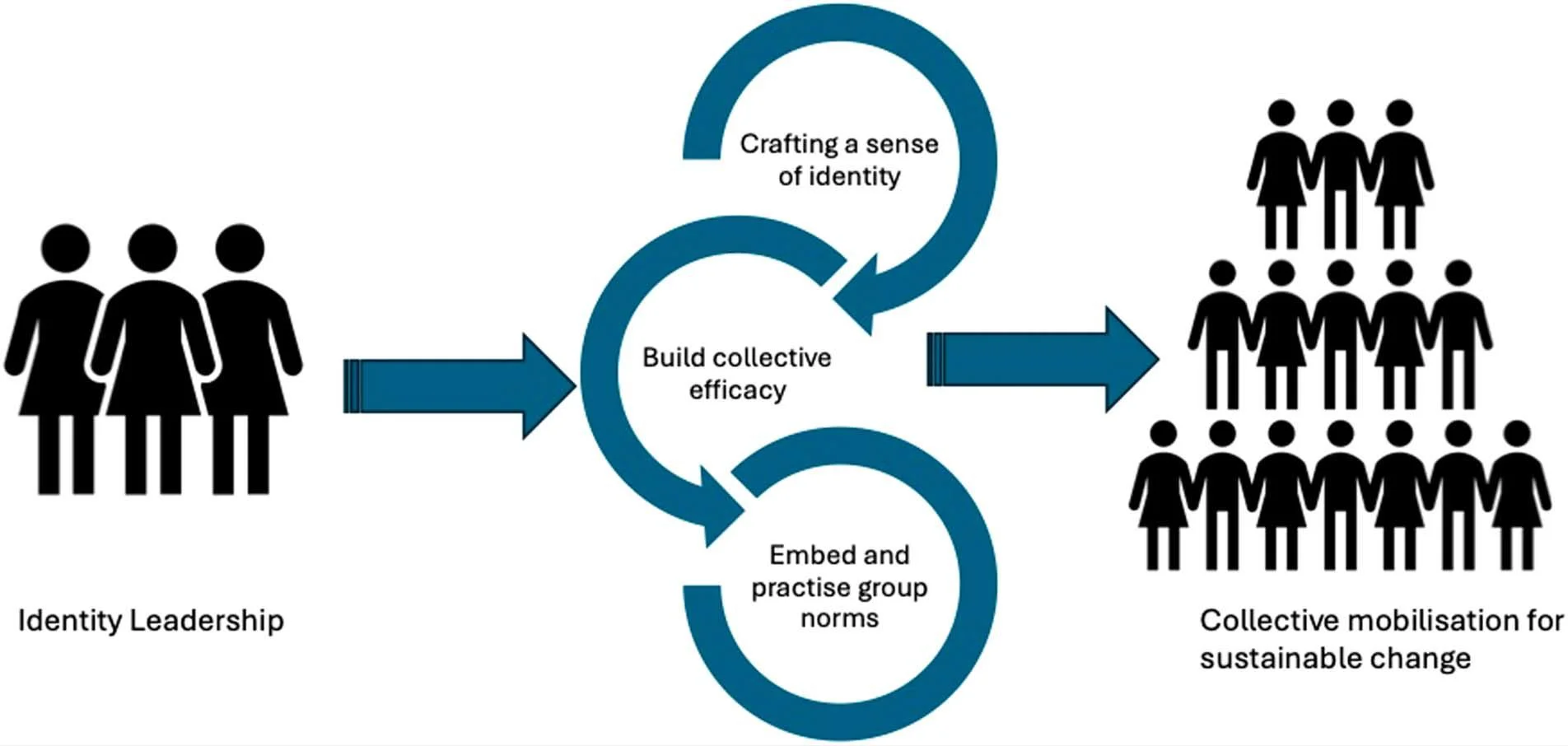
A paper by Ilka Gleibs and Lea-Sophie Funk, published in European Psychologist, explores how leaders can build a shared sense of identity to encourage people act together on climate change.
The paper focuses on identity leadership, which understands leadership as a group process that includes building a sense of ‘we’. This reframes the question 'how does affect me?' and encourages people to ask 'How does it affect us?'. The authors argue this shift matters for climate action, because people are more likely to act when they see themselves as part of a group that can make a difference.
Building on the existing 'Social Identity Model of Proenvironmental Behaviour' (SIMPEA), the paper suggests that identity leaders can strengthen three key concepts: group identification, shared norms and collective efficacy (a group’s belief that it can achieve change). They can do this in several ways:
- Communicating: using language that strengthens a sense of ‘we’ and helps build shared norms for climate action.
- Modelling behaviour: demonstrating the actions and values they want to encourage.
- Creating opportunities to act: providing practical ways for people to come together and act on shared values.
The authors stress that this type of leadership isn’t limited to formal roles. It can come from community groups, local organisers, trusted members of a social network or activists with no official authority. What matters is that people see them as representing the group.
Dr Gleibs said: "What our model suggests is that leadership is a vital and proactive process creating conditions for pro-environmental behaviour; instead of managing the climate crisis somewhat passively, leaders can actively influence how we collectively face the challenges ahead".
Gleibs, I. H., & Funk, L.-S. (2026). Leading in the Climate Crisis: The Role of Identity Leadership in Fostering Identification, Norms, and Collective Efficacy for Climate Action. European Psychologist, 0(0). https://doi.org/10.1027/1016-9040/a000615