

LSE Green Week: Solar panels and the impact of the 2016 Trump election
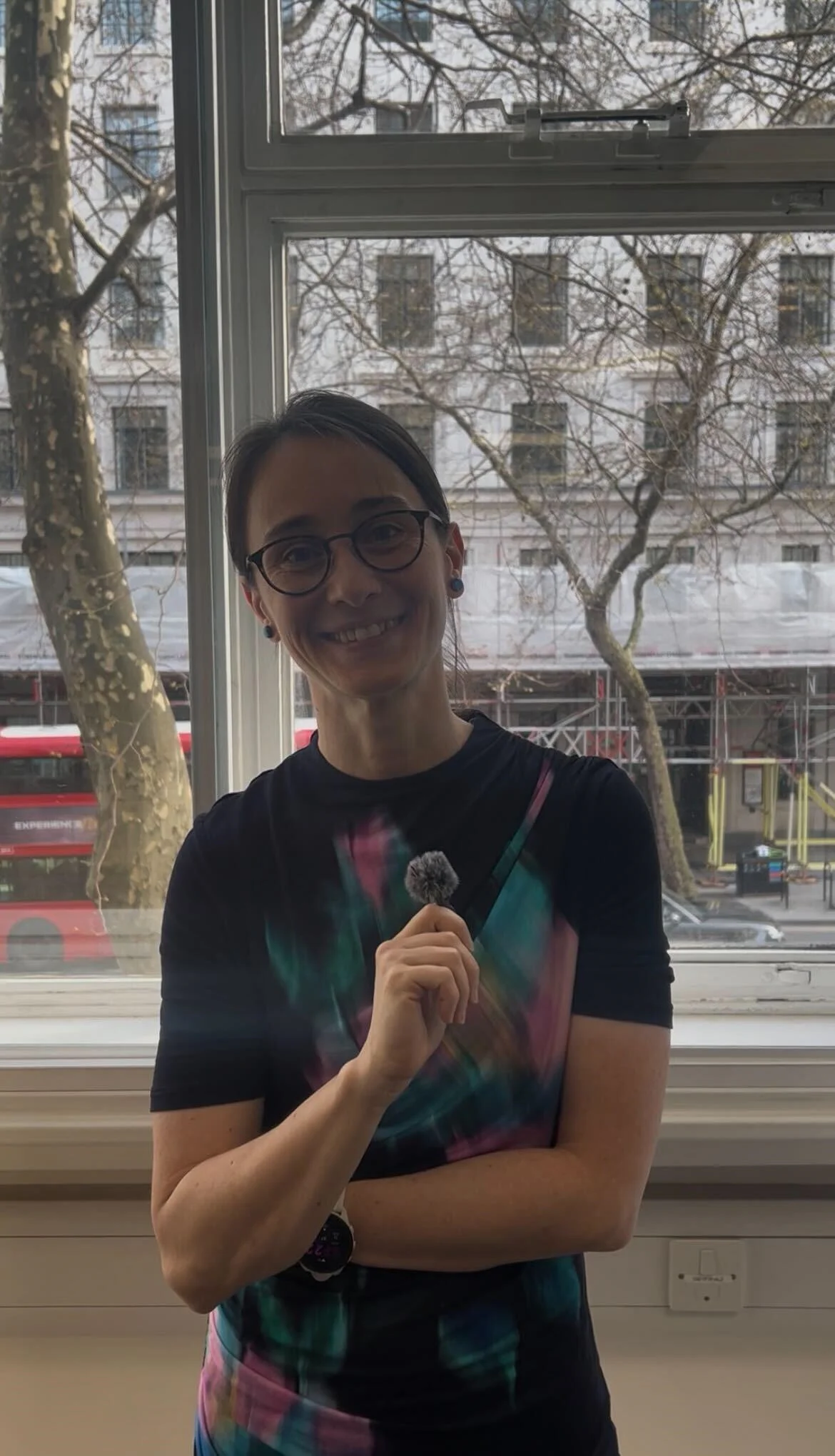
In honour of LSE Green Week, we spoke to Dr Kinga Makovi, Associate Professor at NYU Abu Dhabi, after her Seminar Series talk on her research into solar panel diffusion in the US, 2013-2019.
Kinga, who is currently a visiting Fellow at the Data Science Institute at LSE, gave her talk at the Department of Methodology on Friday 20 March.
We asked her why she thinks her research is relevant today.
She said:
"We are living in a world where there are many common problems, and climate change is one of them. Residential solar, albeit a small piece, is going to be an important piece to address that issue. My research speaks to the heart of that"
Kinga continued:
"At the seminar, I spoke about a paper that I've been working on with a former post-doc, Thomas Marlow, now an Assistant Professor at Texas A&M. He's an environmental sociologist, and he got me interested in solar panels. I'm a networks person, so I immediately thought about the problem as an instance of technological diffusion.
"So we started digging into this, and at this seminar, I was talking about that diffusion process, from 2013 to 2019 in the US context.
"I think that the big reveal is, that this diffusion gets disrupted in 2016. The story that I was telling is that the disruption was linked to the Presidential campaign of Donald Trump, who strongly campaigned on getting out of the Paris Agreement, an Obama-era legacy that Trump was going to undo. We demonstrate that the adoption of solar panels particularly slows down in Republican areas, which is indicative of how politics might shape technological adoption. It is a suggestive story, there is more work we need to do, but I think it's a really good one.
"The seminar at LSE Department of Methodology was a great session, I got some great questions - and importantly, I got some good push-back on the argument. We were aware of a couple of the limitations of the data and the analysis that we were doing, and what I found most invigorating was that the Q&A was generative - people had great ideas that we can explore to make this work better. This is why giving talks is a great thing."
You can join our final Seminar Series of 2025/26 by keeping an eye on our social media and Seminar Series webpage.