

We have a relationship problem: Trust, doubt, and the future of vaccine confidence
Speaker

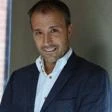
Why do people who have access to safe, effective vaccines choose not to take them? The instinctive answer is misinformation, ignorance, irrationality. It turns out to be the wrong one.
In this lecture, Professor Heidi Larson drew on over two decades of research to argue that vaccine hesitancy is fundamentally a crisis of trust, not a failure of information. As the founding director of the Vaccine Confidence Project at the London School of Hygiene & Tropical Medicine, Professor Larson has spent her career asking a different question: not what people believe about vaccines, but why belief has become so contested, and what that reveals about the health systems we have built.
Her research spans rumour dynamics, risk communication, and the politics of public doubt, from the 2003 northern Nigeria polio boycott - where the rumour spread not because people were misinformed, but because they had reasons not to trust the people telling them otherwise, - to the fractured vaccine landscape of the COVID-19 pandemic. Through her Global Listening Project, a 70-country study of public experiences with health and information technologies, she has shown that hesitancy does not emerge in a vacuum. It is shaped by historical grievance, political polarisation, the erosion of expert authority, and the failure of health institutions to listen as well as they speak.
This lecture asked what it means to take public doubt seriously as data. If vaccine hesitancy is a symptom of broken relationships between health systems and the communities they serve, what would it mean to genuinely repair them? And in a moment of escalating misinformation, democratic backsliding, and declining institutional trust worldwide, what are the stakes of getting this wrong?
Professor Larson's work challenges health professionals, policymakers, and researchers to move beyond the instinct to correct and persuade, towards a deeper reckoning with why trust is earned, how it is lost, and what it takes to rebuild it.
Meet our speaker and chair
Heidi J. Larson, PhD, is Professor of Anthropology, Risk and Decision Science, and Director of the Vaccine Confidence Project at the London School of Hygiene & Tropical Medicine(UK); Clinical Professor, Institute for Health Metrics &Evaluation, University of Washington, Seattle(USA); and Visiting Professor, University of Antwerp and KULeuven, Belgium. Prof Larson also leads the Lancet-LSHTM Commission on the Emotional Determinants of Health. She formerly headed Strategy and Communications around new vaccine introduction for UNICEF’s Global Immunization Programme and served on the WHO SAGE Working Group on Vaccine Hesitancy. Prof Larson is the author of STUCK: How Vaccine Rumors Start – and Why They Don’t Go Away (Oxford University Press 2020; 2nd ed.2022) and has published widely on issues of public trust, risk and mis- and disinformation. She was awarded the Edinburgh Medal for Science and, in 2021, named by BBC as one of the 100 most influential women in the world.
Joan Costa-Font is Professor of Health Economics at LSE, where he is one of the coordinators of the Ageing@LSE group. He is a faculty associate of LSE Health and the International Inequalities Institute, where he leads the Ageing and Health Incentives Lab (AHIL) and co-leads the perceptions of inequality program respectively. He is affiliated with the two major global economics research networks, namely IZA, and CESifo.
Please contact the Press Office if you would like to request a press seat or have a media query about this event, email lse_health@lse.ac.uk. Please note that press seats are usually allocated at least 24 hours before each event.
Follow LSE Health on LinkedIn for the latest updates on all our events and ticket releases.
Videos of past events are shared on our Youtube channel.
Attending our events in-person or online? Join the conversation using #LSEHealth.
Photographs are regularly taken at LSE events both by LSE staff and members of the media. Photographs from events taken by LSE staff are often used on LSE's social media accounts.
If you are planning to attend this event and would like details on how to get here and what time to arrive, as well as on accessibility and special requirements, please refer to LSE Events FAQ. LSE aims to ensure that people have equal access to these public events, but please contact the events organiser as far as possible in advance if you have any access requirements so that arrangements, where possible, can be made. If the event is ticketed, please ensure you get in touch in advance of the ticket release date. Access Guides to all our venues can be viewed online.
LSE has now introduced wireless for guests and visitors in association with 'The Cloud', also in use at many other locations across the UK. If you are on campus visiting for the day or attending a conference or event, you can connect your device to wireless. See more information and create an account at Join the Cloud.
Visitors from other participating institutions are encouraged to use eduroam. If you are having trouble connecting to eduroam, please contact your home institution for assistance.
The Cloud is only intended for guest and visitor access to wifi. Existing LSE staff and students are encouraged to use eduroam instead.
LSE holds a wide range of events, covering many of the most controversial issues of the day, and speakers at our events may express views that cause offence. The views expressed by speakers at LSE events do not reflect the position or views of the London School of Economics and Political Science.