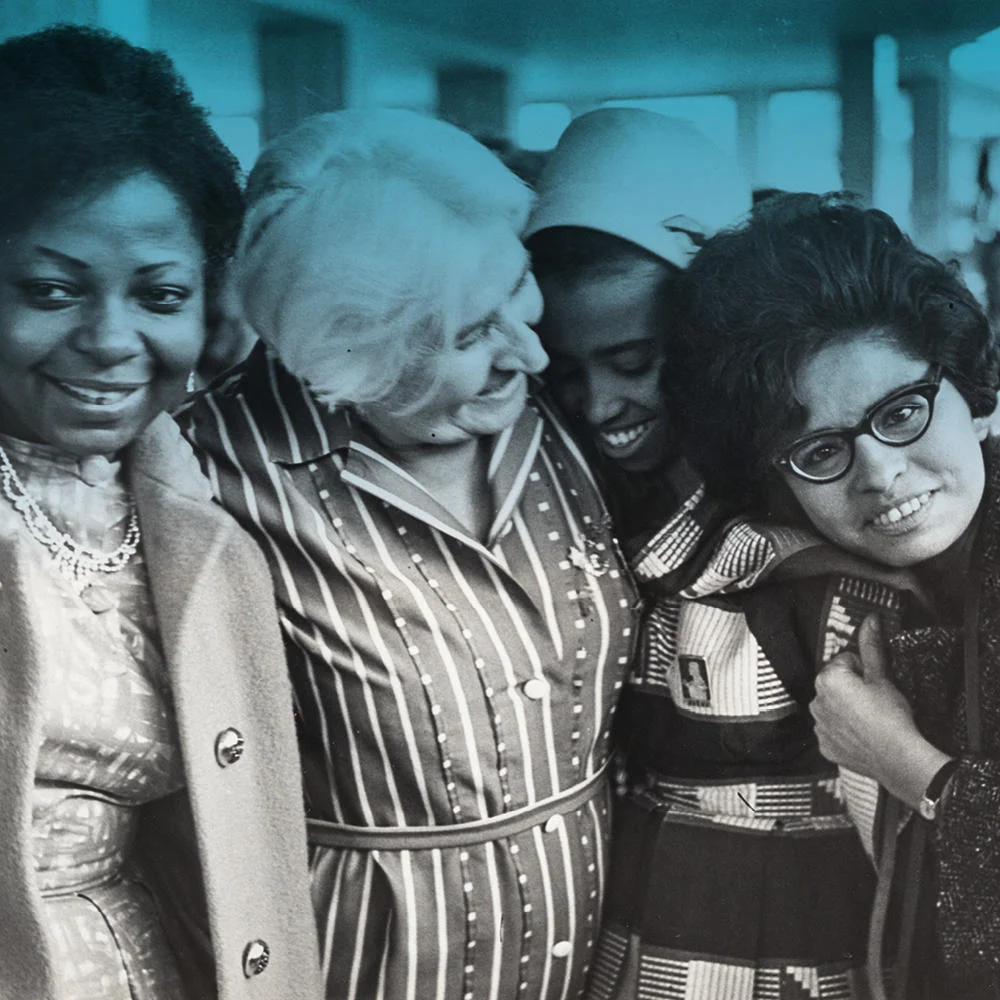

The Women’s Library at 100: celebrating a century of collections
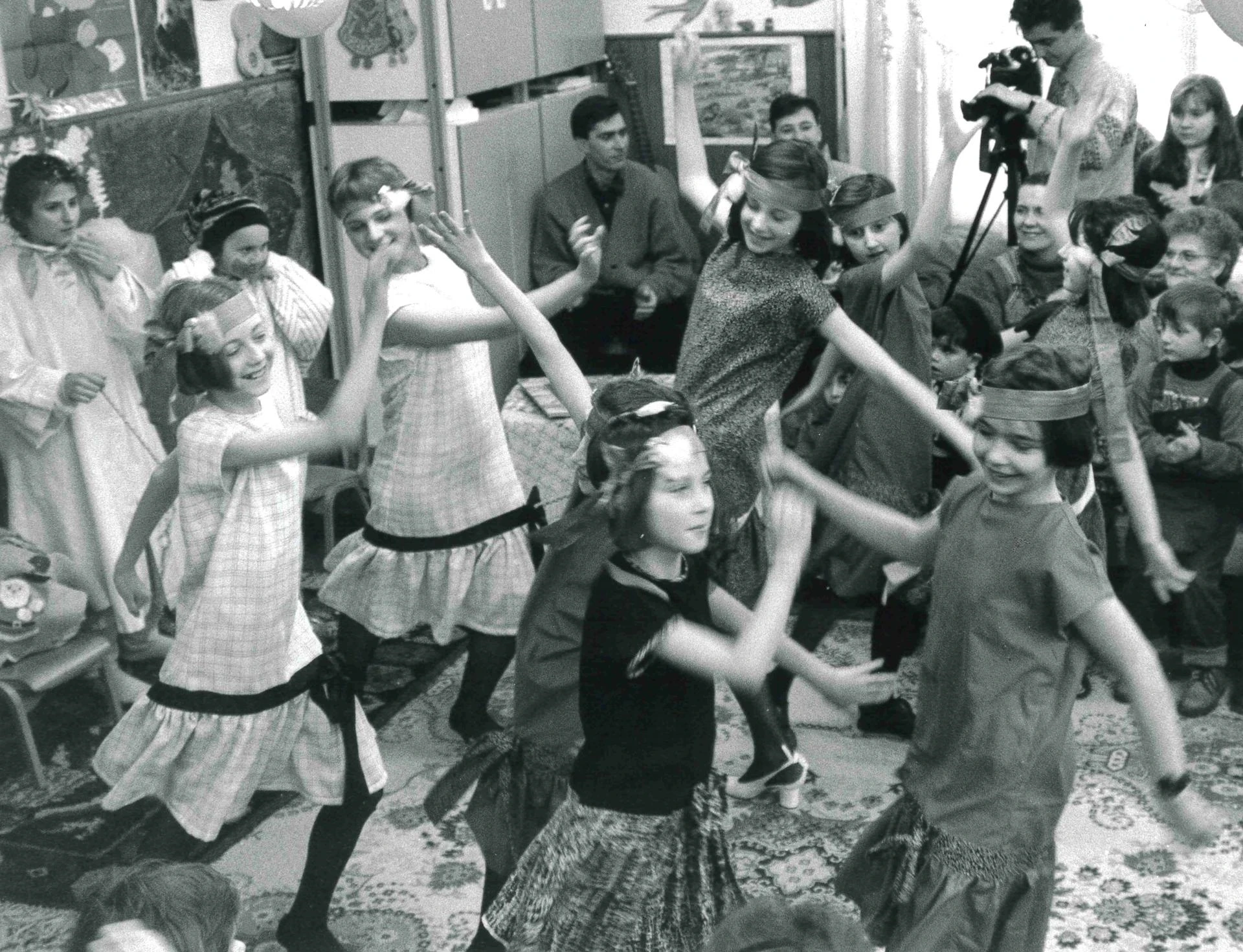
The Women’s Library, the UK’s oldest and largest collection on the history of the women’s movement, is 100 years old.
This exhibition looks at the history of The Women’s Library and explores its rich and diverse collections from the viewpoint of researchers and their current engagement with it. Through the broad themes of international relations, women’s equality campaigning, political representation, child protection, and feminist publishing, the material highlights the important role women have played in shaping society.
Featuring over 60 items, many on display for the first time, this exhibition represents just a fraction of the extensive history preserved in The Women’s Library—stories of activism, resilience, and progress that continue to inspire today.
Lead image: Cockburn/12/2 ‘New Year 1996’ in Medica, Bosnia.
Exhibition curators
Patricia Owens, Professor of International Relations, University of Oxford.
Kelly Bosomworth, Midlands4Cities PhD candidate, University of Birmingham.
Dr Grace Heaton, Lecturer in History, University of Oxford.
Dr Lyndsey Jenkins, Associate Professor, University of Oxford.
Dr Claire Cunnington, Interpersonal violence researcher, University of Sheffield.
Caroline Derry, Professor of Feminism, Law and History, The Open University.
Nazmia Jamal, Paul Mellon Centre’s New Narratives Doctoral Scholar, University College London.
Angèle David-Guillou, Archives Assistant, LSE Library.
Gillian Murphy, Curator for Equality, Rights and Citizenship, LSE Library.
Read the blogs
- Read Grace Parker's Women's environmental activism and the National Federation of Women's Institutes
- Read about Mary Stott: the pioneering woman journalist
- Read Madeleine Dawson's The What Women Want archive
- Read Nazmia Jamal's blog on Black women poets at Sheba Feminist Publishers
- Read Heather Dawson's recommended readings on exhibition themes
- Read Gillian Murphy's blog In the Pot Bank: Sylvia Pankhurst’s drawing of women workers
- Read Claire Cunnington and Caroline Derry on The Victorian sex abuse scandal that shocked Britain and changed the law – long before Epstein
- Read about the guest curators favourite items from The Women’s Library exhibition
- Read Terri Mullholland's blog “An ever increasing army” – housing the unmarried woman worker in London
Read The Women's Library at 100 Zine
Download The Women's Library at 100 Zine [22mb PDF]
How to find us
Organise a tour
- The Gallery is a small enough space for a 15 minute tour — available on request.
Opening times
- Monday to Friday, 9am to 7pm
- Saturday and Sunday, 11am to 6pm
Any questions?
Contact us via email or see other ways to get in touch
Further information
The British Library of Political and Economic Science, known as LSELibrary, was founded in 1896, a year after the London School of Economics and Political Science. It has been based in the Lionel Robbins Building since 1978 and houses many world class collections, including The Women's Library and the Hall-Carpenter Archives.
If you are planning to attend this event and would like details on how to get here and what time to arrive, as well as on accessibility and special requirements, please refer to LSE Events FAQ.
LSE aims to ensure that people have equal access to these public events, but please contact the events organiser as far as possible in advance if you have any access requirements so that arrangements, where possible, can be made.
Follow LSE public events on X for the latest updates on events and ticket releases.
Videos of past LSE Library events and more are on our YouTube channel.
Event updates and other information about what’s happening at LSE can be found on the LSE Facebook page. For photos from events around campus, follow LSE on Instagram.
Attending our events in-person or online? Join the conversation using #LSEEvents.
LSE has now introduced wireless for guests and visitors in association with 'The Cloud', also in use at many other locations across the UK. If you are on campus visiting for the day or attending a conference or event, you can connect your device to wireless. See more information and create an account at Join the Cloud.
Visitors from other participating institutions are encouraged to use eduroam. If you are having trouble connecting to eduroam, please contact your home institution for assistance.
The Cloud is only intended for guest and visitor access to wifi. Existing LSE staff and students are encouraged to use eduroam instead.
From time to time there are changes to event details so we strongly recommend that if you plan to attend this event you check back on this listing on the day of the event.
Whilst we are hosting this listing, LSE Events does not take responsibility for the running and administration of this event. While we take responsible measures to ensure that accurate information is given here this event is ultimately the responsibility of the organisation presenting the event.
LSE holds a wide range of events, covering many of the most controversial issues of the day, and speakers at our events may express views that cause offence. The views expressed by speakers at LSE events do not reflect the position or views of the London School of Economics and Political Science.
The Women's Library at 100