

Library rules and policies
Library rules
- The London School of Economics and Political Science exists for the purpose of public education. The School is a private institution and retains the right to revoke the permission of people to enter and use the estate if they are engaging in behaviour that is criminal, prejudices public safety, breaches the School’s rules and procedures or diminishes or disrupts the experience of students through the misuse of School facilities.
- The Library is open for the purpose of study and research to current members of the School and other groups and individuals according to the Library's admissions policy.
- All users must possess a current Library card and show it on request to Library staff and Security. Library users are responsible for the use of their Library card and should not allow others to use it. Users who are found to have allowed entry to unauthorised people will be subject to disciplinary procedures (see Enforcement below).
- Applicants for a Library card will be required to provide evidence of identification and status. See the Join the Library page for full admissions policy details.
- Users who are accompanied by children under 12 should speak to a Security Officer.
- Noise, disturbance or inappropriate behaviour is prohibited, including abusive or threatening behaviour to Library staff and other Library users.
- No food is permitted in the building, apart from in the Escape areas outside the turnstiles. Anyone found to be eating will be asked to dispose of the food or take it to one of the appropriate areas on the ground floor. Food left unattended will be removed.
- Drinks may be consumed as long as they are non-alcoholic and in non-spill containers..
- Smoking (including smoking of electronic and herbal cigarettes) is not permitted in the Library building or outside near external doorways.
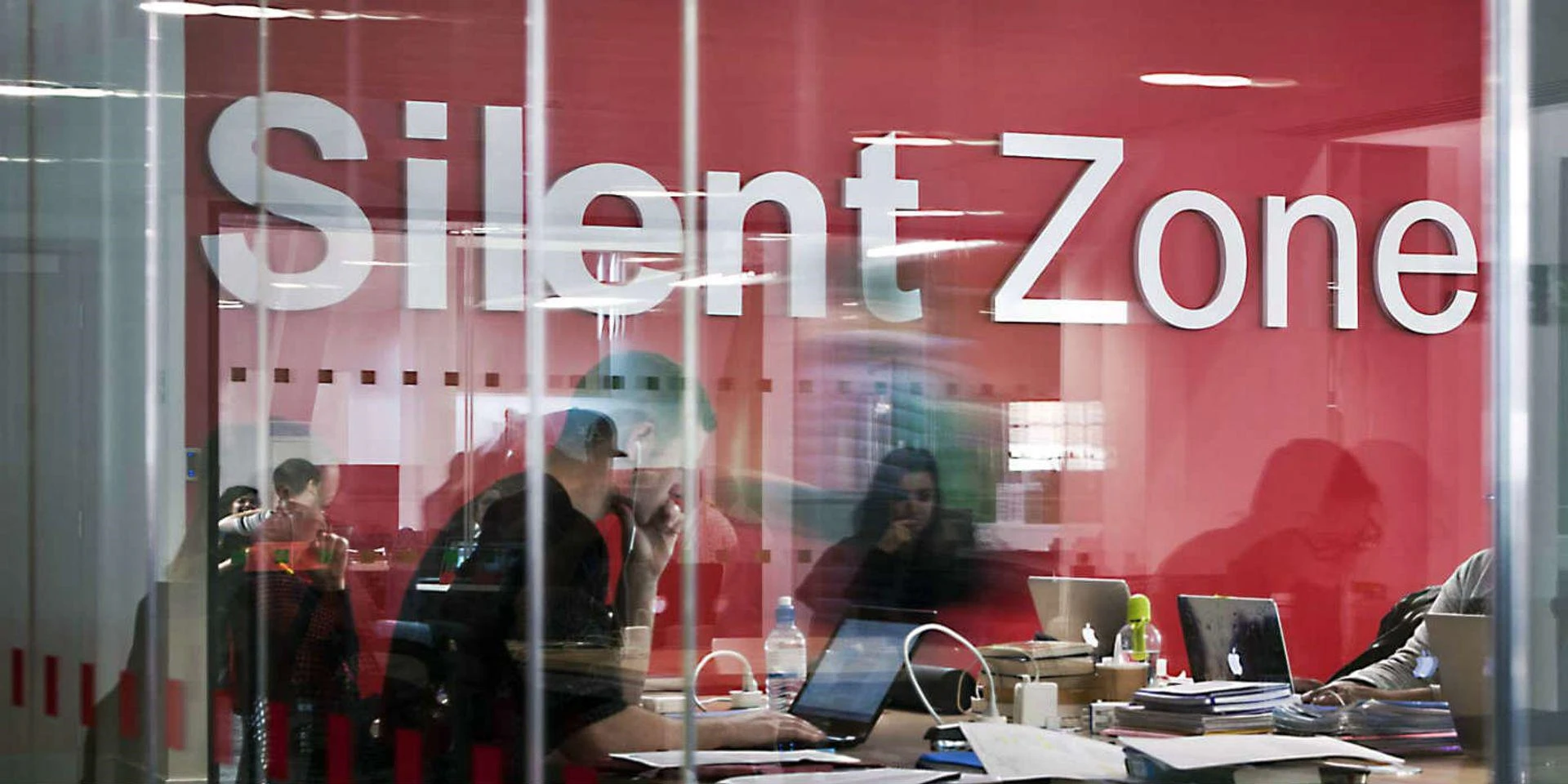
- Phones can be used in the Library but disruptive mobile phone use is prohibited. Set your phone to silent and do not use it in the red Silent Zones.
- Library users are asked to treat other users with consideration.
- No material other than official notices from the Library or the School may be distributed or posted within the Library without permission.
- Furniture, fittings or equipment must not be misused or their arrangement altered.
- You should not attempt to reserve study spaces by leaving personal belongings at unattended desks. Belongings may be cleared to allow others to use study places. You are strongly advised not to leave valuables even if you will be away for a short time.
- Study space and group study room bookings take precedent over casual use of space and rooms. A user who has booked a study space or room can expect any other user occupying it, at the reserve time, to vacate it.
- You may be asked to present your possessions for inspection by staff.
- Any damage or defacement of materials is prohibited and if you are found damaging material you will be subject to disciplinary procedures. Please report any instances of such defacement to staff.
- Photography is not permitted without permission - via library.enquiries@lse.ac.uk in the first instance.
- Members of LSE and certain categories of external users may borrow from the Library. Details of borrowing privileges are available.
- Loans may normally be renewed if the book is not required by another user.
- Borrowing from the Course Collection is restricted to LSE staff and students. External users may have access to the Course Collection for reference use during vacation.
- A current Library card is required whenever borrowing items.
- Library materials on loan to one person may not be transferred to another. The person in whose name the loan is made is solely responsible for the safekeeping and due return of items loaned.
- All Library materials borrowed must be returned within the stipulated loan period. Failure to do so will result in application of appropriate sanctions.
- Items on loan may be recalled at any time if required by another user. Failure to return recalled books on time will result in application of appropriate sanctions.
- Sanctions to be applied for the late return of borrowed or recalled material will be determined from time to time by the Library's management.
- Late return of materials borrowed, or failure to comply with sanctions, may result in suspension of borrowing privileges and access, in the case of external user categories.
- Where an item is lost or stolen, returned damaged, or not returned after a reasonable period of time, the borrower will be charged for the item at a level to be determined by the Library's management. An item charged for in this way remains the property of the Library.
- No book or other Library property may be taken from the building at any time without authority.
- Library users allocated a book locker may keep in it Library materials recorded as on loan to them. Checks of the lockers will be carried out, from time to time, by Library staff and any non-issued Library materials found will be removed. In such circumstances the individual concerned will automatically lose the right to use the facility. Locker keys must be returned by the date stipulated. Beyond this date, key deposits will not be refunded.
- Special rules (displayed in the Archives Reading Room) apply to the use of rare books and archives in the Archives Reading Room or administered by its staff.
- LSE Library users must comply with UK copyright law when copying any Library and archive material and in all copying carried out within the Library, whether by using the Library’s photocopiers or by any other means (for example, digital photography).
- Under the Copyright Licencing Agency’s Higher Education licence, up to the following may be copied by staff and students: One chapter from a book. Two articles from a journal issue. One paper from a set of conference proceedings. One report of a single case from a volume of judicial proceedings. Or 10% of the total publication, whichever is the greater.
- Current copyright licensing rules for Library material are displayed next to Library photocopiers and copyright guidelines for archive and historic print material are displayed on desks in the archives reading room.
- If you need help with copying, please contact us for further assistance. There are exceptions within copyright law which permit the reuse of material within certain parameters. There are also exceptions which allow the making of accessible copies for disabled people. A summary of legal exceptions can be found in the Intellectual Property Office’s guidance on Exceptions to copyright.
Article 89 of EU General Data Protection Regulation (GDPR 2018) governs how personal data should be handled and is applied to the use of information relating to living individuals found in our archive collections.
Library users are responsible for ensuring that any data obtained relating to living individuals is treated in accordance with the principles of GDPR. Guidance on the handling of personal data is displayed in the archives reading room and there is online guidance.
Library users should bear in mind the following when handling personal data:
- GDPR only applies to the personal data of living individuals.
- Do not use personal data to support measures or decisions concerning an individual.
- Do not use personal data to cause substantial damage or distress to individuals.
- Whenever possible depersonalise or anonymise personal data.
- Keep personal data secure.
- Do not disclose personal data to anyone else without ensuring you do so in accordance with the GDPR.
Read further information about the use of personal data in the Information Commissioner's Guide to the General Data Protection Regulation (GDPR).
Read further information about using archives and GDPR on the National Archives’ website.
- Use of information technology facilities within the Library is governed by the School's Conditions of Use of such services. By accessing and/or using the IT facilities, you agree to be bound by these Conditions of Use.
- The software, databases, websites and other electronic resources accessible via the Library are either owned by LSE or owned by various publishers and other third parties. Users may only access and use these resources in accordance with any applicable terms of use including any relevant licence.
- Failure to observe any of the rules may be dealt with by a Library manager.
- Any user who is unhappy with a decision of a member of Library staff may appeal to the Director of LSE Library, as set out in the Library's Feedback Policy.
Library policies and privacy
We strive to provide excellent customer service. Your feedback is welcomed and used to improve our services.
If you experience a problem inside the Library please report it to us as soon as possible. If we cannot resolve the issue immediately, we will explain why.
If you would like to offer feedback, please contact us by email. We will reply within two working days. Where necessary, your feedback may need to be reviewed by a Library manager who can investigate further and make recommendations.If this happens, we will let you know straight away and you will receive a response within ten working days.
If you are unhappy with our reply, a senior manager will review your feedback and provide a further response within ten working days.
If you remain unhappy: LSE staff and students are advised to follow the School Service Complaints Procedure [PDF]; and other Library users should put their complaints in writing to the Director of LSE Library. Please include full details of the issue and information about your attempts to resolve it.
We reserve the right not to investigate complaints that we consider to be frivolous (unfounded, trivial and persistent) or malicious (with vindictive motivation).
Our staff expect to be treated with respect by users. The Library rules provide a code of conduct expected by all Library users.
Incidents where staff feel users have behaved in an abusive or threatening manner will be reported and investigated.
The School's disciplinary procedure will be used for incidents involving students where the matter cannot be resolved informally at a local level.
LSE is committed to a working and learning environment where people can achieve their full potential. The School's harassment policy provides a mechanism to resolve complaints where it is felt that harassment has occurred.
If you are the author, rights holder or are authorised to act on behalf of the author/rights holder and you are concerned that you have found material available on our website for which you have not given permission and which infringes your copyright, you have the right to request its removal.
Please contact us stating the following:
- Your contact details: this should include your full name, title if acting on behalf of an organisation, telephone number, email and postal address.
- The name and/or a description of the work/s.
- The exact and full URL where you found the material.
- Proof that you are the rights holder or are an authorised representative.
Upon receipt of a request to take down one or more pieces of work from its website, LSE Library will suspend as soon as is practicable publication of the material in question while an investigation is carried out. A staff Review Panel will investigate the query and will usually convey its decision within 4 weeks. If the case is complex, and additional time is needed, we will write to let the Requestor know.
Contact details
Email: library.enquiries@lse.ac.uk
Post: LSE Library, 10 Portugal Street, London WC2A 2HD
Please send any queries for the attention of the Copyright Officer.
This notice applies to all users of LSE Library
London School of Economics and Political Science (LSE) is committed to a strategy that will build on our strengths, address challenges and maintain our worldwide reputation for excellence. LSE offers a range of different programmes, from undergraduate and postgraduate study, to executive education, distance learning, language study, summer school and study abroad options.
This Privacy Notice explains how LSE processes the personal data of all users of LSE Library collections and facilities and your rights in relation to the personal data we hold. It sets out the obligations of LSE, a private company limited by guarantee, registered in England under company number 70527, whose registered office is at Houghton Street, London WC2A 2AE, UK.
For the purposes of any applicable data protection laws in England and Wales, including the UK General Data Protection Regulation (UKGDPR), the School is the data controller of your personal data. The School Data Protection Officer is Rachael Maguire, who can be contacted via email at glpd.info.rights@lse.ac.uk, or you can write to us at the above address.
This Notice applies together with any other information the School may provide about a particular use of personal data, for example when collecting data via an online or paper form.
This notice should be read in addition to the School’s other relevant policies, including;
- Data Protection Policy
- Privacy Notice for Researchers
- Privacy Notice for Research Subjects
- Privacy Notice for Students and Prospective Students
Introduction
This privacy notice covers personal data processed by LSE Library to give LSE students, staff, and visitors to LSE access to library facilities and collections, and to deliver library services.
What is Personal Data?
The UKGDPR defines “personal data or personal information” as any information relating to an identified or identifiable natural person (a “data subject”); an identifiable natural person is one who can be identified, directly or indirectly, in particular by reference to an identifier such as a name, an identification number, location data, an online identifier, or to one or more factors specific to the physical, physiological, genetic, mental, economic, cultural, or social identity of that natural person. This includes information which may not explicitly identify you (e.g. where your name has been removed) but which does make it possible to identify you if it is combined with other information that is readily available. For example, this might be because the information available contains a postcode, your gender and date of birth; in these circumstances it might be possible to identify you by using this in conjunction with other information available elsewhere.
LSE data protection obligation
In accordance with the UK General Data Protection Regulation (UKGDPR), Data Protection Act 2018 (“DPA”) and any data protection legislation enacted in the UK, we are the data controller of your personal data and this means that we are legally responsible for the personal data we collect and hold about you. One of our responsibilities is to tell you about the different ways in which we use your personal data – what information we collect, our legal basis for doing so, why we collect it, where we collect it from and whether and with whom we will share it. We also need to tell you about your rights in relation to your personal data. In addition to the information in this statement, you may be given further information about the uses of your personal data when you sign up to use specific services and facilities we offer, and in certain situations, you may be asked whether you give your consent to us processing information about you.
Types of Personal Data We Process
We may collect information about you through your application and enrolment. We may collect the following types of personal data about you:
- Name
- LSE username
- Library number
- Date of birth (age)
- Proof of Identity (e.g. passport)
- Contact Info (Address, Phone, Email etc.)
- Student status (e.g. ‘offer’, ‘accepted’ etc.)
- Department affiliation (LSE users)
- Programme information (LSE students)
- Home institution (visitors)
- Photograph
- Library usage e.g., items borrowed, room bookings
- Feedback responses e.g., from surveys
- Research Grant information (researchers submitting publications to Pure, or applying for funding to pay open access publishing fees)
- ORCID iD (researchers)
LSE Library may also process some information about you that is considered to be sensitive or which is “special category” personal data. This includes information concerning your:
- Disability
All personal data will be kept in accordance with our policies (as listed on page 1 of this document) or any regulatory requirements.
In accordance with our CCTV Policy, we may also capture your image on CCTV whilst you are on our premises.
Personal data that we collect from other sources
We will be collecting data about you from the following sources:
- Automatic feeds from LSE systems
- Our enquiry management system, email system, and chat widget
- Our online forms
- In person, in our Library and Reading Room
- In the course of providing services to you (e.g. library usage history) or after we have provided services to you (e.g. feedback responses)
- Automatic feeds from external systems (ORCID)
- The use of Cookies and other technologies
We will also collect personal data about website usage through cookies which is a small file of letters and numbers that is stored on your device. Our websites use cookies to distinguish you from other users of the website. The cookies set may obtain information about you, how you use the website and any other information you post, email or otherwise send to us. Your computer IP address, operating system and browser type, your use of our website and your general internet usage.
For more information about our use of cookies and similar technologies to allow you to browse our website effectively, see our cookie page. You can also see Google Analytics Privacy Policy and how google safeguard your data.
The Lawful basis for processing Your Personal Data
In fulfillment of the GDPR and DPA 2018, we are required to be explicit with you about the legal basis upon which we process your personal information. We will process your personal information in accordance with the legal bases explained below:
- Consent: We may ask you to provide us with special category or sensitive personal data as detailed above which we will agree only to process with your express consent.
- Performance of contract: The processing of your personal data may be necessary in relation to the contract we have entered into with you to provide LSE's services to you or because you have asked for something to be done so you can enter into such contract.
- Public interest: The processing of your personal data may be necessary for the performance of a task carried out in the public interest or in the exercise of official authority vested in us;
- Legitimate interests: The processing of your personal data may be necessary for the purposes of the legitimate interests pursued by us or by a third party, except where such interests are overridden by your interests or by fundamental rights and freedoms which require protection of personal data. It may be necessary for our legitimate interests to collect your personal data to enable us to manage certain operations of the School effectively.
- Processing is necessary for the purposes of carrying out the obligations and exercising specific rights of the controller or of the data subject in the field of employment and social security and social protection law in so far as it is authorised by Union or Member State law or a collective agreement pursuant to Member State law providing for appropriate safeguards for the fundamental rights and the interests of the data subject;
Purposes for which we process your personal data
We use the data we hold to:
- Provide you with access to our building
- Give you access to ebooks, ejournals, and databases
- Address unauthorised excessive use of eresources
- Provide and administer library services, including requesting and borrowing items, booking rooms, providing inter-library loans, providing access to secure data
- Respond to enquiries
- Administer reading lists
- Facilitate the deposit of publications into the institutional repository in preparation for the Research Excellence Framework (REF)
- Facilitate the deposit of research outputs and research data into the institutional repository as required by LSE and research funders’ policies, including making this data more accessible e.g. through Wikidata
- Facilitate the deposit of PhD Theses into the Open Access repository
- Facilitate the creation of Data Management Plans
- Gather usage statistics and feedback to inform decisions about our services and collections
- Administer Open Access funds
- Publish Open Access books and journals
Sharing Your Information with Others
Your information will usually be shared with the following people and organisations.
- Third party providers. Library services such as Library Search provide links to published content from a number of third-party providers. Where access to these third-party providers is via Single Sign On, your IP address and LSE username may be shared with them. Where a third-party provider requires you to create an account, your contract is with that provider and your data is stored by them.
- In order to process and store your data effectively, we employ IT systems. These systems may entail the transfer of data to a third party. Any such transfer will be covered by a specific contract that will include protection of personal data:
- Ex-Libris provides Primo, Alma, RapidILL, and Leganto, through which we manage your library account, manage collection requests and loans, provide access to electronic resources, and provide reading lists.
- Elsevier provides PURE, LSE’s Current Research Information System, through which we manage research outputs for inclusion in the institutional repository and in preparation for the Research Excellence Framework (REF).
- Researchers may connect their ORCID iD to PURE, enabling the School to update the ORCID Profile and draw information from it into PURE. Your data is stored and processed according to this ORCID Privacy Policy.
- Springshare provides LibAnswers, LibChat and LibCal, through which we manage email and chat enquiries, and allow room and study space booking.
- LSE Research Online is provided by Eprints. The service makes research outputs, including full text versions of theses accepted for the qualification of Doctorate at LSE, and datasets free to access and downloaded. Participants in research should refer to the Privacy Notice for Research Subjects.
- LSE Digital Library is provided by AM Digital Quartex. Users have the option of creating an account with AM Digital to access additional functionality. Where you create an account, your contract is with AM Digital and your data is stored by them according to the AM Digital Privacy Policy.
- The LSE Archives Catalogue is Epexio by Metadatis. Metadatis store and process your data according to the Metadatis Privacy Policy.
- Data management plans are supported through DMP Online. Where you make an account, your contract is with DMP Online and your data is stored and processed by them according to the DMP Online Privacy Statement.
- Ubiquity Press provide the technical platform for LSE Press. Your data is stored and processed according to this privacy policy.
- Some secure data must be accessed from a SafePod or SafePoint. These are part of the SafePod Network and your data is stored and processed according to the SafePod Privacy Notice.
- Sometimes your personal data is processed by these organisations outside the European Economic Area (eg, because they use a cloud‐based system with servers based outside the EEA or to facilitate your participation in an exchange visit or to report to an overseas funding provider), and if so, appropriate safeguards are in place to ensure the confidentiality and security of your personal data.
- Your personal data may be shared as is necessary, on a considered and confidential basis, with relevant LSE members of staff on a ‘need to know’ basis. This includes sharing data with those staff members involved in any investigations/decision making on disciplinary matters and complaints raised by or against you. It may also include sharing outcomes/sanctions with reporting parties and/or staff involved in their implementation.
We do our utmost to protect your privacy. Data Protection Legislation obliges us to follow security procedures regarding the storage and disclosure of personal information in order to avoid unauthorised loss or access.
As such we have implemented standard security systems and procedures to protect information from unauthorised disclosure, misuse or destruction. We have established procedures to deal with any suspected personal data breach and will notify you and any applicable regulator of a breach where we are legally required to do so.
We require all third parties to respect the security of your personal data and to treat it in accordance with the law. If we need to transfer any information to a country not recognised as providing equivalent protection, we will use additional safeguards approved by UK or EU regulators. We do not allow our service providers to use your personal data for their own purposes – we only permit them to process your personal data for specified purposes and in accordance with our instructions.
Principles and Rights
The School will abide by the six data protection principles that govern how personal data should be processed.
We will handle your personal data in accordance with the principles set out below.
| Principle | Personal Data shall be: |
| Integrity and confidentiality | Processed in a manner that ensures appropriate security of the personal data, including protection against unauthorised or unlawful processing and against accidental loss, destruction or damage, using appropriate technical or organisational measures. |
| Lawfulness, fairness and transparency | Be processed lawfully, fairly and in a transparent manner in relation to the data subject. |
| Purpose limitation | Collected for specified, explicit and legitimate purposes and not further processed in a manner that is incompatible with those purposes. |
| Accuracy | Accurate and, where necessary, kept up to date. |
| Storage limitation | Kept in a form which permits identification of data subjects for no longer than is necessary for the purposes for which the personal data are processed. |
| Data minimisation | Adequate, relevant and limited to what is necessary in relation to the purposes for which they are processed. |
| Accountability | Be able to demonstrate compliance with the above principles |
Your rights
Under certain circumstances, by law you have the right to which we will always work to uphold:
- The right of access. This enables you to request a copy of your data we hold about you and to check that we are lawfully processing it.
- The right to rectification. If any of your personal data held by us is inaccurate or incomplete, this enables you to ask us to make correction as deem fit.
- The right to erasure. This enables you to ask us to delete or remove your data where consent has been withdrawn and there are no other legal grounds for the processing.
- The right to object. You can object the processing of your data where we are relying on our compelling legitimate interests. You also have the right to object where we are processing your data for direct marketing purposes and profiling.
- The right to restrict processing of your data. This enables you to ask us to suspend the processing of your data or stopping further processing where there is no further legitimate ground to continue processing it.
- The right to data portability. This means that, if you have provided personal data to us directly and we are using it with your consent or for the performance of a contract, and that data is processed using automated means, you can ask us for a copy of that personal data in a machine-readable format to re-use with another service.
- Rights in relation to automated decision making and profiling – Rights not to be subjected to a decision based solely on automated processing and profiling.
Please keep in mind that there are exceptions to the rights above, there may be situations where we are unable to do so depending on the circumstances and the nature of your request. It may not be possible for us to do what you have asked, for example, where there is a statutory or contractual requirement for us to process your data, it would not be possible to fulfil our legal obligations if we were to erase your data.
However, where you have consented to the processing (for example, where you have asked us to contact you for marketing purposes), you can withdraw your consent at any time by completing our Data Protection Form and email it to us at glpd.info.rights@lse.ac.uk or by clicking the unsubscribe button on the marking page. In this event, we will stop the processing as soon as we can. However, this will not affect the lawfulness of any processing carried out before your withdrawal of consent. The same form can be used to exercise any of the rights.
Offensive or inappropriate content on LSE websites
We may remove any content posted on or sent to LSE websites or social media channels, which may reasonably be deemed to be offensive, inappropriate, or otherwise disruptive.
Where LSE reasonably believes that you are in breach of any applicable laws, we may disclose your personal information to relevant third parties, including law enforcement agencies or your internet provider. LSE would only do so in circumstances where such disclosure is permitted under applicable laws, including data protection law.
How Long is Your Personal Data Kept?
We will only retain your personal data for as long as necessary to fulfil the purposes we collected it for, including for the purposes of satisfying any legal, accounting, or reporting requirements, and in accordance with LSE Retention Schedule under our Information and Record Management page, unless stated otherwise in this privacy notice.
Marketing
If we require your personal data for marketing purposes then we will seek your consent to Opt‐In to receive marketing services via your preferred communication channels. We will also make provision for a simple and clear way to unsubscribe at any time. We also send regular emails to let you know about our products and services and to inform you of the latest LSE research and insights. We may also invite you to take part in surveys about our products and services or matters concerning LSE.
Changes to Our privacy notice
We keep our Privacy Notice under regular review and may be updated from time to time. Any updates will appear on this webpage. This notice was last updated in November 2025.
How to Contact Us
If you want to exercise any of the rights described above or are unhappy with the way we have used your information, you should contact the School Data Protection Officer, Rachael Maguire at glpd.info.rights@lse.ac.uk. We will seek to deal with your request without undue delay, and in any event in accordance with the requirements of the GDPR and related Data Protection Legislation. Please note that we may keep a record of your communications to help us resolve any issues which you raise.
How to Make a Complaint to the Regulator
If you are dissatisfied with our response, or you believe that your data protection or privacy rights have been infringed, you should contact the UK Information Commissioner’s Office (ICO), which oversees data protection compliance in the UK. Details of how to do this can be found at: https://ico.org.uk/make-a-complaint/.
Flickr Rights Statement
We joined Flickr Commons in November 2009.
The images published on our Flickr Commons photostream are all marked as having ‘no known copyright restrictions’ attached to them, either because LSE owns the copyright, or the term of copyright has expired, or because no evidence has been found that copyright restrictions apply.
You are free to copy and redistribute the material in any medium or format, or to remix, transform, and build upon the material, for any purpose, even commercially.
If you re-use images from the LSE Library Flickr pool, please credit "LSE Library."
Please also consult The Commons rights and copyright page to ensure you are aware of your own obligations regarding re-use of any of the content we have made available.