
Why Moses Mpungu doesn't regret declining a diplomatic posting for an LSE Master's
After choosing an LSE master's in International Development and Humanitarian Emergencies (IDHE) over a diplomatic posting abroad, Moses Mpungu returned to Uganda's foreign service and went on to earn successive promotions, rising from Third Secretary to First Secretary. Now serving at the Uganda Consulate in Mombasa, he reflects on the decision that shaped his career, the value of emotional intelligence in diplomacy, and why investing in education can open doors you never expected.
Since graduation, my International Development Degree (IDHE) has enabled me to get two promotions in the diplomatic service of Uganda.
In what ways has your International Development degree shaped your path since graduation?
Since graduation, my International Development Degree (IDHE) has enabled me to get two promotions in the diplomatic service of Uganda. When I joined LSE in 2013, I was a Third Secretary (the lowest rank in Uganda's diplomatic service) but I was promoted to Second Secretary in 2018 and First Secretary recently in 2024 (a middle managerial position).
How did you get your first job after graduation, and what advice would you give students starting out?
When I joined LSE, I was already working in the Ministry of Foreign Affairs of the Republic of Uganda in the African Union Department. When I returned to Uganda in October 2014, I was shortly deployed in the European Department and later posted to Uganda High Commission London as Accounting Officer/ Head of Finance. What I would like to advise students starting out is that an LSE degree can open doors for you. I do not think I would have been posted to London as Accounting Officer at that time if it were not for my degree from LSE.
Tell us about your current role (or further studies), what does a typical day or week look like?
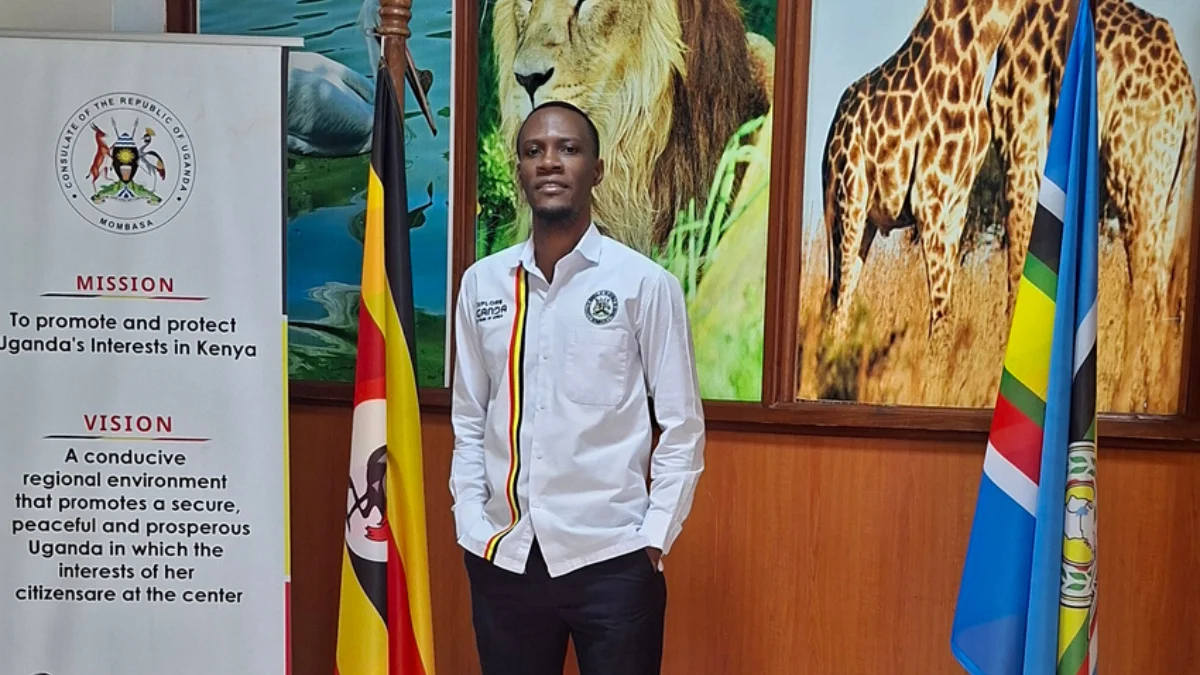
I am currently a diplomat at the Uganda Consulate in Mombasa, Kenya. My role is to ensure that there is seamless movement of Uganda cargo passing through the port of Mombasa given that Uganda is landlocked and relies almost 80 per cent on Mombasa Port for imports and exports. Secondly, recently, Uganda's diplomatic strategy has been re-focused to the promotion of Economic and Commercial diplomacy (ECD). My other role is to source market for Ugandan products in Kenya, look for investment opportunities and to source and encourage local and international tourists from Kenya to visit Uganda. Because we are a lean team, I am also the Head Chancery responsible for all the Mission properties and supervising the locally recruited staff.
What has been the best part of your career journey, and what has been the biggest challenge?
The best part of my career journey so far has been the ability to travel and learn new things. For instance, when I first arrived at LSE, I had never lived away from my country for more than a month. However, the opportunity to study at LSE taught me to be resilient, learn and accept different cultures and to be independent minded. Since then, I have travelled to several countries, and I have been able to learn a lot about the world. However, the downside to it is that I live away from my family and tend to miss important days like birthdays, Easter and Christmas. It is sad but at the end of the day it is where I earn my salary.
I do feel AI is taking creativity away from people. I'm not against the use of AI, but my only concern is that it's making people lazy. My advice to students is to try to use AI in a way that improves them rather than just making their work easier.
What skills have been most important in your career, and what skills should students focus on developing?
Emotional intelligence. Working in a diplomatic environment requires one to have a high degree of emotional intelligence. For instance, you must understand the culture of where you live and work regardless of whether you like it or not. This is because as a diplomat, you're also bound by local laws. Secondly, negotiation skills, foreign policy and diplomacy are all about interests but while pursuing these interests you must know that the other party also has interests. Therefore, as a diplomat you must ensure that you have negotiation skills to win over the other party. Similarly, if I were to recommend general skills to students, emotional intelligence would be number one. Then skills in the use of Artificial Intelligence. When I was doing my master's at LSE, the use of AI was not very common. We need to understand that AI is here to stay and we need to learn how to use it to improve our work.
How is your sector changing, including the impact of AI, and what should students be paying attention to?
What I have seen of late is the use of AI in drafting of documents such as briefs, reports, letters, speeches, talking points, concept notes, etc. However, I do feel it's taking creativity away from people. I'm not against the use of AI, but my only concern is that it's making people lazy. My advice to students is to try to use AI in a way that improves them rather than just making their work easier.
What career options exist beyond traditional International Development organisations, and which transferable skills help most?
I think one of the highlights of my one-year IDHE master's degree was the project that we did as a group. The project had transferable skills such as research, teamwork, report writing, time management, leadership, etc... These skills go beyond the traditional international Development Organizations. For instance, these skills can apply in diplomacy, politics, management and more.
To the current students, I encourage them to use their time at LSE productively. They should make connections, join student groups/ associations, volunteer and lastly not fear applying for any opportunity.
What is one piece of career advice that has had the greatest impact on you, and what advice would you leave current students with?
Before deciding to take up the Scholarship offer at LSE, I was supposed to be posted abroad as part of my job. But when I went to my Head of Department, she told me that I should choose the option of studying rather than the posting because I would never get such an opportunity to study at a prestigious school like LSE. Indeed, it came to be true because I found LSE to be the best school in the world because it has had the greatest impact on whatever I have done since then. All the opportunities I have received since 2014 have been because of LSE. To the current students, I encourage them to use their time at LSE productively. They should make connections, join student groups/ associations, volunteer and lastly not fear applying for any opportunity.
What helped you move into more senior roles or change direction in your career? (If relevant!)
Of course, the most important one is a qualification. I have a Masters in IDHE, and most recently I graduated with a Post Graduate Diploma in Public Administration and Management. Secondly, it is skills such as management, teamwork, and emotional intelligence.
The views expressed in this post are those of the alum and in no way reflect those of the LSE International Development Department or the London School of Economics and Political Science.
Featured Image credit: Moses Mpungu