

Remembering Thandika Mkandawire: Decolonizing Development in Troubled Times
Professor Kate Meagher reflects on how the life and legacy of Thandika Mkandawire contributes to our understanding of the contemporary challenges of decolonising Development.
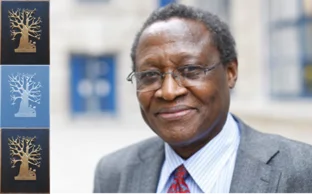
Prof. Thandika Mkandawire, Professor of African Development in the LSE Department of International Development from 2010 to 2020, was an icon of decolonized Development research. He was a renowned Southern intellectual in a top UK university whose incisive scholarship has had a profound influence on how students, academics and practitioners alike think about Africa. His work was devoted to deciphering the biases and blindspots embedded in orthodox development perspectives on the African state, democracy, institutional reform, and social policy. He was also a tireless promoter of Southern intellectual agency, arguing for African scholars to be knowledge producers and theorists, rather than merely supplying data for the intellectual agendas of the Global North. Each year at the time of Thandika’s birthday (10 October), we introduce a new cohort of International Development students to his work, using the lens of his life and research to examine contemporary trends in Development thinking.
Of late, calls to decolonize Development have been confronted by growing struggles over what that means. The recent media savaging and tragic death of Cambridge Prof. Jason Arday has raised new questions about what is at stake in decolonization efforts. Are they about DEI gestures, or the promotion of Southern scholars who can bring new perspectives that may challenge the political and intellectual establishment? Should academic soul-searching direct attention to the failures of academic institutions, or to wider far-right forces behind anti-DEI mobilization, the weaponization of ‘freedom of speech’, and the resurgence of eugenics and ‘scientific racism’ in academic spaces? Is the decolonization of Development knowledge restricted to addressing racial discrimination in academia, or does it also require examination of the political as well as structural forces that continue to embed racial and geopolitical disadvantage in global structures of opportunity, production, trade, and finance?
In the spirit of Thandika’s commitment to decolonizing development, we invite staff, students, and scholars and practitioners more broadly to post their thoughts on the following question [brief comments welcome, or longer thoughts of up to 150 words]:
What is the reading, experience, image or reflection that best represents the decolonization of development for you and why?