

From Yemen to Ukraine, Federica Dispenza found growth in choosing challenge over certainty
Alumna Federica Dispenza, Head of Governance and Participation at UNDP Vietnam, has built her career across conflict-affected and transitional settings from Yemen and Ukraine to governance leadership in Southeast Asia. In this interview, she reflects on how working across diverse political and institutional contexts reinforced the importance of adaptability, continuous learning and local leadership, and why some of the most formative career opportunities emerge from uncertainty rather than certainty.
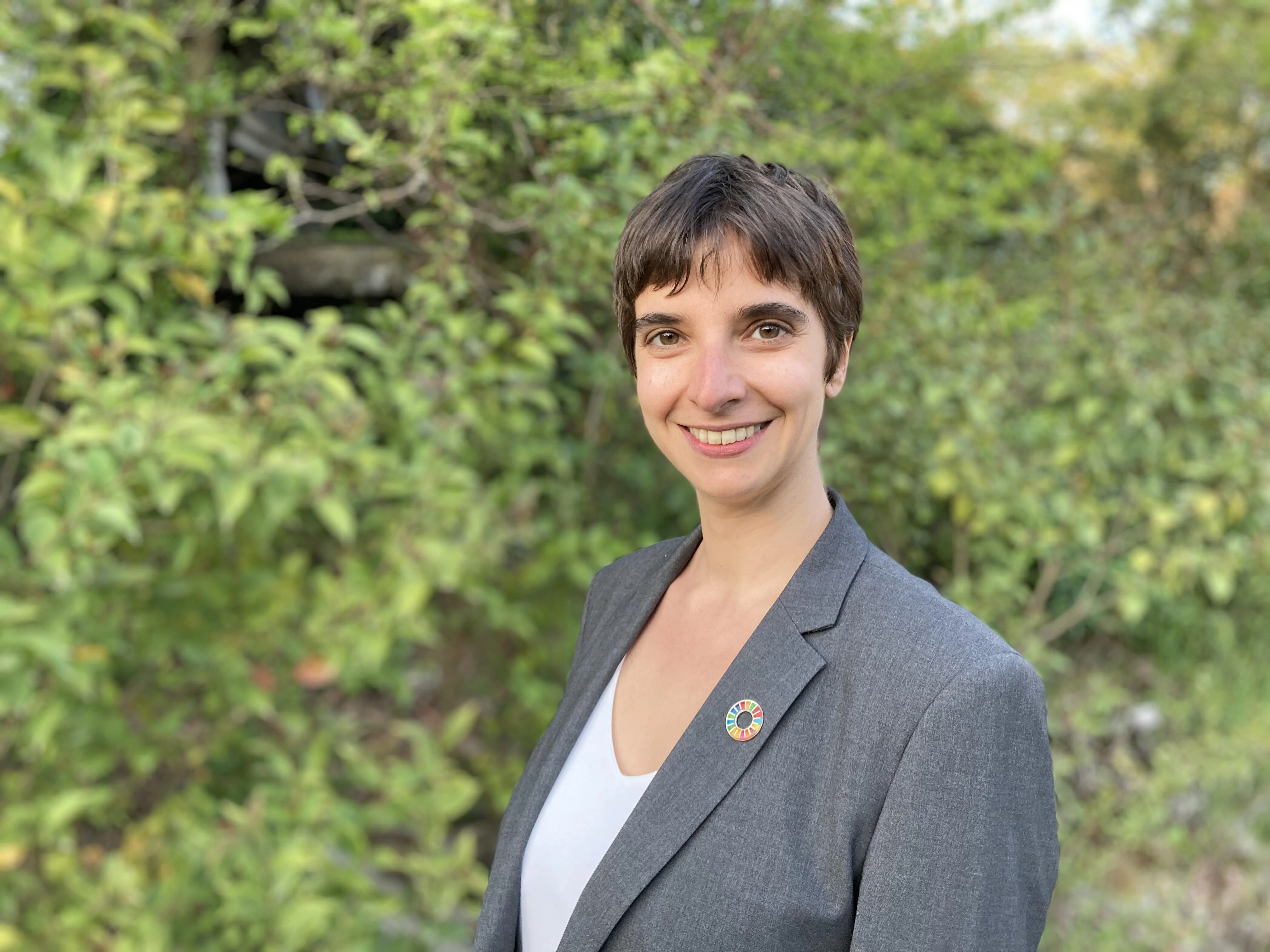
In what ways has your International Development degree shaped your path since graduation?
My MSc in Development Management (2007) gave me something much more valuable than a set of technical tools: it taught me how to think about complex problems. At LSE, I was exposed to different perspectives on development, governance, institutions and social change, and I quickly realised that there are rarely simple solutions to complex challenges. Throughout my career, whether working in Yemen, Georgia, Ukraine or now Viet Nam, I have drawn on that ability to analyse issues from multiple angles and understand how politics, institutions, economics and communities interact. The degree gave me a strong foundation, but perhaps more importantly it instilled curiosity, critical thinking and a willingness to challenge assumptions, which have shaped every step of my professional journey.
How did you get your first job after graduation, and what advice would you give students starting out?
Like many graduates, I did not follow a perfectly linear path. My early career involved a combination of persistence, flexibility and being willing to take opportunities that were not necessarily part of a long-term master plan. One lesson I learned early on is that your first job does not define your entire career. It is more important to focus on building skills, demonstrating reliability and learning from every experience. My advice to students is to stay open-minded, be willing to work in unfamiliar contexts and remember that careers are often shaped by opportunities you could never have predicted. Some of the most rewarding roles I have taken were not ones I had originally envisaged for myself.
Tell us about your current role (or further studies), what does a typical day or week look like?
I am currently the Head of Governance and Participation at UNDP Viet Nam, where I lead a portfolio of programmes focused on governance, institutional development and citizen participation. There is no truly typical day, which is one of the reasons I enjoy the role. One day may involve advising government counterparts on governance reforms, while another may focus on managing programmes, engaging development partners, leading a team discussion or exploring opportunities for new partnerships and resource mobilisation. What I appreciate most is the combination of strategy and practice. The role requires thinking about long-term development challenges while also ensuring that programmes deliver meaningful results on the ground.
How is your sector changing, including the impact of AI, and what should students be paying attention to?
embrace new tools while maintaining the core principles of development practice. Technology can help solve problems, but understanding people, institutions and local contexts remains fundamental.
The development sector is changing rapidly. Traditional distinctions between humanitarian action, recovery, governance, climate resilience and economic development are increasingly blurred, requiring professionals to think across sectors rather than within silos. AI is already changing how we analyse data, generate knowledge and improve efficiency. At the same time, it raises important questions around inclusion, ethics, accountability and unequal access. Future development professionals will need to understand both the opportunities and risks associated with emerging technologies. My advice would be to embrace new tools while maintaining the core principles of development practice. Technology can help solve problems, but understanding people, institutions and local contexts remains fundamental.
What has been the best part of your career journey, and what has been the biggest challenge?
The best part has been the opportunity to work with extraordinary people in very different contexts and to witness the resilience of communities facing difficult circumstances. Whether in conflict-affected settings or during recovery processes, I have consistently been inspired by local leaders, civil society actors and citizens who continue working to improve their communities despite significant challenges. The biggest challenge has been working in situations where needs are immense and resources are limited. Development professionals are often confronted with tough choices and imperfect solutions. Over time, I have learned that progress is rarely linear, and that patience, adaptability and humility are just as important as technical expertise.
What skills have been most important in your career, and what skills should students focus on developing?
Technical knowledge is important, but the skills that have mattered most in my career are communication, relationship-building, strategic thinking and the ability to work effectively with people who have very different priorities and perspectives. For students entering the field today, I would encourage developing three things. First, strong analytical skills, because evidence-based decision making remains critical. Second, communication skills, including the ability to explain complex issues clearly and to different audiences. Third, adaptability. Development challenges evolve constantly, and the most successful professionals are those who continue learning throughout their careers.
What career options exist beyond traditional International Development organisations, and which transferable skills help most?
In my opinion, one of the greatest misconceptions about international development is that it only leads to careers in NGOs or international organisations. In reality, graduates can work in government, public policy, consulting, social enterprises, philanthropy, research, finance, technology, corporate sustainability and many other fields. The transferable skills are often what employers value most: problem-solving, stakeholder engagement, policy analysis, intercultural communication, project management and the ability to work in complex environments. These skills are relevant far beyond the traditional development sector and can open doors to a wide range of professional opportunities.
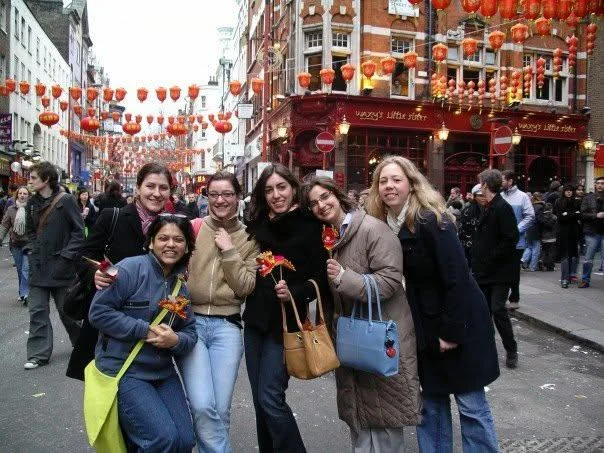
Federica Dispenza and friends during their time at LSE
What is one piece of career advice that has had the greatest impact on you, and what advice would you leave current students with?
The piece of advice that has had the greatest impact on me is: don't optimise for the next job, optimise for learning...my advice is not to wait until you feel completely ready for an opportunity, and don't worry too much about finding the perfect career path. Be curious and go for assignments that stretch you.
The piece of advice that has had the greatest impact on me is: don't optimise for the next job, optimise for learning. With every step I took, I have found myself moving towards complexity rather than away from it. Early in my career, I sometimes worried about whether I was following the "right" path. Looking back, many of the experiences that shaped me most were not the obvious career moves. They were the assignments that felt challenging, uncertain or even uncomfortable at the time. For example, working in Yemen and Ukraine taught me how institutions and communities continue to function under extraordinary pressure. Ukraine was also a clear example of the importance of local leadership and community-level resilience in times of crisis. More recently, moving from Ukraine to Viet Nam reminded me that growth often comes from stepping into unfamiliar environments and having to learn it all, all over again. For current students, my advice is not to wait until you feel completely ready for an opportunity, and don't worry too much about finding the perfect career path. Be curious and go for assignments that stretch you. Careers are rarely linear, and some of the most rewarding opportunities will be the ones you could never have planned for. Looking back, every major turning point in my career came from saying "yes" before I was entirely certain where the path would lead.
What helped you move into more senior roles or change direction in your career?
Two things made the greatest difference: taking on challenging assignments - which meant always being out of my comfort zone - and investing in relationships. I often accepted roles in complex or difficult environments because they offered opportunities to learn and contribute in meaningful ways. Those experiences accelerated my professional growth and broadened my perspective. Equally important were the people I worked with. Mentors, colleagues and partners helped me see possibilities I would not have considered on my own. Building trust, learning from others and maintaining strong professional relationships has been just as important as any formal qualification in helping me progress into leadership roles.
The views expressed in this post are those of the alum and in no way reflect those of the LSE International Development Department or the London School of Economics and Political Science.
Featured Image credit: Federica Dispenza