

Dentist turned global health advocate Abhijit Dhillon is chasing interesting problems, not impressive opportunities
After an unconventional journey from dentistry to global health advocacy, MSc Health and International Development alum Abhijit Dhillon reflects on how studying development changed the questions she asks about power, policy and health systems. She discusses the importance of curiosity, the value of understanding institutions rather than simply seeking technical solutions, and why building a career around interesting problems can be more rewarding than pursuing impressive opportunities.
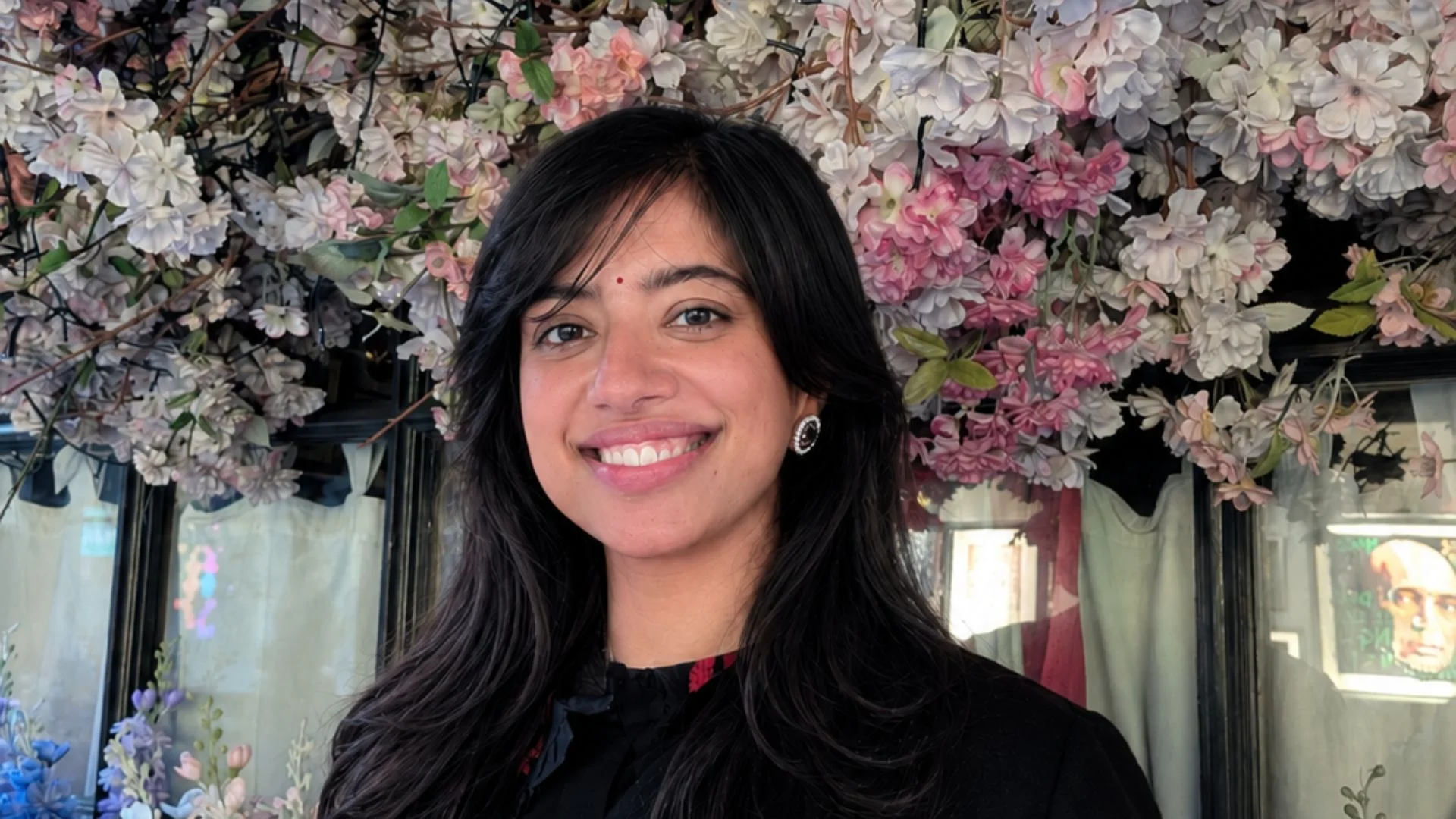
In what ways has your International Development degree shaped your path since graduation?
I've realised that every stage of my career has been an attempt to answer the same question from a different direction. As a dentist, I saw the consequences of health systems. Through gender and human rights, I saw who was excluded from them. At LSE, I began to understand the political and institutional forces that shape them. The MSc fundamentally changed the questions I ask. I became less interested in technical solutions alone and more interested in understanding why systems look the way they do in the first place; who gets heard, whose knowledge counts, how funding decisions are made, and why some ideas travel while others never leave the room. Today I work in global advocacy at the Community Health Impact Coalition, working with governments, multilateral organisations and civil society to strengthen investment in professional community health workers. Whether I'm analysing Global Fund financing, supporting country advocates or preparing policy for the UN General Assembly, I still find myself returning to the questions that LSE taught me to ask. LSE gave me a new lens to my career.
How did you get your first job after graduation, and what advice would you give students starting out?
I actually got my role before I graduated. While studying at LSE, I started applying for jobs early rather than waiting until I had finished my degree. In July, I joined the Community Health Impact Coalition in a part-time advocacy role alongside my MSc. Balancing work and study wasn't always easy, but it allowed me to apply what I was learning in real time and gain hands-on experience in global health advocacy. After graduation, that role naturally evolved into a full-time position leading global advocacy work.
If I could offer one piece of advice, it would be this: don't wait until graduation to start looking for opportunities. Apply early, be open to part-time or project-based roles, and don't underestimate how much you can learn by getting your foot in the door. Sometimes the first opportunity isn't the destination but a beginning of a much bigger journey.
One thing LSE reinforced for me is that careers are rarely linear. Mine certainly wasn't. I moved from dentistry to human rights, gender, international development and now global health advocacy. Looking back, each step made sense because I followed questions that genuinely interested me, rather than trying to follow the "perfect" career path.
Tell us about your current role (or further studies); what does a typical day or week look like?
No two weeks are the same, which is one of the reasons I enjoy the work. A typical week might involve analysing health financing trends, facilitating strategy discussions with coalition members across Africa, Asia and Latin America, preparing advocacy ahead of major political moments such as the UN General Assembly, WHA or working with partners to strengthen investment in community health systems. Recently I've also been coordinating advocacy around the Ebola response, bringing together organisations across multiple countries to capture lessons from the outbreak and make the case for recognising and protecting community health workers within preparedness and response efforts. At its heart, my role is about connecting evidence with influence and helping ensure that the realities experienced at community level shape decisions made in global policy spaces.
What has been the best part of your career journey, and what has been the biggest challenge?
The best part has been realising that advocacy isn't just about changing policy but about changing what people believe is possible. There's something incredibly rewarding about watching an idea discussed in a meeting eventually appear in funding guidance, policy language or a country's strategy. Those moments remind me that change is often quieter than we imagine, but no less meaningful. The biggest challenge has been learning patience. (Sigh!) International development often celebrates quick wins, but the work I care about be it changing institutions, shifting financing and strengthening community health systems in reality takes years. I've had to learn to value steady progress, even when the impact isn't immediately visible.
What skills have been most important in your career, and what skills should students focus on developing?
Curiosity is probably the most underrated professional skill. Not curiosity as a personality trait, but as a discipline.
Curiosity is probably the most underrated professional skill. Not curiosity as a personality trait, but as a discipline. Some of the most valuable opportunities in my career have come from asking one more question than everyone else. Why is this policy written this way? Why does funding flow like this? Why is one country succeeding where another is struggling? Alongside curiosity, I'd encourage students to develop strong writing, critical thinking and the ability to communicate complex ideas clearly. Technical expertise matters, but so does being able to bring different people together around a shared goal.
How is your sector changing, including the impact of AI, and what should students be paying attention to?
AI is already changing how we research, analyse information and communicate. I use it regularly to synthesise large amounts of evidence, challenge my own thinking, and work more efficiently. But I don't think the biggest transformation is technological. It is political. Global health is increasingly shaped by questions of financing, localisation, geopolitical change, and who has the power to influence decisions.
AI will reward people who can ask better questions, not just generate faster answers. As technical barriers continue to fall, judgement becomes even more valuable.
AI will reward people who can ask better questions, not just generate faster answers. As technical barriers continue to fall, judgement becomes even more valuable. I strongly believe that the ability to understand context, question assumptions, navigate institutions and build trust will remain difficult to automate.
What career options exist beyond traditional International Development organisations, and which transferable skills help most?
International development today extends far beyond NGOs and multilateral organisations. Graduates are increasingly working in philanthropy, consulting, public policy, impact investing, corporate sustainability, technology and social enterprises. The boundaries between sectors are becoming less important than the ability to solve complex public problems. The skills transfer remarkably well: analysing evidence, understanding systems, communicating across different audiences, managing stakeholders and thinking strategically. Those capabilities are valuable whether you're working in government, business or civil society.
What is one piece of career advice that has had the greatest impact on you, and what advice would you leave current students with?
Early in my career, I believed I needed to know everything before contributing. Over time, I've realised that asking a thoughtful question can sometimes be more valuable than offering a quick answer.
I'd encourage students not to optimise for the next job. Optimise for becoming someone people trust with difficult problems. Titles and organisations change but overtime it is trust that endures.
I'd encourage students not to optimise for the next job. Optimise for becoming someone people trust with difficult problems. Titles and organisations change but overtime it is trust that endures. I remember a mentor advised me early in my career: to not chase impressive opportunities but chase interesting problems. The opportunities then definitely follow.
The views expressed in this post are those of the alum and in no way reflect those of the LSE International Development Department or the London School of Economics and Political Science.
Featured Image credit: Abhijit Dhillon