
Project reports

Report detailing proceedings and findings of a conference, seminar or other output tied to an LSE IDEAS project or programme.
Recent Reports

From the Black Sea to the British Isles
March 2026
BY BUĞRA SÜSLER, JON-WYATT MATLACK, OLIVER GILLThis report summarises a high-level policy discussion convened by LSE IDEAS in partnership with the Foreign, Commonwealth & Development Office and the Embassy of Ukraine to the United Kingdom, held on 10 November 2025 at Lancaster House. Against the backdrop of the protracted war following Russia’s full-scale invasion of Ukraine, the discussion focused on the evolving security, trade, and political dynamics of the Black Sea region and explored policy instruments to support Ukraine and strengthen regional stability.
Central Asia Between China and Russia: Exercising agency in a changing regional order
March 2026
Edited by Giulia ScioratiThis report draws on insights from three expert roundtables convened by LSE IDEAS in 2025, bringing together scholars and practitioners specialising in international security, migration and development, and global order. The discussions reassessed common assumptions about Central Asia, focusing on evolving relations between China and Russia, the responses of Central Asian states, and the role of external actors in a region shaped by multi-actor cooperation and growing autonomy.
Decline or Disruption? The West and Transformation of the International Order
January 2026
Edited by Giulia GrilloThis project report summarises the panel discussions of the Turin Symposium held at the University of Turin on 5th May 2025, with support from LSE IDEAS and T-wai Centre.
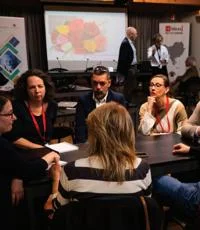
Ratiu Forum: History Workshop Report
November 2025
This project report details the discussions and findings of the Teaching History Programme of the Ratiu Forum from 2024 to 2025.
Teaching Difficult Histories: Key Principles For Democracy
July 2024This project report details the discussions and findings of the Teaching History Programme of the Ratiu Forum from 2023 to 2024. The workshops and conferences engaged with History teachers of post-communist Europe to address the challenges of politicised History curricula and explore methods for teaching difficult and dark pasts – facilitating and improving cross-border understanding within the region.
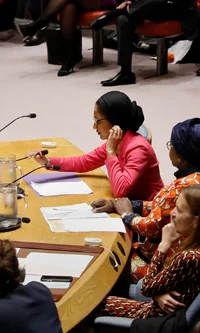
Strengthening the Representation of Women in Diplomacy: Challenges and Policy Solutions
June 2024Women’s representation in international diplomacy is alarmingly low. Though it varies across countries and regions, women’s underrepresentation in international diplomacy is pervasive.

Is Feminist Foreign Policy driving progress for women’s representation in diplomacy?
October 2023Building on an October 2022 Women in Diplomacy online event, this Strategic Update assesses the implications of feminist foreign policy (FFP) adoption for driving progress on improving women’s representation in diplomacy. Tracking the spread of FFPs globally and the ministers responsible for implementation, this paper focuses on their potential for improving or strengthening the role of women in diplomacy – including in ambassadorial and cabinet foreign-policy roles.
All Reports
Teaching Difficult Histories: Key Principles For Democracy
July 2024
This project report details the discussions and findings of the Teaching History Programme of the Ratiu Forum from 2023 to 2024. The workshops and conferences engaged with History teachers of post-communist Europe to address the challenges of politicised History curricula and explore methods for teaching difficult and dark pasts – facilitating and improving cross-border understanding within the region.
Strengthening the Representation of Women in Diplomacy: Challenges and Policy Solutions
June 2024
Women’s representation in international diplomacy is alarmingly low. Though it varies across countries and regions, women’s underrepresentation in international diplomacy is pervasive. Despite a few women holding senior leadership positions in prominent institutions such as the World Trade Organization, European Commission, International Monetary Fund, and European Central Bank, women’s representation within international organisations is unequal and only twenty percent of ambassadors worldwide are women. At the same time, research increasingly shows that diversity enhances decision-making capabilities, better addresses the needs of a diverse population, and embodies a commitment to the democratic principles of inclusion and tolerance.
Is Feminist Foreign Policy driving progress for women’s representation in diplomacy?
October 2023
Building on an October 2022 Women in Diplomacy online event, this Strategic Update assesses the implications of feminist foreign policy (FFP) adoption for driving progress on improving women’s representation in diplomacy. Tracking the spread of FFPs globally and the ministers responsible for implementation, this paper focuses on their potential for improving or strengthening the role of women in diplomacy – including in ambassadorial and cabinet foreign-policy roles.
The Return of History: Countering the Decline of Democracy in Europe
August 2023
This article summarises discussion held at the Ratiu Dialogues on Democracy conference, held in Cluj (Romania) on 15-16 June 2023. Contributors to the discussion were: Dr Radu Albu-Comanescu, Prof Christopher Coker, Dr Adrian-Gabriel Corpadean, Prof Sumantra Bose, Prof Christopher Dandeker, Prof Michael Burleigh, Dr Mois Faion, Dr Marcin Fatalski, Dr Alexander Gerganov, Maja Kurilić, Prof Dominic Lieven, John Lloyd, Bálint Magyar, Prof Slobodan Markovich, Dr Oana-Cristina Popa, Wojciech Przybylski, Richard Ralph CMG CVO, Nicolae Ratiu, Emilia Șercan, Louisa Slavkova, and Dr Eric Weaver
Countering United Front Work: Taiwan’s Political Warfare System
March 2023
This strategic update introduces the challenges posed by China’s united front work, which has significantly expanded due to unprecedented institutional elevation and support under Xi Jinping. Mariah argues that Taiwan—a country that has effectively resisted China’s united front activities for several decades—can serve as an instructive case for other democratic countries in institutionalising counter-interference operations. The briefing initially explores the origins of Taiwan’s political warfare system, its evolution from the martial law era to democratisation in the 1990s, and how this history informs the institution’s modern structure and operations. The information presented in this report was compiled during a period of fieldwork in Taiwan from late September to early November 2022, in which she interviewed dozens of political warfare officers as well as Taiwanese defence and security experts–a majority of whom have chosen to remain anonymous. In the conclusion, Mariah offers broad policy recommendations based on these findings that may be applicable to other countries experiencing united front work activities and or seeking to institutionalise counter-interference operations.